Sea Ice In Antarctica Was Expanding Until 2016. Then Everything Changed.
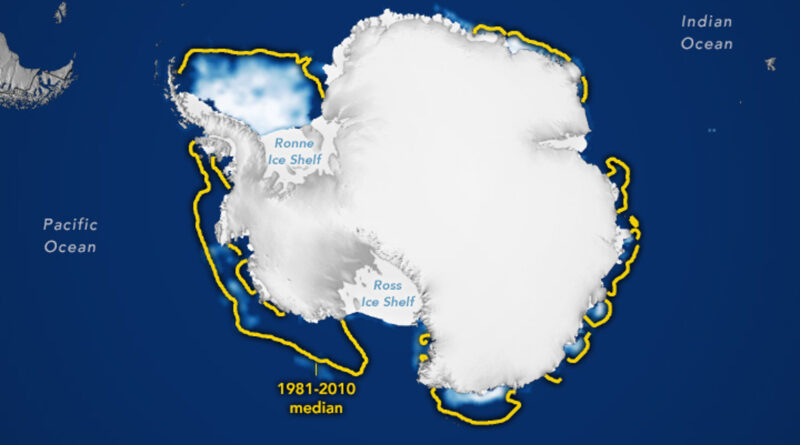 Credit: NOAA Earth Observatory
April 18, 202610 minutes ago
Steve Hanley
0 Comments
Support CleanTechnica's work through a Substack subscription or on Stripe.
Credit: NOAA Earth Observatory
April 18, 202610 minutes ago
Steve Hanley
0 Comments
Support CleanTechnica's work through a Substack subscription or on Stripe.
In a paper published by PNAS on March 23, 2026, researchers Earle Wilson, Lexi Arlen, and Ethan Campbell wrote in the introduction:
“Antarctic sea ice is an integral component of the climate system, regulating heat and CO2 exchange between the surface and deep ocean. Contrary to the gradual ice loss predicted by climate models, we have observed ice expansion until 2015, followed by an abrupt and sustained decline in subsequent years. Using nearly two decades of under-ice Argo float data, we find that the ice expansion was partly due to surface freshening from enhanced precipitation that trapped subsurface ocean heat.
“After 2015, intensified wind-driven upwelling reversed freshening trends, releasing years of accumulated ocean heat that contributed to unprecedented sea ice loss. These results demonstrate the potential for wind-driven upwelling and freshwater fluxes to drive multiyear Antarctic sea ice trends.”
Why should we care about ice in Antarctica? Because if all of it on that continent melted, the world’s oceans would rise nearly 200 feet, inundating many coastal areas and displacing hundreds of millions of people. It all comes down to salinity, winds, and churn. “One of the key takeaways from the study is that the ocean plays a huge role in…..modulating how sea ice can vary from year to year, decade to decade,” Earle Wilson, a polar oceanographer at Stanford University and lead author of the study, told Grist.
Underwater Sensors
The data for the study was supplied by a fleet of torpedo shaped submersibles known as Argo floats that are designed to sink thousands of feet below the surface. While underwater, they sample things like temperature and salinity. When they surface, they transfer the data collected back to researches via satellites. Because they float passively, their instruments can gather data for years.
The data shows that as sea ice expanded in the decades before 2016, increased precipitation made surface waters fresher, in contrast to saltier waters below, resulting in stratification. That fresher water at the surface was able to freeze to form new sea ice.
But as winds intensified and shifted, they pushed surface waters away from Antarctica, which allowed an upwelling of warmer, saltier water from below. “What we witnessed was basically this very violent release of all that pent up heat from below that we linked to the sea ice decline,” Wilson said.
Climate Change Is A Partial Explanation
The changes in wind currents was driven in part by climate change. Grist said, “As the planet warms, the atmosphere develops temperature gradients which strengthen winds and change their patterns. Scientists, though, are still working out how much of this shift might be due to “natural variability” — what might happen anyway if humans hadn’t released so much carbon dioxide since the start of the Industrial Revolution.
In addition to allowing warmer water to come to the surface, the winds may have broken up the ice, both by pushing blocks of ice together and by creating waves. “Recent research has shown that both atmospheric and oceanic warming is likely contributing to the sudden change in Antarctic sea ice extent since 2016, and this paper helps to further develop the point that deeper ocean warmth is a significant player,” said Zachary Labe, a climate scientist at the research group Climate Central who studies Antarctic ice but wasn’t involved in the paper.
Knock On Effects
As sea ice has declined, it has imperiled ice elsewhere. The Antarctic ice sheet that rests on land is bolstered by ice shelves that float along the coast. These ice shelves are already in serious trouble as warming seas and violent underwater storms erode them from below. If they also lose the sea ice floating around them, they lose a significant buffer, as the floating chunks absorb wave energy. In addition, most sea ice is quite bright, which reflects some of the sun’s warmth back into space and reduces local temperatures. Because the ice shelves hold back the ice sheet, losing them would mean an accelerated decline of an extraordinary amount of frozen water sitting on the continent of Antarctica.
While the Argo floats provided invaluable data, scientists say they need more measurements. “Overall, we need more international support to continue building observing networks across the Antarctic polar region, both for oceanic and atmospheric monitoring,” Labe said. “This is critical given the rapid changes we are beginning to observe in this part of the world in a warming climate, with potentially significant consequences for global sea level rise.”
Are These Permanent Changes?
The big question now, Grist says, is whether we are witnessing a permanent state of low sea ice, or whether atmospheric and oceanic conditions might swing back enough to encourage years of growth. This new research will help researchers refine their models to predict how much the waters around Antarctica might change, and how quickly. Perhaps sea ice will see years of sharp decline, followed by years of growth. “But the long term, multi-decade trend will be negative,” Wilson said. “That would be my guess, but we don’t know for sure.” The researches wrote:
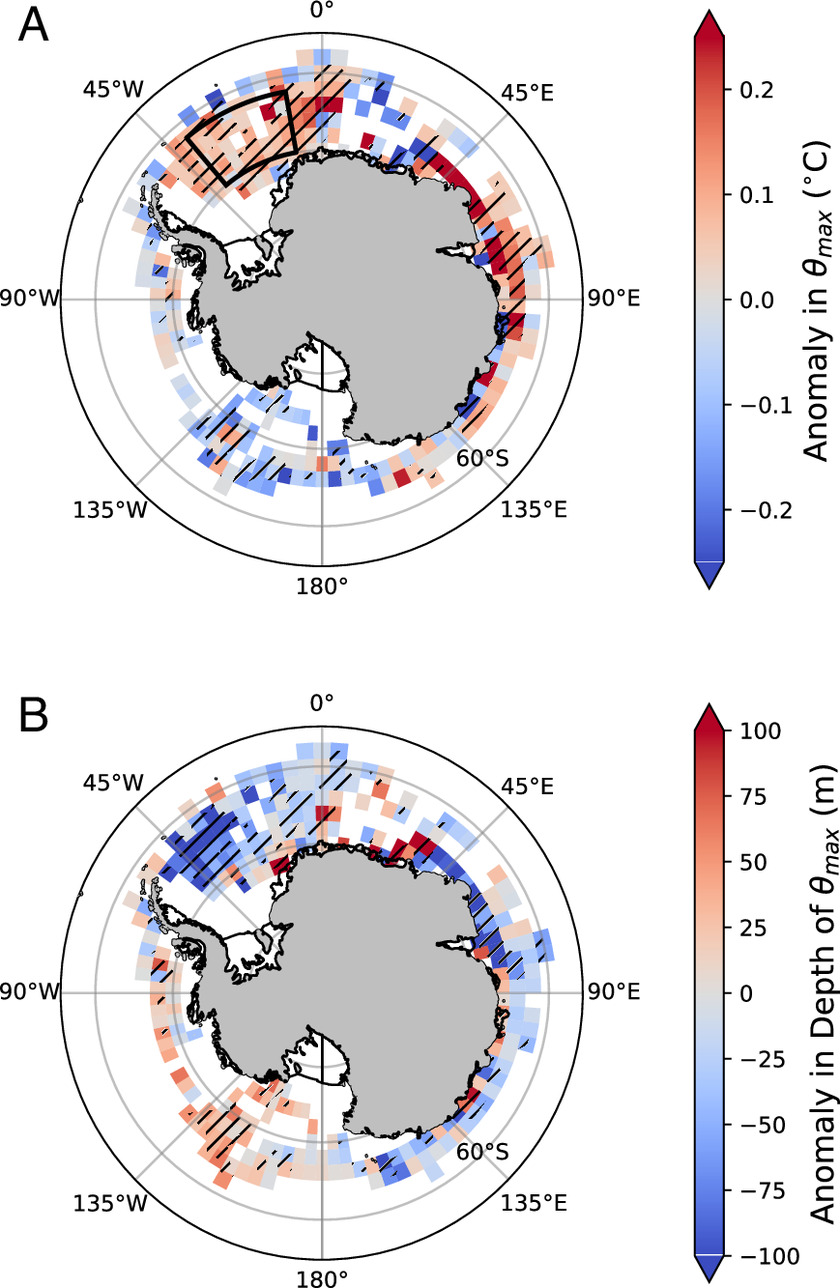
Under-ice Argo float data reveal that Antarctic sea ice has been increasingly exposed to warm circumpolar deep water (CDW) over the past two decades. While our results support earlier inferences that subsurface warming has sustained recent Antarctic sea ice decline, we illuminate the causal chain of events by emphasizing the critical role of surface salinity and stratification trends.
We further highlight the regional dependence of these processes, with thermocline warming and shoaling being most apparent in the Weddell Sea and offshore of East Antarctica. In contrast, the thermocline in the Pacific sector of the Antarctic SIZ has mostly cooled and deepened since 2007.
Within the Weddell Sea, the halocline (the boundary between saltier and fresher water) was relatively strong during the 2007–2015 sea ice expansion period, which suppressed vertical heat fluxes and contributed to the concurrent subsurface warming. The reduction in halocline strength after 2015 coincided with subsurface cooling, implying greater heat flux to the surface that would suppress sea ice growth.
In a recent article about changes to the AMOC current in the North Atlantic, we reported that differences in temperature and salinity are primary factors in the speed of ocean currents and the depth at which they operate. Like all science, this research does not definitively indicate what factors are affecting sea ice in Antarctica, but it does suggest likely answers and points to further research that could better identify the primary causes. The answers could benefit dozens of nations and millions of people — reason enough to proceed with all deliberate speed to find them.
Sign up for CleanTechnica's Weekly Substack for Zach and Scott's in-depth analyses and high level summaries, sign up for our daily newsletter, and follow us on Google News! Advertisement Have a tip for CleanTechnica? Want to advertise? Want to suggest a guest for our CleanTech Talk podcast? Contact us here. Sign up for our daily newsletter for 15 new cleantech stories a day. Or sign up for our weekly one on top stories of the week if daily is too frequent. CleanTechnica uses affiliate links. See our policy here.CleanTechnica's Comment Policy