Iran war: Who in Tehran could shape talks with the US?

Since agreeing to a ceasefire on April 8, the US has been seeking a permanent end to the war it launched on Iran, together with Israel. But there has been no breakthrough in negotiations, which are being carried out through intermediaries.
Another round of talks in Pakistan last week failed to materialize after the US said it was sending envoys, but Iranian Foreign Minister Abbas Araghchi left Islamabad before their arrival.
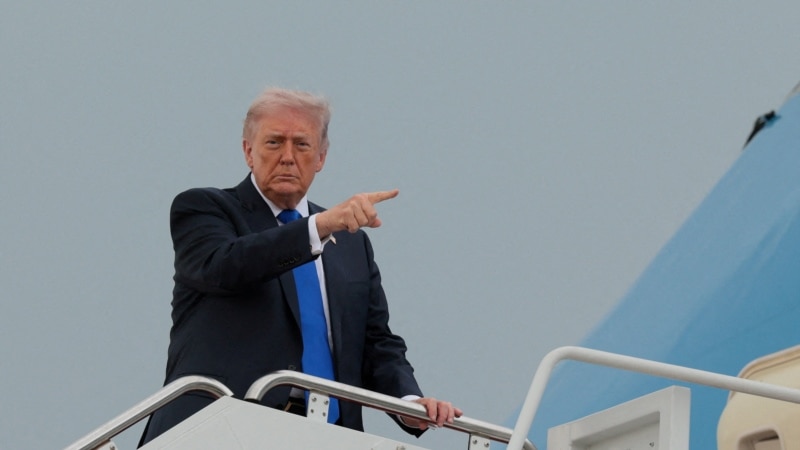
US President Donald Trump claims talks are being complicated by Iran's chaotic domestic political situation.
"Iran is having a very hard time figuring out who their leader is," he wrote last Thursday on his Truth Social platform. Trump said that there is a power struggle between "hardliners" and "moderates," who he said "are not very moderate at all (but gaining respect!)."
Trump extends US-Iran ceasefire as talks remain on hold
To view this video please enable JavaScript, and consider upgrading to a web browser that supports HTML5 video
On the same day, broadcaster CNN reported that the US military was planning, among other things, targeted strikes against individual Iranian military leaders and other individuals whom the US believes are actively undermining the negotiations.
Much of Iran's top political and military leadership has already been killed in US-Israeli strikes. DW has narrowed down a list of those who are likely still calling the shots in Tehran.
Ahmad Vahidi: IRGC commander since March 2026
As commander-in-chief of Iran's Islamic Revolutionary Guard Corps (IRGC), 68-year-old Ahmad Vahidi succeeded Mohammad Pakpour, who was killed in the first strikes of the war on February 28, along with several high-ranking IRGC commanders during a meeting with Supreme Leader Ali Khamenei.
Vahidi is not a newcomer in Iran or internationally. Since 2007, Vahidi is wanted by Interpol in connection with his alleged involvement in the 1994 bombing of the Argentine Israelite Mutual Association (AMIA), a Jewish community center in Buenos Aires.
Argentine investigators consider Vahidi to be one of the masterminds behind the attack, which killed 85 people and injured hundreds. At the time of the attack, Vahidi was the commander of the Quds Force, an elite IRGC unit responsible for overseas operations.
Vahidi joined the Revolutionary Guard at the age of 20 and rose through the ranks during the Iran-Iraq War (1980–1988) . He later became commander of the Quds Force and remained in that position until 1997.
He is considered a close confidant of Iran's hardliners. He served as defense minister under President Mahmoud Ahmadinejad (2009–2013). Under President Ebrahim Raisi, Vahidi served as Minister of the Interior from 2021 to 2024.
During the "Woman, Life, Freedom" protest movement following the death of Jina Mahsa Amini in police custody in 2022, he was regarded as one of the central figures in the suppression of the protests and as a staunch advocate of women being forced by law to wear a hijab headscarf.
According to Iranian sources, Vahidi is also said to belong to the inner circle of individuals who maintain direct contact with Iran's new supreme leader, Mojtaba Khamenei.
According to assessments by the US-based Institute for the Study of War (ISW) and the Critical Threats Project (CTP), the current situation in Iran suggests that Vahidi could emerge as a stronger contender than Mohammad Bagher Ghalibaf in the internal power struggle. Ghalibaf is the speaker of parliament and is considered part of the moderate camp, which advocates for direct negotiations with the US.
Mohammad Bagher Ghalibaf: speaker of parliament
Mohammad Bagher Ghalibaf is one of Iran's most influential politicians, and he also has close ties to the Revolutionary Guard. He has served as speaker of the Iranian Parliament (Majlis) since 2020.
Born in 1961, he joined the IRGC after the revolution. During the Iran-Iraq War, he served as a commander in the Revolutionary Guard and later rose through the ranks of the security apparatus.
As speaker of parliament, he led the first direct negotiations with US Vice President JD Vance in Pakistan, which ended without a breakthrough after 21 hours.
It is currently unclear whether Ghalibaf will continue in this role.
Iranian officials deny there are internal conflicts with hardline factions over what position Iran should take in talks. However, Ghalibaf is said to have issued a clear internal warning against the influence of people like former National Security Council Secretary Saeed Jalili, whom Ghalibaf has assessed "will destroy Iran."
According to the Iranian news portal Jamaran, Amir Ebrahim Rasouli, political advisor to the speaker of parliament, denied these reports of internal divisions.
Saeed Jalili: the hardliner
US broadcaster Fox News reported on April 26 that Saeed Jalili, an "ultra-hardliner who has mocked Trump," is poised to take over the nuclear negotiations. There has been no official confirmation from Iran regarding a change in the negotiating team.
Jalili, 60, is one of the most prominent hardliners in the Iranian political system and rejects any rapprochement with the West. Like many of his generation, he volunteered for military service during the Iran-Iraq War and lost part of his right leg during combat. After the war, he began his career at the Iranian Ministry of Foreign Affairs in 1989.
He later worked in the office of the supreme leader and served as secretary of the Supreme National Security Council from 2007 to 2013, while also serving as chief negotiator on the nuclear program. In this role, he steered talks with the West in an increasingly confrontational direction, thereby contributing to further UN sanctions resolutions against Iran.
Following Trump's recent remarks on Iran's leadership, Jalili demonstratively aligned himself with the government and supported the official Iranian line.
Jalili and other officials posted nearly identical messages on social media stating: "In our Iran, there are neither hardliners nor moderates."
The message went on to say: "We are all 'Iranian' and 'revolutionary,' and with the iron unity of the people and the state, we will, in complete allegiance to the Supreme Leader of the Revolution, force the criminal aggressor to repent."
Mojtaba Khamenei: the supreme leader
Mojtaba Khamenei was born in 1969 as the second son of former Iranian Supreme Leader Ali Khamenei. Following Ali Khamenei's death in the first strikes of the war on February 28, Mojtaba Khamenei was designated as his successor and the new supreme leader by the 88-member Assembly of Experts.
Since becoming supreme leader on March 8, 2026, his supporters have been waiting for a public statement. To date, however, there is neither an official video nor an audio recording of him. Unlike his father or the revolutionary leader Ayatollah Khomeini, Mojtaba is not known as a public speaker and has always remained in the background.
Many are wondering whether he survived the attack involving some 30 missiles on his father's residential and office complexes.
According to a report in The New York Times last week, he is said to be receiving treatment for serious injuries at a secret location, is without electronic communication, and remains under the supervision of a small circle of trusted doctors. The report also states that President Masoud Pezeshkian has been involved in his treatment as a heart surgeon.
Iran elects Khamenei's son as supreme leader
To view this video please enable JavaScript, and consider upgrading to a web browser that supports HTML5 video
Masoud Pezeshkian: the president
Masoud Pezeshkian has been President of Iran since July 2024. He was born in Mahabad in 1954, is a trained heart surgeon, and served as minister of health under President Mohammad Khatami from 2001 to 2005. He later served for many years as a member of parliament representing Tabriz and was Deputy Speaker of the Iranian Parliament from 2016 to 2020.
In Iran's political system, the president is subordinate to the supreme leader, who holds actual control over the military, the Revolutionary Guard, the judiciary, and strategic foreign policy.
Pezeshkian repeatedly emphasizes the need for negotiations with the US and calls for "fair and equal talks." He officially supports Mohammad Bagher Ghalibaf, who, as speaker of parliament, established the first direct contacts in negotiations with the US in Pakistan.
Abbas Araghchi: the foreign minister
Abbas Araghchi also repeatedly echoes this message in his public statements. Born in 1962, Araghchi has served as Iran's foreign minister since 2024 and is the public face of the negotiations with the United States.
He took part in the Iranian Revolution as a teenager and fought in the Iran-Iraq War as a member of the Revolutionary Guard.
Araghchi joined the Iranian Ministry of Foreign Affairs in 1989 and served, among other posts, as ambassador to Finland (1999–2003) and Japan (2007–2011), as well as holding several positions as deputy minister and spokesperson for the Ministry of Foreign Affairs.
In 2015, he was Iran's chief negotiator in the nuclear talks that led to the Joint Comprehensive Plan of Action (JCPOA), which sought to end Tehran's nuclear program.
In recent days, Araghchi traveled to Pakistan and Oman for talks, and on Monday to Russia. At the same time, he is at the center of intense diplomatic activity.
The Iranian news agency Fars, which is close to the Revolutionary Guard, also reported that Iran had conveyed "written messages" to the US government via mediator Pakistan.
Trump met with top security advisors on Monday to discuss these Iranian proposals.
They would reportedly see Tehran allow passage through the Strait of Hormuz in exchange for the US lifting its retaliatory blockade on Iranian ports while broader negotiations continue.
The question of Iran's nuclear program would be picked up at a later date. However, early indications are that Iran's latest proposal will not go far, as Trump wants the nuclear program on the table in any negotiations.
This article has been translated from German
AdvertisementСхожі новини
ЗМІ: розвідувальні служби США вивчають, як Іран відреагує на оголошення перемоги Трампом

Африканська поразка Путіна. Заворушення в Малі – флагманському проєкті Кремля в Африці
Президент повідомив про готовність України до експортування зброї