Germany's crime figures: Comparing apples to oranges?
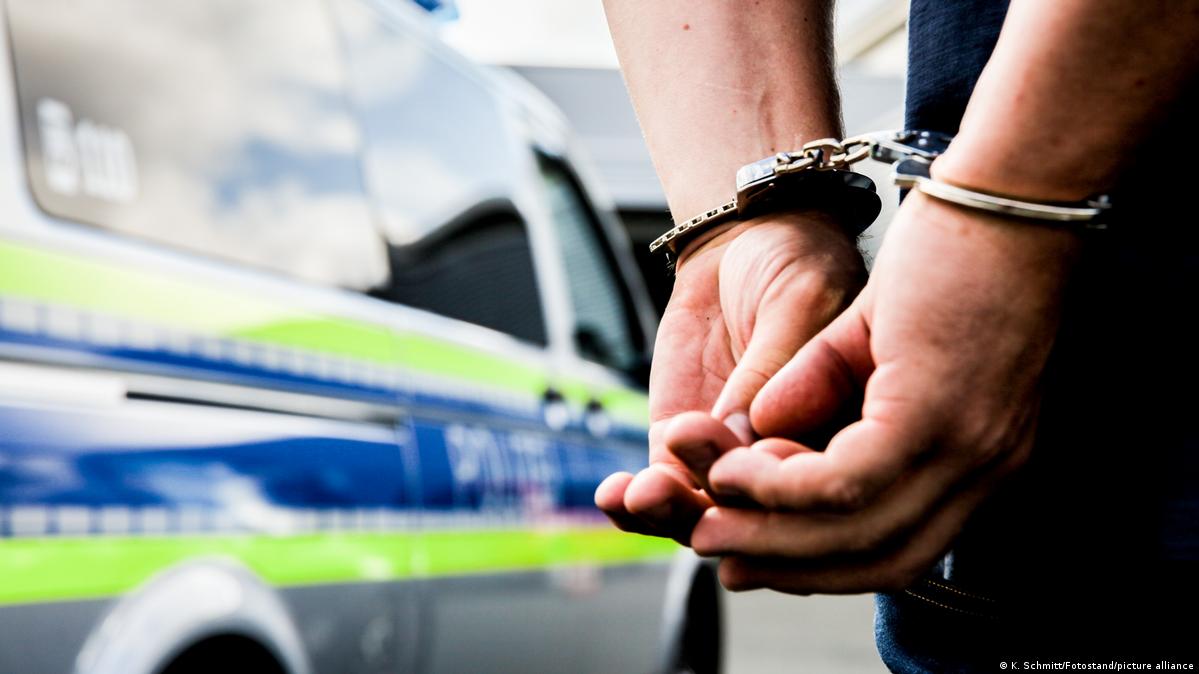
Ahead of the presentation of the 2025 figures for crime in Germany by the Federal Criminal Police Office (BKA), Susann Prätor has shared her thoughts on the issue of nationality and statistics. She is a sociologist, psychologist and legal scholar. Her work as an expert on crime draws on these diverse perspectives.
More than a third of all suspects are not German citizens. About 16% of the total population of Germany don't have German citizenship, yet they accounted for roughly 34% of suspects in crimes as diverse as theft, burglary and violent crimes.
However, according to Prätor, comparing figures in police crime statistics is often like comparing apples to oranges — in other words, comparing two things that are fundamentally different and thus misleading to compare.
Young men are the most prone to criminal activity worldwide
Prätor, who is a professor with the police academy in the state of Lower Saxony, cites age and gender as key factors. Both play a major role in criminal activity regardless of ethnic background, as the number of young male suspects has always been disproportionately high. Prätor considers such factors to be highly relevant when interpreting statistics.
"Non-Germans are, on average, significantly younger than Germans," says the expert, adding: "Young men are a demographic group that frequently stand out for their involvement in criminal activity, not only in Germany but worldwide."
And, perhaps more crucially, "studies show that people perceived as foreign are more likely to be reported to police," Prätor adds. According to a 2024 study by the Criminological Institute of Lower Saxony, non-Germans were reported nearly three times as often as Germans.
Crimes that are not reported
The researcher hopes that studies on unreported crime will provide greater clarity on context and causes. In such studies, as many people as possible are randomly selected and surveyed about their experiences with crime. This approach yields additional insights into crimes that remain unreported and therefore do not appear in any statistics.
bSusann Prätor erklärt das Prinzip: "Ich kann nach Migrationshintergrund fragen. Ich kann auch nach Ursachen fragen. Und ich habe nicht das Problem, nur die Kriminalität zu sehen, die offiziell in Erscheinung getreten ist." Der Vorteil solcher Befragungen sowohl von Opfern als auch Tätern liege darin, viel mehr differenzieren zu können.
Susann Prätor explains this method allows for a more nuanced understanding, as it permits space to question victims and perpetrators alike about possible underlying or contributing factors. "And I'm not facing the problem of only seeing the crime that has officially come to light," she adds.
How migration to Germany changed after 2015 refugee arrivals
To view this video please enable JavaScript, and consider upgrading to a web browser that supports HTML5 video
When it comes to young people, there are already good studies on unreported crime, says Prätor. "They show that the living conditions of immigrants differ greatly from those of Germans," she explains. Factors such as domestic violence, lower levels of education, criminal peer groups and an emphasis on masculinity are cited as contributing factors.
A closer look at suspects' nationalities also gives a sense of just how complex the topic of migrant crime rates is. In 2024, just under 13% of suspects were from Ukraine. Compared to the proportion of Ukrainian refugees living in Germany (35.7%), this is a strikingly small number. It is worth noting in this case that the overwhelming majority of Ukrainian refugees are women and children.
As for people from Algeria, Morocco, Tunisia and Georgia, the reverse is true. About three percent of suspects come from these countries, but they account for less than one percent of refugees registered in Germany.
The second largest group of refugees comes from Syria, making up one fifth of all refugees in Germany. Around 900,000 live in Germany, while around 115,000 Syrian were identified as suspects by the police in 2024. Here, too, it is worth pointing out that the majority of Syrian asylum seekers in Germany are young and male.
So, are North Africans and Georgians more likely to commit crimes than Ukrainians or Germans? A closer look at the underlying factors behind the numbers is helpful. The relatively low proportion of Ukrainian suspects could be due to the demographic makeup in Germany: 63% of adult refugees from that country are women.
Germany relies on Syrian workers amid return debates
To view this video please enable JavaScript, and consider upgrading to a web browser that supports HTML5 video
In contrast, between 74% and 82% of asylum seekers from North African countries are men. And regardless of country of birth or passport, men's share of total crime is always significantly higher than that of women.
In 2024, there was a 7.5% increase in violent crime involving suspects with non-German nationality. But experts point out, this may be due to a rise in reporting rather than actual incidents. They also highlight that a considerable number of non-German nationals are involved in violent crimes as the victims.
This article has been translated from German.
AdvertisementСхожі новини
Germany's crime figures: Comparing apples to oranges?

Оплачувана перерва гіг-спеціаліста в «Дія.Сіті»: як кваліфікувати ці виплати під прицілом податкової — колонка
