Economist Justin Lin urges West to adopt ‘Eastern wisdom’ as China moves up value chain
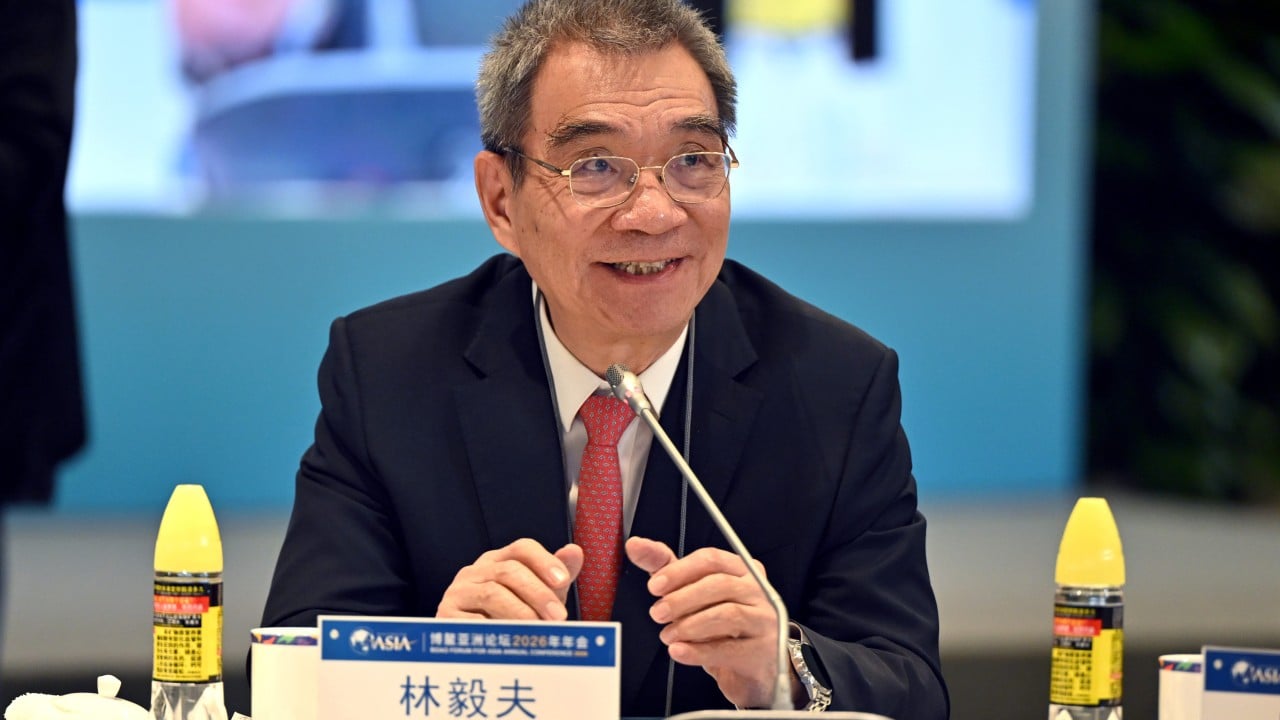
Former World Bank economist defends Beijing’s industrial strategy amid ‘overcapacity’ allegations, points to Germany and a ‘double standard’
2-MIN READ2-MIN3 Listen
The West’s narrative of Chinese “overcapacity” is a double standard, said a former chief economist of the World Bank as he urged advanced economies to draw on “Eastern wisdom” rather than protectionism to navigate the rise of hi-tech competition.
Justin Lin Yifu, a prominent advocate of Beijing’s industrial policy, dismissed claims that China’s auto-export surge was a sign of industrial imbalance. Speaking at Hong Kong Chu Hai College, Lin drew a contrast with Germany to expose a logical inconsistency in the current Western rhetoric.
Advertisement“[Western countries] say China became the world’s largest car exporter because of overcapacity, but if we look at which country has the highest share of auto exports – it is Germany,” Lin said during a question and answer session following his keynote speech at the college on Friday.
He noted that Germany exports about 4 million vehicles a year, accounting for roughly 80 per cent of its total production. In contrast, he said, China exports around 7 million vehicles, representing about 20 per cent of its output, with the rest absorbed domestically.
“If Germany’s ratio is taken as the benchmark, then China would be seen as having ‘undercapacity’, not overcapacity,” said Lin, who is now dean of the Institute of New Structural Economics at Peking University.
Lin’s remarks underscore the persistent debate over China’s industrial policies, which he has championed for decades. While these state-backed efforts have cemented China’s dominance in green technology and other fields, they have also fuelled accusations of “overcapacity” and dumping from major trading partners such as the United States and the European Union.
“A major issue for developing nations is that we often fall into the trap of adopting [Western] rhetoric,” he said, slamming the “overcapacity” talking point as a “complete double standard”.
AdvertisementWhile China admitted that “overcapacity in some industries” was a problem during a high-level conference in 2023 – and frequent mention has been made of neijuan, the excessive industrial competition that can lead to redundancies in supply chains – officials and state media have refuted charges from the US and EU that Beijing was weaponising its vast manufacturing power to disrupt global trade.I think Western countries should learn from the wisdom of Eastern countries
Схожі новини
Japan finance minister to discuss Mythos threat with banks
Will Hungary join the euro? It’s a long road after Orban
