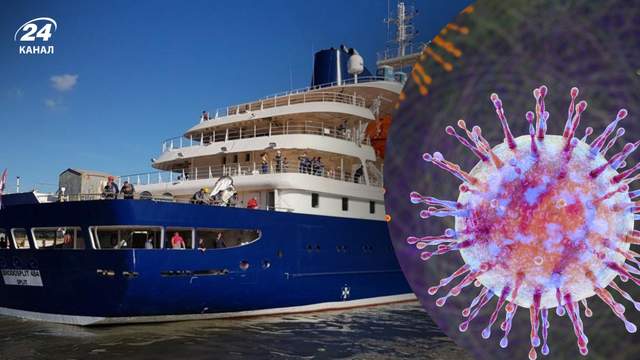
Ebola in Africa is a constant threat: Symptoms, treatment and vaccines

The World Health Organization declared a public health emergency of international concern on May 17, 2026, following reports of an outbreak of Ebola, caused by the Bundibugyo virus, in the Democratic Republic of the Congo and Uganda.
But the WHO said the outbreak did "not meet the criteria of pandemic emergency."
This comes just after the hantavirus outbreak on the MV Hondius and — perhaps poignantly — as the WHO meets for its 79th General Assembly (May 18-23, 2026).
What you need to know about Ebola:
- Ebola damages blood vessels and causes severe internal bleeding
- It spreads from other animals to humans and among humans through close contact with blood, organs, secretions and other bodily fluids
- Some forms of Ebola can be prevented with vaccines and treated with medicines
- First discovered in 1976, the largest known outbreak between 2014 and 2016 spread through Central Africa, killing 10,000 people
Ebola remains an ongoing challenge for people and authorities in affected regions. Vaccine development could help lessen the burden.
Ebola: What to know after WHO declares health emergency
To view this video please enable JavaScript, and consider upgrading to a web browser that supports HTML5 video
Most often, Ebola outbreaks have been caused by the Zaire type of the Ebola virus (Zaire ebolavirus) and the Sudan type (Sudan ebolavirus).
During the most recent outbreaks, which have had high numbers of infected people, researchers have used these live situations to test vaccines in development.
What have been the most severe Ebola outbreaks?
The largest Ebola outbreak came four decades after the disease was originally identified.
Between 2014 and 2016, Ebola spread from the Democratic Republic of the Congo (DRC) in Central Africa to Liberia, Guinea and Sierra Leone in the west of the continent. There were more than 28,600 infections and 10,000 deaths.
From 2018 to 2020, Ebola spread again from the DRC to Uganda. There have been further outbreaks in Gabon, South Africa, Ivory Coast, Nigeria, Mali and Senegal, killing at least 2,000 people.
What is the difference between the Ebola virus and Sudan virus?
Ebola was discovered near the Ebola River, during two simultaneous outbreaks in 1976 — in Zaire, now DRC, and South Sudan.
Ebola virus disease (EVD) — named after the river — is the deadliest form of the virus. It has a survival rate of 10% of cases.
Sudan virus disease (SVD) causes death in about 50% of cases.
The third most common variant in Africa is Bundibugyo virus, discovered in 2007.
Symptoms are similar: fever, nausea, weakness, loss of appetite and unexplained bleeding. Chest pain can occur with SVD, but less so with EVD.
How is Ebola virus treated?
If caught early, hospital treatment, with oral and intravenous fluids and medicines, can help and reduce the risk of fatality.
One such medicine is Ebanga — an antibody-based drug that prevents the virus from entering cells, thus slowing its spread through the body.
A second drug is Inmazeb — a cocktail of three antibodies.
In both cases, patients should avoid using live virus vaccines at the same time.
The World Health Organization (WHO) advises against treating people at home, especially without the help of professional health care. The virus is highly contagious and other people in the home will likely get sick.
Other treatments include blood transfusions, medicines to treat the symptoms — pain, nausea, vomiting and diarrhea — or coexisting illnesses, such as malaria.
Are there vaccines against Ebola?
Ervebo has been approved for use in the US and European Union.
It can be used to protect adults and children against EVD. The regulations vary, however — Ervebo is approved for use in Europe from the age of 1, while the US has only approved it for people 18 years of age and older.
Drug and vaccine approvals by the peak US and European agencies (FDA and EMA, respectively) are considered the global standard, so Ervebo may also be used in Africa.
It is also necessary for people visiting regions affected by Ebola to get vaccinated before they travel.
What is Ervebo?
Ervebo is a live-attenuated vaccine.
That means it contains a weakened protein from EVD, which is not strong enough to cause a full infection but is just enough to trigger an immune response.
Then, if the vaccinated person ever encounters the real virus, the body knows how to react and defend itself against the viral attack.
In February 2025, the International AIDS Vaccine Initiative, Uganda's Health Ministry, Makerere University in Kampala and the WHO launched a trial for a candidate vaccine against SVD.
It was the first trial conducted during a live outbreak — Uganda's sixth outbreak of the Sudan type of the virus.
The Sudan vaccine is a similarly designed vaccine to Ervebo. It is said to be one of the most promising types of vaccine against Ebola and other so-called filoviruses, including Marburg.
Edited by: Matthew Ward Agius
This article was originally published on February 6, 2025, and was updated to include a new outbreak in the Democratic Republic of the Congo and Uganda on May 18, 2026.
AdvertisementСхожі новини

Експерт медмережі ADONIS: Кількість виявлених меланом загально збільшилась завдяки доступу до діагностики
У Києві жінка розстріляла чоловіка через зауваження про галас під вікнами: фото

Журналісти таємно користуються ChatGPT і бояться зізнатися колегам, – експерт з ШІ