‘Astonishing’ discovery could help save children from deadly disfiguring condition
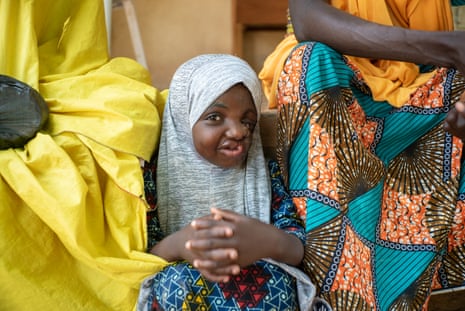
A previously unknown species of bacteria found in patients with noma could be key to creating treatments for the neglected tropical disease
The “astonishing” discovery of a new bacteria could open the door to better ways to prevent, detect and treat a fatal and disfiguring childhood disease, researchers hope.
Noma, which is fatal in 90% of cases without treatment, begins as a sore on the gums but goes on to destroy the tissues of the mouth and face.
It mainly affects young, poor and malnourished children, and has been called the “face of poverty”. Those that survive are left with lifelong scarring and disfigurement. Data on noma is patchy, but expert estimates put case numbers at tens of thousands every year. Most cases are reported in the Sahel region of Africa, but it also occurs in other parts of the world.
While it can be successfully treated with broad spectrum antibiotics, pointing to a bacterial culprit, the precise underlying cause of noma, classified as a neglected tropical disease, has never been established.
Research led by the Liverpool School of Tropical Medicine set out to study the community of bacteria living in noma patients’ mouths, using samples taken from 19 children in Nigeria.
Modern genetic analysis techniques revealed an apparently disturbed community of microbes, with lower levels of normal, healthy bacteria, but other strains greatly increased. Deeper analysis uncovered a previously undescribed species of Treponema bacteria in most of the noma patient samples.
When Angus O’Ferrall, the PhD student who had put the data together and found the species in the samples, presented the results, Prof Adam Roberts, a senior author on the study, said it was “a great reveal”. “I was astonished,” he said.
The scientists went on to reanalyse older samples from other noma patients, and found the Treponema bacteria – currently called Treponema A – was also present in those.
“We don’t know causality,” stressed Roberts. “We don’t know if it can colonise a noma wound, because of the architecture and the environment, or if it causes the noma wound.”
The team is now trying to answer that question with a larger study that will use samples from more noma patients and healthy individuals in the same communities, across multiple countries.
Once noma progresses to its necrotising stage, there are only two paths for the patient, according to Roberts. Either they are treated swiftly with antibiotics “and you usually get a good recovery, but massive disfiguring – and with that comes lifelong stigma and social exclusion – or death. We want to stop it reaching that point.”
In the future, a test for children with gingivitis that reveals the presence of Treponema A could save them from either fate, Roberts hopes.
“At the moment, the only thing that we have is a clinical diagnosis based on symptoms. And that can be a foul smell [or] holes in the skin and the tissues,” he said. “But if we know that actually Treponema A, for example, is always or 99% associated with the development of noma at the gingivitis stage then we could detect and treat prophylactically with antibiotics to stop it progressing.”
The current treatment for noma, using broad-spectrum antibiotics, risked increasing antimicrobial resistance, Roberts said. A targeted treatment aimed at a specific bacteria could reduce that threat.
And the drop in healthy bacteria seen in noma patients raised the prospect of “a potential preventive intervention” with probiotics, he added.
The study was published in Plos Neglected Tropical Diseases, and also included researchers from the University of Liverpool, Médecins Sans Frontières and the Noma children’s hospital in Sokoto, Nigeria.
Dr Michael Head, senior research fellow in global health at the University of Southampton, who was not involved in the study, said the findings were a useful first step to understanding a “currently mysterious condition”. “A different version of this Treponema bacteria causes syphilis, which is known for being a sexually transmitted infection, but can and does also cause wounds and ulcers within the mouth.”
Prof Philippe Guérin, director of the Infectious Diseases Data Observatory, University of Oxford, agreed the study was “a valuable starting point and should help stimulate greater interest from both the research community and funders”.
Explore more on these topicsShareReuse this contentСхожі новини

Вчені встановили, що поєднання цих двох фруктів покращує здоров’я серця

Путін втрачає контроль: чому в Росії раптом заговорили про революцію і до чого це може призвести

Легенда без зайвого шуму: як Олег Гусєв став символом Динамо і героєм ЧС-2006
