XPENG’s Human Approach To Technology Part 2: Automation, AI & Expectations
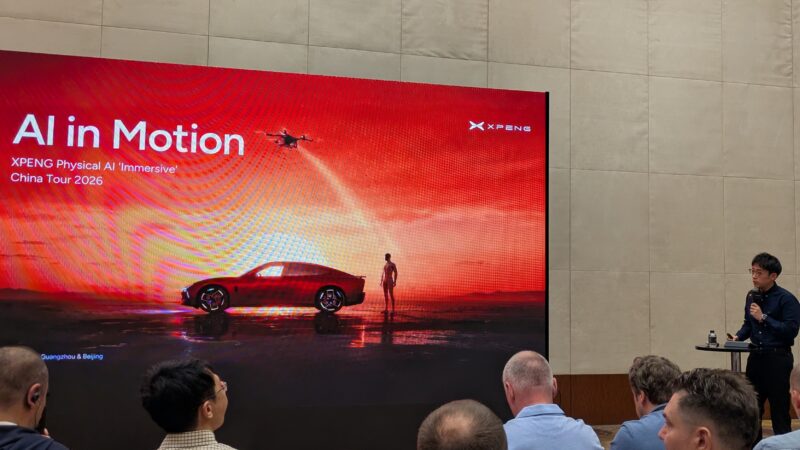 Photo by Larry Evans
May 21, 20263 hours
Larry Evans
0 Comments
Support CleanTechnica's work through a Substack subscription or on Stripe.
Photo by Larry Evans
May 21, 20263 hours
Larry Evans
0 Comments
Support CleanTechnica's work through a Substack subscription or on Stripe.
In the first part of this series on XPENG, I focused on how the technology company treats and develops its employees. In the second part, the focus shifts to how Automation and AI make the most of their employees, as well as how this relates to existing expectations and expectations for the future.
In 2025, XPENG grew from 15,364 to 19,884 employees, with R&D personnel comprising over 40% of the total. Last year, they also sold 429,445 vehicles, up 125.9%. Employee count and sales are also projected to grow this year, with new models and market expansion. However, compared to many other automakers, that is fewer employees per car but a much higher proportion of employees in R&D. While XPENG may not have the level of vertical integration seen in some automakers, that also means that they do not have to dedicate resources to develop every part of the car. That lets them concentrate on the technology that sets them apart, including their in-house developed Turing chip, full-stack AI and intelligent driving systems that enable products like their recently launched Robotaxi. The approach is less like a manufacturer trying to become the next Toyota and more like a Silicon Valley tech company. However, the accomplishments at XPENG were only made possible due to how their employees use technology to develop and produce new technology.
A More Human Approach to Automation
You can see a more human approach to AI and automation within XPENG. Automation takes over the more dangerous and strenuous production tasks. When touring their Guangzhou factory, all the stamping and pressing is handled by robots, with robots moving the sharp metal to the next station. Robots are also densely packed to perform the riveting, welding and adhering needed to produce the vehicle body. These are some of the more dangerous tasks on an assembly line. Other than a few engineers monitoring and performing inspections, there were not a lot of people. In addition, there were no strong smells. The welds were precise, avoiding large sparks and off gassing of molten metal. There was little chance anyone would be burned by a stray spark. No dedicated eye protection was needed, only a baseball cap with a hard liner. It was also surprisingly quiet, with no need for the ear protection often required in this stage of manufacturing. Although I tried to avoid getting them in my photos, our media group was preceded by a group of elementary school children who safely toured the plant. We were able to take pictures of this part of the plant.
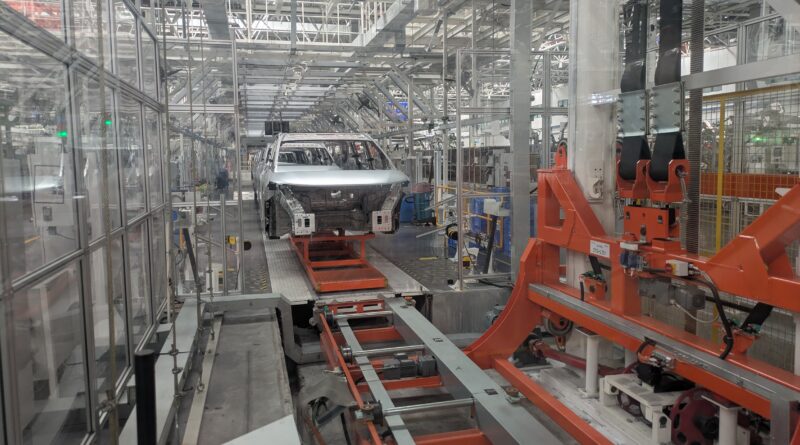
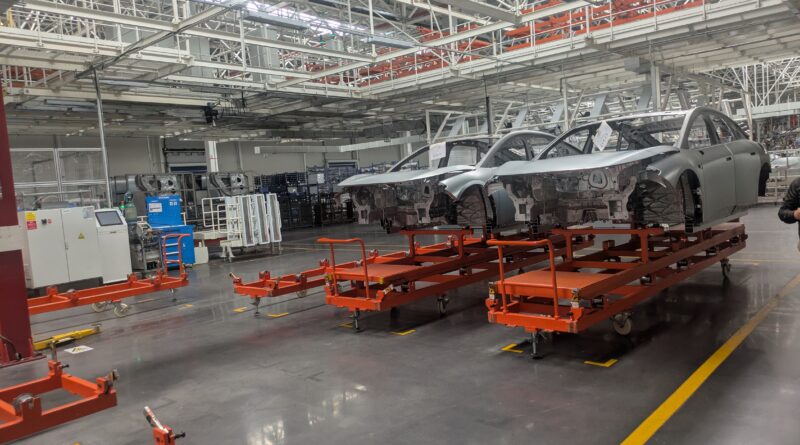
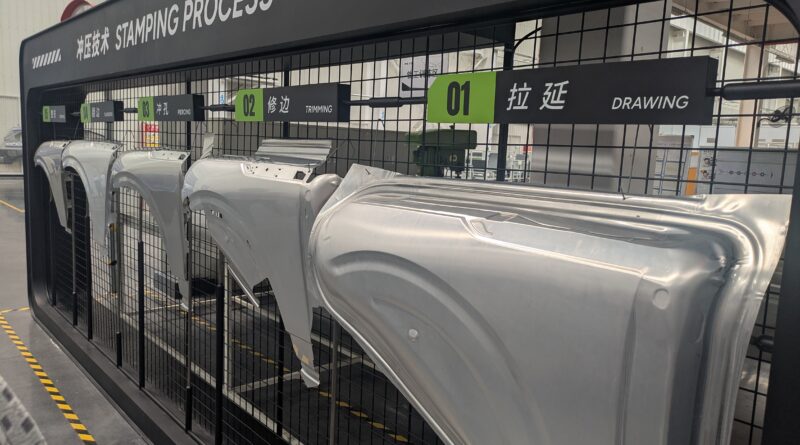
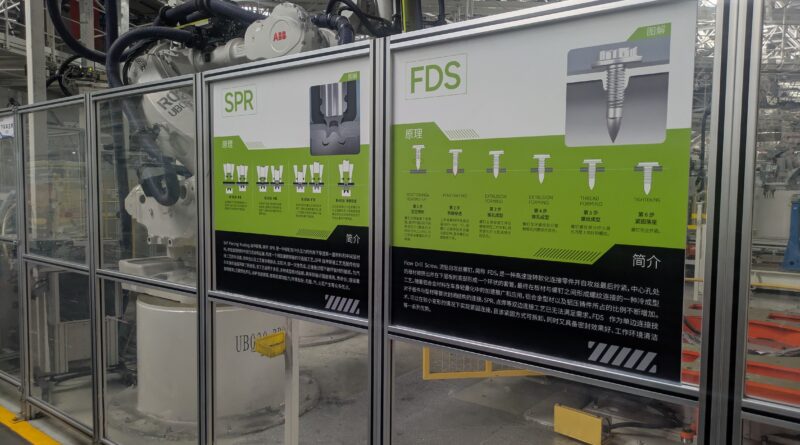
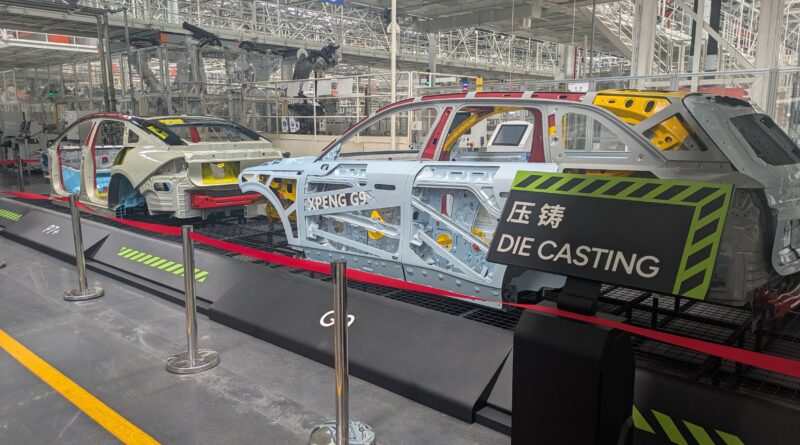
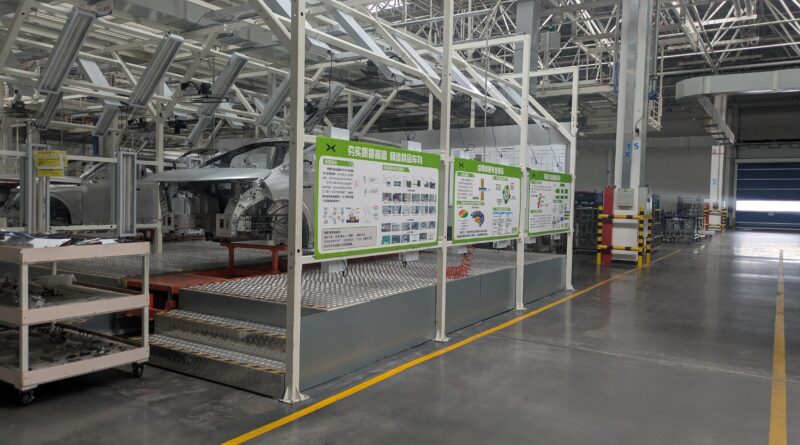
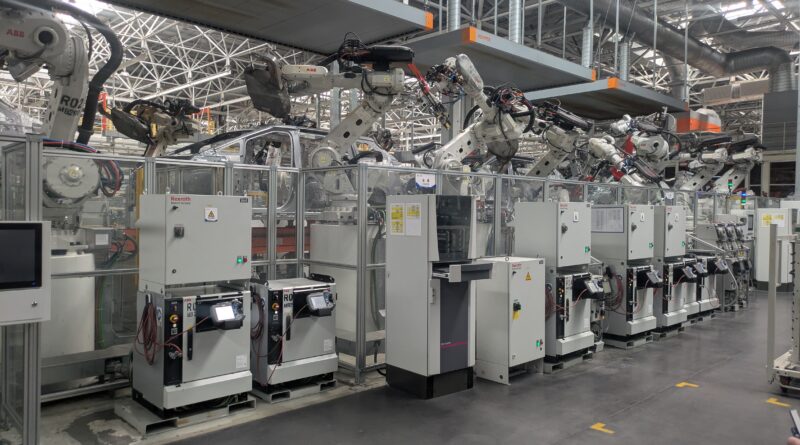
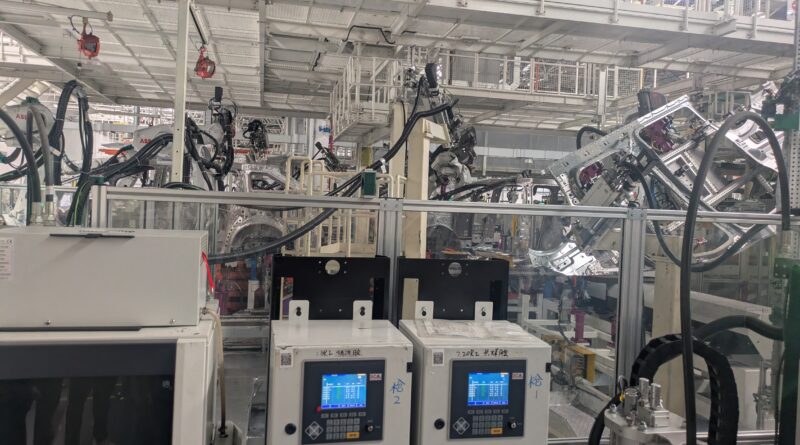
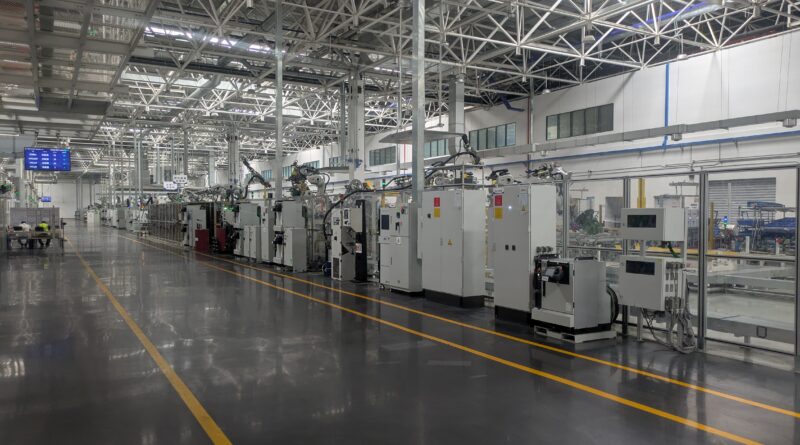
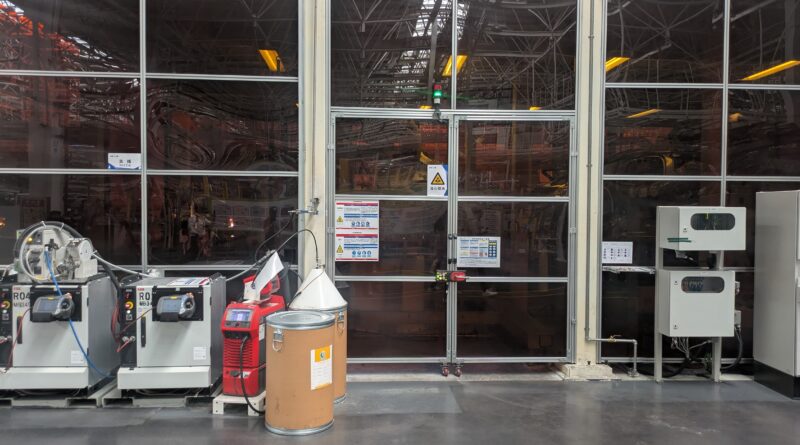
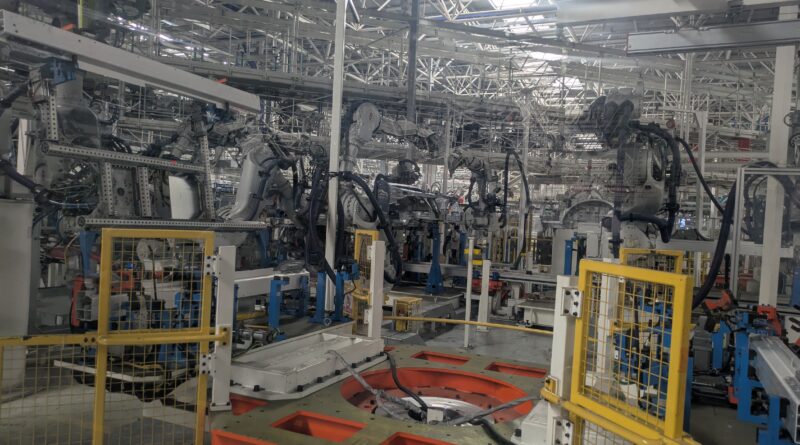
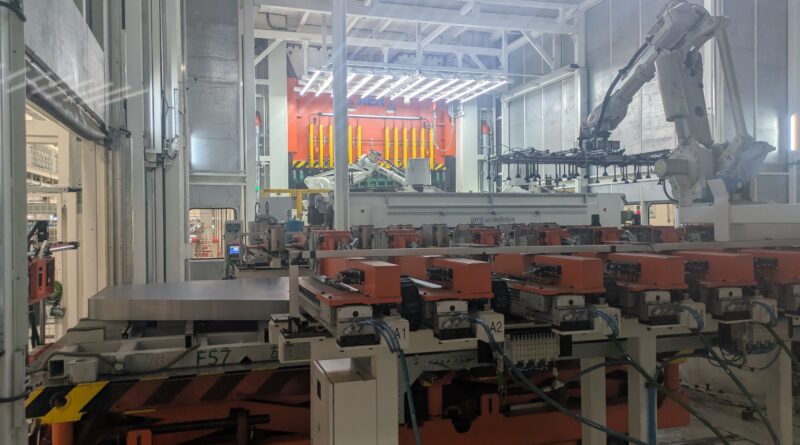
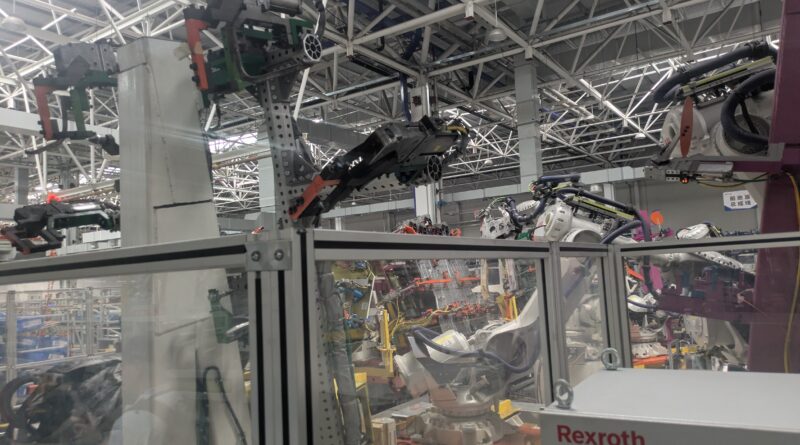
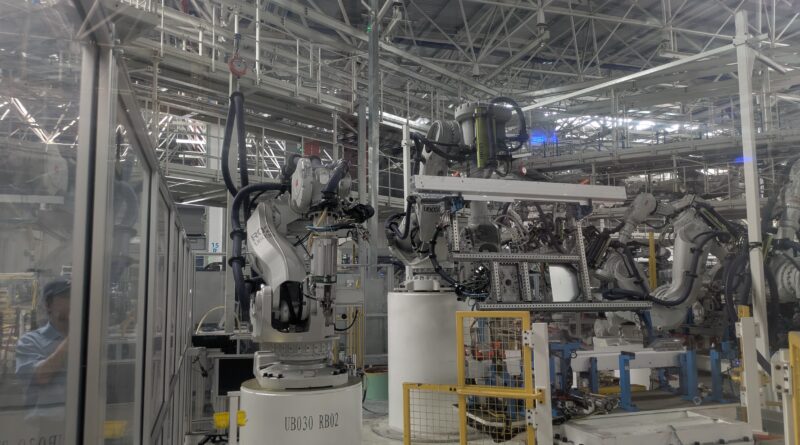
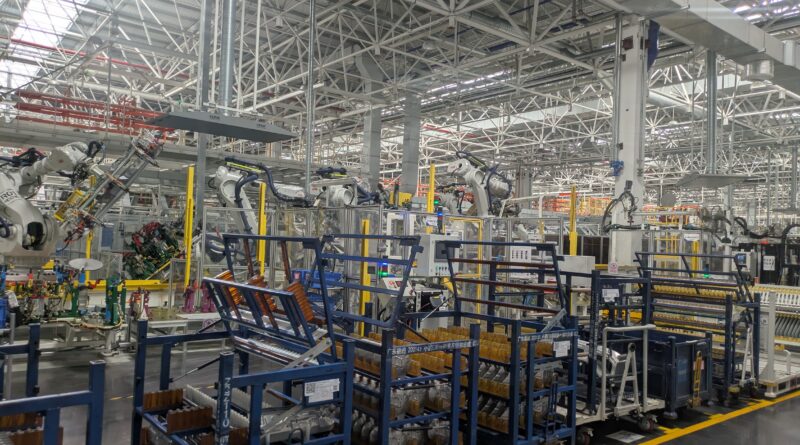
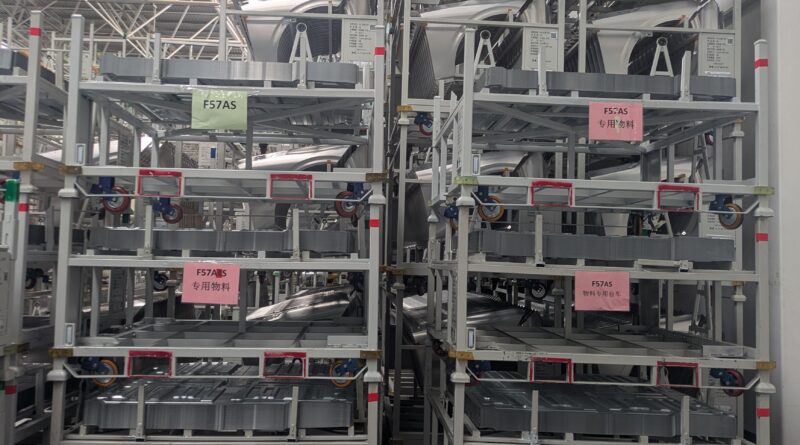
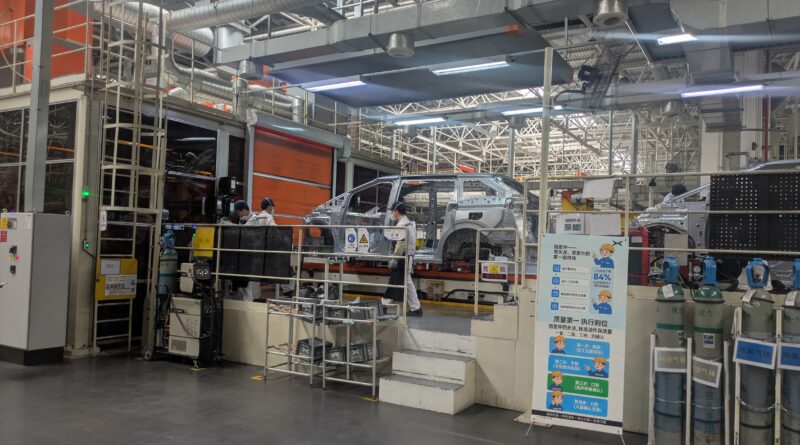
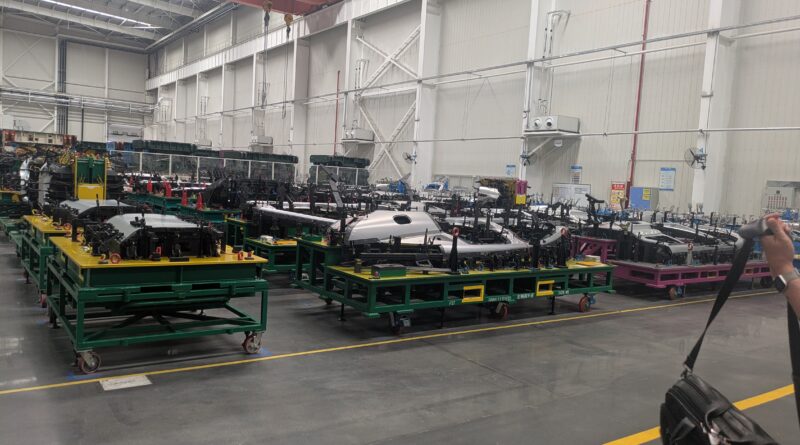
After this stage, the car bodies go to paint, which is also automated. Where most of the people show up is in final assembly and inspection. All the heavy lifting was already done, and the focus was on interior and trim. We were not allowed to take photos in this section, although you get a glimpse of it on the side of the millionth vehicle rolling off the line in November.
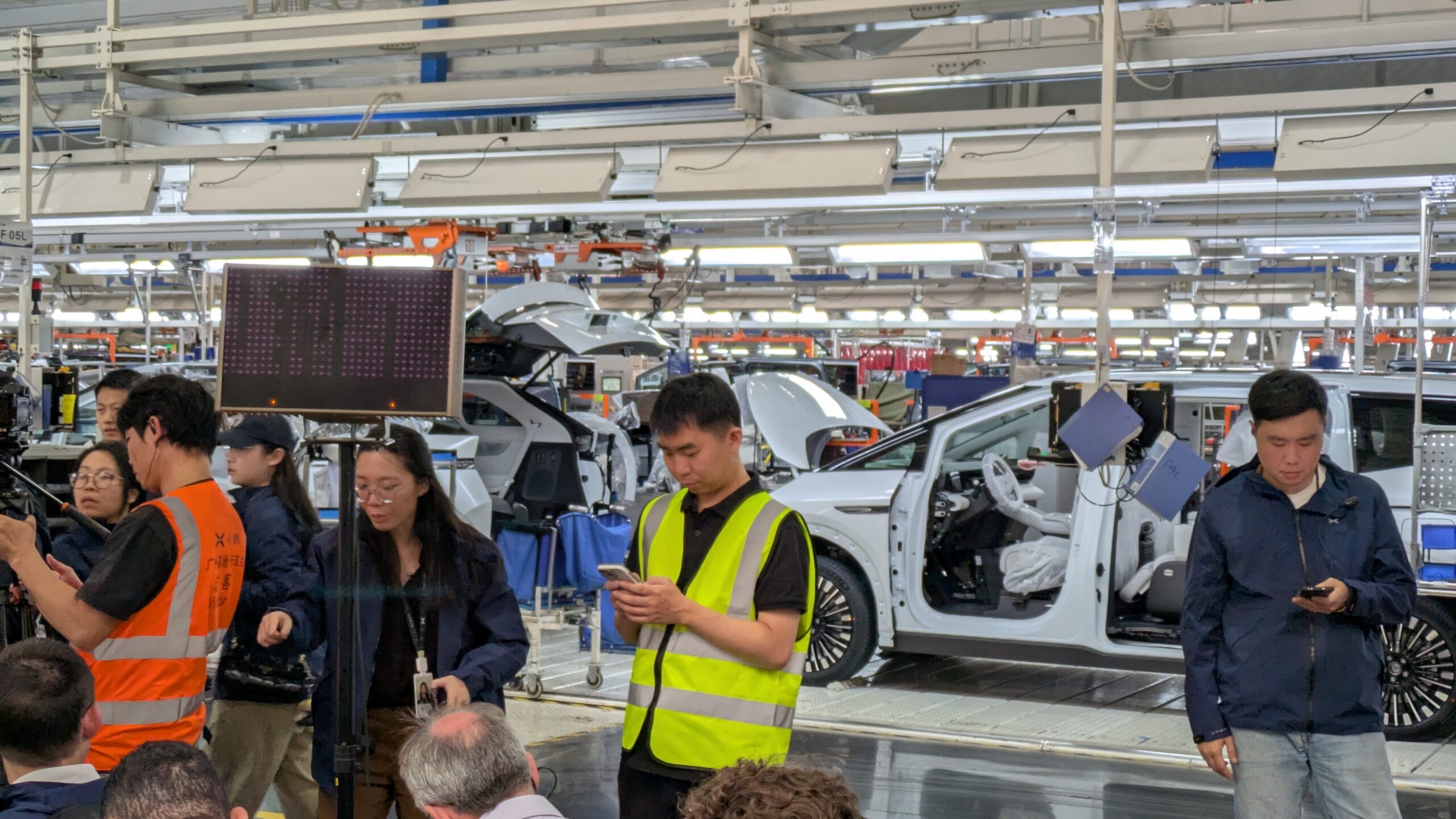
The area is much brighter than many assembly plants, with heavy use of daylighting. There did not seem to be a lot of wasted movement or the contortion seen in some other plants that I have toured previously. Clearly some industrial engineering and human kinematics are at work. However, the pace seemed reasonable compared to the “industrial athletics” seen at some factories. In addition, the line stops every two hours for a break, as well as a longer lunch break mid-shift. I didn’t notice the hot swapping of people for bathroom breaks seen at some plants. People stopped, napped, had a snack, had conversations or checked their phones. Overall, there were more machines than people on the assembly line, but the people who were there seemed to be treated more like people and less like machines.
 A More Human Approach to AI
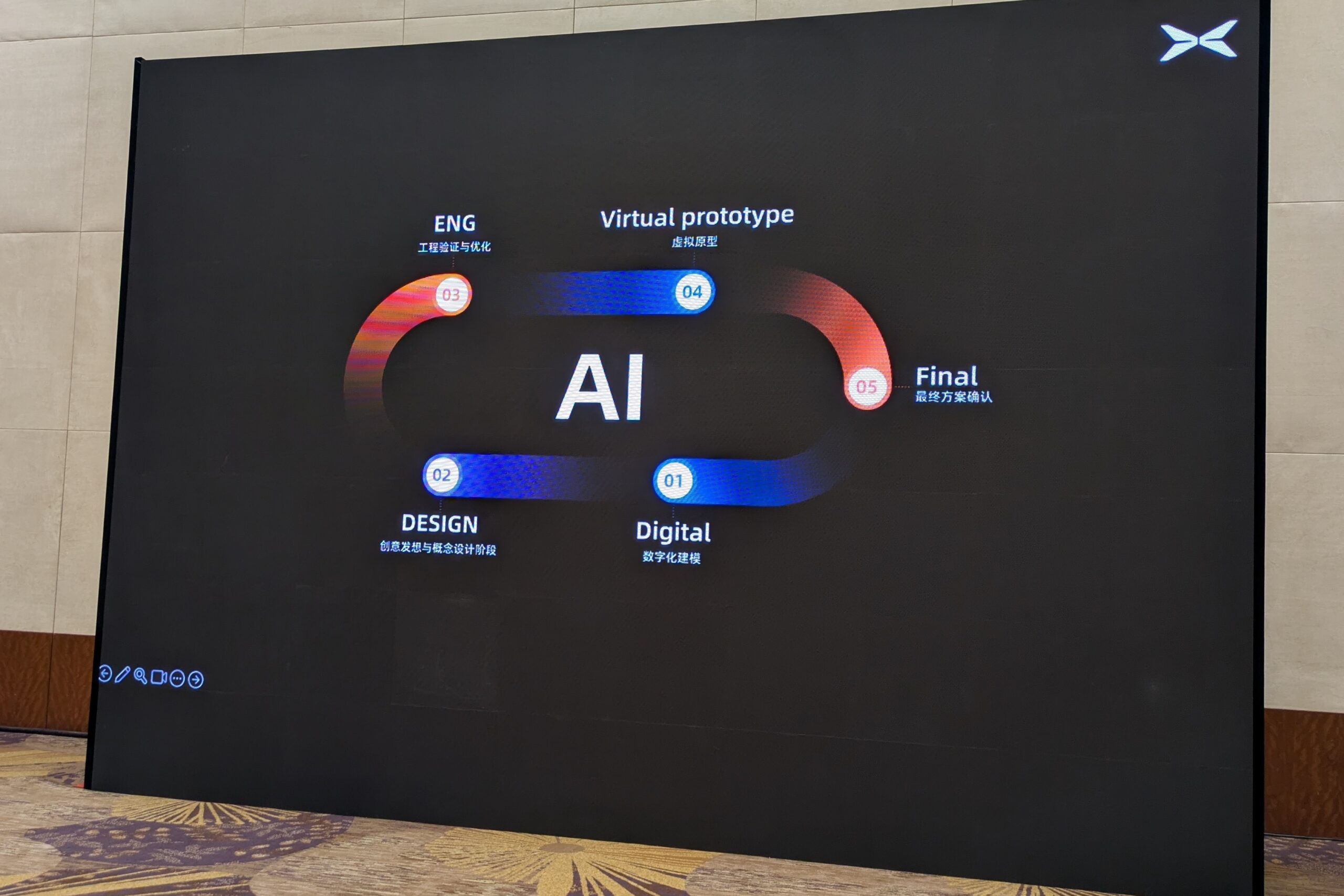
Within XPENG, AI is treated as a tool that allows people to do more. They have developed proprietary AI tools that not only securely add capabilities to their teams but also embody their philosophy toward technology. As He Xiaopeng puts it, “An intelligent technology company can only go further and stand firmer when it truly understands people’s needs and empowers people.” Designers can explore multiple ideas and iterate. The design process is streamlined. People with great ideas in their minds that lack the ability to physically sketch them out can develop those ideas.
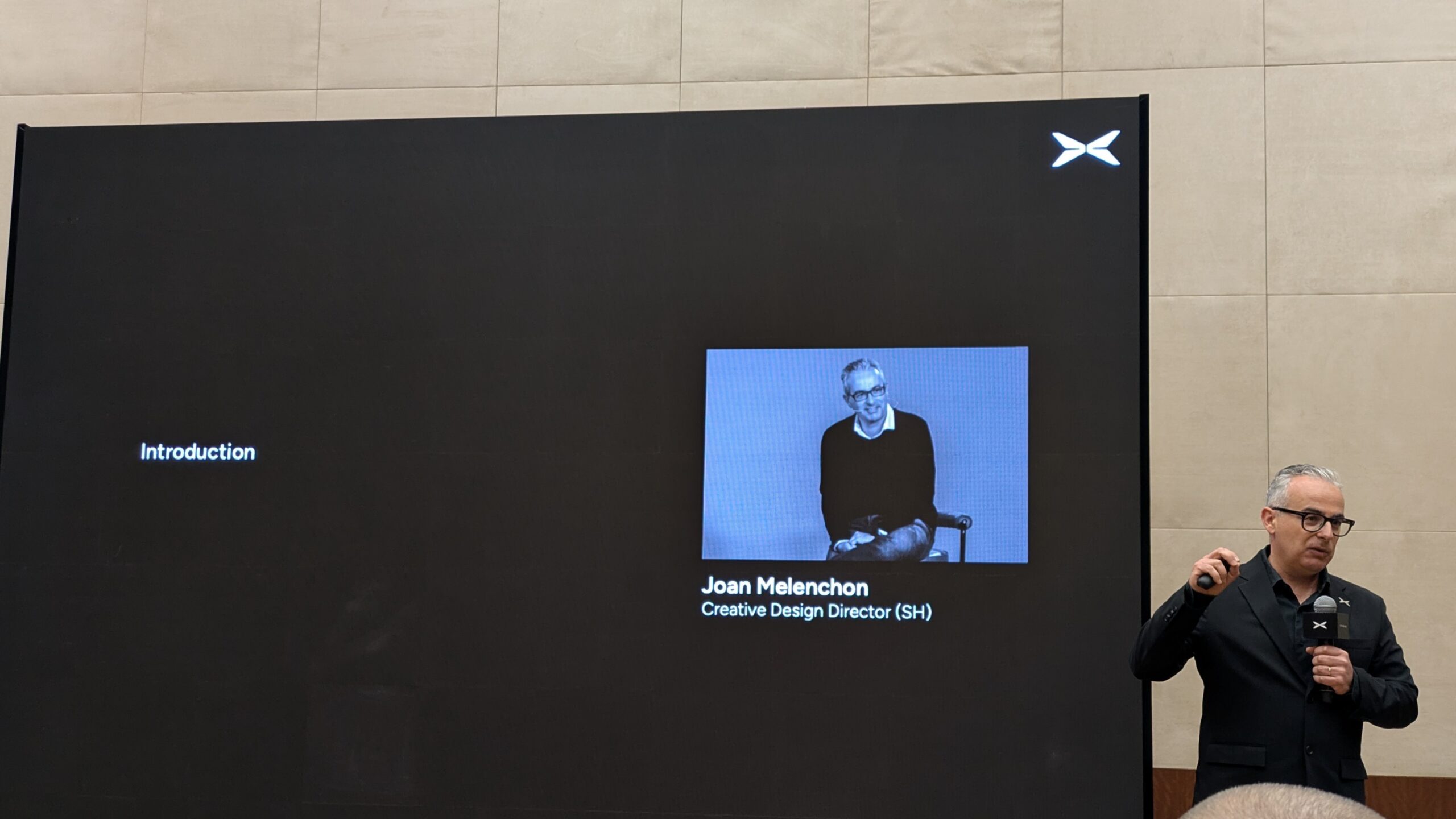
However, AI does not replace the human ability to understand needs and appeal to consumers. It does not replace the ability to judge what makes up a great idea to meet those needs in a market. But AI helps their designers develop products to meet those needs. As Joan Melanchon, Creative Design Director at XPENG, explains:
AI lets you try new ideas. In some ways, it lets you be more human, getting beyond some of the limitations of people who (like me) couldn’t draw or wouldn’t be able to do some of the tasks that would have been a limitation preventing their ideas from coming to fruition…In terms of the design process, what AI tools enable you to do is to move from this, it’s like, if you were a musician, you need your physical ability to play, you need genetic (talent), you need to train, you need years to train. Design is the same. You need years to draw, draw, draw, OK. Now, what AI is doing is taking this step a little bit out, but what a musician or a designer has initially here, this AI cannot replace it.
And this is not only pure style, it’s also how you use the car, which is usability, and how this typology can enable new usability. AI cannot do it. And for that you need people… you could be creative and maybe you don’t have the ability to represent it or to explain it, this AI can do it, but you need to be creative in your brain. There is no physical AI that can replace this nowadays, that’s for sure… what AI does is it gives you thousands of possibilities. And to choose the right one, it’s better for a human to choose it.
The approach does not only make the most of existing employees. It appeals to people who want to engage with the capabilities of AI. Employees who will be better suited for the Ai-enabled workplaces of the future. I can also see their more human approach to AI in the more human-like reasoning of their AI systems, but that is for a future story.
Of course, this is partially one of the privileges of having a young, rapidly growing tech-focused company. They are not faced with the challenge of having numerous employees who resist learning the skills needed to utilize the latest technology. Automation forms an addition to workers, allowing them to expand production capacity as sales increase, rather than as a replacement for workers as sales stall or decline. It will be interesting to see how XPENG approaches these technologies as their company matures, but they certainly seem to have a more human approach to AI and automation.
Challenging Expectations
Seeing firsthand how XPENG treats its employees, it is a dramatic departure from what many people in the US would assume. Seeing how they integrate AI and Automation into the workplace is also far from what many envision.
On my last night in Beijing, I had a conversation with some people I met about the many misconceptions people have in the US. I repeated some of the statements that I have heard people say and they wondered how anyone could be so out of touch. Some people undoubtedly are good-hearted but misinformed, while others are intentionally spreading misinformation.
While China isn’t perfect, it is a dramatic departure from what many people choose to believe. It is also by no means a monolith, with some companies showing global leadership. But there are some stereotypes about China that do have truth behind them:
- Changing Rapidly: The country has changed dramatically in recent years. With rising pay scales, companies are now turning to LATAM, Africa, India, SEA and even some parts of Europe for low industrial wages. Automation has accelerated and working conditions have improved. AI is changing how work gets done in expanding abilities. Perceptions based on just a few years ago no longer hold water.
- Learning and Improving: Chinese companies seek to learn from others and improve upon what they have learned. They do not suffer from the “not invented here” syndrome that can afflict many companies. Many of XPENG’s leadership have been educated or have worked overseas. While this undoubtedly impacts their approach to technology, it also likely impacts how they treat their employees. Many ideas have been used at Western tech companies to attract talent. Those ideas are now being improved upon at XPENG.
- Competitive: People compete for top jobs and companies compete for top talent. AI has the potential to enable people to better live up to their own potential, making them more competitive for future roles. The technology-enabled work environment and the technology being developed at XPENG present a competitive advantage in attracting top talent. It could also make it hard for people to be lured away. I could also see the positive employer reputation leading to some affinity in the competition to attract car buyers.
That said, I am sure that not every Chinese company has working conditions up to the level of XPENG. However, that could also change quickly. If a competing company sees this approach working for a leading, it may try to learn and improve. Competition to become the company that treats its employees the best could intensify as quickly as the competition for the best full-sized SUV EV did this year. I could see XPENG creating new innovations in how it develops employees and how they interact with technology to maintain its leadership position as an employer.
This is not to say that people do not work hard in China or that the hardest working are not rewarded for their work. I have a feeling sometimes that my PR contact Sarah doesn’t get much sleep between all the questions coming in from different time zones. In such a competitive environment, I have no doubt that some will still put in extra hours to get ahead.
XPENG intends to bring its work culture to its growing footprint globally. This will let more people experience what I saw in China. It will also provide additional points of reference on areas where they can further improve, both in adapting to local markets and spreading what they learn throughout their operations. They intend on being a leading employer globally, not just within China.
Overall, XPENG’s approach should be commended. If they are doing something better on social metrics, it should be rewarded. How they treat their employees and use technology can also positively influence purchase consideration. The reality of working conditions should be a reason to buy from a leading Chinese automaker, rather than a barrier. Technology can make work better with the right approach. If another company wants to join the competition to become the best employer as technology evolves, we should all encourage it. That is how progress happens in industries. If customers choose vehicles because of the company behind them, in addition to the merits of the car itself, then they are realizing value on multiple levels. If companies get into a fierce competition for who treats their employees the best while making the most of their talents, that should be something that everyone can support.
Sign up for CleanTechnica's Weekly Substack for Zach and Scott's in-depth analyses and high level summaries, sign up for our daily newsletter, and follow us on Google News! Advertisement Have a tip for CleanTechnica? Want to advertise? Want to suggest a guest for our CleanTech Talk podcast? Contact us here. Sign up for our daily newsletter for 15 new cleantech stories a day. Or sign up for our weekly one on top stories of the week if daily is too frequent. CleanTechnica uses affiliate links. See our policy here.CleanTechnica's Comment Policy
Share this story!
Схожі новини