Xi Jinping Is No Less Dangerous Than Putin – Former Taiwan Presidential Spokesperson on China policy and What Unites Taiwan and Ukraine
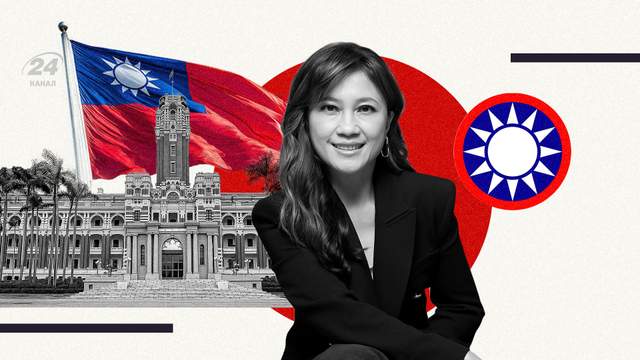
 Kolas Yotaka Taiwan / Collage by 24 Channel
 22 May 2026, 16:40
 26 хв
26 хв
China's ambition to bring Taiwan under its control remains one of the defining geopolitical challenges of the 21st century for the democratic world. In recent years, Beijing has intensified its military threats, as well as its economic and political pressure on Taiwan and its allies.
At the same time, preserving democracy in Taiwan matters deeply for Ukraine too. Both societies face aggressive authoritarian neighbors seeking to interfere in and ultimately undermine their democratic systems.
Kolas Yotaka – a Taiwanese political figure, journalist, and former spokesperson for both the Presidential Office and the Executive Yuan of Taiwan – was among the key speakers at Lviv Media Forum 2026.
24 Channel had a unique opportunity to conduct an exclusive interview discussing the major challenges facing Taiwanese society today, the similarities and differences between Ukraine and Taiwan, and how Taipei manages to build political partnerships with other countries under such difficult conditions.
This material was produced in partnership with Lviv Media Forum 2026. Its featured guests are speakers from this year's conference.
"It's impossible for us not to be a friend of America": How Taiwan Navigates US Relations and China's Pressure
Speaking at LMF-2026 yesterday, you said Taiwan is the key factor in US-China relations. At the same time, American politics has become highly unpredictable, and Ukraine already feels that.
How does Taiwan build its strategy with the United States in a way that avoids becoming too dependent on any particular administration in the White House? And how do you build communication with both Republicans and Democrats?
I think for a country like Taiwan – or Ukraine – I wouldn't call it sad, but it's the reality we have to deal with: it's impossible for us not to be a friend of America, no matter which administration is in power, whether it's Democrats or Republicans.
Because countries like ours – both Ukraine and Taiwan – need allies. We need allies to confront the aggressive neighbor next to us. For Ukraine, it's Russia. For Taiwan, it's China. Even though the US is comparatively unpredictable right now, we still have to find a way to work with them, whether it's diplomatic support or, in Taiwan's case, arms sales. Taiwan has been purchasing a lot of weapons from the US.
 Хочете щодня читати оперативні та якісні новини
Додайте 24 Канал у вибрані в Google
Додати
Хочете щодня читати оперативні та якісні новини
Додайте 24 Канал у вибрані в Google
Додати
That's why people paid so much attention to Xi Jinping and Trump's meeting yesterday. People were talking about it before the meeting and are still talking about it after, commenting constantly, because Taiwanese people are anxious. We don't know what kind of deal Trump might make with Xi Jinping.

Kolas Yotaka speaks during a panel discussion at Lviv Media Forum 2026 / Photo LMF
Even today, before speaking with you, while I was on my way here, I was checking the news to see what Trump's administration had been saying. So far, they have stayed quiet on Taiwan.
Xi Jinping mentioned Taiwan yesterday, but Trump stayed quiet. From Taiwan's point of view, you could say that's better than bad news coming out of the meeting. At least they remained silent. And Marco Rubio, the Secretary of State, made a statement saying the US position on Taiwan is not changing.
So we Taiwanese have to believe that the United States is a democratic country, no matter which party is in power. Whether it's Republicans or Democrats, we have to maintain diplomatic relations with both sides. And we believe that, as a democratic country, the US has to support Taiwan. They have to understand what the right thing to do is if a confrontation between Taiwan and China happens.
I also think Trump's administration has to understand that Xi Jinping is not a good leader.
Xi Jinping is definitely not a good person. Trump has said many times that Xi Jinping is his good friend, that he's a good leader. But actually, he's a frightening person. Americans have to understand that. Just like Putin – he's terrifying. He would bomb Kyiv, like two days ago, just to see people die. Xi Jinping could be even worse. You just don't know. He's a very frightening person. So he is definitely not someone Trump or his administration should call a good leader.
Of course, we understand that America makes deals with China and looks at things from a business perspective. But beyond that, people have rights – especially Taiwanese people. Taiwanese people have the right to continue living in a democratic society. That's what Taiwanese people want.
I also want to ask about how Beijing might view the results of military operations by Russia against Ukraine or the US against Iran. Could these examples influence China's future decisions toward Taiwan? We see military drills around the island, but maybe the outcomes of these wars could also delay or reshape Beijing's calculations.
We always see Russia's invasion of Ukraine as a lesson for Taiwan. Taiwanese people pay a lot of attention to the war in Ukraine because we don't want to see that happen to us. But at the same time, we know it's very possible something similar could happen in the future.
Of course, war is terrible. War is bad for everyone – for Putin, for President Zelenskyy, for Ukrainian people. And war would also be terrible for Taiwanese people, for businessmen, teachers, for everyone. But we have been preparing ourselves for this possibility because Xi Jinping has never stopped saying that Taiwan is part of China. He says we are the same people, the same Chinese people, that we belong together and should return to the "motherland" governed by Xi Jinping. But that is completely false.
I feel Putin is using the same narrative toward Ukraine that Xi Jinping uses toward Taiwan. Xi Jinping says Taiwan is part of China. Putin says Ukraine is part of Russia. Xi Jinping says Taiwanese people are Chinese people. Putin says Ukrainians are Russians.
Of course the ability of Ukrainians to resist Russian aggression has had an effect on China's calculations. The fight for Ukrainian democracy is the same fight Taiwan is facing. They are deeply connected, we know Russia and China are working together. So we need Ukraine to succeed. Every democratic society should see this clearly, not only Taiwan.
Regarding the situation in Iran, we have seen the effect it is having on the global economy, and the result from an attack on Taiwan would be much worse. So it is in everyone's interest to deter China from creating a crisis in the Taiwan Strait.
As you probably know, Putin even wrote the article "On the Historical Unity of Russians and Ukrainians" shortly before the full-scale invasion.
Exactly. And Xi Jinping just passed a very frightening law in March that will come into effect on July 1. It's some kind of "Ethnic Unity and Progress Promotion Law" – about Chinese people being united and strong together. Under this law, anyone can accuse another person of not recognizing China as their country.
For example, if I say, "No, I'm not Chinese, I'm Taiwanese," someone who hears me can report me to the authorities. They could arrest me, put me in jail, sentence me, make me a criminal – just because of what I think and say, not because of something I did. Simply saying, "I'm not Chinese" or "I don't love China" could become enough to send someone to prison once this law takes effect on July 1. It's very frightening.

Taiwan remains a key factor in US-China relations / Photo LMF
And Xi Jinping – yes, you can see him smiling and shaking hands with Trump – but that's not who he really is. So of course we understand that Putin has been using the same methods against Ukrainians, and in the end he invaded and bombed Ukraine.
Taiwanese people are very careful and cautious about this. We watch Ukraine fight, but we also see how much Ukrainians are suffering because of the war.
Just now, at a restaurant where I was having brunch, I saw a man who had lost his leg trying to walk in and get a cup of coffee. On the one hand, I am deeply touched by how brilliant, resilient and strong Ukrainian people are. But at the same time, I feel sadness and sympathy seeing all of this. How could this happen just because of Putin's ambitions toward Ukraine? So for us, this is a very important lesson.
What we learn from Ukraine is resilience. We can hardly imagine the kind of life Ukrainians have been forced to live through. Four years is a very long time. And the strength of will and resilience Ukrainian people have shown is truly amazing.
Why Don't Taiwan's Partners Officially Recognize Its Independence?
Thank you. During your time working in the presidential office, what was the most difficult part of dealing with international politics and working with partners and allies? Did anything surprise you about how democracies in Europe, the US or elsewhere make decisions, especially during moments of crisis?
There is a good part, and there is also a sad part.
The good part is that we are able to talk to and build friendships with many democratic countries in America and Europe.
But the depressing and disappointing part is that even though they shake hands with you, the next moment, when talking about Taiwan, they still say they follow the "One China" policy.
Background: The "One China" policy is promoted as one of the core principles of the People's Republic of China's foreign policy. It holds that there is only "one China," and that Taiwan is an inseparable part of Chinese territory governed from Beijing.
As a result, countries that maintain close diplomatic relations with China usually do not officially recognize Taiwan as an independent state. Some countries – most notably the United States – instead maintain close unofficial ties with Taiwan, including economic cooperation and, most importantly, security and military cooperation. This is precisely what makes Taiwan one of the most sensitive geopolitical flashpoints in the modern world.

Taiwan has 112 official representative offices and embassies around the world – Ukraine is still absent from that list / Wikimedia
They may want to do business with you, but when it comes to sovereignty or the independence of a country, many of them still go along with China and describe Taiwan as a province of China. So this creates a dilemma, a very awkward situation that we constantly have to face.
But we cannot give up. We have to keep moving forward every single day. And we hope that one day the Taiwanese people will be able to say clearly that we are not part of anyone else – we are ourselves, Taiwan is Taiwan.
So when you shake hands or build friendships with different countries, you carry these very mixed and complicated feelings. In the end, they often cannot do as much as you hoped they would. But little by little, we are still making progress.
We also see Beijing constantly trying to isolate Taiwan through diplomatic and economic pressure. In this situation, how important is public communication – not only with politicians and elites, but directly with ordinary people as well?
You mean from my perspective as a spokesperson? Or from the government's point of view?
Government's, i want to ask how does Taiwan explain to people why they should support you despite pressure from China
We do have official public communication channels to speak with people because there is a huge amount of fake news. Even when China threatens Taiwan, many different versions of misinformation start spreading. So people look to the government for answers. Thank God many people still trust the government – not everyone, of course.
We have government spokespersons who communicate with the public, clarify different issues and explain our policies against Chinese propaganda and influence campaigns. I think most Taiwanese people still trust the government, so they want to hear what the government has to say.
In that sense, we are not doing too badly. But misinformation remains a very serious problem. We still haven't fully figured out how to deal with it because it's extremely difficult.

Taiwan has pro-China political forces in parliament, including the Kuomintang party / Photo LMF
There are too many Chinese proxies in Taiwan and too many people who effectively represent Chinese interests there. They spread misinformation on behalf of China.
Some of them may even be elected politicians, members of parliament, businessmen or students. And sometimes you don't know who they are because Taiwan is a democratic country. We do not suppress freedom of speech. We cannot monitor everyone's Facebook account or WhatsApp messages to see what they are spreading.
Taiwan is not a police state like that. And because of this, sometimes our democracy creates loopholes that hostile actors can use to attack Taiwan. We are still trying to solve this problem.
As a government spokesperson, I don't think we can completely prevent this from happening. But what we can do is continue giving the public accurate information.
And do you also try to work with Chinese society itself? To be honest, Ukraine has also tried to work with Russian society, but it didn't really work. Maybe Taiwan has a different experience.
You mean ordinary Chinese citizens?
Yes. Do you try to explain to them how things actually work?
No, because their access to information is blocked. They cannot freely use Google or Facebook. So we don't really have channels to communicate with them directly.
But we do have one radio station – Radio Taiwan International. In fact, they are here with me today. They can do a little bit.
China is huge, but in some eastern and southern coastal regions, people can sometimes hear our radio broadcasts. So Radio Taiwan International tries to speak to Chinese people in that way. But the reach is very limited.
What Taiwan and Ukraine Have in Common – and Where They Differ
Ukraine and Taiwan are often compared in discussions about defending democracies under pressure from authoritarian regimes. Which similarities between our societies do you think are real, and which comparisons can actually be misleading?
The similarity is that both of us are facing threats, and both of us consider ourselves democracies.
From my understanding, Ukrainian people want to be part of Europe and the European Union. You want democracy. You do not want to go back to something like the Soviet Union under Putin. That is frightening.
It's similar for Taiwan. We do not want to become part of communist China. Actually, I shouldn't even say "go back," because Taiwan has never been communist. We simply do not want to become part of China.
I think both Ukrainians and Taiwanese have become very cautious because we have lived under threats from authoritarian regimes for decades.

Kolas Yotaka met Ukrainian soldiers near Lviv's railway station / Photo from Kolas Yotaka's Facebook page
And despite these pressures, both of our societies are still trying to move forward economically, culturally and socially. We are trying to become stronger countries. That is a real similarity between us.
The difference, however, is probably Taiwan's weakest point: not many countries officially recognize Taiwan as an independent and sovereign state. That is a major problem for us. At least Ukraine is internationally recognized as a country. Ukrainians have their own strong voice in Europe, and even NATO has to pay attention to Ukraine.
There is also a geographical difference. Ukraine is a large continental country, while Taiwan is an island. In terms of war and defense, that creates very different strategies and very different types of confrontation.
So I think those are the main similarities and differences.
Схожі новини