Will the Iran war end supremacy of Strait of Hormuz?
Four decades ago, the Strait of Hormuz revealed its deadly vulnerability to the global oil market. During the 1980 to 1988 Iran-Iraq war, both sides repeatedly targeted oil tankers in the strait, turning one of the world’s most vital crude arteries into a floating battlefield.
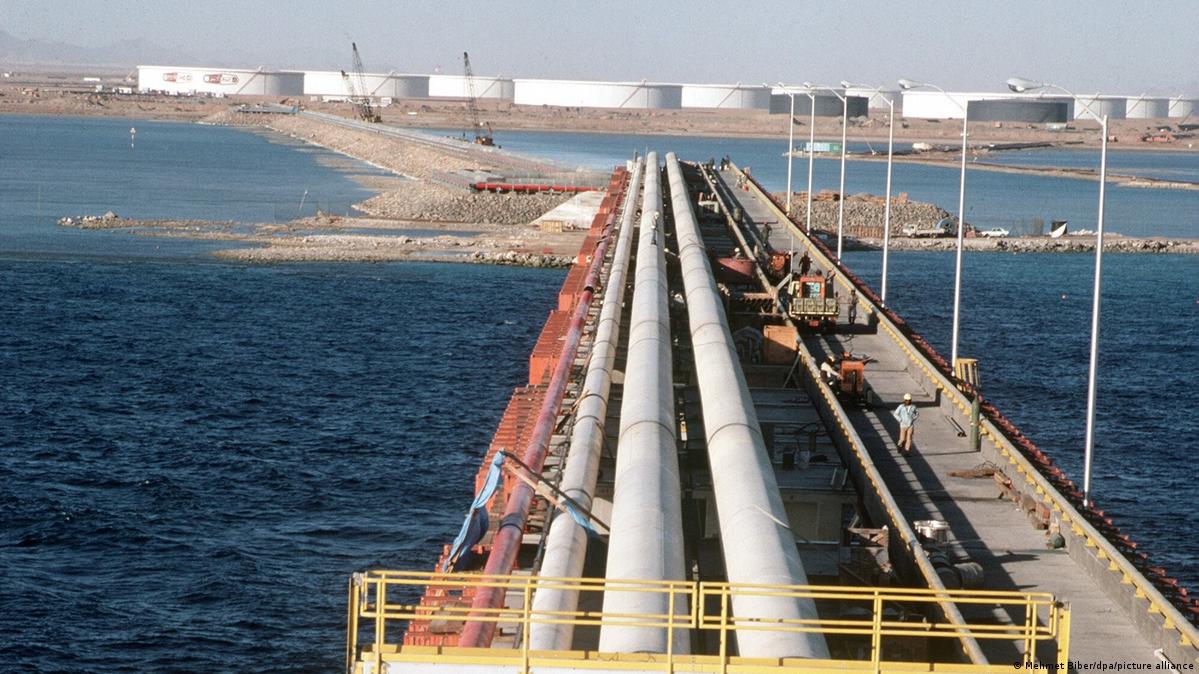
Saudi Arabia reacted by building the East-West Pipeline across its vast desert peninsula to the Red Sea port of Yanbu. Years later, the United Arab Emirates (UAE) followed suit with the Habshan–Fujairah pipeline from Abu Dhabi emirate to the Gulf of Oman.
Hormuz’s vulnerability came roaring back in late February when the US-Israel war with Iran broke out. Tehran made good on its longstanding promise to close the strait if it were ever attacked. The move stranded hundreds of oil and gas tankers, choking off around a fifth of the world's energy supply.
Attention is now turning to derisking Hormuz, to ensure that the narrow waterway can never again be weaponized the same way. The energy market is relying on other oil producers to ramp up output, while global powers such as China, India and the European Union, alongside environmental groups, are urging faster investments in renewable energy.
Iran seizes 2 container ships in Strait of Hormuz
To view this video please enable JavaScript, and consider upgrading to a web browser that supports HTML5 video
Gulf states race to bypass Hormuz
Gulf leaders, meanwhile, are moving ahead with plans that will allow more of their crude to bypass the strait entirely and help to secure exports long term.
Earlier this month, the Financial Times reported that Saudi Arabia, the UAE and others were actively considering new oil pipelines to run parallel with existing structures, along with expanded export terminals on alternative coastlines.
Landon Derentz, senior director of the Global Energy Center at the Atlantic Council think tank, called for the Trump administration to back the new projects with US funding.
"Instead of forcing ships through the chokepoint, the United States and its partners should rapidly build around it," he wrote in a recent dispatch. "Saudi Arabia ... has already proven that bypass infrastructure can relieve part of the bottleneck… That model should now be scaled dramatically."
The existing 1,200-kilometer (746-mile) Saudi pipeline is already running at maximum capacity of 7 million barrels per day (bpd), up from 5 million before the war, while the UAE is piping another 1.8 million bpd to its Fujairah port.
Saudi, UAE need to 'double' pipeline capacity
While these measures are providing a buffer to global oil markets, the scale of the challenge is clear to Robin Mills, CEO of Qamar Energy, a leading Dubai-based consultancy specializing in Middle East energy strategy and geopolitics.
"Before the war, about 15 million barrels per day of crude went through the strait," Mills told DW. "You would need to double [current pipeline capacity] to get all of the original crude exports out."
The FT cited officials and energy experts as saying that even though new pipelines are expensive, time-consuming and sometimes politically complex, they may be the only way Gulf states can reduce their vulnerability to future disruption.
Mills said many of these bypass plans had been afoot for years. But those involving multiple countries had stalled due to distance, cost and regional rivalries.
No way around Hormuz for some
“The new Saudi or UAE routes could proceed almost immediately and take a couple of years to build," Mills told DW. Kuwait, Bahrain and Qatar face a big geographical problem, he added, as they have no alternative coastlines and almost all their hydrocarbon exports transit Hormuz.
"They would most likely have to go through Saudi Arabia or Iran, which means long pipelines and complicated political negotiations, which would take a minimum of three to four years — probably longer."
Beyond the Gulf states, international organizations are also pushing for wider regional solutions as part of the broader derisking effort. The International Energy Agency (IEA) is calling for a major new pipeline from Iraq to Turkey's Mediterranean port of Ceyhan.
IEA Executive Director Fatih Birol told Turkish newspaper Hurriyet last week that the "extremely attractive" project would boost energy security, "especially from Europe's perspective," and that the "financing issue can be overcome."
What does Trump's Iran ceasefire extension mean for peace?
To view this video please enable JavaScript, and consider upgrading to a web browser that supports HTML5 video
Iraq accelerates Western pipeline push
Iraq's existing export pipeline from the northern Kirkuk region to Turkey was built in the 1970s and was restarted last September after a two-and-a-half-year shutdown. It is now pumping up to 250,000 barrels per day.
The Hormuz crisis has also given fresh momentum to other western routes. Earlier this month, the Iraqi government advanced the $4.6 billion Basra–Haditha segment, running from the south toward the Syrian border, to the bidding stage.
This 685-kilometer line is seen as the critical first leg that could later extend to Jordan’s Red Sea port of Aqaba or possibly Syria or Turkey. If approved, it would have the capacity to deliver up to 3 million bpd in phases.
Iraq has additionally been considering a separate pipeline to Oman’s port of Duqm on the Gulf of Oman, with initial talks announced in September.
Overland routes gain momentum
Aside from pipelines, Gulf countries already have concrete plans to expand the limited rail and road networks connecting Gulf states to help smooth the export of non-crude freight. The flagship GCC (Gulf Cooperation Council) Railway aims to deliver a 2,100-kilometer integrated network across all six GCC states by 2030.
The UAE's rail network, operated by Etihad Rail, has ramped up freight services during the war to shift containers away from vulnerable Gulf ports toward safer eastern outlets. Saudi Arabia has also increased capacity on its rail network and launched new freight routes for stranded cargo.
Although these efforts cannot replace the massive cargoes carried by tankers, they are already easing pressure on supply chains. Experts believe they will now be essential insurance against future weaponization of the strait.
Backed by vast energy wealth, Gulf states certainly have the financial power to turn these projects into reality. Whether they can muster the political will to clear the remaining hurdles will determine if this crisis marks the beginning of the end of the Strait of Hormuz's stranglehold on global energy.
Edited by: Srinivas Mazumdaru
AdvertisementСхожі новини

‘Stealing from a family-run business’: Truck driver nabs $3,000 worth of fuel in Sydney
Japan lifts advisory a week after magnitude 7.7 quake

World’s hottest cities: India transforms into a scorching furnace with cities shockingly hitting 46°C