Why Trump’s latest demand for Iran peace deal is fastest way to kill hope of progress
Trying to hammer out a sustainable peace deal between the US, Israel, Lebanon and Iran is already an impossibly hard task. Despite the fact it is needed to bring the world back from the brink.
But Donald Trump’s decision to abruptly add a caveat that a slew of Muslim-majority countries must also sign the Abraham Accords (diplomatic deals with Israel) as a “mandatory” peace condition for an Iran plan is dangerous and unnecessary.
Particularly as the countries in question have had this war forced on them. They include Pakistan – the peace broker that has already categorically rejected the suggestion – as well as Saudi Arabia and Qatar, which host US bases and so have come under Iranian missile fire.
 open image in gallery
It is no exaggeration to say the lives of millions of people, the future of the global economy, the security of the region and the world depend on an Iran peace deal.
We have all experienced the financial impact of this senseless conflict, which has stretched across 13 countries, killed more than 6,000 people and, with the blockade on the Strait of Hormuz, caused the biggest disruption to global energy supplies in history.
Despite all of us dealing with a surge in the cost of living and volatile markets, the true impact has yet to be felt, according to the International Energy Agency, which said full repercussions won’t kick in until the end of the year.
Just last week, Yvette Cooper, echoing warnings from the United Nations, said that the world is “sleepwalking into a global food crisis”. Tens of millions of people are going to go hungry if the Strait of Hormuz continues to be closed by Iran (and in part by the US) and fertiliser does not get to farmers.
We do not yet know the butterfly effect of this conflict. And we do not want to.
So what is going on?
The war in Iran is not popular in the US. Last week, The New York Times/Siena poll showed that two-thirds of voters believe Trump’s decision to go to war with Iran was the wrong one.
This has had a significant impact on Trump’s approval rating, a key historical predictor of how a president’s party will fare in an election. It sank to a second-term low of 37 per cent, according to the same poll, just a few months ahead of critical midterms.
 open image in gallery
Trump, who campaigned as the president of peacemaking, who regularly boasts of resolving “eight wars”, and who has made no secret of his desire for a Nobel Peace Prize, needs a win in that department.
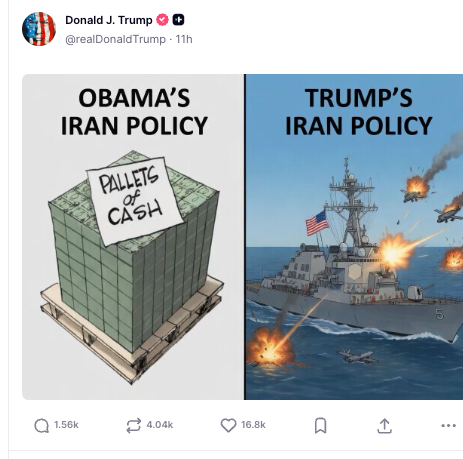
Managing to secure an Iran deal, which he will sell as a win no matter the cost, alongside more Abraham Accords sign-ons, would no doubt be a spectacular way to get his reputation back on track with his support base.
The problem is that it is impossible, and will see further delays and possible conflict on the horizon.
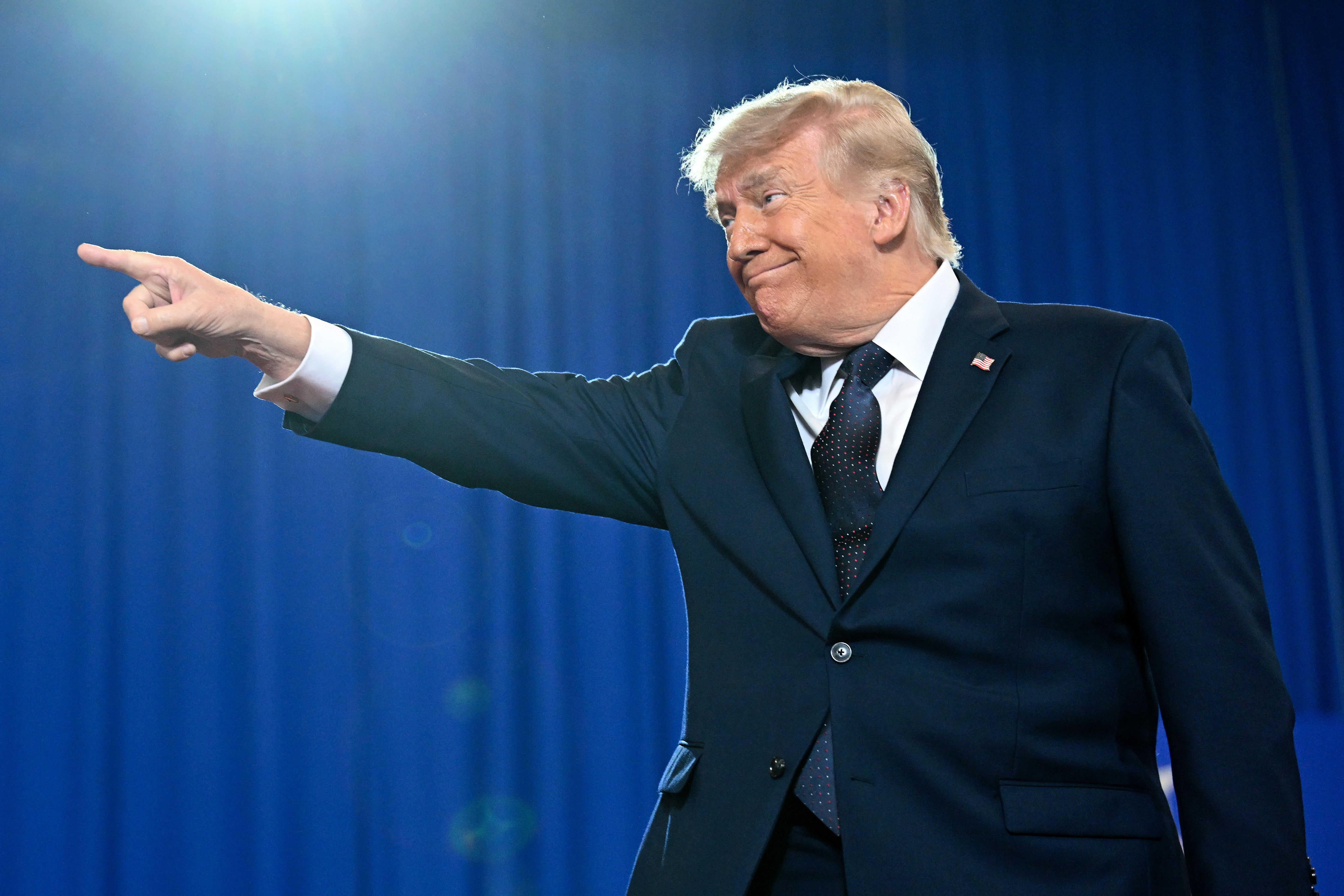
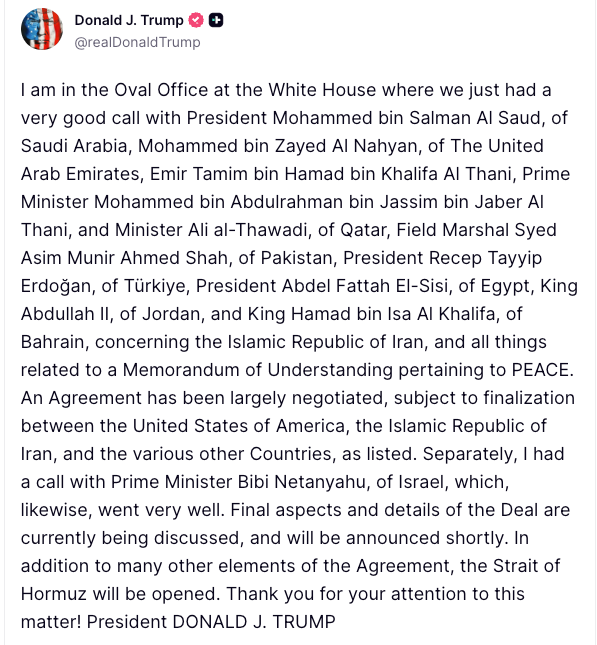
On Monday, Donald Trump posted on Truth Social that during discussions on an Iran truce, he told the leaders of Saudi Arabia, the UAE, Qatar, Pakistan, Turkey, Egypt, Jordan and Bahrain that, “at a minimum”, these countries must sign onto the Abraham Accords first. “It should be mandatory,” he added.
The UAE and Bahrain, which have never formally been at war with Israel, already did that six years ago, recognising Israel and opening lucrative diplomatic, tourism, security, arms and trade deals amounting to billions of dollars according to Israeli statistics.
Former US president Joe Biden had hoped to get Saudi Arabia to follow suit by the end of 2023.
 open image in gallery
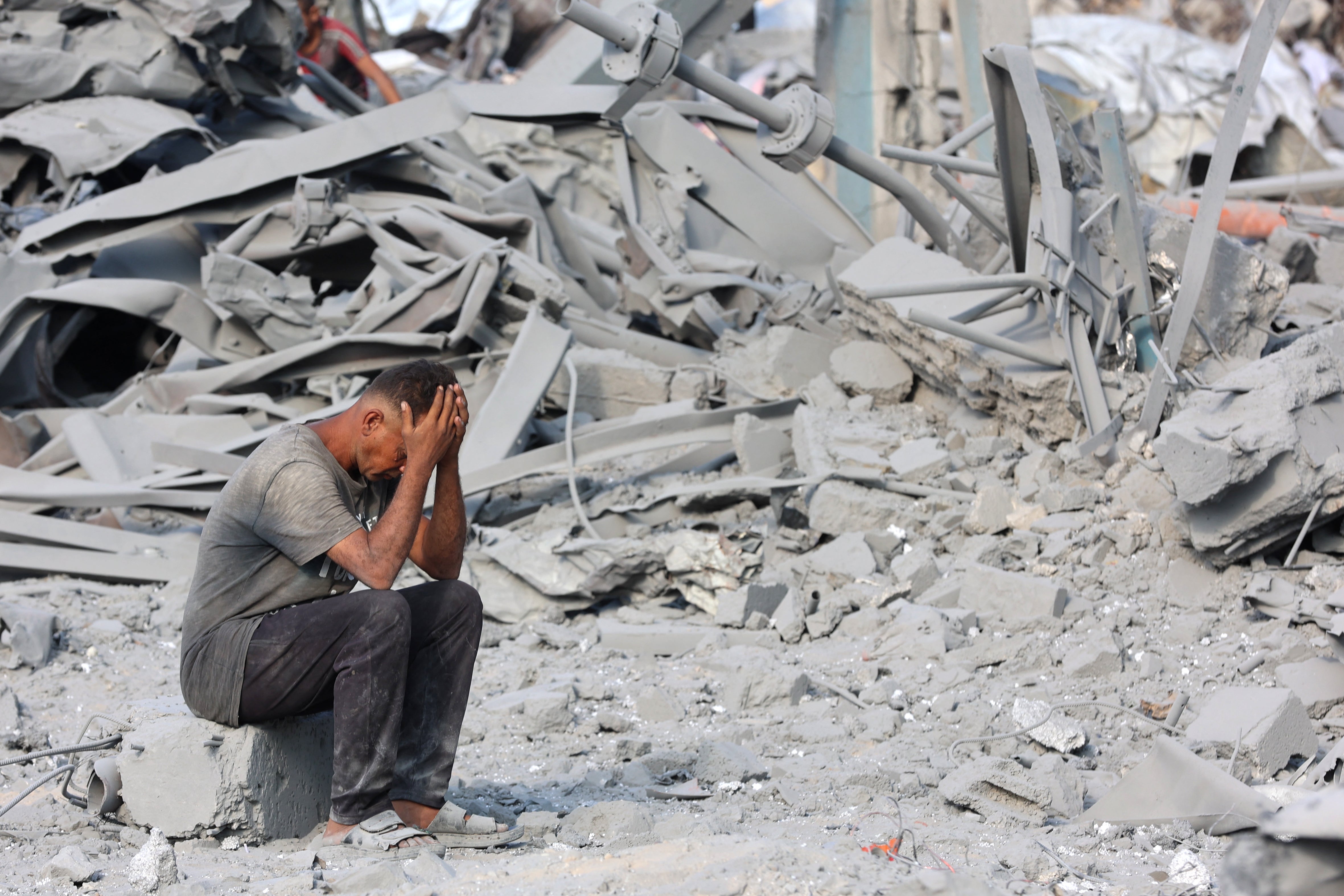
Any hope was immediately upended by Hamas’s bloody 7 October 2023 attacks on Israel, which killed more than 1,200 Israelis and foreign nationals and Israel’s subsequent unprecedented bombardment of Gaza, which killed more than 70,000 Palestinians, and displaced nearly two million people.
Israel’s attacks on Gaza are so grave, UN experts have said it amounts to a genocide (something Israel denies) and warned that Israel has escalated its “campaign of ethnic cleansing and annexation” in the occupied West Bank. (Again, something Israel has denied).
Riyadh and others have repeatedly made recognition of Israel conditional on the establishment of a Palestinian state with East Jerusalem as its capital.
Benjamin Netanyahu’s extreme-right government has made it abundantly clear that there will be no Palestinian state. Senior members of his cabinet, including National Security Minister Itamar Ben Gvir, are instead making the de facto annexation of the West Bank into a de jure one.
The war on Gaza and the assault on the occupied West Bank have already pushed the existing Abraham Accords to the point of collapse: countries like the UAE have faced significant pressure to pull out of them.
By tying a messy deal involving Iran, Israel, the US and Lebanon to the expansion of the already-flailing Abraham Accords among another half dozen countries, Trump is adding a layer of impossible and dangerous complexity that could end all hopes of resolving any conflict. And possibly even spark new ones.
 open image in gallery
The Iran truce is already complicated enough on its own. Visions for the future, including who will control the Strait of Hormuz and what will become of Iran’s nuclear programme and leadership, are existentially opposed.
We saw Iran deal negotiations were already almost completely upended by Israel’s continued assault on Lebanon and war with Lebanon’s militant group Hezbollah. That was nominally addressed by a barely existent truce, which is not really holding. Right now, there are concerns over a permanent expansion of Israel’s borders into Lebanese sovereign territory, alongside fears of civil conflict within fractured Lebanon.
There were further fears of escalation on Tuesday after heated exchanges between the US and Iran, which accused Washington of violating the existing ceasefire with strikes in Iran’s southern Hormozgan province.
Throwing in sudden impossible curveballs means more war on the horizon.
And everything is at stake.
Join our commenting forum
Join thought-provoking conversations, follow other Independent readers and see their replies
CommentsСхожі новини

'Are you from India?': Viral video shows random racist attack on couple in US, they don't lose calm

iPhone 17 Pro price drops to lowest: Details inside

Scorching Paris heat? Coco Gauff keeps it quick for fans at Roland Garros