Who is Ahmad Vahidi, Interpol-wanted IRGC general and key Iranian war strategist?

 Facebook
 Twitter
 Flipboard
 Send
Send
 Reddit
 Linkedin
 Messenger
 Telegram
 VK
VK
 Bluesky
 Threads
 Whatsapp
Ahmad Vahidi, deputy IRGC commander and the man Argentina formally accused of planning the 1994 Buenos Aires bombing that killed 85 people, has emerged as the key figure in organising Tehran's military response and partaking in back-channel negotiations with regional mediators.
Ahmad Vahidi, one of the most senior figures in the Islamic Revolutionary Guard Corps (IRGC), has emerged as a key player in shaping Tehran's posture toward the US since the war began in February — and may now be the main point of contact for the regional mediators trying to end it.
 ADVERTISEMENT
ADVERTISEMENT
ADVERTISEMENT
Holding the rank of a brigadier general, Vahidi currently serves as deputy commander-in-chief of the IRGC.
Analysts believe he belongs to the small inner circle in direct contact with Mojtaba Khamenei, who has not appeared in public since Israeli and US strikes on his residence on 28 February.
According to the Washington-based Institute for the Study of War, "Vahidi and his inner circle have brought not only Iran's military response but also the country's negotiating strategy under their control."
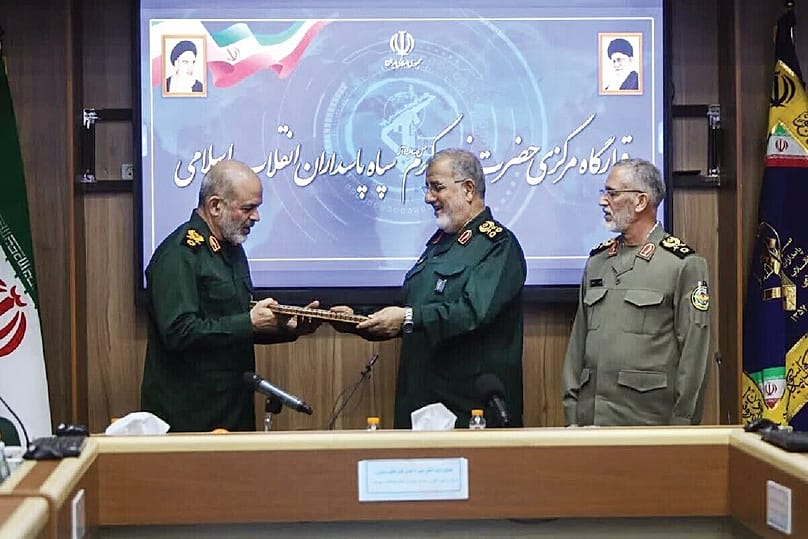
On Thursday, several outlets reported that Vahidi had met Pakistan's Interior Minister Mohsin Naqvi to receive a message from Washington regarding ongoing negotiations.
Iranian state-run broadcaster IRIB quickly denied the reports, saying no such meeting had taken place and that the photographs circulating online dated from 2024, when Vahidi was serving as interior minister under the late President Ebrahim Raisi.
From Buenos Aires to the Strait of Hormuz
Born in 1958 in Shiraz under the name Vahid Shahcheraghi, Vahidi joined the IRGC in 1980.
During the Iran-Iraq War he worked in military intelligence and helped establish the IRGC's intelligence operations unit.
In 1988 he was appointed the first commander of the Quds Force, the Guards' elite overseas operations arm.
The Quds Force was responsible for training, equipping and financing Iran's network of proxy groups across the Middle East, including Hezbollah in Lebanon, Hamas in Gaza and Shia militias in Iraq.
He held the post until 1997, when he was succeeded by Major General Qassem Soleimani, who would lead the force until his killing in a US drone strike in Baghdad in January 2020.
Vahidi's name is linked to the 1994 bombing of the AMIA Jewish community centre in Buenos Aires.
The attack killed 85 people and wounded more than 300, making it the deadliest antisemitic attack in the Western Hemisphere since World War II.
Argentina's prosecutor formally named Vahidi as one of the planners and he has been on Interpol's Red Notice list ever since, which has significantly restricted his ability to travel abroad. Iran has consistently denied any involvement in the attack.
Minister's 'golden age'
Under President Mahmoud Ahmadinejad, Vahidi served as defence minister from 2009 to 2013, focusing on domestic production of missiles and drones.
IRGC-affiliated Fars News Agency described that period as "the golden age of Iran's defensive deterrence."
He subsequently headed the Supreme National Defence University before being appointed interior minister under President Ebrahim Raisi in 2021.
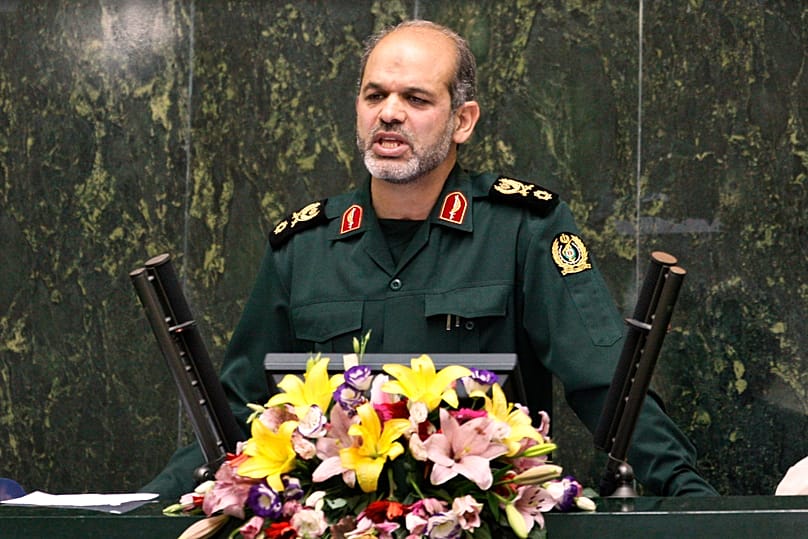
In that role, he oversaw the security forces during the crackdown on protests that erupted across Iran following the death of Mahsa Amini in September 2022.
Amini, a 22-year-old Kurdish-Iranian woman, died in custody after being detained by the morality police for allegedly violating Iran's mandatory hijab law.
The protests that followed were the largest in the Islamic Republic's history, sparking Tehran regime's pushback. Human rights groups documented the killing of more than 500 protesters by security forces in the crackdown on the demonstrations.
Vahidi at the time described pressure on Iran's dress code as "a colonial plot" by the country's enemies.
Hardline conservative negotiator
Politically, Vahidi belongs to the hardline conservative "principlist" camp and has consistently advocated military self-sufficiency and distrust of Western engagement.
Iran's current strategy, shaped in part by Vahidi's influence, rests on two pillars: maintaining control over the Strait of Hormuz to create energy market pressure on the West, and refusing US demands to hand over Iran's enriched uranium stockpiles.
Diplomatic efforts have so far failed to produce an agreement. Talks in April in Islamabad between Iranian parliament speaker Mohammad Bagher Ghalibaf and US Vice-President JD Vance ended without result.
RelatedGhalibaf and Foreign Minister Abbas Araghchi returned to Tehran to sharp criticism from hardliners who accused them of offering concessions.
Vahidi's reported emergence as a back-channel interlocutor with regional mediators has drawn close attention, although Thursday's reports of a meeting with Pakistan remain unverified.
Go to accessibility shortcuts Share CommentsRead more
Tehran politicians are holding back military from striking US fleet, Iranian MP tells Euronews
Tehran's tiered internet leaves most Iranians in the dark 82 days on
Iranian TV teaches viewers to shoot as IRGC ramps up child recruitment
Схожі новини
Saudi Arabia: 1.5 million join Hajj pilgrimage despite war
Saudi Arabia: 1.5 million join Hajj pilgrimage despite war

Журналістів Руденко і Ткача відзначили премією Ґонґадзе. ФОТОрепортаж