Where problems started with 2026 rules and calendar congestion - F1 Q&A
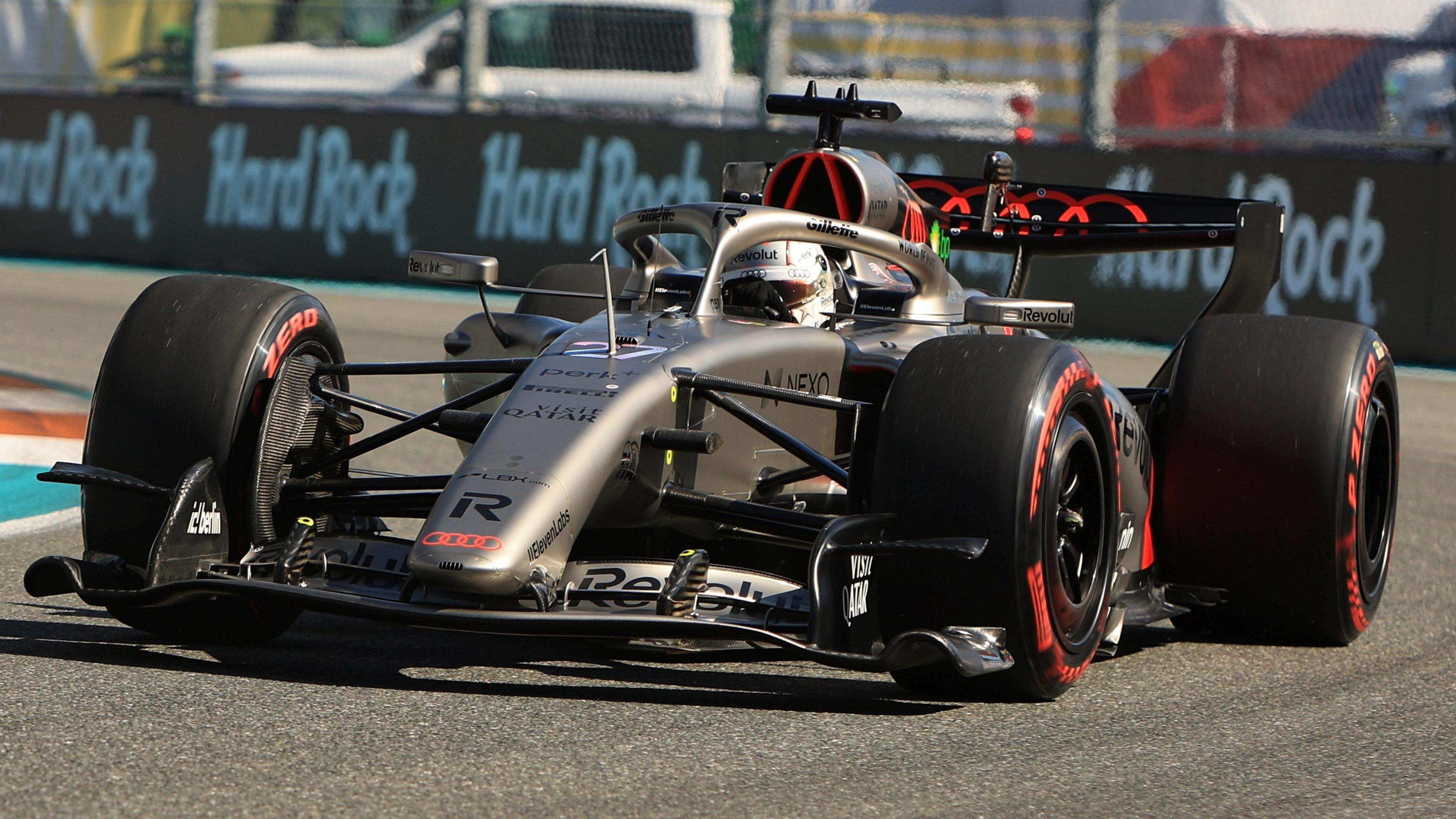 Image source, Getty Images
Audi were enticed to enter a works F1 team by the engine rules introduced this year, believing the increased effect of the electrical part of the engine was an important marketing point for their road-car portfolio
- Published7 minutes ago
Rule changes have continued to be a big focus in Formula 1, with the previous race in Miami the first since a series of tweaks designed to address concerns about the 2026 engine regulations.
Since then, F1 bosses have agreed to further changes to engine design for the 2027 season.
With plenty to talk about, BBC F1 correspondent Andrew Benson answers your latest questions.
How did the people who run F1 make such a mistake when implementing the new regulations? Having watched F1 for decades, this is the worst regulation change I can remember. - Michael
Before answering this question directly, it's important to point out that not everyone views the new rules in such a negative way.
There is an acceptance in F1 that qualifying has been significantly negatively affected, in terms of the driving experience of being on the limit.
Efforts have already been made to address that up to a point this year, and larger steps are in the making for next year.
At the same time, most senior figures in F1 - including some of the drivers - agree that there has been a positive effect on the racing, even if some of the increased number of overtakes that have been seen can be argued to be artificial and down to offsets between states of charge.
TV figures over the first three races were up by more than 20% - all three of Australia, China and Japan had significant increases. Miami's are not available yet.
Now, as for the genesis of the new regulations, the target when talks started five or so years ago was to attract more manufacturers.
At the time, the direction of road-car technology was firmly electric, so it was decided in concert with the manufacturers to increase the amount of electrification.
A nominal 50-50 split between internal combustion and electric was agreed. Fully sustainable, carbon-neutral fuels were added for further environmental credibility.
The MGU-H, a part of the hybrid system that recovered energy from the turbo, was removed. The reasoning being it was complex and expensive - and therefore hard for new manufacturers to compete with existing ones - and not road relevant.
Following the announcement of those rules, first Audi committed to F1. Soon afterwards, Ford and General Motors did the same, and Honda reversed its decision to quit.
Had the rules not changed, F1 now would have a maximum of three manufacturers or possibly only two, Mercedes and Ferrari, if Renault had gone ahead with its withdrawal.
Instead, it has six.
The problems started when the teams started to look at what a near 50-50 energy split with an engine devoid of an MGU-H meant in terms of operating the cars.
Very early on, at least by 2023, there were warnings that the cars would be energy starved.
Energy recovery from the front axle could have solved this, but this was rejected on the basis that it could give Audi an advantage as it had experience in it from world endurance racing.
The result was a series of sticking-plaster solutions - such as active aerodynamics - that only tickled with the fundamental problem.
It's hard to get a definitive answer as to why someone in authority did not ask everyone to stop, step back for a minute, look at the big picture, and ask whether the 50-50 split was really so important. And whether the sport should change tack. Clearly, that was a failure.
So now the rules have to be amended. And solutions that could have been introduced before 2026 - such as altering the energy split and making it more in favour of the internal combustion engine - are now likely to be introduced for 2027.
Parallel to that, talks are now ongoing on what comes next - from either 2030 or 2031.
The trajectory of road cars has changed. Electrification is still coming, but - it seems - not to the same degree or at the same speed as was thought five or so years ago.
In F1, a reversal away from electrification to some degree is inevitable. But how much remains to be seen.
A naturally aspirated engine - most likely a V8 - with token hybrid is being pushed by FIA president Mohammed Ben Sulayem.
But for various reasons that exact solution may not be acceptable to all stakeholders, nor the panacea its proponents claim. Negotiations are ongoing.
F1 bosses agree to engine design change for 2027
- Published3 days ago
Chequered Flag Extra: Hamilton's Drive For Opportunity In F1
Now that Alpine are best of the rest, does that show how dominant the Mercedes engine is rather than Alpine's progress? - Emily
The answer is a combination of both.
There is widespread agreement that the Mercedes engine is the best in F1 this year so far - although other power-units have strong points, such as the responsiveness off the line of the Ferrari.
But while Mercedes have won every race, Williams also have a Mercedes engine, and have gone backwards significantly.
So it's clear Alpine have made progress compared with last year - and so they should, as they invested a lot in 2026, to the extent of using a year-old chassis in 2025 and barely developing the car at all.
It's hard to be sure how much of that progress is car and how much engine.
This may become clearer when the FIA publishes its conclusions in terms of relative engine performance, and which manufacturers are allowed additional upgrade allowance, although these only deal with the performance of the internal combustion engine, and not the electrical systems.
But that should take nothing away from the fact that Alpine have made a significant step forward as a team.
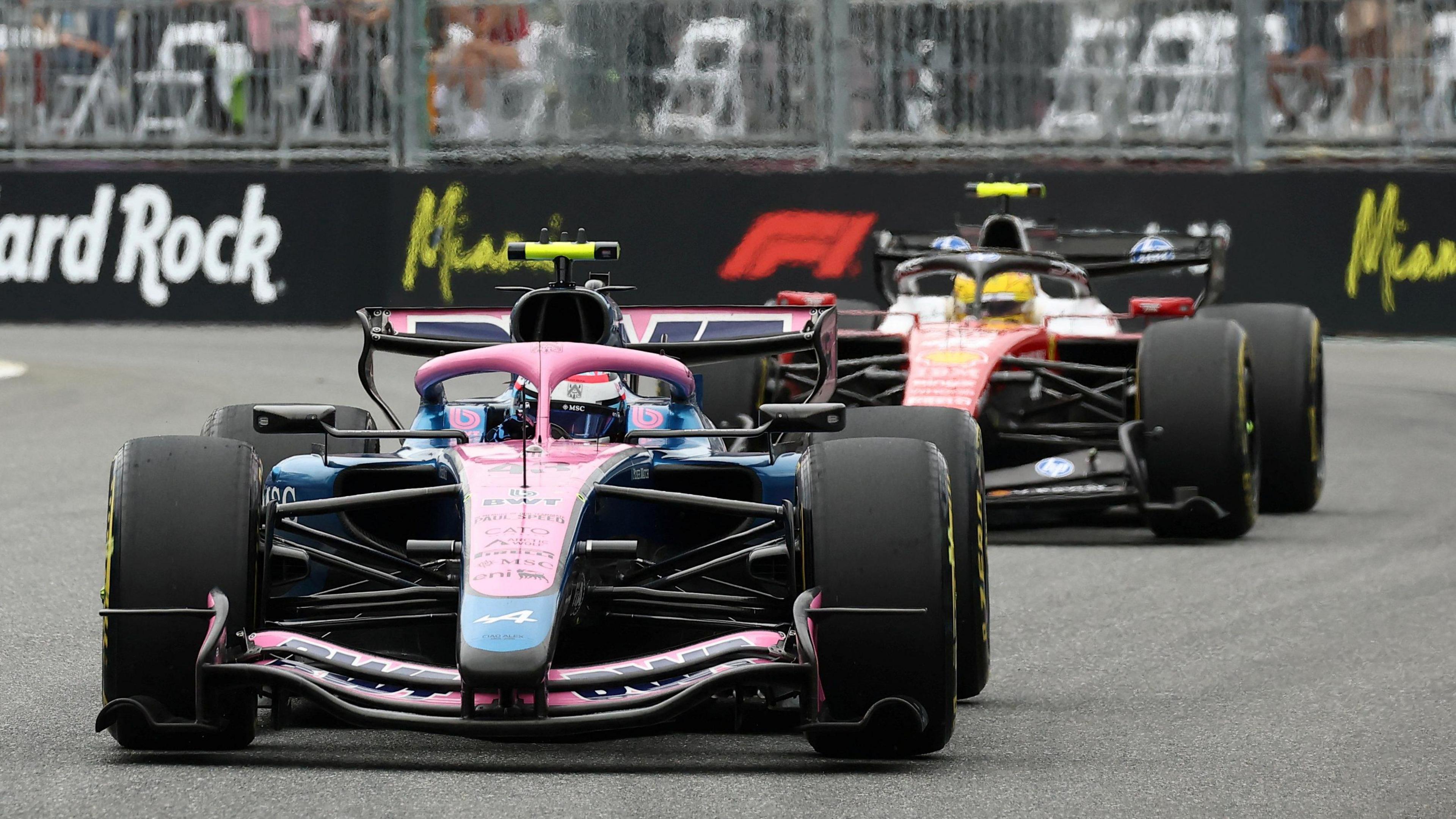 Image source, Getty Images
Alpine have finished in the points in all four grands prix so far this season, with Franco Colapinto seventh in Miami. They are fifth in the constructors' championship
Putting the potential thunderstorms risk to one side in Miami, is there a genuine increased safety fear of racing these F1 cars in wet weather conditions due to the new regulations? - Nicole
Yes, the vast amounts of electrical power in the new engines - 350kW (470bhp) - have raised concerns about racing in the wet.
That's why one of the changes made to the engine regulations before the Miami Grand Prix was related to wet conditions.
Full "boost" mode will not be allowed and maximum electrical deployment may additionally be limited at the FIA's discretion.
The maximum temperature of tyre blankets has also been increased following interventions from drivers who were concerned about tyres not being up to temperature when they first went out on track.
To play this video you need to enable JavaScript in your browser.
This video can not be played
F1 world champion Lando Norris gives championship advice to Arsenal's Declan Rice.
As two grand prix races have been lost so far this season, why don't they consider having two races at a grand prix that doesn't have a sprint race, ie a qualifying session on Saturday morning and then a grand prix in the afternoon and the same on Sunday? - Brian
The sport is a business, and if F1 is going to change things, it has to make sense from both a sporting and a financial point of view.
For F1 and the teams, holding two races on a given weekend brings extra cost - more mileage, and the increased risk of crash damage.
The sprints are appealing because they mean more competitive action with no significant increase in time on track.
Would two full-length grands prix on a given weekend work for broadcasters in the same way? Is the appeal really there? What's the point of the extra one? There would unlikely be any further money.
As for the wider situation, F1 will take a financial hit through the loss of the Bahrain and Saudi Arabian Grands Prix, so the idea of finding a way to put at least one of them back on is appealing.
But the first-order issue there is the war between the US/Israel and Iran. While that is ongoing, there can be no question of reinstating either race. The question instead becomes what happens to Qatar and Abu Dhabi at the end of the season, as those also cannot be held if the war has not ended.
If the war does end relatively soon, then, yes, F1 will look at staging at least one of the lost events.
At the moment, the only obvious available slot is the first weekend in October, between Azerbaijan and Singapore.
If a race can be put on then, it will most likely be Bahrain, largely for logistical reasons - it is a permanent circuit whereas Jeddah is a street track.
Moving the end-of-season races around to fit in Saudi Arabia? Not easy.
Abu Dhabi has a contract that guarantees it is the last race. So to fit in Saudi Arabia would likely mean moving Abu Dhabi back a week - which would push it to within two weeks of Christmas.
The teams would not want that, and Abu Dhabi may not be keen either, as the grand prix is currently in the same week as their national day.
The only gap before that is 13-15 November, between Brazil and Las Vegas. But that would not fit with F1's desire to stop zigzagging across the globe, and would also mean five race weekends in a row to end the season. So that's highly unlikely.
Get in touch
Send us your question for F1 correspondent Andrew Benson
Contact formContact form