Where Germany's economy still excels
For years, doubts have grown about the international competitiveness of German industry. Take the photovoltaic sector, for example, where Germany had a lead but the real action has long since shifted to East Asia. Similarly, its famed automotive industry is fast losing ground, particularly compared to China.
Yet some German giants remain global leaders, including SAP, Europe's largest software provider, Deutsche Telekom, a leader in telecommunications and DHL Group, the world's top logistics and international express shippingfirm.
Germany still ranks among the top five largest economies in the world, even as growth forecasts are slashed. It may have fallen behind the United Statesand China, but it remains "the best of the rest." This fact isn't just thanks to a few big names, but rather owes a lot to small and midsize businesses.
German economy under pressure
To view this video please enable JavaScript, and consider upgrading to a web browser that supports HTML5 video
Germany's hidden champions
And there are plenty of "hidden champions" in Germany. For years now, not even half of German workers have been employed by a large company. Most work in and for smaller businesses — namely, Germany's small and medium-sized enterprises (SMEs).
"Over 99% of companies in Germany are small and medium-sized enterprises, and 50% of net value added comes from the SME sector," Bastian Pophal told DW. He is the chief executive of the CDU-affiliated MIT (SME and Economic Union), Germany's largest party-political business association.
The example of Zeiss, a technology company specialized in optics and optoelectronics, shows that a company doesn't necessarily have to be a global corporation like TSMC, Taiwan's leading semiconductor manufacturer, to play a key and defining role in the value supply chain.
Maximilian Flaig, spokesperson for the German Mittelstand Association, told DW that the hidden champions can combine several strengths: "a globally unique dual education system, high technical expertise, exceptional reliability and remarkable adaptability."
But he stressed, the most important factor is this: "The German midsize firms, known as the Mittelstand, think long-term, act responsibly and stay close to their markets and employees. That is its central competitive advantage."
Germany's midsize companies are confident
Asked about their companies, midsize business leaders paint a fairly consistent picture. Martin Herrenknecht, founder and CEO of Herrenknecht AG, the maker of tunnel-boring machines, lists several advantages of the hidden champions.
"High innovation, strong industrial expertise, quality and reliability. These are recognized and valued all over the world," Herrenknecht said. Germany, he told DW, remains "the land of tinkerers and doers."
Trump tariffs, AI dominate Hannover industry trade fair
To view this video please enable JavaScript, and consider upgrading to a web browser that supports HTML5 video
Another advantage, he said, is the close relationship with customers, something no larger company could offer. "With us, the customer is king — and if something gets stuck, we'll even drive to the construction site at night to solve the problem. For us, this is a matter of entrepreneurial honor," he said.
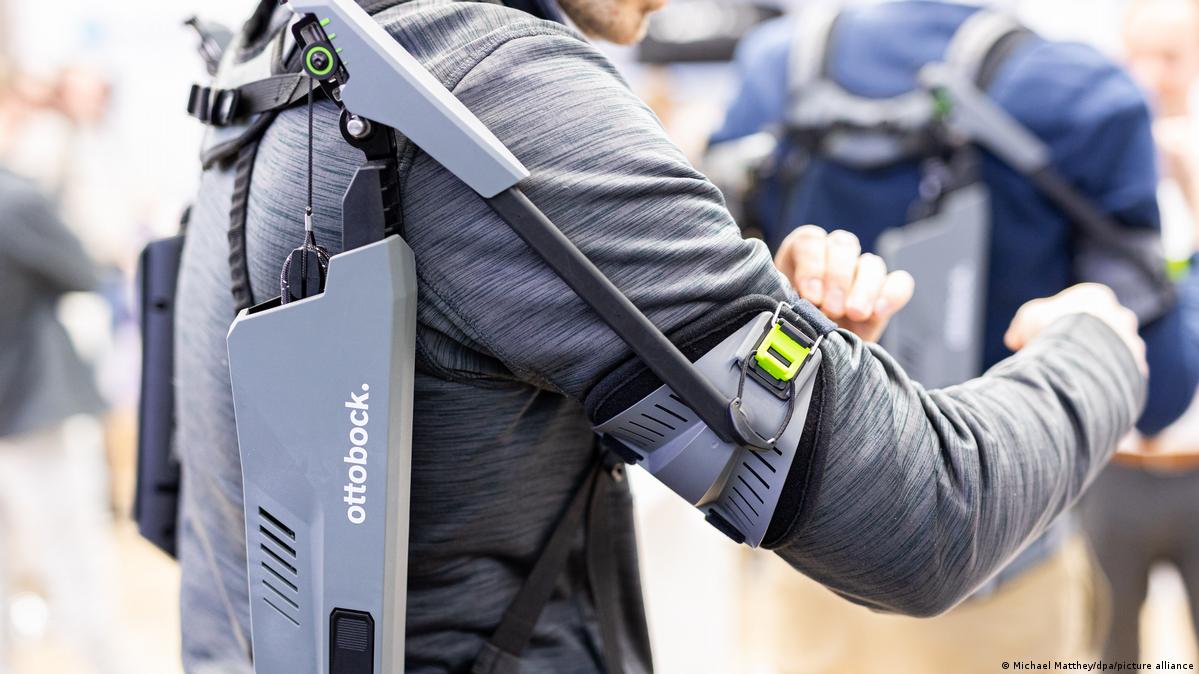
Ottobock is another hidden champion and a global leader in prosthetics. The company provides almost all athletes at the Paralympics with prostheses, orthoses or wheelchairs. Company spokesperson Merle Florstedt said the firm stands "for a combination of solid training, strong innovation and high quality." Above all, she added, they can "adapt quickly to different international markets, regulatory frameworks, and customer needs."
Money flows outside of Germany
There are many German innovations that have been internationally successful, to this day. These include the audio compression format MP3 or the magnetic levitation train — which now runs in China, not Germany.
However, while a lot of development has happened in Germany, company strategy has often failed to prevent money from flowing elsewhere.
Nonetheless, German midsize firms are looking to the future with optimism, according to the experts who spoke with DW. "We are firmly convinced that those firms can continue to withstand international competitive pressure," said Pophal of the Mittelstands- und Wirtschaftsunion.
Crumbling infrastructure: Germany's growth killer?
To view this video please enable JavaScript, and consider upgrading to a web browser that supports HTML5 video
Flaig, of the German Mittelstand Association, took a similar line. "Driven by stable networks, regional roots and a clear long-term strategy, the Mittelstand remains a reliable engine of growth," he said.
German politics needs to deliver
However, as oil prices rise and the broader economy struggles, Herrenknecht has clear ideas about what needs to change.
"What we need now is the courage for real and comprehensive structural reforms. This includes, above all, reliable and accelerated investments in our infrastructure — in rail, roads and digitalization," he said.
"That also means competitive energy prices, stable and resilient supply chains and investment security," said Elisa Meglio of specialty glass manufacturer Schott AG. "If these conditions are in place, we will also see good long-term prospects for remaining successful on the international market."
Ottobock spokesperson Florstedt summed it up: For the Mittelstand to remain internationally competitive in the future, it is crucial to maintain high levels of innovation speed and adaptability.
This article was originally written in German.
AdvertisementСхожі новини
Чому не можна кидати зчеплення та повертати кермо до упору: як працюють механізми в авто