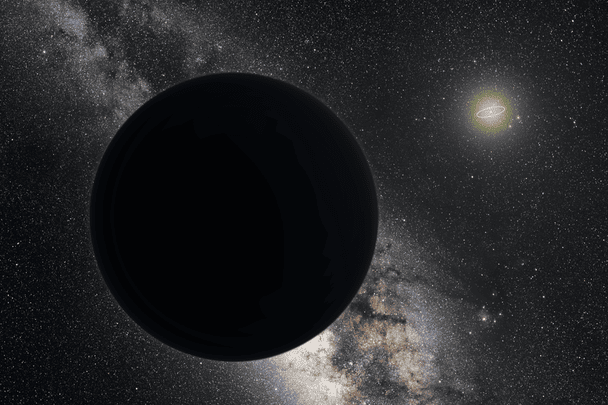
Where did Mercury get its water ice? Maybe from a slow asteroid impact in a single Mercurian day
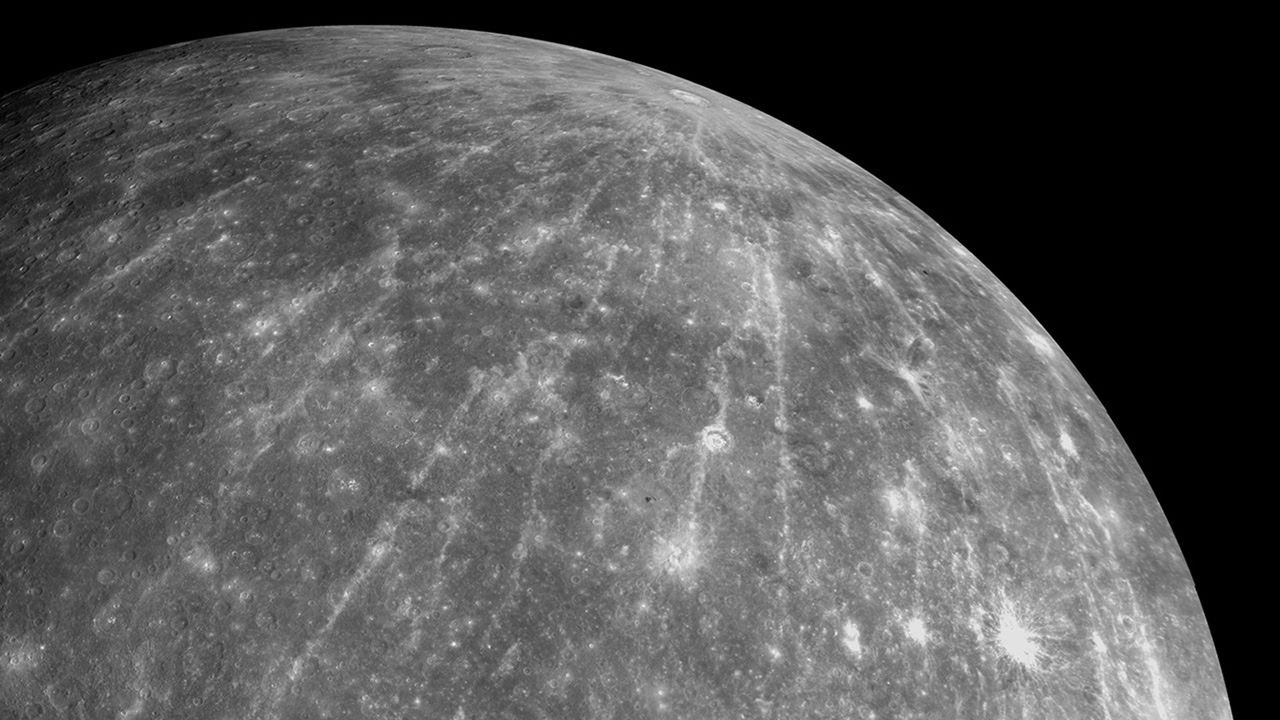
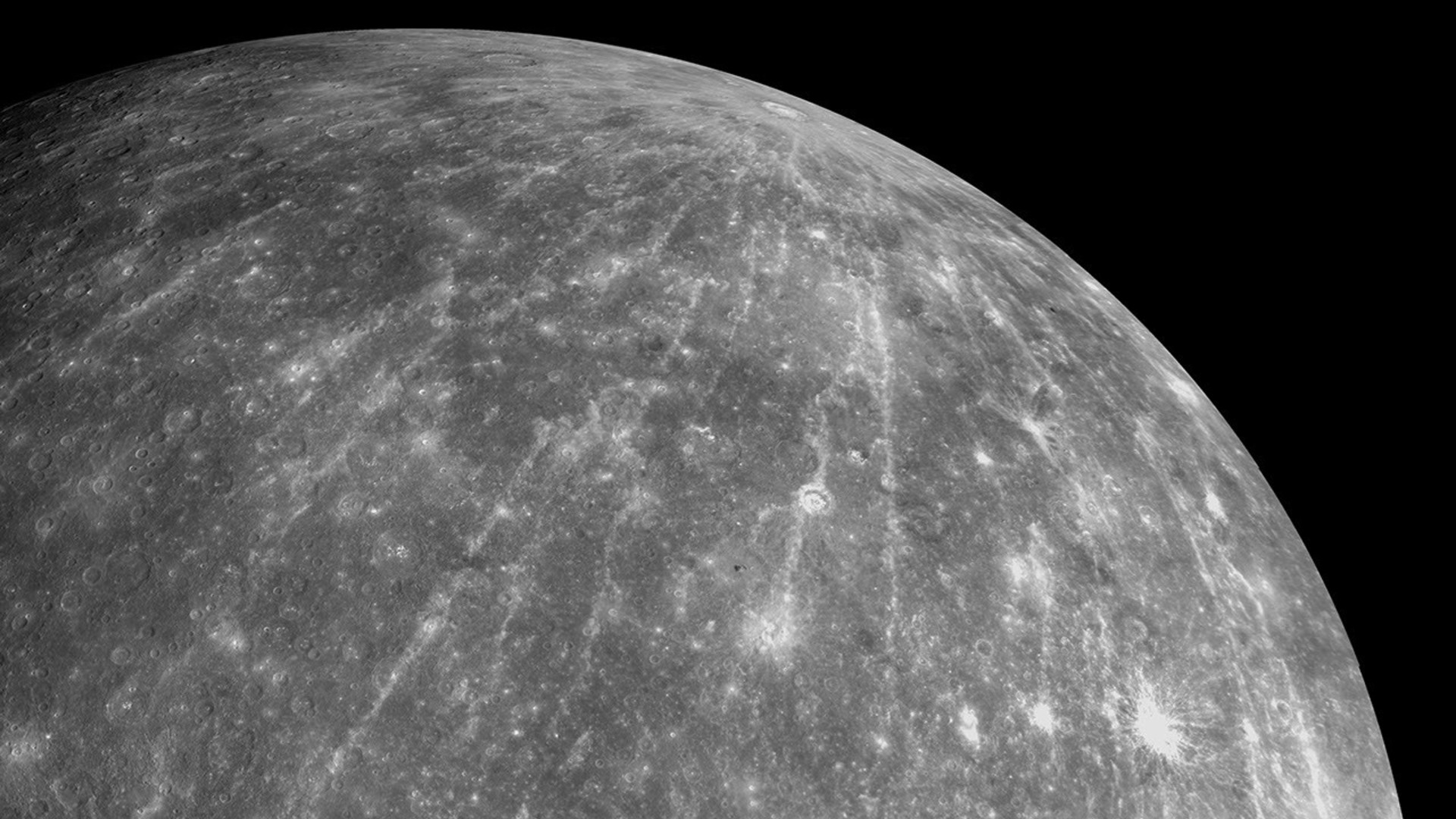
A single colossal impact may have rapidly spread water across Mercury and locked much of it into permanently shadowed polar craters — all within the span of a single Mercurian day, or 176 Earth days, according to a new study.
Being the closest planet to the sun, Mercury seems like the last place in the solar system where water ice should survive. The sun appears nearly three times larger in Mercury's sky than it does from Earth, while daytime temperatures on the scorched world can soar above 800 degrees Fahrenheit (427 degrees Celsius).
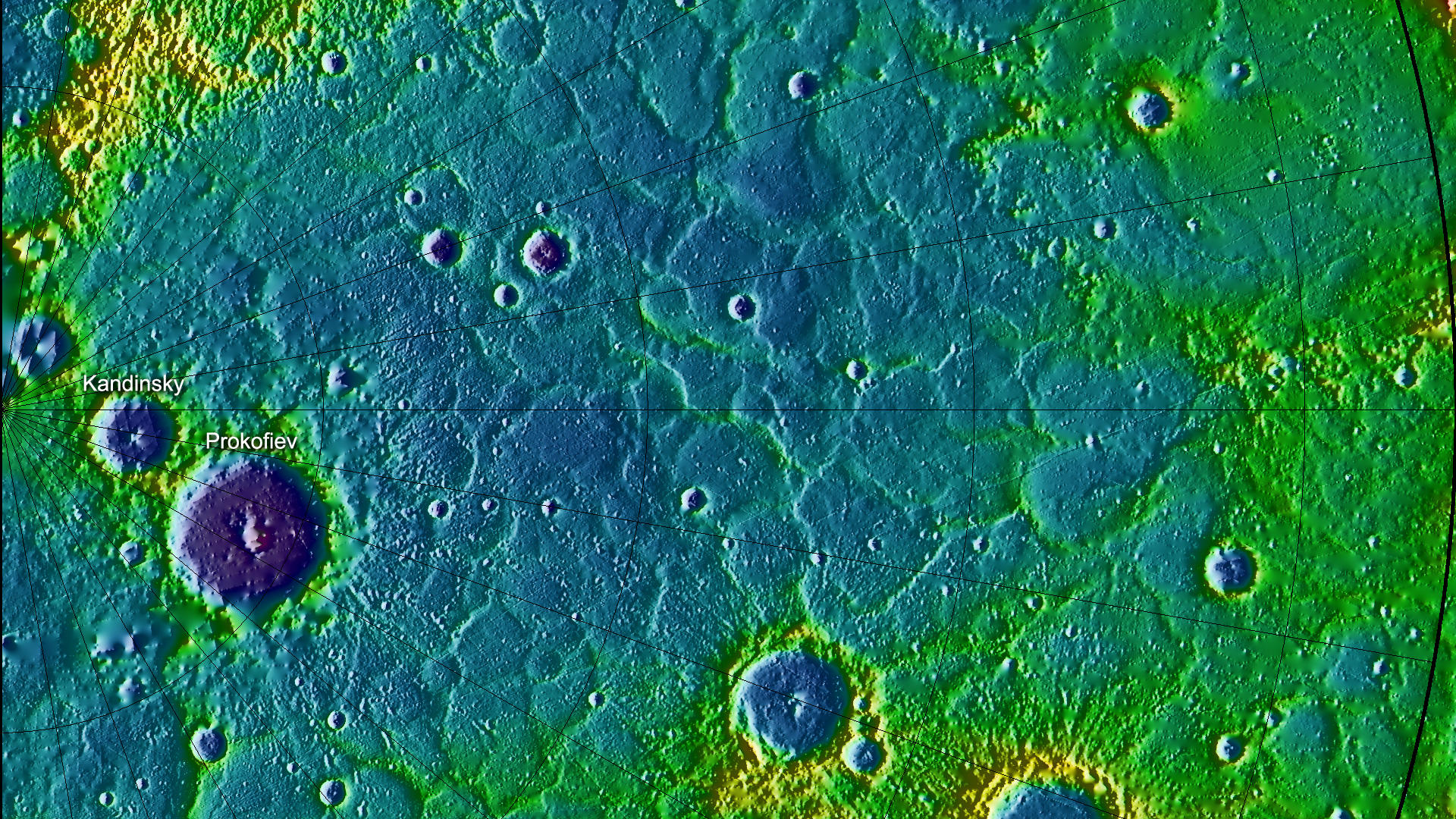
Yet observations from Earth-based telescopes in the 1990s, later confirmed by NASA's MESSENGER spacecraft, revealed vast pockets of frozen water hidden inside deep craters near Mercury's poles that never receive direct sunlight. Exactly how that ice formed, however, has remained a mystery.
One leading hypothesis suggests the polar ice was delivered during a relatively recent impact by a water-rich comet or asteroid — possibly in scale and age to the one that carved Hokusai crater, a prominent 60-mile-wide (97-kilometer-wide) crater in Mercury's northern hemisphere. Hokusai is known for its bright rays of debris that stretch thousands of kilometers across the planet, created when material blasted from beneath Mercury's surface was hurled outward during the impact.
"How is water transported and redistributed in the aftermath of an impact on Mercury?" the researchers write in the new paper. "The results presented here indicate that the answer depends in part on the scale of the impact."
To investigate the idea that much of Mercury's present-day ice may have been delivered by a large, volatile-rich collision, a team co-led by scientist Parvathy Prem of Johns Hopkins Applied Physics Laboratory in Maryland ran computer simulations recreating a Hokusai-like impact.
The simulated collision matched a roughly 17-kilometer-wide impactor slamming into Mercury at speeds of up to 30 kilometers per second, generating a dense, temporary atmosphere rich in water vapor around the planet, the team reports in the new study.
"Within just over an hour after impact, the impact-generated water vapor has expanded to entirely surround the planet," the study notes, adding that "the bulk of ice deposition occurs within one solar day (176 Earth days)."
The surprisingly rapid spread of water was possible because the dense, impact-generated atmosphere effectively protected itself from the sun's intense ultraviolet radiation, according to the study.
The temporarily thick cloud of water vapor acted like a shield, the researchers say, slowing the breakdown of water molecules and allowing much larger amounts of water to survive long enough to migrate into Mercury's permanently shadowed polar craters.
The findings suggest Mercury's ice was deposited rapidly rather than supplied gradually over long periods of time — a scenario that also helps explain the apparent purity of the ice deposits, the study notes.
Scientists hope upcoming observations from the joint European-Japanese BepiColombo mission will provide new clues about the origin of Mercury's polar ice. The $1.8 billion spacecraft — only the second mission ever sent to orbit Mercury after MESSENGER — experienced an 11-month delay after a thruster glitch forced engineers to redesign part of its trajectory to compensate for reduced thrust.
BepiColombo is now scheduled to enter orbit around Mercury in November, when the mission's two probes will separate and begin studying the planet from different orbits.
This research is described in a paper published May 12 in the Journal of Geophysical Research: Planets.
View MoreYou must confirm your public display name before commenting
Please logout and then login again, you will then be prompted to enter your display name.
Logout
Sharmila Kuthunur is an independent space journalist based in Bengaluru, India. Her work has also appeared in Scientific American, Science, Astronomy and Live Science, among other publications. She holds a master's degree in journalism from Northeastern University in Boston.
Схожі новини
Професор Единбурзького університету Чарльз Кокелл прочитав відкриту лекцію в КНУ ім.Тараса Шевченка
Уряд пропонує фінансувати іпотеку облігаціями (подробиці)
У двох українських електричках вперше встановили кондиціонери (фото)