What we know and don't know about the emerging deal to end the Iran war
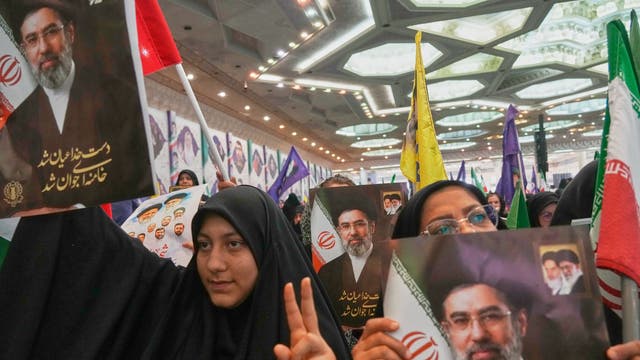
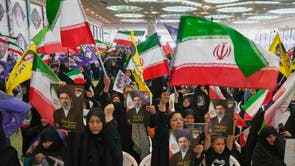
The United States and Iran appear to be closing in on a deal to end the war and open the Strait of Hormuz. U.S. President Donald Trump said Monday that negotiations are “proceeding nicely,” while reiterating his warning that fighting would resume if no deal is reached.
It is not clear when or how the deal might be finalized and when its various parts will take effect. Trump spoke with allies in the Middle East, including Israel, over the weekend. Details come from two regional officials and a U.S. official who spoke on condition of anonymity to discuss the sensitive negotiations.
An Iranian delegation led by parliament speaker Mohammad Bagher Qalibaf traveled to Qatar on Monday as part of negotiations, though it wasn’t immediately clear what would be discussed. Qalibaf led historic face-to-face talks with Vice President JD Vance in Pakistan last month.
Here’s what we know and don’t know:
The war would end
In the 12 weeks since the U.S. and Israel launched the war with attacks that killed Iran's Supreme Leader Ayatollah Ali Khamenei and other top officials, Tehran has insisted that any deal focus on ending the fighting on all fronts. That includes Lebanon, where the Iranian-backed Hezbollah militant group has been fighting Israel since two days into the war.
A fragile ceasefire has held since April 7. An end to the war would ease concerns throughout a region that saw Gulf havens and travel hubs like the United Arab Emirates struck by Iranian missiles and drones. It would allow for global shipping, including an estimated 20% of the world's oil, to begin flowing through the Strait of Hormuz again. It also would allow the rebuilding of energy and other infrastructure in the region.
Both regional officials said the draft deal includes an end to the war between Israel and Hezbollah, as well as a commitment to not interfere in the domestic affairs of countries in the region. That’s a reference to Iran’s support for proxies, including Houthi rebels in Yemen, Hamas militants in Gaza and Shiite armed groups in Iraq.
The U.S. wants Israel to have a free hand to respond to what it views as threats in Lebanon, while Iran rejects it, one regional official said. The U.S. official said the deal would guarantee Israel’s right to act against imminent threats in self-defense.
The Strait of Hormuz would reopen gradually
The stated objectives of the U.S. and Israel were to dismantle Iran’s nuclear program, curb its missile program and end its support for armed proxies.
But Iran's chokehold on the Strait of Hormuz, which was open to international shipping before the war, quickly shot to the top of global concerns as hundreds of ships carrying oil, natural gas, fertilizer and other supplies were stranded.
Under the emerging agreement, the strait would gradually reopen in parallel with the U.S. ending the blockade of Iran’s ports it imposed on April 17, the regional officials said. The blockade has limited Iran’s ability to ship its oil and bring in badly needed cash for its long-suffering economy.
The U.S. would allow Iran to sell its oil through sanctions waivers, said one of the officials, who has been briefed on the negotiations. Sanctions relief and the release of billions of dollars in frozen Iranian funds would be negotiated during a 60-day period, the official said.
Iran would give up its stockpile of highly enriched uranium
Iran’s nuclear program and international concerns over its possible pursuit of a nuclear weapon underlie the tensions. The U.S. and Israel have considered highly complex military operations to go in and take out its highly enriched uranium.
Under the potential deal, Tehran would agree to give up that stockpile of highly enriched uranium, according to the regional officials. One official, with direct knowledge of the negotiations, said how Iran would give it up would be subject to further talks over the 60-day period. Some would likely be diluted and the rest transferred to a third country, the official said. Russia has offered to take it.
A U.S. official confirmed the 60-day period and said if Iran doesn’t give up its stockpile, there will be no sanctions relief.
Iran has 440.9 kilograms (972 pounds) of uranium that is enriched up to 60% purity, a short, technical step from weapons-grade levels of 90%, according to the International Atomic Energy Agency.
Iran says it has an “inalienable” right to nuclear technology while insisting its program is peaceful. On Sunday, President Masoud Pezeshkian told state TV they were ready “to assure the world that we are not after a nuclear weapon.”
What appears to be missing
“Negotiations with the Islamic Republic of Iran are proceeding nicely!” Trump wrote on social media Monday. “It will only be a Great Deal for all or, no Deal at all — Back to the Battlefront and shooting, but bigger and stronger than ever before — And nobody wants that!”
Despite the claims of progress, several issues appear to be unsettled, including whether Iran would be able to enrich uranium and to what level, and the fate of its missile program, which Israel in particular views as a major threat.
While the United States and Israel entered the war with the stated hope of seeing Iranians rise up against their government after nationwide protests early in the year, any discussion of leadership change in Tehran appears to be out.
As for Iran's past stated aims during negotiations, there appears to be no mention of any withdrawal of U.S. forces from the region, or for reparations for the damage the war has caused.
___
Superville reported from Washington and Anna from Lowville, New York.
Схожі новини
Can money buy happiness? Bill Gates offers a surprisingly honest answer
The Abraham Accord plus: Trump aims for grand bargain tying Islamic world with Israel
'For Brothers': Major international gang busted in Canada, 17 Indians charged for extortion targeting South Asians
