What makes an Isle of Man TT winner?
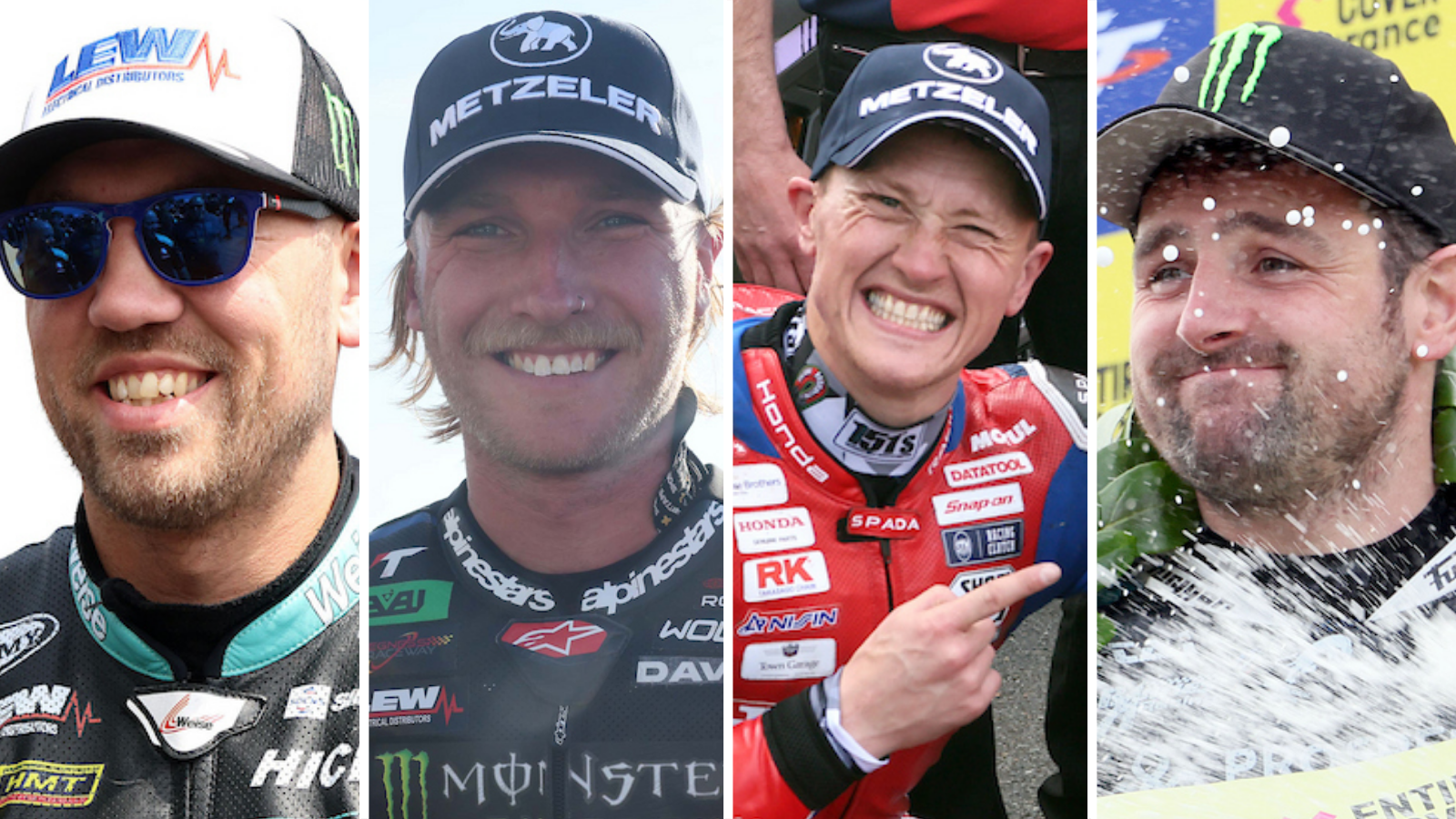 Image source, Pacemaker
Peter Hickman, Davey Todd, Dean Harrison and Michael Dunlop have been regular TT winners in recent years
- Published1 hour ago
The Isle of Man TT is widely regarded as one of the most iconic events in motorsport, staged on one of the most demanding and perilous race courses in the world.
Every rider who takes up the challenge of racing on the 37.73-mile Mountain Course, with all the inherent hazards of a public roads circuit, attracts the admiration of fans of motorcycle competition.
Those who manage to win races receive special adulation and rank among the legendary figures of the sport.
Names such as record 33-time winner Michael Dunlop, his uncle Joey, 26 times a victor, and John McGuinness, with 23 wins, resonate with followers across the globe.
As this year's event revs into action, BBC Sport examines what are the special qualities that make a TT winner at road racing's ultimate test of man and machine.
Course knowledge and experience
While competitors can become familiar with some motorsport tracks relatively quickly, it takes time and dedication to learn the TT course and gain sufficient track knowledge to be in a position to challenge for wins.
Experience is key to incrementally improving lap times and attaining to high placings, given that the circuit includes more than 200 corners.
Then there are the numerous bends, changes in road surfaces, thousands of gear changes and learning the racing lines involved in negotiating each lap of the course.
The commitment required to make progress towards achieving success means TT racing must be a priority for potential winners, such as has been the case with Michael Dunlop, 14-time winner Peter Hickman, Dean Harrison (five wins) and Davey Todd (three victories) over recent years.
Joey Dunlop and Steve Plater are two who have bucked the trend somewhat, winning a race in only their second year of participation, in 1977 and 2008 respectively.
Combined, Michael Dunlop, Hickman and Harrison have won 40 of the past 41 solo races staged at the Manx event, with just Lee Johnston's Supersport success in 2019 breaking their domination.
Multiple winners like McGuinness and fellow 54-year-old Michael Rutter, who both have decades of experience under their belt, have continued to achieve competitive results beyond their peak and Ian Hutchinson, the only man to win five races in a week and with 16 triumphs in total, remains competitive well into his 40s despite several serious injury setbacks.
With races being staged over distances ranging from 113 miles to 226 miles, fitness, durability and concentration are essential ingredients given the gruelling nature of the challenge.
Physical stature can be a significant asset in manhandling the larger capacity bikes, such as was the case with the late David Jefferies, who notched nine wins during his short TT career before his death in 2003, and more presently with the likes of Hickman and Dunlop.
All you need to know about the 2026 Isle of Man TT
- Published1 day ago
Todd declared unfit to compete at Isle of Man TT
- Published12 May
Short circuit pedigree and roads specialists
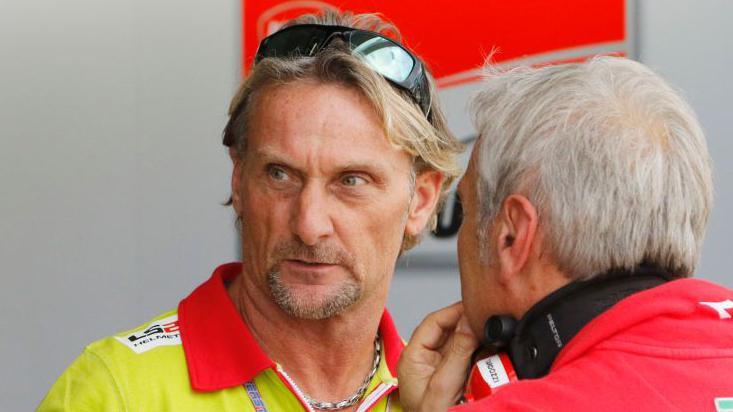 Image source, Getty Images
Four-time World Superbike champion Carl Fogarty won three IOM TT races
Many eventual TT winners also pursue successful careers in the British Superbike (BSB) short circuit championship, adapting to display their pedigree and prowess across both disciplines.
Among the top riders past and present who have transferred their skills and talent to become victors over the Mountain Course are four-time World Superbike champion Carl Fogarty, 11-time winner Steve Hislop, Jefferies, Plater and Hickman.
Among current BSB regulars, Glenn Irwin became the fastest newcomer on his only TT appearance in 2022 and two-time champion Josh Brookes sits fifth in the list of all-time fastest laps.
It is now widely acknowledged that being exposed to the cut and thrust of short circuit racing, regularly competing against strong opposition at a top level and increasing familiarity with the machines under you, is beneficial.
Todd is a two-time British Superstock 1000cc champion on short circuits, while Hickman and Harrison regularly ply their trade in the BSB paddock.
Some notable past winners, including Hislop, Fogarty, Robert Dunlop and Ian Hutchinson progressed from what used to be the traditional route of first competing in the Manx Grand Prix, the amateur version of the TT also held on the Mountain Course.
This is a less travelled path for contemporary winners.
Other riders advance from serving their apprenticeship as specialists on Irish national road race circuits or the Southern 100 on the Isle of Man, this largely the preferred route of the Dunlop dynasty of TT winners - Michael, Joey and Robert having racked up 64 wins in total for the renowned family up to this point.
Todd and Harrison regularly honed their skills on the narrow country roads which make up the Irish domestic road racing scene and have proved a breeding ground for TT winners of the future.
Racer turned TV personality Guy Martin, arguably the best rider never to win a TT, followed a similar path on his way to achieving 17 podiums at the event.
Adapting style and race management
Suitability to the various idiosyncracies which make up Isle of Man TT racing plays its part in becoming a TT winner.
The course combines sections of navigating your way through the countryside between hedges and stone walls with racing through villages, plus the sweeping nature of racing on the smoother Snaefell Mountain section perhaps best suited to short circuit specialists.
Preferred sections may be reflected in sector times but potential winners need to be strong in all areas throughout each lap.
The TT is a time trial, with competitors starting at 10-second intervals in contrast to the traditional mass start, so top-end racers must be able to race effectively against the clock, often on their own and in response to pit boards around the course informing them of their position.
Those with aspirations to win races must be on the pace from the start of the race, with little in terms of a settling in period in the first few miles and scant opportunity to ensure that tyres are fully warmed up.
Successful participants in many cases adapt their style from the raw aggression required for short circuit racing to the smoother momentum needed for road racing.
Given the attritional nature of the challenge, the fastest riders know the value of managing their lead, winning a race at the slowest possible speed and conserving their bike.
Managing the risks and being able to up their pace when necessary in a close race are other essential qualities.
Top machinery and teams
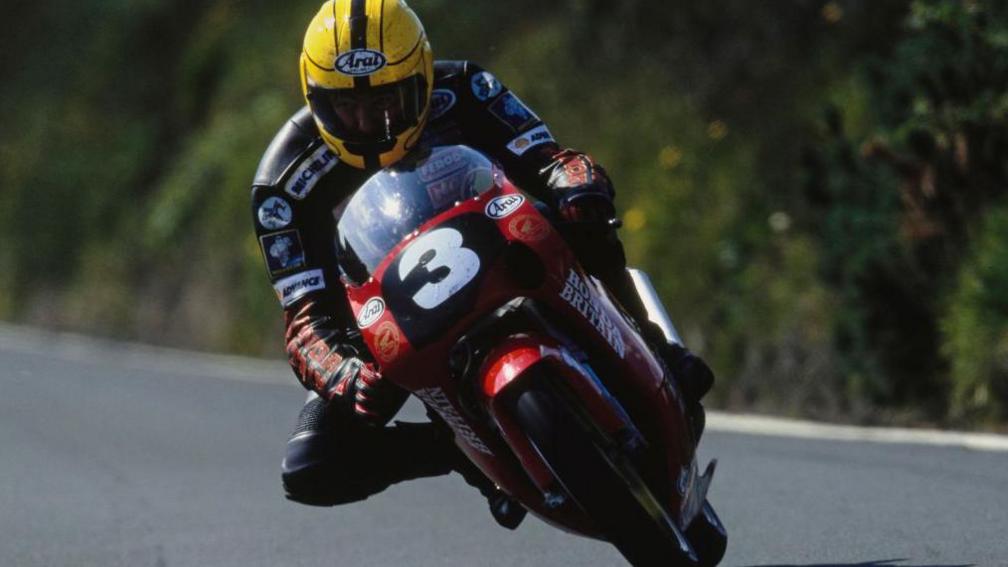 Image source, Getty
Legendary late 26-time TT winner enjoyed a lengthy productive partnership with Japanese manufacturer Honda
Multiple TT winners have proved their ability to effectively race a variety of capacities and classes of machinery across their TT careers, often for different manufacturers, something which is a trademark of wins record holder Michael Dunlop.
Potential to achieve strong results is generally recognised early in a rider's Mountain Course odyssey, leading to rides with the most competitive teams on board the best bikes, with significant sponsorship.
Machine choice and reliability are key components of a winning partnership, allied to an accomplished group of technicians, electronics personnel and team management working together to help achieve the best possible bike set-up, including suspension settings, to accommodate the varied sections of the circuit.
Pit stops are a regular feature of races, testing the composure of those tasked with refuelling bikes or changing tyres. Races can be won or lost in the pits.
Related topics
Схожі новини

Doping Olympics' sprinters miss Bolt's record, clean athletes win despite odds
У Києві завершився Фінал чотирьох жіночої Молодіжної баскетбольної ліги
Мільйон доларів за допінг: плавець підірвав "Олімпіаду на стероїдах" шаленим рекордом