Global Business Leaders Grapple with Permanent Uncertainty: What 30+ CEOs Say Keeps Them Awake
In conversations with more than 30 chief executives and business leaders at Singapore's Converge Live event last week, a sobering consensus emerged: volatility and crisis are no longer temporary disruptions but permanent features of the corporate landscape.
Across banking, energy, shipping, technology and manufacturing sectors, business chiefs are confronting a fundamental shift in how they operate and plan for the future.
Planning for Perpetual Uncertainty
Tan Su Shan, CEO of DBS Bank—Southeast Asia's largest financial institution—offered a stark prescription for navigating this new reality.
"If you are a manager, manage for maximum flexibility. Because guess what, you don't know what's going to happen tomorrow. Stress test, stress test, stress test, so be ready for the worst case scenario."
The accelerating pace of crises—from the COVID-19 pandemic through trade tensions to current geopolitical conflicts—has fundamentally altered corporate strategy. Stanley Szeto, chairman of apparel manufacturer Lever Style, noted that long-term planning has become increasingly difficult.
Many companies have abandoned traditional planning altogether. "We kind of threw our three-year and five-year plan out the window," one executive revealed. Instead, organizations now operate under what Thomas Knudsen, managing director for Asia at jewelry company Pandora, described as a shift from "just in time" to "just in case" mentality.
Supply Chain Costs Reaching New Highs
The impact reverberates through global supply chains. Captain Rajalingam Subramaniam, CEO of shipping services firm Fleet Management Limited, reported that over 2,000 vessels remain stuck in the Persian Gulf, affecting nearly 20,000 to 30,000 mariners. He warned that supply chain costs will remain elevated for the foreseeable future.
Companies are responding by duplicating supply chains, rewriting inventory strategies and rerouting logistics—often at considerable expense. Lever Style has significantly increased air freight usage despite higher costs compared to sea transport, prioritizing speed and operational flexibility.
The mounting expenses are inevitable to reach consumers. "Ultimately, it will all be passed to the consumer," Knudsen stated, as material price increases and shipping disruptions fuel inflationary pressures across manufacturing.
Consumer Behavior Shifting, But Resilience Holding
While overall demand among mass-market consumers remains stable, purchasing patterns are changing noticeably. Hans Patuwo, CEO of Indonesia-based superapp GoTo, observed that affluent shoppers maintain resilience while lower-income consumers benefit from government support. The middle segment, however, is adapting: "Now they are willing to sacrifice assortment. They are willing to sacrifice speed for cheap," he said.
Martha Sazon, CEO of GCash operator Mynt, reported that Philippine consumers are becoming increasingly selective, with government subsidies and overseas remittances providing crucial support. When asked to rate ASEAN consumer resilience on a scale of 10, Sazon scored it at seven. Patuwo agreed, noting that the region has developed experience managing repeated shocks and now knows how to adapt.
Artificial Intelligence: Opportunity and Risk
Nearly every executive addressed artificial intelligence as a defining challenge—whether as a cost-reduction tool, growth accelerator, cybersecurity threat or potential business model disruptor.
In software, traditional subscription-based models face pressure as AI agents reshape procurement decisions. Magnus Grimeland, founder and CEO of early-stage venture firm Antler, warned that "product is becoming less of a moat." Companies lacking distribution advantages and unable to reinvent themselves will struggle significantly.
Daisy Cai, general partner at B Capital, predicted that Software-as-a-Service companies may shift from per-user pricing models to outcome-based charging as AI agents change the economics of software consumption.
Beyond employment concerns, executives emphasized the importance of implementing proper safeguards. Cybersecurity emerged as perhaps the most urgent worry, particularly as AI accelerates both the speed and scale of potential attacks.
Tan highlighted her team's continuous security testing and emphasized that in an AI-saturated world where technology access is universal, trust becomes the ultimate competitive advantage. Her cybersecurity head's philosophy: "Inside is the outside. Trust nothing, trust nobody."
Brendan Laws, COO of Blackpanda, an Asia-based cybersecurity firm, observed that the cyberattack acceleration is outpacing defensive capabilities. "Response generally is a little bit behind offense at the moment," he said.
Energy Transition Accelerating Amid Geopolitical Tensions
Recent oil price shocks stemming from Middle East tensions have intensified focus on energy security and renewable transition. TK Chiang, CEO of Hong Kong power producer CLP, argued that energy security imperatives are driving renewable investment while maintaining the importance of diversification across gas, nuclear and carbon capture technologies.
Assaad Razzouk, CEO of Singapore-based renewables firm Gurin Energy, countered that renewables and storage are already winning on cost and scale globally. He noted that 2025 saw enough renewable capacity added globally to meet 100 percent of new electricity demand growth.
Both agreed that surging demand—particularly from artificial intelligence and data centers—amplifies the urgency of this transition.
The New Normal: No Return to the Past
Across all sectors, leaders shared a unified message: the world will not return to pre-crisis conditions. Instead, companies must adapt to an environment defined by volatility, fragmentation and rapid technological disruption.
The challenge extends beyond managing the next crisis. Business leaders must convince employees, customers and investors that their organizations can continue adapting as successive shocks inevitably arrive.
Former Canadian Prime Minister Justin Trudeau, addressing the broader implications, identified a deeper concern: "What keeps me up is the fact that so many people are being convinced that they don't matter anymore." He framed the central risk as loss of collective faith in humanity's ability to shape the future.
Схожі новини
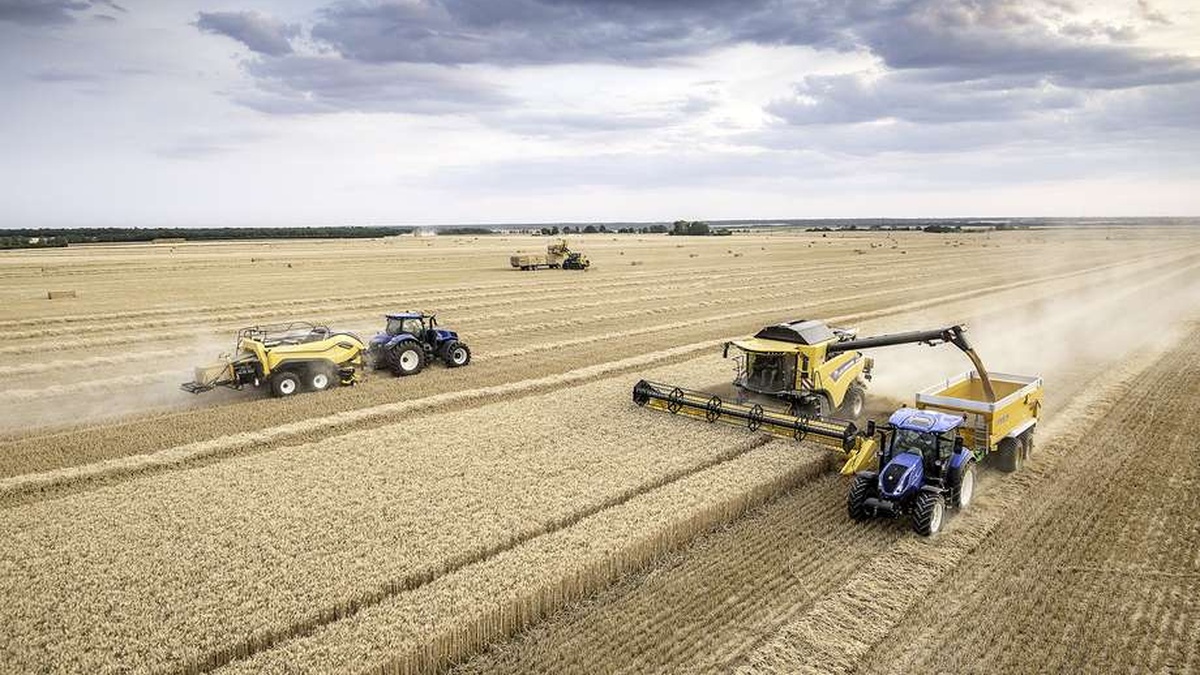
Аграрії на прифронтових територіях отримуватимуть до 40% компенсації за купівлю вітчизняної техніки – ВАР

Російські ДРГ намагаються через «зеленку» проникнути вглиб на Олександрівському напрямку - Волошин
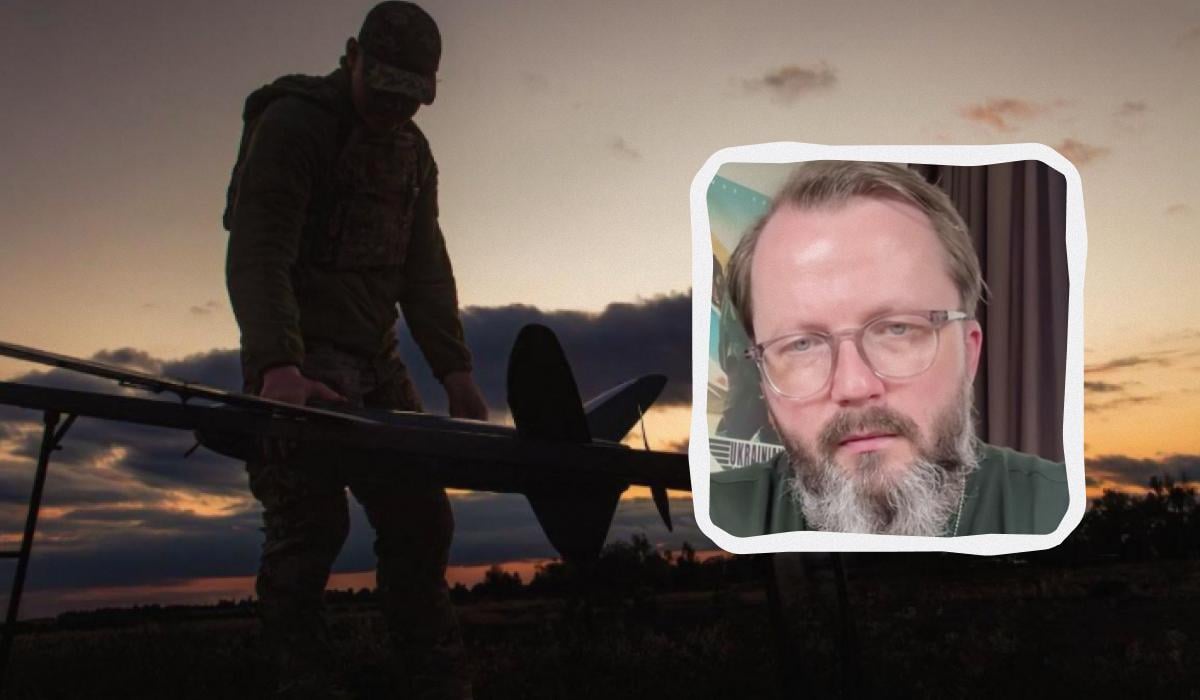
Акт падіння російської ППО: експерт пояснив, як українські дрони долетіли до Уралу