Venice Biennale art exhibition jury quits over Israeli and Russian participation
The Venice Biennale, one of the world's most prestigious contemporary art exhibitions, has opened its most contentious edition in recent memory, marred by geopolitical tensions and unprecedented protests.
The jury, tasked with awarding the coveted Golden Lions, resigned in protest over the participation of Israel and Russia, while there were also loud demonstrations outside their respective pavilions.
The jury's decision specifically targeted countries under investigation by the International Criminal Court for human rights abuses. Some critics, however, argued that the United States should also have been included.
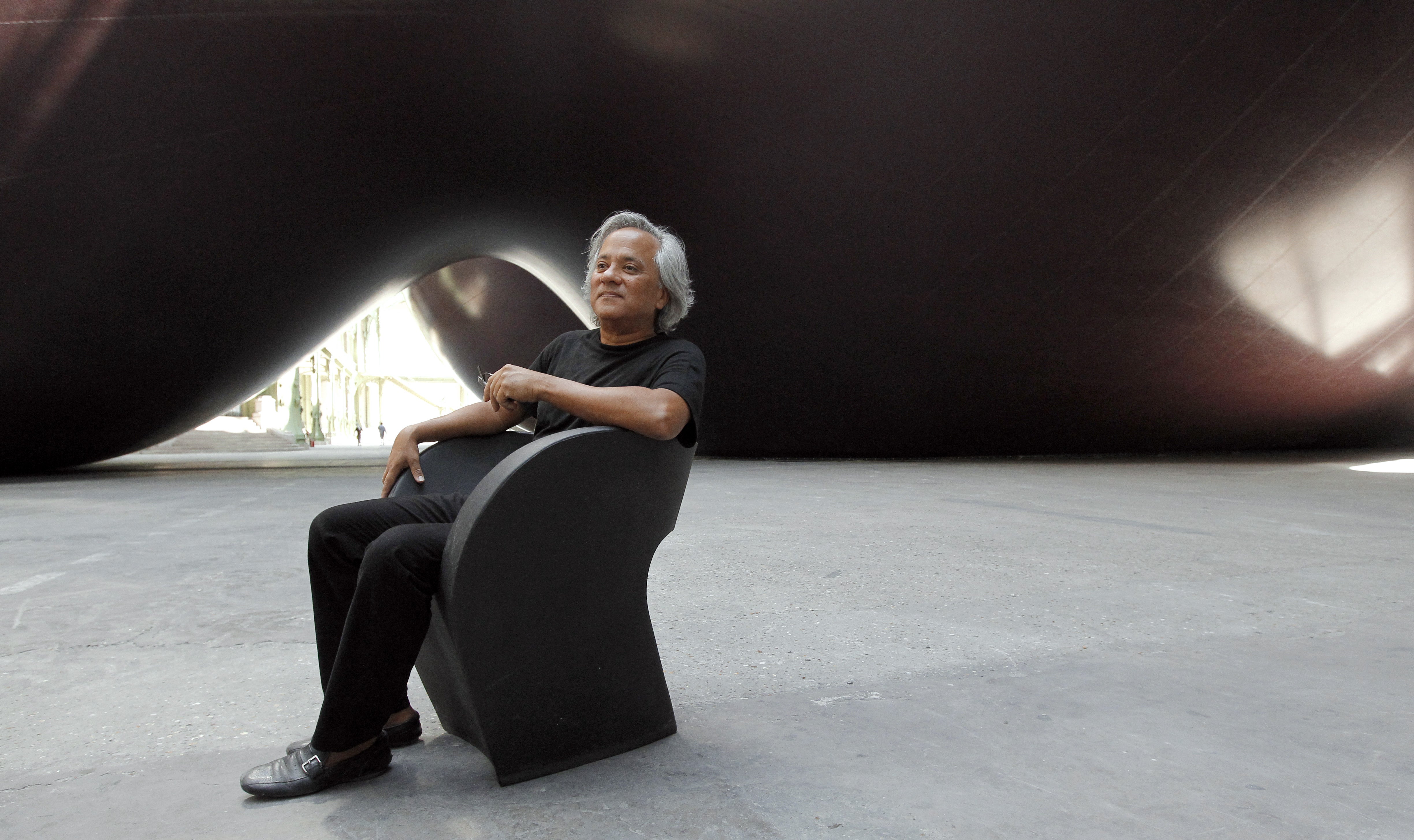
British artist Anish Kapoor voiced the widespread sentiment, citing "the politics of hate and war and all that that’s been going on now for too long."
Despite the controversy, the Biennale's vast array of artistic expressions continues across its Giardini and Arsenale venues.
Visitors are tasked with voting for the best national pavilion among 100 participants, and the top artist in the main curated show, "In Minor Keys”, with winners set to be announced on 22 November.
 open image in gallery
At the heart of the exhibition is Koyo Kouoh’s ‘In Minor Keys’, the main curated show, which immediately captivates with a towering red feathered sculpture adorned with beaded embroidery.
This costume-like piece, rooted in New Orleans Black Masking culture, signals the exhibition's profound focus on minority perspectives. Kouoh, the first African woman to curate the main Biennale exhibition, assembled 110 artists and groups to spotlight the overlooked, with five co-curators continuing her vision after her death a year ago.
Co-curator Marie Helene Pereira reflected: "She was someone who thought about making spaces for everyone to shine and we see it in her exhibition, we see it with ourselves."
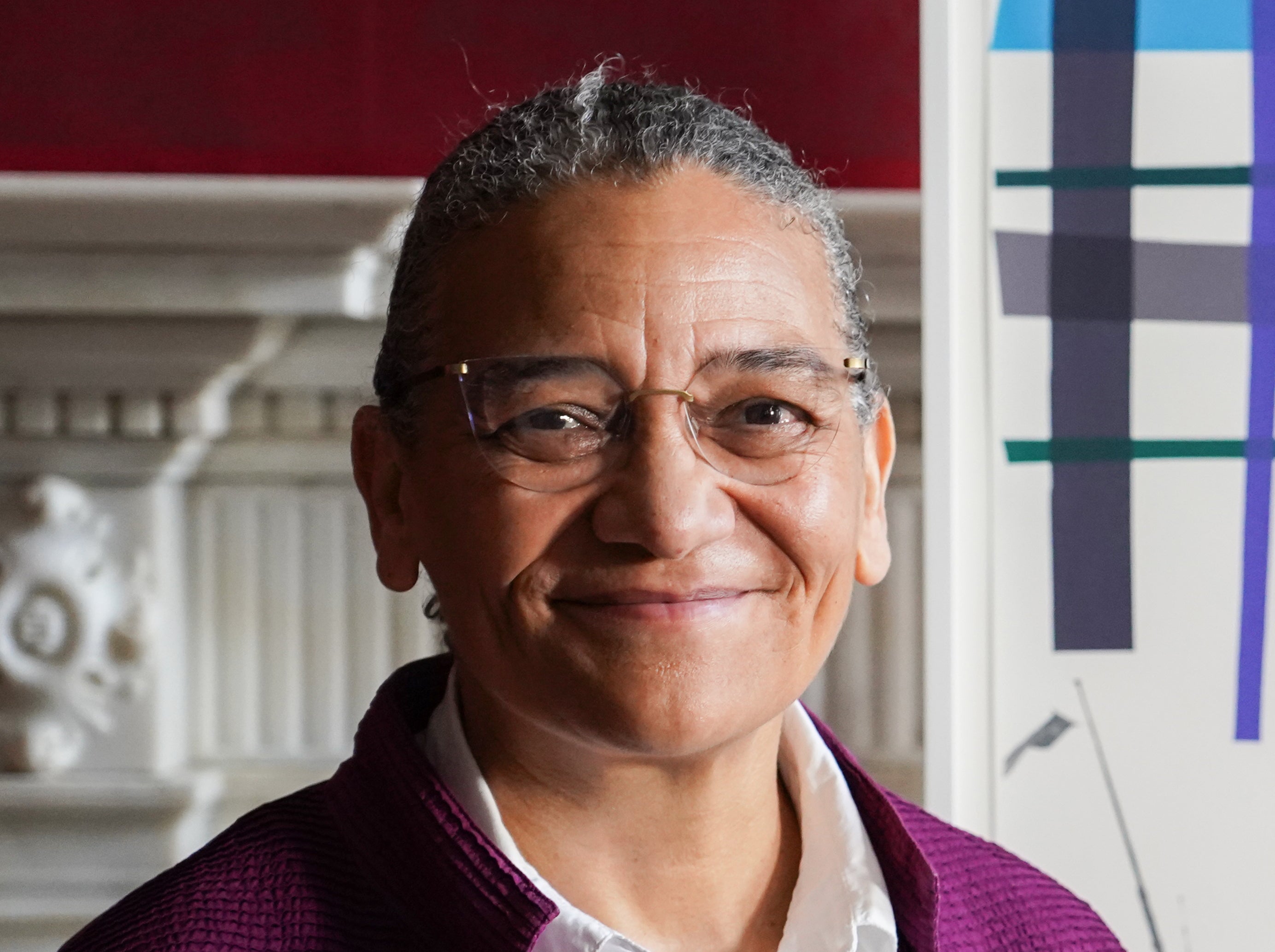
Elsewhere, British artist Lubaina Himid, a Turner Prize winner, explores the complexities of establishing a new home in her British Pavilion exhibition, "Predicting History: Testing Translation."
Her brightly hued paintings depict couples grappling with the dilemmas faced by newcomers.
Himid, born in Zanzibar and a long-time resident of Great Britain, explained one such piece: "One of them is trying to decide, would we build a building here, that proves that we have contributed to the culture, and the other architect is saying ’No, no, no, no, no. Let’s build something that we can escape in tomorrow."
 open image in gallery
In stark contrast, the Vatican offers a spiritual sanctuary within the Mystic Gardens of the Discalced Carmelite order.
Here, visitors can wander among vineyards and herb beds, listening through headphones to music by 12th-century abbess St. Hildegard of Bingen, reinterpreted by contemporary artists such as Brian Eno and Patti Smith.
Rev. Ermanno Barucco, prior of the Carmelite order, noted: "Music also helps us delve into ourselves and understand, to use a phrase by Hildegard, the symphony that God has placed in our lives."
The Austrian Pavilion, meanwhile, offers a provocative commentary on over-tourism. Performance artist Florentina Holzinger features a naked woman acting as a human clapper on a bell outside, while inside, a nude rider performs on a Jet Ski within a tank.
Another installation, "Seaworld Venice”, presents a naked woman breathing through a scuba mouthpiece in a tank filled with filtered effluent from nearby toilets, starkly reflecting Venice's transformation into an "amusement park."
The Israeli Pavilion, a focal point of the protests, presents Romanian-born artist Belu-Simion Fainaru's installation. Water drips from suspended tubes into a pool, pausing for 42-second cycles, symbolising divine creative power in Jewish mysticism.
Locks engraved with "Love thy neighbour as thyself" in Hebrew and "This too shall pass" adorn the pavilion. Fainaru firmly stated: "I am against boycott, I’m for dialogue, and that’s a political statement”, describing the jury's exclusion of Israel as a form of discrimination.
Finally, the Estonian Pavilion showcases Merike Estna's ongoing work on a vast wall painting within a community centre gymnasium, formerly a church.
Her practice of layering paint over time, mirroring the space's layered history, represents the often-undervalued daily work of women. Curator Natalia Sielewicz likened it to: "the everyday feminism of sustaining life, of sustaining our planet."