Venezuela: German entrepreneurs bet on business boom
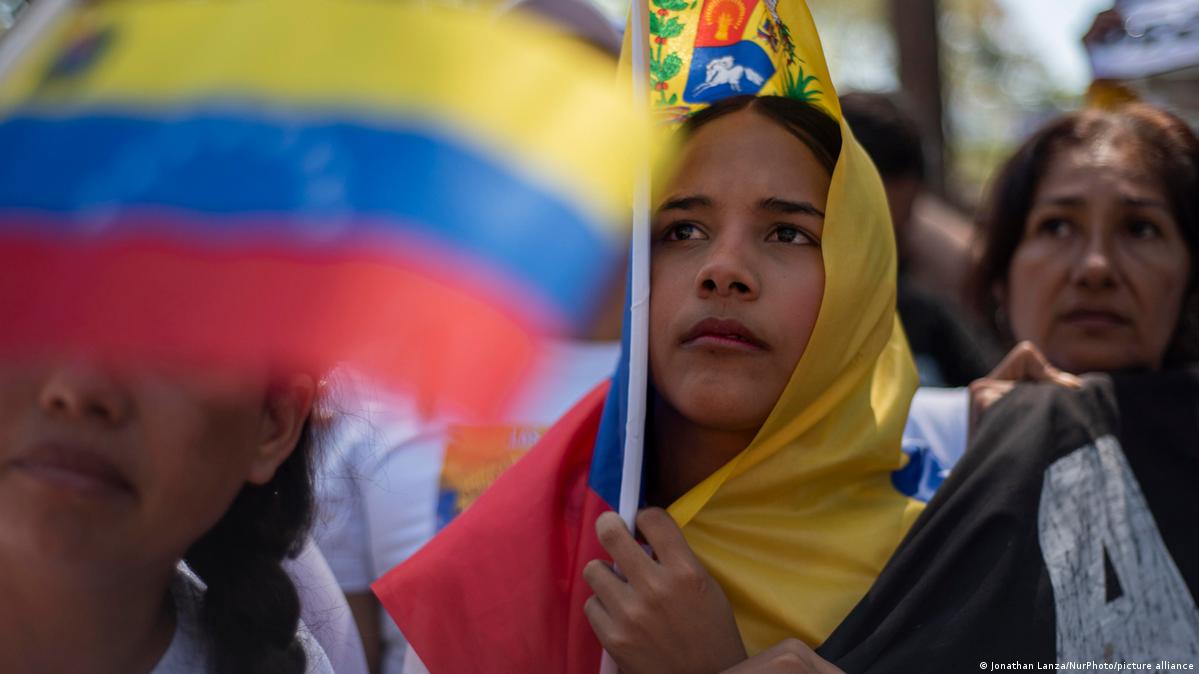
"We've been preparing for exactly this moment," German-Venezuelan businessman Thilo Schmitz tells DW.
"I'm certain that we'll do very good business over the next five years," the 59-year-old Caracas-born entreprenur predicts. By "this moment" he means the Venezuela's reopening after years of decline.
Venezuela has been changing rapidly since United States special forces abductedVenezuelan President Nicolas Maduro on January 3. Although interim President Delcy Rodriguez, Maduro's former deputy, continues to handle official business, Schmitz is convinced the US is pulling the strings.
"On an economic level, the Americans are calling all the shots," Schmitz said.
Venezuela opens oil sector
In late January, Venezuela — which has the world's largest oil reserves — opened the oil sector to foreign investment. After two decades of state control, efforts are now underway to attract private companies that bring expertise and capital. American delegations visit Caracas on a regular basis. Recently, the World Bank and the International Monetary Fundalso resumed relations with Venezuela.
The huge problem with Venezuela's oil
To view this video please enable JavaScript, and consider upgrading to a web browser that supports HTML5 video
In January, DW spoke with Schmitz in the aftermath of President Maduro's ouster. He was one of the very few business owners in Venezuela to speak out publicly.
"People have huge expectations," says Schmitz, who took over his father's stationery company in 1996. Today, Schmitz also deals in gluten-free foods and, since 2022, medical technology from Germany. According to Schmitz, the firm now has 50 employees, with revenue reaching $45 million (€38 million) in its best years.
"The old elite is still there"
The German-Venezuelan Chamber of Commerce and Industry (CAVENAL) estimates only ten German companies are present in Venezuela today. But for many years, the country was seen as a gateway for German industry to South America. Compared to the violent conflict plaguing neighboring Colombia, Venezuela was regarded as economically stable, offering a good quality of life.
However, many companies began leaving Venezuela after Hugo Chavez took office in 1998. Nicolas Maduro's rule, starting in 2013, coupled with increasing US sanctions, exacerbated the exodus.
While there appears to be renewed hope for economic recovery among the few companies that stayed, they are reluctant to talk. Siemens and Linde did not respond to DW's request for comment at the time of publication.
Meanwhile, Bosch confirmed that it no longer conducts business in Venezuela.
"At this point, it is still too early to assess Venezuela's future economic potential," a Bosch spokesperson told DW.
A German entrepreneur, who works in rural Venezuala and spoke to DW on condition of anonymity, said: "In principle, Donald Trump has only cut off the head of the Hydra; the old ruling elite is still there."
He added that the current phase is critical as interim President Delcy Rodriguez knows she cannot continue this way. He hopes government revenues will now also benefit the people.
"If there isn't a lasting change now, people will take to the streets again, despite the ongoing repression. And the people who have left Venezuela won't come back," he said.
"Everything needs to be rebuilt from scratch"
Mismanagement under Venezuela's socialist governments has taken a devastating toll. An estimated eight million Venezuelanshave left the country, including many highly educated people. Today, 28 million still live in Venezuela, which has seen economic output plummet and inflation spiral to over 400% in 2024
Thilo Schmitz, who witnessed the decline firsthand, believes the Venezuela's economy can only improve.
"Everything in this country needs to be rebuilt," Schmitz tells DW. He says public hospitals have received no investment in over ten years — a sector where he sees significant growth potential for his company.
Schmitz knows that without new elections, the country lacks legal certainty and predictability. Nevertheless, he senses a spirit of optimism: "People are willing to take risks again. We're getting small orders and inquiries."
Opportunities for German companies in Venezuela?
The German entrepreneur in rural Venezuela is less optimistic.
"Our employees continue to face the same difficulties: constant power outages, fuel shortages, and long lines at gas stations," he tells DW.
Alvaro Yaber, a Venezuelan engineer, predicts German companies could do good business in Venezuela, particularly in the energy and raw materials sectors.
He notes tha Siemens, for example, has a long history of expanding the power grid. Venezuela's transitional government has recently held negotiations with Siemens and the US conglomerate General Electric with a view to modernize the power grid, he says.
Exiled Venezuelans remain absent
For Yaber, who has worked in the energy sector in Venezuela and Colombia for more than three decades, it is particularly important that Venezuela develops a long-term strategy for its electricity supply.
"Energy can drive reconstruction and economic growth," he told DW. He estimates that building a sustainable power grid will require investments of between $30 and $50 billion over the next few years.
Thilo Schmitz believes the most important factors are whether banks will be able to grant loans again and whether skilled workers will return. For him, the shortage of skilled labour remains a key challenge for the country's economic development.
Is Venezuelan oil United States' main interest?
To view this video please enable JavaScript, and consider upgrading to a web browser that supports HTML5 video
This article was originally written in German.
AdvertisementСхожі новини
Texas daycare accused of H-1B scam; visas tied to unrelated job roles
Agent injured in Trump assassination attempt may have been shot by own colleague
На саміті ЄС - Вірменія говоритимуть і про Україну
