US reportedly seeks to indict Cuba's ex-president Raúl Castro as energy crisis deepens

 Facebook
 Twitter
 Flipboard
 Send
Send
 Reddit
 Linkedin
 Messenger
 Telegram
 VK
VK
 Bluesky
 Threads
 Whatsapp
US Secretary of State Marco Rubio has renewed an offer of €85 million in aid on the condition that the assistance be distributed by the Catholic Church, bypassing the government.
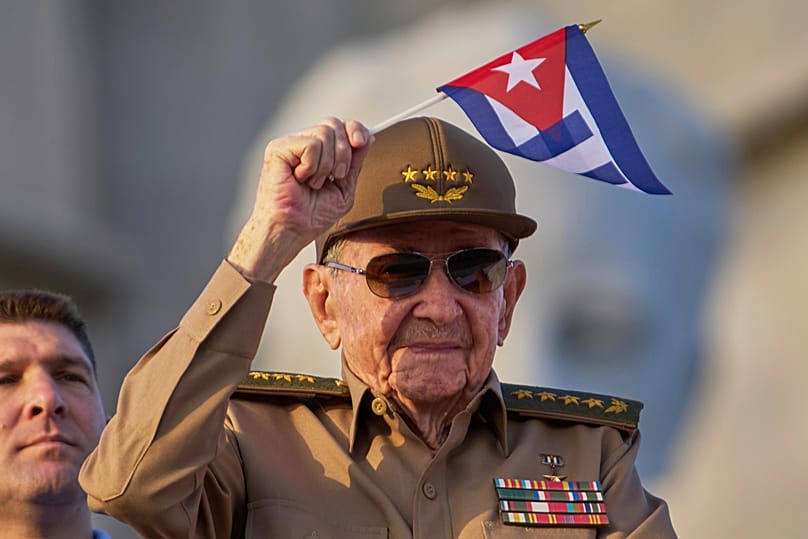
The United States is reportedly seeking to indict Cuba’s former President Raúl Castro, the 94-year-old brother of late leader Fidel Castro, as Washington ramps up pressure on the communist-run island, US media said on Thursday.
 ADVERTISEMENT
ADVERTISEMENT
ADVERTISEMENT
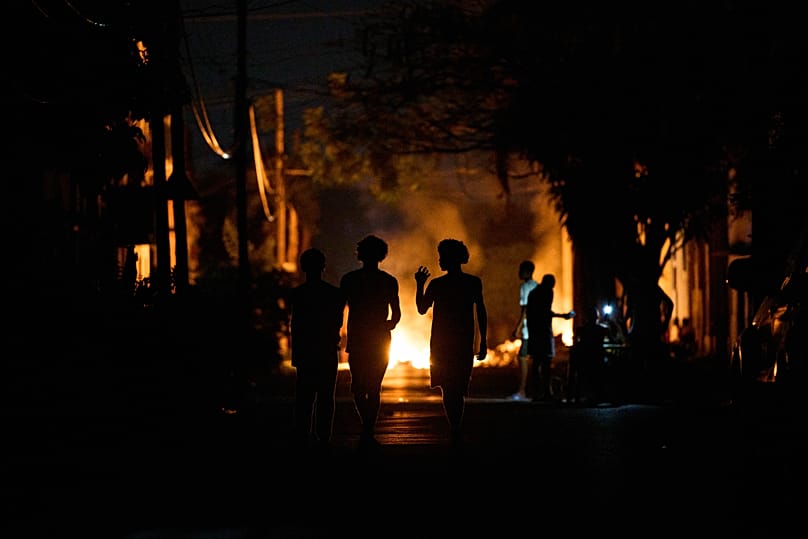
An indictment of Castro would be a stunning twist in the deepening crisis in US-Cuba relations, with the island enduring constant power outages prompted by President Donald Trump's fuel blockade.
Trump has repeatedly signalled that he wants to topple the communist government in Cuba.
Raul Castro, who succeeded his brother as president of Cuba, oversaw a historic 2015 rapprochement with the United States under Barack Obama that Trump later reversed.
CBS News reported that the possible indictment would focus on the 1996 downing of two civilian planes manned by anti-Castro pilots, citing US officials familiar with the matter.
The US justice department did not immediately reply to press requests for comment.
Ratcliffe in Cuba
Meanwhile, the head of the CIA visited the island on Thursday, an extraordinary step-up in contact between Washington and Havana as the communist-run island declared it is out of oil, a visit the Havana framed as a chance to calm tensions.
The Central Intelligence Agency, at the heart of the decades-long struggle between the United States and Cuba, confirmed a Cuban government statement about Director John Ratcliffe's visit.
Photos posted by the agency on X showed Ratcliffe alongside several people with blurred-out faces meeting with Ramón Romero Curbelo, chief of the intelligence of the Cuban Interior ministry, and other Cuban officials.
The visit comes during a deepening crisis in US-Cuba relations, with the island enduring constant power outages prompted by the US fuel blockade.
Only one tanker from Russia, a historic ally of the Cuban authorities, has got through.
Energy Minister Vicente de la O Levy told state television that oil has now "run out."
"The impact of the blockade is indeed causing us significant harm...because we are still not receiving fuel."
The meeting with Ratcliffe took place "in a context marked by the complexity of bilateral relations, with the aim of contributing to the political dialogue between both nations," a government statement read.
The exchanges "made it possible to demonstrate categorically that Cuba does not constitute a threat to US national security, nor are there any legitimate reasons to include it on the list of countries that allegedly sponsor terrorism," the Cuban statement added.
Cuba "has never supported any hostile activity against the United States, nor will it permit actions against any other nation to be carried out from Cuba," it emphasised, referring to allegations of a Chinese presence.
RelatedBlockade
One of Cuba's last economic lifelines was cut in January when US forces toppled the strongman leader of oil-rich Venezuela, Nicolás Maduro, and instituted a fuel blockade.
US Secretary of State Marco Rubio has renewed an offer of $100 million (€85 million) in aid on the condition that the assistance be distributed by the Catholic Church, bypassing the government.
In an interview with NBC News that aired Thursday, Rubio blamed Cuba for the island's current suffering.
"The Cuban people should know there's $100 million of food and medicine available for them right now," Rubio said. "It's in our national interest to have a prosperous Cuba, not to have a failed state 90 miles from our shores."
In a post on X, Cuban President Miguel Díaz-Canel urged the United States to instead lift its blockade.
"The damage could be eased in a much simpler and faster way by lifting or relaxing the blockade, since it is known that the humanitarian situation is coldly calculated and induced," he said.
Despite tensions, inter-governmental talks are ongoing, with a high-level diplomatic meeting taking place in Havana on 10 April, the first time a US government plane landed in the Cuban capital since 2016.
Go to accessibility shortcuts Share CommentsRead more
Marco Rubio says Cuba's leaders must go as US offers country €85 million in aid
Trump jokes that the US Navy will takeover Cuba 'almost immediately' on the way back from Iran
Cuba accuses US of 'extorting' Latin America by forcing countries to cancel doctors deals
Схожі новини
«Дивитися треба в бік своєї країни»: Очільник Закарпатської ОВА прокоментував зміну влади Орбана
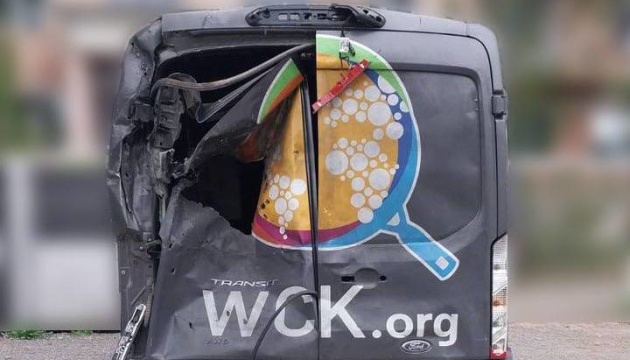
Росіяни атакували волонтерів у Херсоні: один із постраждалих - у тяжкому стані
IBF висунула ультиматум Усику перед боєм із Верховеном