US Innovator Crosses The Bridge From Powdered Milk To SAF
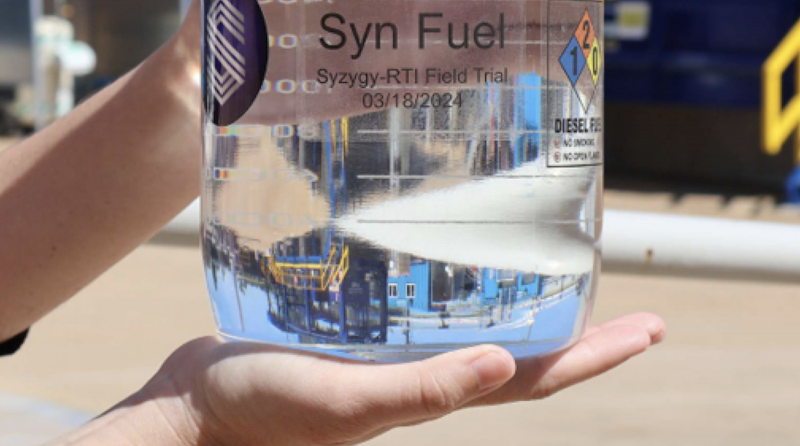 A biogas-to-fuel SAF system developed by the US startup Syzygy Plasmonics deploys renewable electricity to synthesize kerosene jet fuel. (cropped, courtesy of Syzygy).
May 11, 20261 hour
Tina Casey
0 Comments
Support CleanTechnica's work through a Substack subscription or on Stripe.
A biogas-to-fuel SAF system developed by the US startup Syzygy Plasmonics deploys renewable electricity to synthesize kerosene jet fuel. (cropped, courtesy of Syzygy).
May 11, 20261 hour
Tina Casey
0 Comments
Support CleanTechnica's work through a Substack subscription or on Stripe.
The law of unintended consequences is working overtime at the White House, now that the Iran War has sparked a global fuel crisis of epic proportions. As a result, the cost gap between petroleum products and renewable alternatives has suddenly tightened up. Among other markets, leading to a sudden surge in demand for alternative fuels, including sustainable aviation fuel (SAF).
The Long Road Of SAF Is Getting Shorter
The global aviation industry has been poking around the fringes of SAF since the early 2000s, with little to show. Although algae biofuel has received much attention as a promising non-food solution, until recently only waste fats and cooking oils were considered economically competitive with conventional kerosene jet fuel, and uptake has been achingly slow.
More recently, the e-fuels or electrofuels field is beginning to offer a more scale-up-able alternative. E-fuels leverage renewable energy to run electrolysis systems that push hydrogen from water. Combined with captured carbon, the result is a drop-in replacement for kerosene jet fuel that deploys waste gas instead of solids or oils.
The Texas-based startup Syzygy Plasmonics has developed a variation on the e-fuels theme. The firm’s photocatalytic system deploys a proprietary, light-operated “Rigel” biogas reactor that can produce synthetic fuels from biogas without combustion.
The reaction is touched off by interchangeable catalysts, meaning that the same reactor can produce different fuels, including syngas and hydrogen as well as SAF, among others.
Syzygy first sailed across the CleanTechnica radar in 2024, when the company described a method for cracking hydrogen from ammonia without encountering oxides of nitrogen, which is a challenge for conventional systems. Earlier this year, Syzygy surfaced in the SAF field again.
“On the sustainable aviation fuel side, Syzygy deploys waste gas culled from landfills, dairies, or wastewater, without relying on the high heat needed for conventional steam methane reforming,” CleanTechnica observed on January 21. “The technology was developed at Rice University in Texas over the course of two decades of research by Professors Naomi Halas and Peter Nordlander.”
The Iran War Effect
On February 28 of this year, US President Donald Trump launched his war against Iran. In response, Iran effectively closed the Strait of Hormuz, a key fuel shipping route, leading to a sharp spike in fuel prices globally. The war also sparked a renewed interest in producing fuels from locally sourced, renewable feedstocks as a matter of national defense as well as economic security.
News about SAF and other renewable fuels has been flying thick and fast ever since the first bombs began to drop on Iran, so it was no surprise to see a message from Syzygy in the CleanTechnica mailbox last week.
“Syzygy is electrifying the chemical production of SAF with proprietary light-driven reactor technology. Its approach enables the production of high-grade SAF domestically using local biogas and renewable electricity rather than relying on vulnerable global shipping lanes.” the company reminded. “It makes domestic, feedstock-flexible, and electrically driven fuel production not just the most sustainable option, but also a more resilient choice.”
“Since the Strait of Hormuz crisis began, Syzygy has seen a spike in inquiries from major airlines and commodities providers looking to de-risk supply chains through domestic, electric-driven fuel production,” the company continued.
From Powered Milk To SAF
Alongside the use of electricity from renewable resources, Syzygy’s Rigel bioreactor fits the local sourcing bill. The company’s first project, NovaSAF-1, is under way in Durazno, Uruguay, leveraging local renewable electricity and biogas from the Estancias Del Lago powdered milk plant. According to the Syzygy, the Durazno operation can produce synthetic paraffinic kerosene SAF at 90% less lifecycle emissions than conventional fuel.
On January 20, the Syzygy announced a binding six-year offtake agreement with the leading global commodities trading firm Trafigura. “This landmark offtake agreement covers the entire production volume of Syzygy’s first plant, NovaSAF-1, with first deliveries targeted in 2028,” the company explained. The agreement enables Syzygy to secure financing to construct the facility.
“The agreement also includes an option for Trafigura to purchase additional volumes from Syzygy’s future projects, offering potential to supply a meaningful volume of compliant SAF to meet regulatory mandates.” the company noted, adding that it anticipates a competitive business model within the SAF field, potentially outperforming waste cooking oil.
1 Million Tons Per Year
With the output from Nova SAF-1 all tied up for at least the next six years, other fuel buyers will have to wait their turn. However, the wait may not be all that long. Syzygy designed the Rigel system as a lather-rinse-repeat model for global application.
The wheels are already in motion. On March 3, just days after President Trump touched off the chain of events leading to a global fuel crisis, Syzygy announced plans for producing up to 1 million tons of SAF annually by 2035.
One key step in that direction is a new Memorandum of Understanding with the A-list Brazilian biogas producer Geo. “The agreement with Geo will leverage the company’s deep expertise in operating biogas assets paired with Syzygy’s proprietary, electrified GHG e-Reforming™ technology to convert biogas derived from sugarcane crop residues into SAF and other low-carbon fuels in Brazil,” Syzygy said in a press statement.
“Initial efforts will target sites capable of producing up to 100,000 metric tons per year, with an envisioned final aggregate scale exceeding 525,000 metric tons per year,” the company added, taking note the multi-site strategy outlined in the MOU.
“The companies will work together to identify biogas sites and develop multiple commercial scale SAF plants from Geo’s extensive network of existing and planned facilities across Brazil,” Syzygy explains.
The company’s other projects include a 30,000 metric tons-per-year facility in the Dominican Republic with plans for expanding into Spain, Italy, France, Colombia, and Chile. In addition, the company has an MOU with an SAF producer in Mexico, with the aim of establishing a portfolio of landfill-to-fuel projects totaling up to 100,000 tons per year.
While federal energy policy has taken a sharp U-turn here in the US, Syzygy is among the domestic innovators spotting opportunities to keep the decarbonization momentum going. Under an MOU with NorthStar Renewable Fuels (not to be confused with similarly named firms), Syzygy’s system will be licensed for North American use totaling 25 million gallons (about 75,000 metric tons) per year.
For that matter, federal energy policymakers are not necessarily opposed to bio-based solutions offered up by US innovators. Although President Trump has a personal vendetta against wind turbines that has rippled out to impact the domestic solar industry as well, his so-called “Energy Dominance” menu embraces other renewable resources, namely, biomass, geothermal energy, hydropower and pumped hydro energy storage, along with the yet-to-be-realized field of marine energy. Go figure…
Photo: A biogas-to-fuel SAF system developed by the US startup Syzygy Plasmonics is sparking a fresh round of interest, now that the Iran war has cut the cost gap between sustainable aviation fuels and conventional kerosene jet fuel (cropped, courtesy of Syzygy).
Sign up for CleanTechnica's Weekly Substack for Zach and Scott's in-depth analyses and high level summaries, sign up for our daily newsletter, and follow us on Google News! Advertisement Have a tip for CleanTechnica? Want to advertise? Want to suggest a guest for our CleanTech Talk podcast? Contact us here. Sign up for our daily newsletter for 15 new cleantech stories a day. Or sign up for our weekly one on top stories of the week if daily is too frequent. CleanTechnica uses affiliate links. See our policy here.
CleanTechnica's Comment Policy