Urban Art Biennale: Rust, dust and decay revamps Germany's Völklingen ironworks

 Facebook
 Twitter
 Flipboard
 Send
Send
 Reddit
 Linkedin
 Messenger
 Telegram
 VK
VK
 Bluesky
 Threads
 Whatsapp
Copy/paste the article video embed link below:
Whatsapp
Copy/paste the article video embed link below:
 Copied
At one of Europe’s most imposing industrial relics, urban artists are transforming rust, dust and decay into a giant open-air gallery. The Urban Art Biennale has returned to Germany’s Völklingen Ironworks, a UNESCO World Heritage Site.
Dozens of urban artists from 17 countries have converged on one of Europe's most important industrial landmarks for a show that makes full use of its sprawling spaces and ubiquitous aura of abandonment.
 ADVERTISEMENT
ADVERTISEMENT
ADVERTISEMENT
Germany's Völklinger Hütte, or Völklingen Ironworks, is the setting for the Urban Art Biennale 2026 which opens this Saturday.
“This location is at the core of street art and graffiti art,” said Ralf Beil, the general director of the site, which is open to the public as a museum.
“It all began in industrial places like this. [Artists] “love this place and they do works for the Völklinger Hütte, in the Völklinger Hütte, with the Völklinger Hütte,” added Beil.
Remains of the day
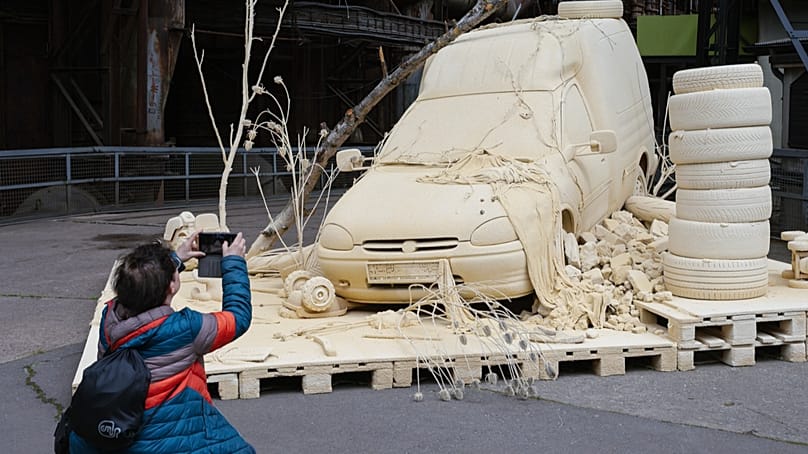
This year's show features 50 artists. Among them is France-based Tomas Lacque, whose installation features a small van, a pile of tires, toys and debris covered in a coat of paint. Standing in a hall where furnaces once worked, it appears to evoke fossil-fueled mobility being covered in ash like Pompeii.
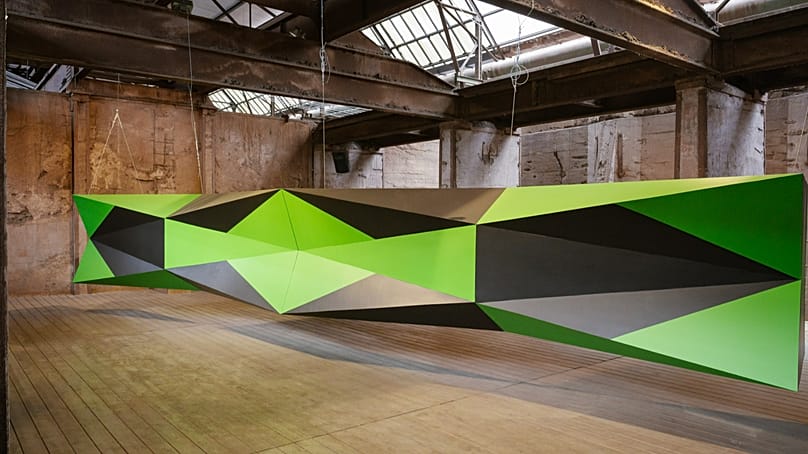
Dutch artist Boris Tellegen, better known as Delta, contributed a massive green-and-black wooden sculpture that lights up the interior of the ironworks.
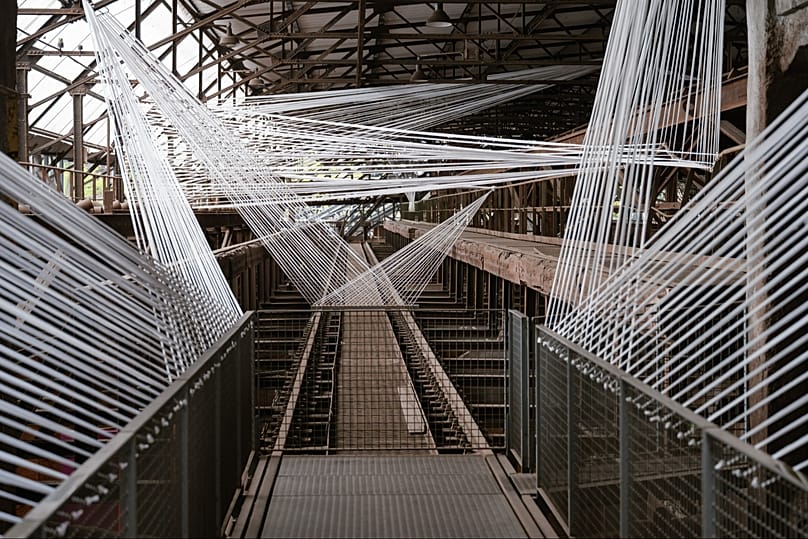
French-based collective Vortex-X, who recycle salvaged material, stretched rays of white industrial fabric across one of the building's halls in a work titled “Memory in transit.”
Spanish artist Ampparito has painted the words “no hay nada de valor” (roughly, "There is nothing of value here") in huge white letters on the roof of one of the site's massive sheds — a work best seen from a viewing platform 45 meters above ground level.
Heritage and history
The ironworks spreads over a 6-hectare site, a maze of chimneys and furnaces in which visitors still encounter ominous industrial-era signs warning of risks such as a “danger of crushing.” They dominate the town of Völklingen, near Germany’s border with France.
They have been on UNESCO’s world heritage list since 1994, recognised as “the only intact example, in the whole of western Europe and North America, of an integrated ironworks that was built and equipped in the 19th and 20th centuries.”
The furnaces have been cold since 1986, when production ended, and the site has been preserved as it was then. But its appearance is much older, as no new installations were added after the mid-1930s.
“It’s so dusty and it’s so old, but it’s beautiful, you know, there’s beauty in decay,” said British artist Remi Rough. “I think what I’ve done makes you kind of just perceive it in a bit of a different way.”
Danish artist Anders Reventlov said he felt “humble to be able to do something here.”
“As somebody told me ... it was hell to work here,” he said. “Now it’s not hell. It’s like a nice place, people walking around, there are bees, there are beautiful flowers, but yeah, we still remember the history and that’s super important.”
Beil said that organizers “want pieces which are really original for this space and this also is then prohibiting (them) from being commercial."
“This is an installation for the space,” he said. “This is pure art.”
The Urban Art Biennale opens Saturday and runs until 15 November 2026.
Go to accessibility shortcuts Share CommentsRead more