UK: Keir Starmer tells Cabinet he will continue in place, as four junior ministers quit
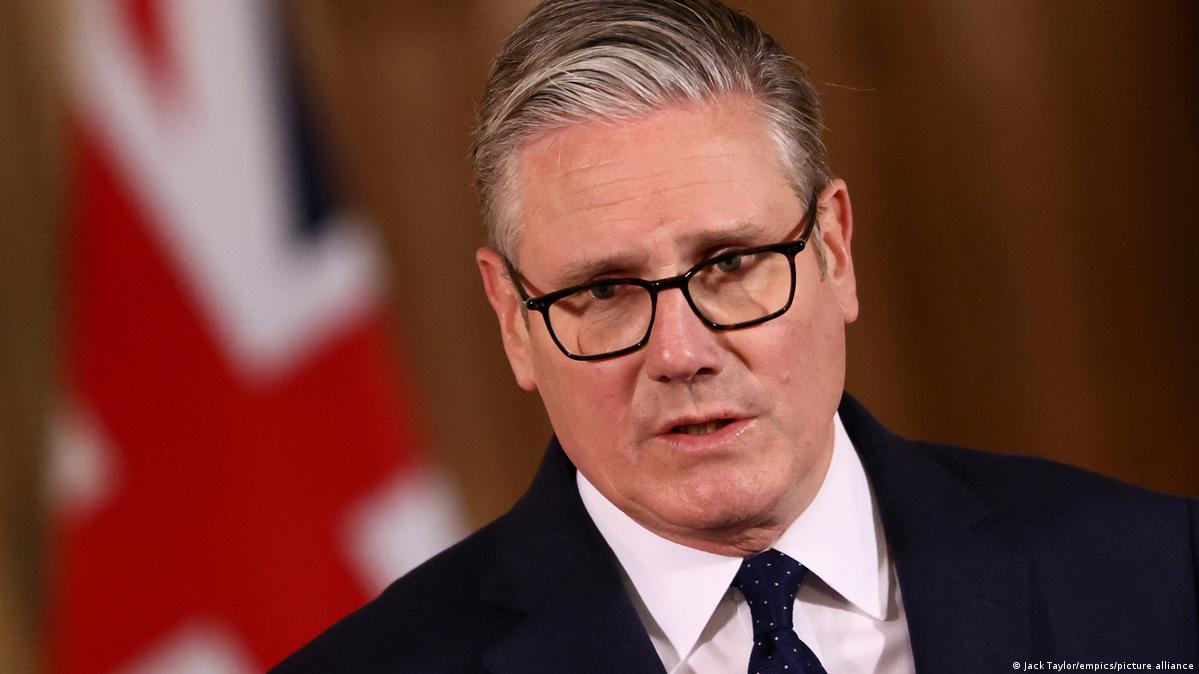
British Prime Minister Keir Starmer continued to fight rumors of dissatisfaction within his Labour Party on Tuesday, in the aftermath of severe losses in local and regional elections in the UK last week.
A major speech on Monday when Starmer said he was "not walking away" did little to calm the waters, and a junior minister in his government, Miatta Fahnbulleh, became the first to resign on Tuesday, urging Starmer to "set a timetable for an orderly transition."
Safeguarding Minister Jess Phillips followed a few hours later, with Phillips saying in her letter to Starmer that she thought he was "a good man fundamentally" but "that is not enough."
A Welsh MP, Alex Davies-Jones, was next in line, highlighting losses in the Welsh parliament — once a Labour stronghold — in particular. By early evening, Glasgow South West MP Zubir Ahmed also published a resignation letter.
What did Starmer tell his Cabinet?
As his Cabinet convened mid-morning, nominally to discuss the reopening of parliament following the vote on Wednesday, Starmer's office was forced to issue another statement voicing his intention to remain in his post.
"The Labour Party has a process for challenging a leader and that has not been triggered," the statement from 10 Downing Street said.
"The country expects us to get on with governing. That is what I am doing and what we must do as a Cabinet," Starmer told his colleagues.
He noted that, "The past 48 hours have been destabilizing for the government and that has a real economic cost for our country and for families."
The statement did not explicitly address or refute the notion of "an orderly transition," as some Labour rebels have suggested, over a longer period of time — addressing the immediate term instead.
What did Cabinet minsters say?
After the Cabinet meeting several ministers, including Liz Kendall and Steve Reed and James Murray all said that Starmer had their "full support," using an identical phrase.
One politician, Health Minister Wes Streeting, raised eyebrows by ignoring questions from the assembled press and walking out silently. Streeting is seen as one potential challenger for Starmer.
Defense Minister John Healey wrote online that more uncertatinty was not in Britain's interest.
"Our full focus now must be on dealing with immediate economic and security challenges," he said.
How did we get here?
For those not following British politics closely, here's a quick recap of the past almost two years, from Starmer's Labour winning a massive majority in 2024 general elections to its woeful showing last week in Scotland, Wales, and on a local level in much of England.
- July 4, 2024: Labour wins a huge majority, 411 seats, in general elections, ending 14 years of Conservative-led government
- Notably, though, the party only won 33.7% of the vote — one of its lowest vote shares of all time — winning as much by virtue of everybody else collapsing as its own popularity
- A series of policy U-turns, often amid criticism from Labour backbenchers, began to undermine the government's credibility and approval ratings
- One scandal in particular, the appointment and then sacking of Peter Mandelson as US ambassador repeatedly came back to haunt Starmer amid the release of the so-called Epstein files
- Reform on the populist right and the Greens, well to the left of Labour, continued to gain momentum with the Conservative Party in the doldrums and Labour also losing popularity
- Nationalist parties in Scotland and Wales similarly enjoyed a resurgence as Labour — the historical political powerhouse in both those countries — wobbled
- This culminated in major losses to Reform, the Greens, the Scottish National Party and Plaid Cymru in Wales in regional and local elections last week
Who in Labour has put pressure on Starmer and what are they saying?
A junior minister, Miatta Fahnbulleh, became the first member of Starmer's government to resign on Tuesday.
Only a member of parliament since 2024, the Minister for Devolution, Faith and Communities is a former left wing think tanker known as an ally of former Labour Party leader Ed Miliband.
"Our country faces enormous challenges and people are crying out for the scale of change that this requires," she wrote in her resignation letter, which she published online. "The public does not believe that you can lead this change — and nor do I. Therefore, I urge you to do the right thing for the country and the Party and set a timetable for an orderly transition so that a new team can deliver the change we promised the country."
Safeguarding Minister Jess Phillips, charged with combating violence and crimes against women and girls, also submitted her resignation on Tuesday afternoon. She said she thought Starmer was a good man but also accused him of not being bold enough.
"The desire not to have an argument means we rarely make an argument, leaving opportunities for progress stalled and delayed," Phillips alleged.
Alex Davies-Jones was third to quit, another minister responsible for helping women and girls facing violence, but this time based in Wales. She highlighted Labour losses in its Welsh heartland in particular.
"The scale of the electoral defeats at the Senedd Cymru and across the United Kingdom have been catastrophic," she said.
The MP for Glasgow South West in Scotland, Health Innovation and Safety Minister Zubir Ahmed, made it a quartet of junior ministers on Tuesday evening.
He said in his letter to Starmer that while doorstep campaigning in Scotland for the elections, "your name specifically" was cited as a reason for not voting Labour, and thereby facilitating "an incompetent fifth term SNP [Scottish National Party] government" at Holyrood.
The first MP to question Starmer's position was Catherine West over the weekend.
She initially urged more senior politicians to launch a leadership challenge against Starmer, saying that if they did not do so by Monday, she would.
But after Starmer's speech seeking to put the resignation rumors to bed on Monday, West pivoted to a similar stance to that adopted by Fahnbulleh the following day — calling for Starmer to initiate an "orderly transition" in the coming weeks and months.
What happens next?
There's no escape from the limelight for Starmer or the British government in the immediate term.
On Wednesday, King Charles III will read out the "King's Speech" as parliament reconvenes following last week's elections.
This name is something of a misnomer, the speech is not written by the King it is merely read out by him. Written by Starmer's government it will lay out some of their legislative priorities for the coming months and years. Starmer said on Monday that a guiding principle of "strength through fairness" would be "writ large" in this speech.
When it comes to a potential Labour leadership challenge, if MPs decide they want to initiate a hostile challenge to Starmer, they need the support of 20% of Labour's MPs.
That figure currently equates to 81. As many as 80 have already voiced a desire for Starmer to make way.
But crucially, they differ both on how they want Starmer to leave — whether immediately or within the next few months — and who would be best suited to succeed him. When asked by a reporter on Monday, Starmer said he would contest a leadership challenge if one emerged.
Why voters are so unhappy with leadership in democracies
To view this video please enable JavaScript, and consider upgrading to a web browser that supports HTML5 video
Edited by: Rana Taha
AdvertisementСхожі новини
UK: Keir Starmer tells Cabinet he will continue in place, as four junior ministers quit
From election drubbing to minister resignations: Why Keir Starmer is in trouble?

'Gray zone' on some parts of front stretches for up to 10 kilometers – Trehubov