Russian Night Strike on Dnipro Kills Two, Injures Eight, Regional Governor Reports
Russian Night Strike on Dnipro Kills Two, Injures Eight, Regional Governor Reports
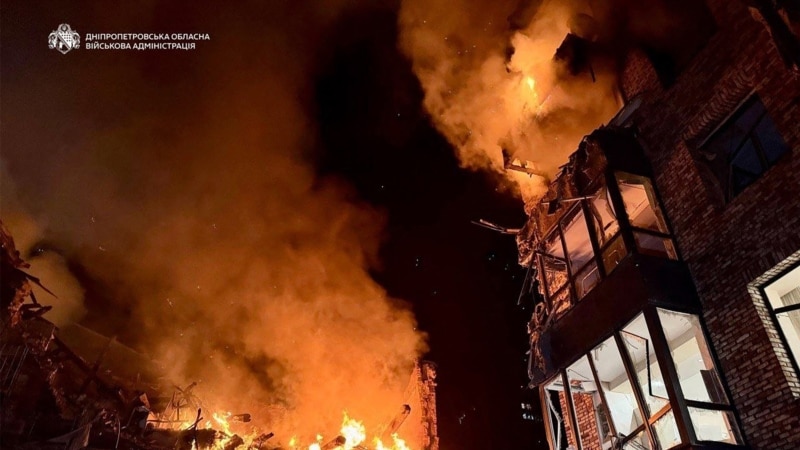
A Russian military attack on Dnipro during the night of April 23 resulted in two fatalities and eight injuries, according to Oleksandr Honcharenko, head of the Dnipro Regional Military Administration. One additional person remains missing.
Among those wounded were two children—girls aged 9 and 14—who were hospitalized along with three adults, all in stable condition, Honcharenko stated. Residential buildings sustained damage from the strike, and fires broke out across the city.
Pattern of Civilian Targeting
Russian armed forces regularly conduct strikes against Ukrainian cities and civilian infrastructure using various weapons systems, including attack drones, missiles, guided aerial bombs, and multiple rocket launchers. Ukrainian authorities and international organizations classify these attacks as war crimes committed by the Russian Federation, characterizing them as deliberate assaults on civilian populations.
Strikes targeting essential services—power plants, heating systems, water supply networks, and medical facilities—designed to deprive civilians of electricity, heat, water, communications, and healthcare are recognized as acts consistent with genocide according to Ukrainian legal experts, genocide researchers, and human rights advocates.
Allegations of Genocidal Actions
Legal professionals contend that Russia has committed all categories of acts that may constitute genocide under international law, including:
- Stated intent for destruction: Russian leadership has repeatedly declared that Ukrainians as an ethnic group do not exist and represent an "artificially created" nation that must be eliminated, with Ukraine itself having no place in the future
- Public calls for destruction of Ukrainian people
- Systematic targeting of life-sustaining infrastructure and healthcare facilities
- Persecution and elimination of pro-Ukrainian civilians in occupied territories
- Destruction of the intelligentsia, including teachers, artists, and cultural bearers
- Educational indoctrination aimed at changing children's identity in occupied schools
- Deportation of children to Russia for identity alteration
- Systematic destruction of Ukrainian cultural artifacts, library collections, and museum pieces documenting Ukrainian history
International Legal Framework
The United Nations Convention on the Prevention and Punishment of the Crime of Genocide was adopted by the General Assembly in 1948. The 149 signatory nations are obligated to prevent and punish genocidal acts both during wartime and peacetime.
The Convention defines genocide as acts committed with intent to destroy, in whole or in part, a national, ethnic, racial, or religious group. Genocidal indicators include killing group members, deliberately creating conditions for group destruction, preventing births within the group, forcibly transferring children between groups, and incitement to commit such acts.
Moscow continues to deny that Russian forces deliberately target civilian infrastructure in Ukrainian cities and towns, and denies responsibility for civilian casualties and the destruction of hospitals, schools, kindergartens, and energy and water supply facilities.
Схожі новини

Геологи розгадали п'ятимільйонолітню загадку річки Колорадо
Поліція розкрила мотиви київського стрільця: нереалізованість та радикальні погляди