Turning point: Germans lose faith in US as NATO ally and turn to defence, study shows

 Facebook
 Twitter
 Flipboard
 Send
Send
 Reddit
 Linkedin
 Messenger
 Telegram
 VK
VK
 Bluesky
 Threads
 Whatsapp
A German defence survey suggests that trust in the US as a NATO ally has fallen sharply, while support for higher defence spending and the military has continued to rise.
Since Russia's full-scale invasion of Ukraine, the German military (Bundeswehr) has returned to the centre of political debate in Germany, amid arguments over rearmament, conscription and vast increases in defence spending.
 ADVERTISEMENT
ADVERTISEMENT
ADVERTISEMENT
But how do Germans actually view their armed forces and has public opinion shifted in recent years?
Dr Timo Graf, a senior researcher at the Bundeswehr's Centre for Military History and Social Sciences in Potsdam, explored those questions in his study, "Germany in a Military Leadership Role? Public Opinion on Security and Defence Policy in the Federal Republic of Germany 2025."
The research forms part of a long-running annual survey series dating back to 1996.
Conducted independently of day-to-day political events, it offers a rare insight into how German attitudes towards security, defence and the military have evolved over time. Using around 300 questions, the study examines public opinion on foreign policy, defence and security issues, as well as perceptions of the Bundeswehr itself.
Euronews: Were you surprised by the study's findings?
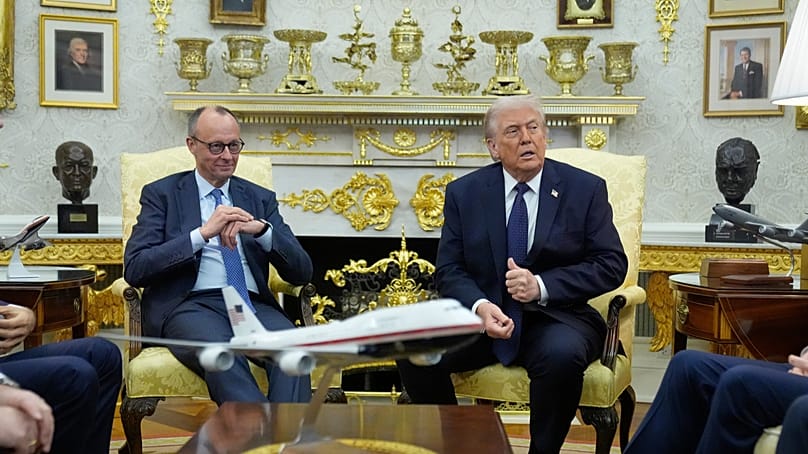
Dr Graf: Since 2022, we've seen a genuine Zeitenwende (turning point) in the way Germans think about defence. In 2025, the clearest trend in the data was the sharp decline in trust in the United States as a NATO ally.
Depending on the specific question, trust dropped by as much as 28 percentage points. At the same time, the figures point to a growing willingness among Germans to invest more in the country’s own defence capabilities.
Before 2022, support for higher defence spending was relatively modest. It then rose sharply after Russia's full-scale invasion of Ukraine and has remained just below 60% ever since. We subsequently saw a further boost driven by the so-called "Trump effect."
Last year alone, support increased by another seven percentage points to 65%, the highest level recorded since 1996.
Euronews: Could this loss of trust deepen even further this year, given everything that has happened since Trump returned to office – from Greenland and Venezuela to the war with Iran and renewed tensions within NATO?
Dr Graf: On the one hand, that's entirely plausible. When we conducted the survey in spring 2025, Trump had only just returned to office. At that stage, there was more of an expectation that relations could become more difficult again, particularly in relation to NATO and European security.
Even then, however, the damage to the US image in our survey was striking. Since then, we’ve had Greenland, the war in Iran, further criticism of NATO and Europe from Washington, as well as the US approach to Russia's war against Ukraine. You would expect all of that to influence public perceptions of the United States. That said, I haven’t seen this year’s data yet, as the survey is still ongoing. Nor would I necessarily expect another shift on the scale we saw last year, with declines of more than 20 percentage points. In absolute terms, trust is already at a very low level.

On some questions, only around a third of respondents still view the US as a reliable partner at all. So while there may well be further declines on individual issues, I don’t think we’ll see another drop comparable to last year's. Otherwise, trust would effectively have to fall close to zero and I don't think that's realistic.
My impression is that public opinion has now consolidated around a relatively hard core of committed transatlanticists and that group is unlikely to shrink much further.
Euronews: When listening to politicians, many still emphasise the US remaining an important partner for Germany. Doesn't that somewhat contradict the findings of the study?
Dr Graf: No, not really. Germans tend to view the relationship with the US in a fairly pragmatic and nuanced way. We ask a broad range of questions on the issue. While support for statements such as "the US is a reliable partner for Germany" has fallen by 28 percentage points, other findings paint a more nuanced picture. For instance, 58 % still agree that the US should remain involved in Europe's defence, while only 18 % disagree.
That suggests a clear majority of Germans still recognise that Europe, and Germany in particular, remains heavily reliant on the United States when it comes to security. You can see the same pattern in attitudes towards nuclear deterrence. Around 46% still support keeping US nuclear weapons stationed in Germany as a deterrent against Russia. Support for that position has even risen slightly.
Taken together, the picture is not contradictory. Even under Trump, many Germans would still prefer to have the US on their side, if that remains politically feasible. At the same time, there is a growing awareness of just how dependent Europe, and Germany in particular, still is on American military capabilities.
Euronews: One thing that also stood out in the study was the relatively high level of public support for the Bundeswehr. Are there big generational differences?
Dr Graf: In some circles, there is still this idea that Germans, because of their history, have an inherently difficult relationship with the military. There is some truth to that in the sense that many Germans remain cautious about the use of military force. That should not be mistaken for pacifism, though. Germans tend to approach the use of military force with caution because they see it as a serious step, not because they reject it outright or on principle.
Germany has never been a predominantly pacifist society. Our data clearly supports that conclusion. Even before 2022, a clear majority of more than 60% of Germans took a fairly pragmatic view and considered both military and civilian means to be legitimate tools for pursuing foreign and security policy objectives. Only around 20% could be described as genuine pacifists, meaning they categorically reject military force and support exclusively civilian means.
At the other end of the spectrum, only around 6% could be described as militarists. The number of isolationists is similarly small. What is particularly striking is that Russia's war against Ukraine has done very little to change these underlying attitudes since 2022. The relative size of these groups has remained remarkably stable. The second point concerns the assumption that Germans are broadly pacifist and therefore sceptical of the Bundeswehr.
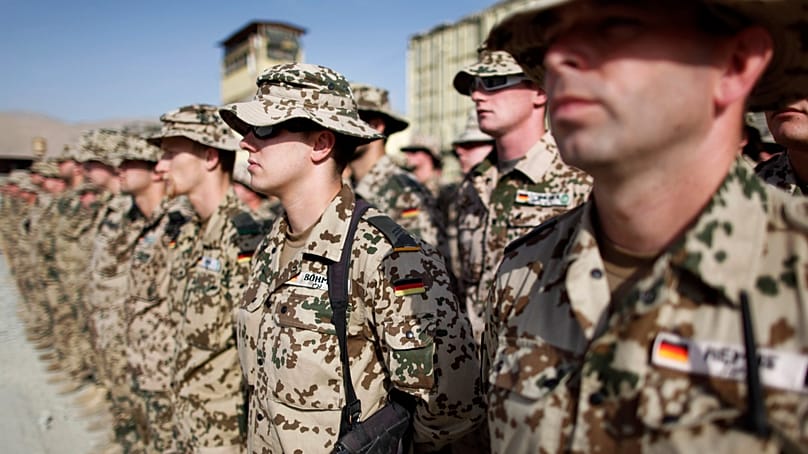
Our data paint a different picture. Since 2000, we have repeatedly asked the same question about people’s general attitude towards the Bundeswehr. At least three quarters of respondents consistently say they have a positive opinion of it, while only 14% say they view it negatively.
The highest level of scepticism we ever recorded was 23% in 2002, at the very beginning of the Afghanistan deployment. We also ask about trust, importance, prestige and people's broader relationship with the Bundeswehr. Across all of those indicators, the picture is remarkably consistent: there has only ever been a relatively small minority that clearly rejects the Bundeswehr, while a large majority views it positively as an institution. There are, however, two important caveats.
First, overseas deployments – Afghanistan or Mali, for example – were often viewed critically by the public. That has frequently been interpreted as pacifism or as a broader rejection of the Bundeswehr.
But our data suggests something quite different: attitude towards the Bundeswehr itself remained broadly positive, regardless of the missions it was carrying out. What many people questioned instead was the political mandate behind those deployments. So the real Zeitenwende is not about attitudes towards the Bundeswehr itself, those were already largely positive, but about people's willingness to support its mission.
And that is closely linked to the fact that the mission itself has changed. Today, the focus is no longer on overseas deployments such as Afghanistan or Mali, but once again on territorial and collective defence.
Most people understand that shift and support it. Against the backdrop of Russia's full-scale invasion of Ukraine, 65% now see Russia as a direct military threat to Germany. That is why there is now broader support for a return to national and collective defence, and for moving away from international crisis management as the Bundeswehr's primary role.
As for generational differences, yes, younger people do tend to be somewhat more cautious on defence issues. Their view of the Bundeswehr is slightly less positive, and they are somewhat less supportive of higher defence spending.
But even among younger respondents, there are still clear majorities in favour of both the Bundeswehr and increased defence spending. The gap compared with older generations is usually around five or six percentage points, not 10 or 20. So I would not describe it as a generational divide.
Euronews: Has that changed since 2022?
Dr Graf: No, not really. Younger people have always tended to be slightly less supportive of the armed forces than the rest of the population. But even among younger generations, a clear majority still hold broadly positive views of the Bundeswehr. And much of that comes down to socialisation and personal experience.
After all, how much contact has the younger generation actually had with the Bundeswehr?
Conscription was suspended in 2011, the armed forces were downsized and subjected to years of cuts. As a result, the Bundeswehr gradually disappeared from everyday public life. Bases were closed, there were fewer soldiers in uniform and people simply had fewer opportunities to come into contact with members of the armed forces in their daily lives.
At the same time, the Bundeswehr was deployed on overseas missions that were often viewed critically by the public, which also shaped perceptions. And then there was the broader security environment at the time. For years, much of Europe lived with the sense that it was surrounded by friends and no longer really needed strong armed forces. Against that backdrop, it is perfectly understandable that younger generations developed a different relationship with the Bundeswehr.
Euronews: Does political affiliation play any role?
Dr Graf: Yes and no. Political affiliation does matter, but even among groups that have traditionally been more critical of the military, our data show higher levels of support than many might expect.
Even among Left party voters, an absolute majority see Russia as a threat. A majority also supports higher defence spending. Support stands at around 75% among CDU/CSU voters, 73% among SPD voters, 68% among AfD voters and 62% among Green voters.
But even 50% still amounts to an outright majority. We see a similar pattern when it comes to attitudes towards the Bundeswehr itself. Compared with other groups, there is certainly more scepticism towards the Zeitenwende, rearmament and the idea of treating the military as a completely normal part of society.
But most left-leaning voters are not fundamentally opposed either to the Bundeswehr or to strengthening Germany’s defence capabilities.
RelatedEuronews: Public support is particularly high when it comes to territorial and collective defence. Did you also ask questions specifically about the brigade in Lithuania?
Dr Graf: No, not specifically about the Lithuania brigade. The brigade is still being built up, so we did not want to ask detailed questions about something that has not yet been fully established. But we have, for many years now, asked very specific questions about Germany's military engagement on NATO's eastern flank. That naturally includes deployments already in place, such as the Enhanced Forward Presence (eFP) in Lithuania, which is set to become part of the Lithuania brigade.
One of the statements we asked respondents to assess was: "Germany should strengthen its military engagement in order to secure NATO's eastern flank." Some 47% agree, 26% are undecided, and only 23% oppose the idea. So overall, attitudes are fairly positive and close to an absolute majority.
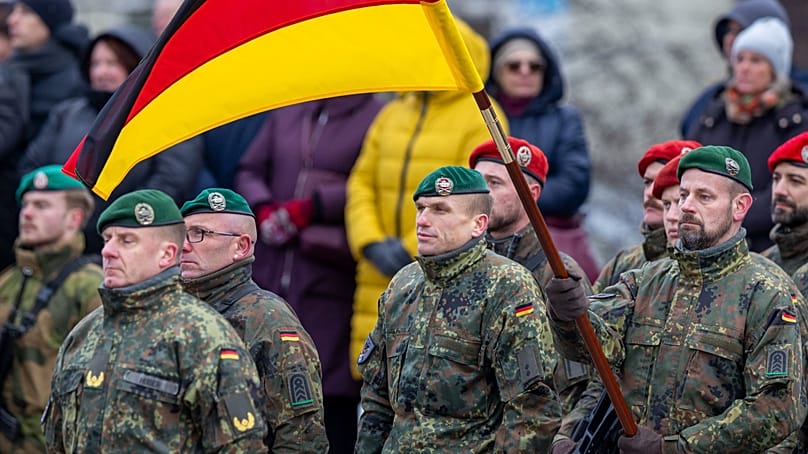
We see a similar picture in response to the statement: "Germany should provide military support to the Baltic states so that they can defend themselves against Russia." That is actually quite a strong formulation, because it directly raises the prospect of a military conflict with Russia. Even so, 50% agree, 24% are undecided, and only 22% clearly oppose it. We see a similar pattern when it comes to specific Bundeswehr deployments such as Baltic Air Policing or the eFP mission in Lithuania.
And that is only about the Baltics. When it comes to missions such as airspace surveillance over Poland, support rises to well above 50 %. For many people, Poland is geographically and politically easier to relate to than the Baltic states, which for some Germans still feel relatively distant and unfamiliar.
RelatedIn general, the closer these deployments are perceived to be to home, the stronger public support tends to be. It is therefore no surprise that the Baltic Sentry mission in the Baltic Sea enjoys by far the highest level of support, with an approval rating of 66%.
By contrast, many people never really bought into the argument that the Bundeswehr needed to train security forces in Mali in order to reduce violence and ultimately curb migration to Europe. Today, however, the situation feels radically different.
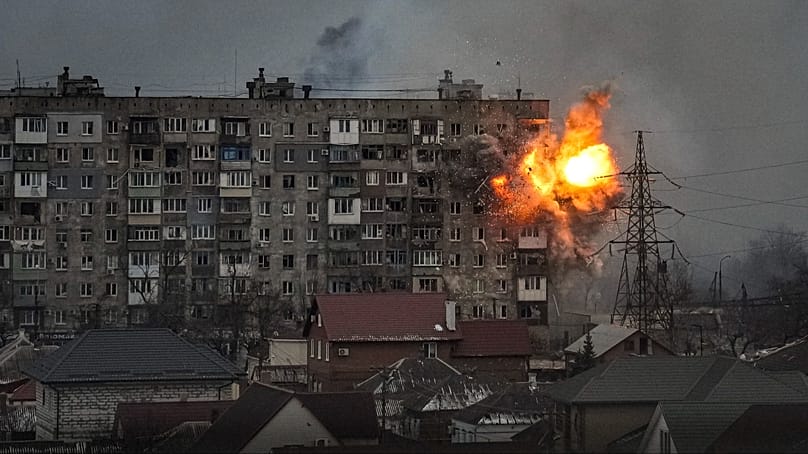
Russia's war of aggression against Ukraine is seen as far more consequential, from migration and inflation to a genuine military threat to Europe as a whole. At the same time, hybrid attacks are increasingly becoming part of everyday reality, ranging from sabotage and espionage to cyberattacks and disinformation campaigns.
Add to that the growing loss of trust in the US and many people now see Europe facing an increasingly dangerous and complex security environment, one that is driving calls for greater investment in defence.
Go to accessibility shortcuts Share CommentsRead more
Germany targets major stake in Europe’s tank titan KNDS
Police in Germany arrest married couple on suspicion of spying for China
Germany plans 'active cyberdefence' as online attacks rise, interior ministry says
Схожі новини
Питання переселенців, жителів ТОТ, захисту інфраструктури в Україні, дрони обговорили в перший день Globsec-2026
Latvia scrambles NATO jets in drone alert, the latest of several in Baltic
Is the US deepening its military involvement in Nigeria?