Trump’s remarkable military failure shows abject fiasco of his Iran war
Iran’s missile arsenal is mostly intact and still capable of attacking America’s allies beyond the Gulf states, two months into a joint US-Israeli bombing campaign.
The White House has repeatedly claimed that Iran’s military capacity has been “decimated” and wiped out, but Nato sources have told The Independent this is not true.
“Whatever anyone is saying in public, we estimate that the Iranians have at least 60 per cent of their missile capability. How else can you explain, for example, how they can continue to attack Gulf nations with missiles and drones?” said a senior Nato source in Europe.
This is the latest blow to American claims to have somehow won a war that has achieved none of its stated aims and shown the limits of US power at a time when Donald Trump is heading to China, hoping to be perceived as first among equals.
“Everybody knows that Trump and Hegseth are talking nonsense when they make claims to have destroyed Iran militarily,” the source continued.
 open image in gallery
“The missiles are largely intact, and the top people who were negotiating with the US before the US-Israeli attacks are now dead, so hardliners are in charge. Meanwhile, there has been no uprising because the Islamic Revolutionary Guard Corps is intact and used rifles to oppress their people, not missiles, anyway.”
As part of its war aims, the US said it wanted to see Iran’s population rise against a murderous and authoritarian regime in Tehran. It has not done so.
The White House said it aimed to destroy Iran’s nuclear programme. It has not done so. The US said it wanted to end Iran’s destabilising activities around the Middle East. It has not done so.
But Iran has managed to cause a surge in global fossil fuel prices, with oil above $100 (£74) a barrel, and crippling reductions in world supplies of fertiliser during the northern hemisphere’s planting season, by closing the Strait of Hormuz.
Recent reporting from The New York Times and The Washington Post has reinforced the understanding that Iran’s military capacity has survived an onslaught that Benjamin Netanyahu, Israel’s prime minister, insists is complete.
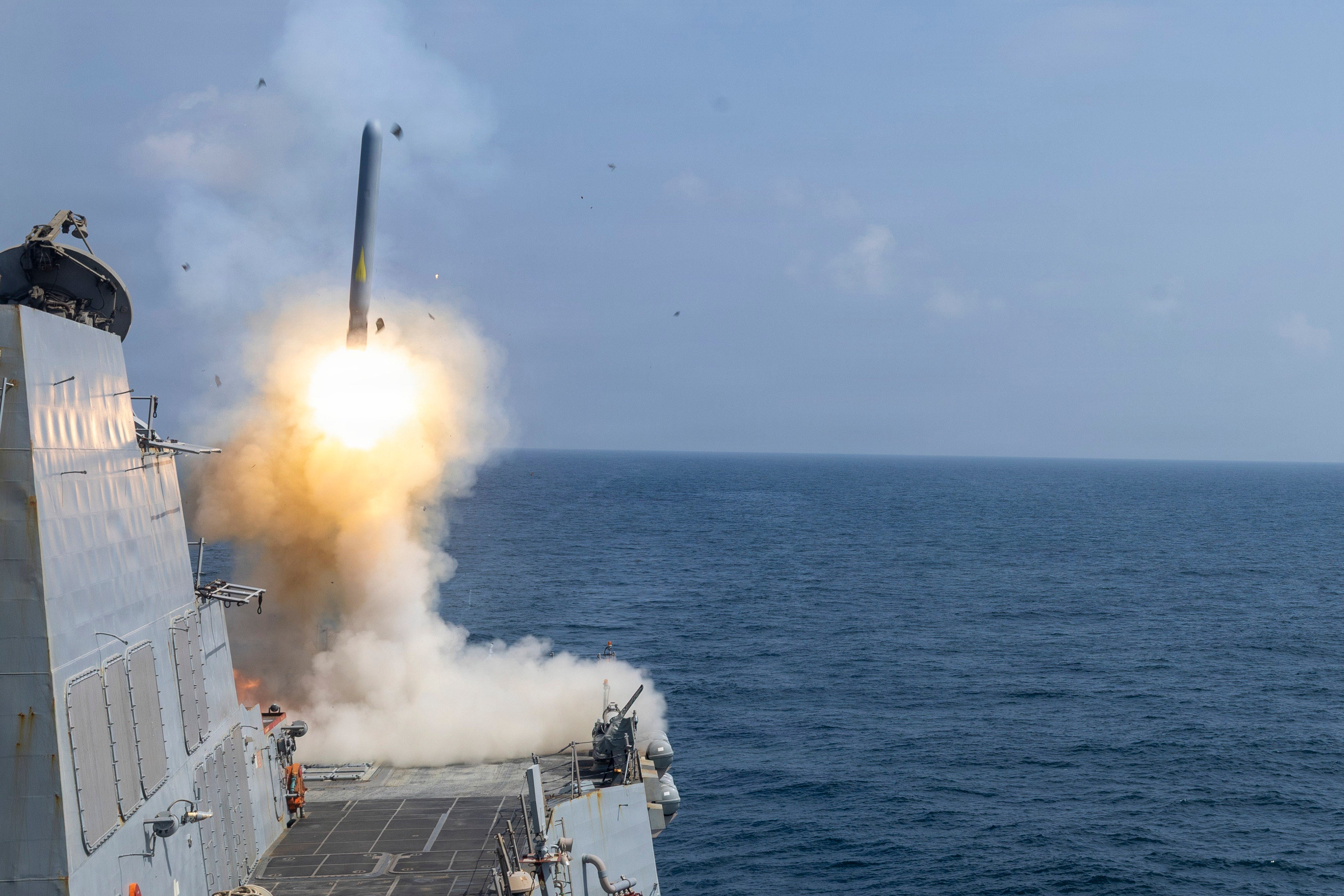
The NYT, citing intelligence sources, reports that between 30 and 33 of Iran’s missile sites along the Strait of Hormuz have survived joint Israeli and US bombardment and are therefore able to continue to threaten the oil-shipping chokepoint.
On top of that, the newspaper said it had seen a month-old intelligence assessment that said the US campaign in Iran had been even more unsuccessful than Nato had reckoned.
 open image in gallery
“Iran still fields about 70 per cent of its mobile launchers across the country and has retained roughly 70 per cent of its pre-war missile stockpile, according to the assessments. That stockpile encompasses both ballistic missiles, which can target other nations in the region, and a smaller supply of cruise missiles, which can be used against shorter-range targets on land or at sea,” the paper said.
The Washington Post also reported that about 70 per cent of Iran’s capacity remained intact.
Intelligence reports also suggest that claims made by the US to have destroyed Iran’s nuclear development programme may be far from realistic.
The fact that the US arsenal contained only a limited stock of deep-penetrating bunker-buster bombs has meant that sites alleged to be part of Iran’s efforts to refine weapons-grade uranium and build missiles that can carry a nuclear weapon are likely to be easily rebuilt.
“Their entrances have been closed, but they’re still there underground,” a Nato source said.
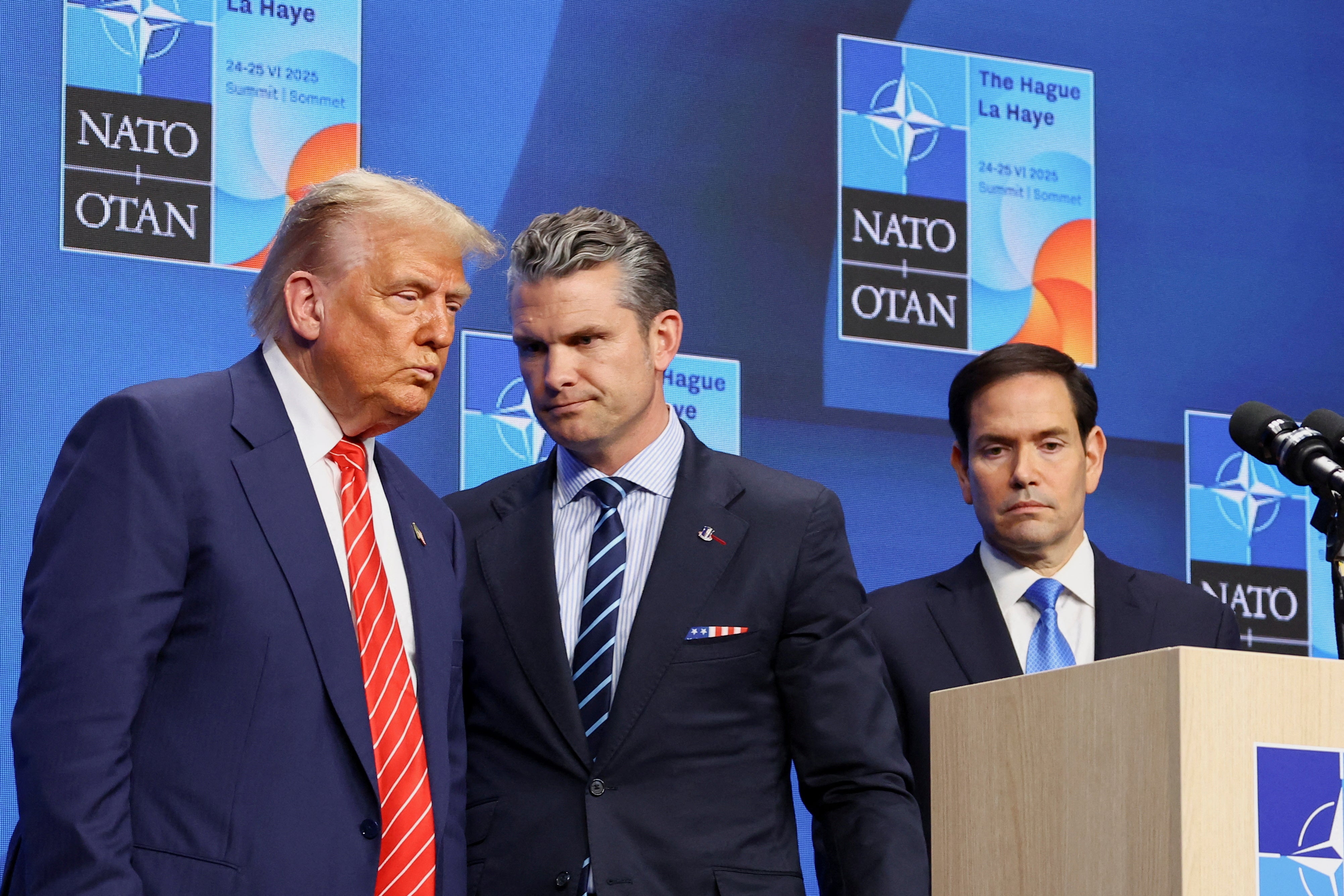
Trump and his “secretary of war”, Pete Hegseth, claimed that Iran’s nuclear programme was “obliterated” in its focused campaign last summer.
 open image in gallery
On 25 June last year, the White House produced a statement headlined: “Iran’s nuclear facilities have been obliterated – and suggestions otherwise are fake news.”
Trump now dismisses reporting on Iran’s military survival as “virtual TREASON”, posting on social media that revelations of Iran’s capacity are “aiding and abetting the enemy”.
Hegseth similarly claims that Iran’s military capability has been “decimated”. By definition, decimated means reduced by 10 per cent, but it is assumed that he means “destroyed”. Any suggestion to the contrary, he has also dismissed as “fake news”.
But across the Atlantic, for America’s allies – all of whom are bitterly opposed to the regime in Tehran – the assessments of Tehran’s survival remain realistic and well understood.
“Iran now knows without doubt it needs a nuclear weapon to survive, and will probably threaten the Strait of Hormuz in perpetuity,” the Nato source added.
Join our commenting forum
Join thought-provoking conversations, follow other Independent readers and see their replies
CommentsСхожі новини
Russia unleashes fatal barrage of drones at Ukraine
Germany's shortfall in medium-range defense capabilities
Russia unleashes fatal barrage of drones at Ukraine
