Trump scores a trophy in Texas as he hunts down Republican rivals

 Facebook
 Twitter
 Flipboard
 Send
Send
 Reddit
 Linkedin
 Messenger
 Telegram
 VK
VK
 Bluesky
 Threads
 Whatsapp
The primary defeat of long-time Senator John Cornyn confirms Trump still has a grip on the party, but comes with huge political risks – and Democrats are excited.
The Texas primaries offered a revealing snapshot of the political dynamics that are likely to shape the remainder of President Donald Trump’s second term, especially the next five months before the Congressional midterm elections.
 ADVERTISEMENT
ADVERTISEMENT
ADVERTISEMENT
More than a routine state-level contest, the races in the Lone Star State became a test of Trump’s continuing grip over the Republican Party, the ideological direction of MAGA politics, and the balance between electability and fealty to the president.
The clearest message came from the Republican Senate primary, where Trump-backed Texas Attorney General Ken Paxton soundly defeated Senator John Cornyn, a towering figure in Texas politics and a four-term incumbent in Washington.
After a nasty intra-Republican campaign, Cornyn projected party discipline.
“I've always supported the Republican ticket, and I intend to do so again in this general election," he told supporters in Austin. "I've said throughout this race that I trust the voters of Texas, and they made their decision."
Cornyn has spent decades as a reliable conservative, helping Trump confirm both Cabinets and all three of his Supreme Court nominees and voted with Trump more than 99% of the time – yet he was still cast by the president as insufficiently loyal.
Paxton, meanwhile, has a long history of allegations involving corruption, marital infidelity, abuse of power, securities fraud and bribery. But never mind.
Trump’s last-minute endorsement of Paxton, who survived a Republican-backed impeachment in 2023, seemed inevitable, yet was something that Washington Republicans and major party donors have been lobbying very hard against for months.
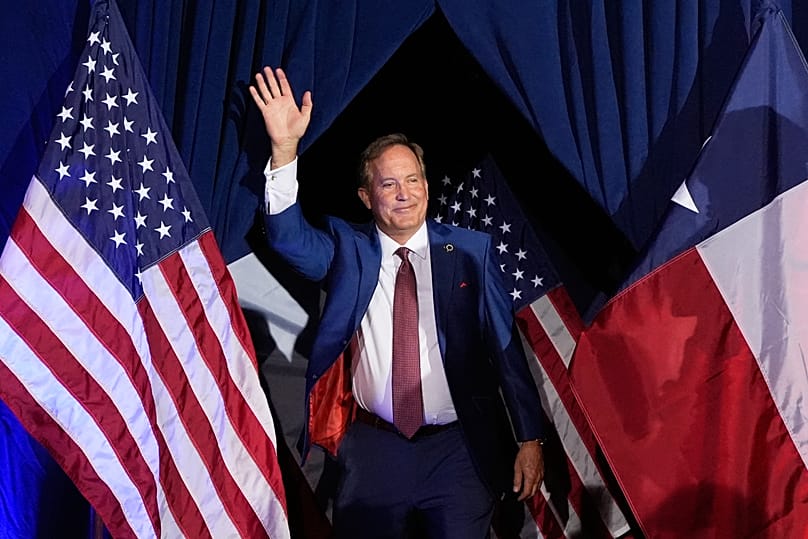
In fact, Senate Republicans spent $90 million defending their amiable colleague and sinking the scandal-soaked Trump endorsee. They failed, and are now left to face the jarring reality that they had hoped to avoid: $250 million. That’s the internal price tag reportedly being circulated among Republicans for the task of helping Paxton to hold the seat in the November election.
Paxton’s victory sets him up against Democratic nominee James Talarico, a telegenic 37-year-old former educator and graduate of a Presbyterian Theological Seminary.
On Tuesday night, Talarico wasted no time depicting the upcoming race as “the choice of the most corrupt politician in America and a candidate who is running on trying to lower costs and clean up corruption.”
“There is going to be a contrast between service and selfishness,” Talarico said on cable news channel MS NOW. “And I look forward to make that case to the people of Texas.”
Talarico, whose top campaigner is none other than former president Barack Obama, is considered a rising star in Democratic politics, and polls suggest he has a serious shot at defeating Paxton in November.
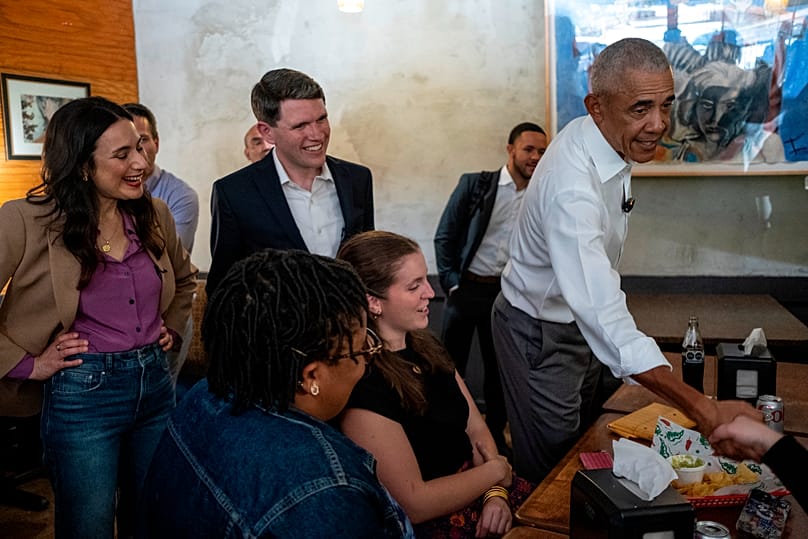
Such an outcome would be a political earthquake.
Texas hasn’t elected a Democrat to the US Senate in almost 40 years; should a Democrat carry Texas in the presidential election, it would mean game over for Republicans as they try to hold at least the upper chamber of Congress, and it could even spell disaster for the GOP in the 2028 presidential election.
Yet Trump ignored his party's warnings and endorsed Paxton anyway, a move that proved decisive. In his victory speech, Paxton called Trump’s endorsement “the most powerful force in politics.”
Paxton’s victory matters far beyond Texas. It signals that for the remainder of Trump’s presidency, Republican lawmakers will likely conclude that personal loyalty to Trump outweighs seniority, institutional experience, or even ideological alignment.
And Cornyn’s defeat sends another warning to Republican incumbents nationwide: simply supporting Trump’s agenda may no longer be enough if a politician is still perceived by the president as independent, insufficiently combative, or too entwined with the old Republican establishment.
The implications for governance in Washington are significant. Trump enters the second half of his term with even stronger leverage over congressional Republicans.
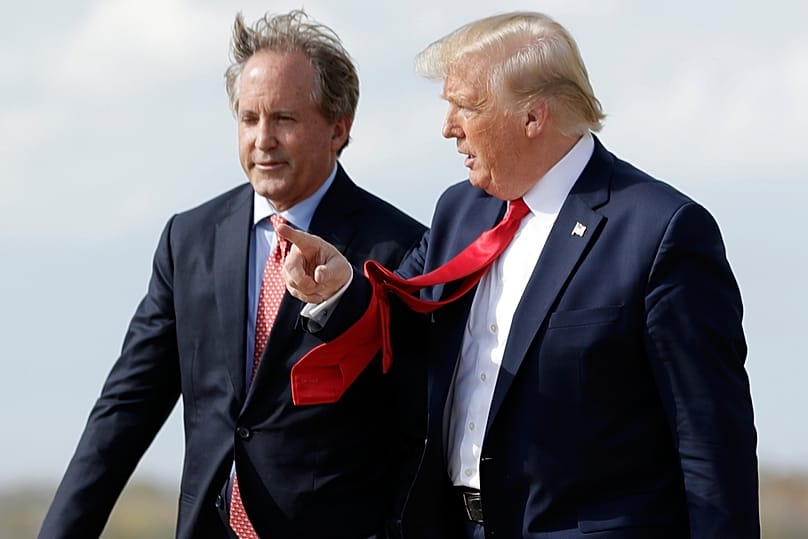
Potential dissenters now have fresh evidence of the political cost of crossing him. Just ask Louisiana Senator Bill Cassidy or Kentucky Congressman Thomas Massie, both of whom who lost their races against Trump-acolytes just days before the Texas runoff that did for Cornyn.
The defeats or setbacks suffered by figures such as Texas Congressman Dan Crenshaw, who lost his primary in March to a challenger running explicitly to his right, reinforced the idea that the Republican electorate increasingly rewards ideological purity and confrontation over pragmatism.
In practical terms, this could make Trump’s final years in office both easier and harder.
Easier, because Republican lawmakers may become more compliant on issues such as immigration, executive authority, trade, and "culture war" matters.
The fear of primary challenges strengthens Trump’s grip over Capitol Hill Republicans. Legislative negotiations within the GOP could become less contentious because fewer Republicans will want to risk becoming the next Cornyn.

But the same trend could also complicate Trump’s broader political position.
The Texas primaries exposed a growing tension between ideological loyalty and general-election electability. Some Republican strategists fear that nominating highly polarising MAGA candidates in otherwise Republican-leaning states could endanger the Republican Senate majority, and Trump's ability to govern ultimately depends on maintaining Republican control of Congress after the midterms.
If Trump-backed candidates energise the Democratic opposition or alienate suburban moderates, Republicans could lose seats that were previously considered safe – the Texas Senate seat is among them.
A Democratic Congress would sharply limit Trump’s legislative ambitions and increase the likelihood of investigations, oversight battles, and political paralysis during his final years in power.
The Texas results also suggest that Trumpism is evolving from a personality-driven movement into an ideological litmus test embedded within Republican politics itself. Candidates no longer simply seek conservative credentials; they compete to prove who is most authentically MAGA.
That dynamic may intensify factional struggles inside the GOP after Trump leaves office, but for now it consolidates his authority.

At the same time, the primaries revealed another potential vulnerability for Trump: the risk of overreach.
In backing insurgent challengers against sitting Republicans, Trump may be strengthening his short-term personal control while weakening the party’s long-term electoral flexibility. Some analysts already see parallels with Republican disappointments in earlier election cycles where hardline candidates underperformed in competitive states.
Ultimately, the Texas primaries confirmed that Trump remains the central force in Republican politics, and the party continues to move in his direction rather than away from it. For the rest of his presidency, that will guarantee him enormous influence over Congress and the GOP base.
But it also means that the success or failure of the Republican Party in 2026 will increasingly be viewed as a direct referendum on Trump himself – his endorsements, his political instincts, and the durability of the MAGA movement beyond his own candidacy.
Go to accessibility shortcuts Share CommentsRead more
US primaries: Texas braces for epic Senate race in November
In upcoming elections, Republicans have a Texas problem — and so do Democrats
Texas House approves redrawn maps to benefit Republican party during 2026 midterm elections
Схожі новини

Білий дім заперечив заяви Ірану про підготовку спільного меморандуму

Ukraine launches Battle Proven defense startup competition

Ukraine to back up to 1GW of new renewable energy projects in 2026
