Trump is not just slashing maternity aid across the world – the US is also being hit hard
The woman on the phone was pregnant with twins and thought she might be in labour. She was two hours from the nearest hospital that could deliver her babies.
Dr Cara Syth, the obstetrician on call, didn't tell her to wait and see. There's no waiting and seeing when the nearest unit is hours away and the unknowns of birth are multiplying by the minute.
“With being so far away, you have to err on the side of caution”, Dr Syth tells The Independent. The woman drove four hours in total to find she wasn't in labour. If there had been a unit closer, she could have stayed home a little longer, gone in when she was sure. Instead, she drove through the night on a maybe.
The family birth centre in Menomonie, Wisconsin – a university town of 16,000 – closed in January 2023. Patients had four months' notice. Women who had been driving thirty minutes to deliver their babies were suddenly looking at hours. Within roughly five years, seven labour and delivery units closed across western Wisconsin, five of them rural. “River Falls closed, then Barron, Menomonie, Rice Lake and Cumberland”, Syth says, counting on her fingers. She's not done: “Then a large healthcare organisation pulled out of Eau Claire and Chippewa Falls.”
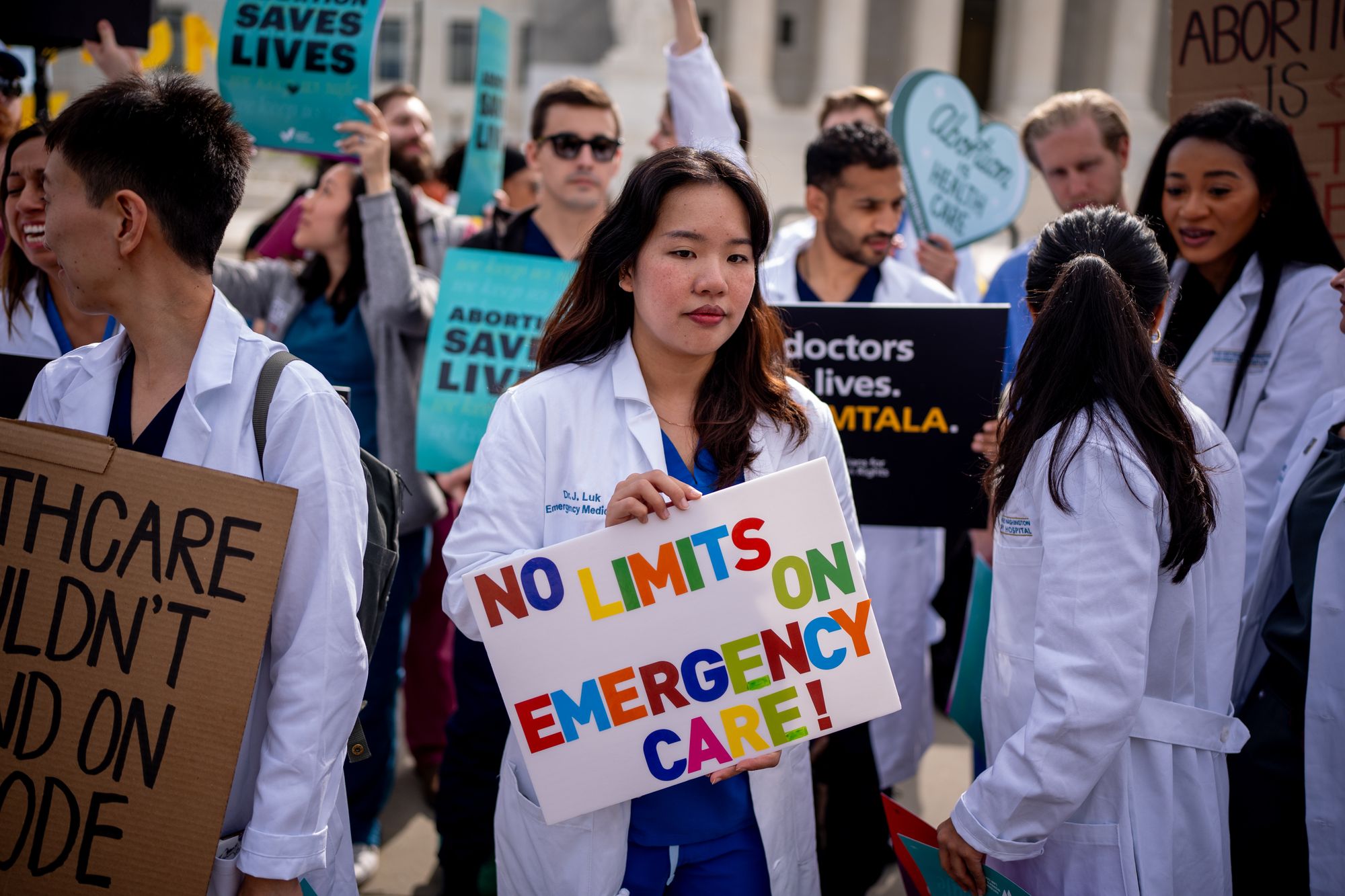
Wisconsin women – and others across the nation – were already dealing with a seminal decision by the Supreme Court. A ruling on Dobbs v. Jackson Women’s Health Organization in June 2022 overturned the landmark Roe v. Wade decision in 1973 which had protected a constitutional right to an abortion, devolving the authority to states. That came in the wake of Donald Trump nominating three conservative judges to the court during his first time in the White House.
Abortion services in Wisconsin halted entirely for fifteen months as courts fought over whether an 1849 law banning the procedure was enforceable. Doctors described patients who could not comprehend being forced to carry nonviable pregnancies. Syth names Dobbs as one of the forces pushing doctors out of states like Wisconsin - fewer willing to practise where the law criminalises their judgment, fewer units with the staff to stay open.
‘We waited for two nights’
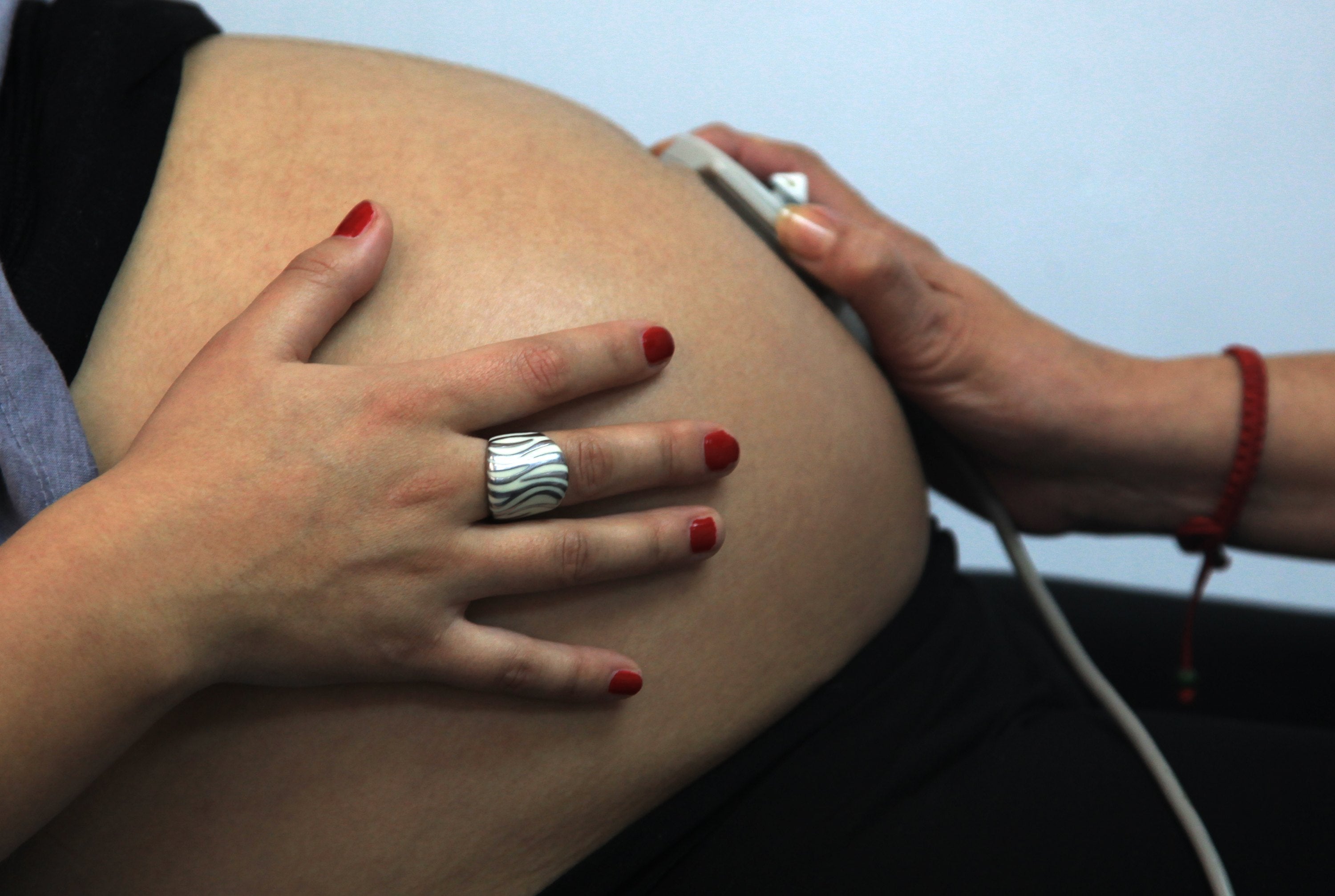
Across the country, a survey found that 40 per cent of medical professionals in states with abortion bans felt constrained in treating patients for miscarriages or other pregnancy-related emergencies. Meanwhile, a survey of more than twenty mothers in West Virginia conducted by the West Virginia Centre on Budget and Policy and exclusively shared with The Independent one woman described waking in the night with contractions a minute apart, her husband driving fast, arriving at a hospital that wasn't ready for them. She said: “As soon as I was admitted, my son came very quickly.”
Another went into early labour from the stress of it all, saying: “They scheduled an induction so I did not have to travel over an hour and a half to the next labor and delivery unit.” A third drove two hours for a VBAC (Vaginal Birth After Caesarean) waited three hours on arrival and was then told there were no beds. She and her husband checked into a hotel and waited two nights. A fourth described struggling alone to pay for gas to appointments.
Syth says that closure of services can generally be attributed to three reasons. First, business decisions by healthcare organisations that decided birth units weren't worth the cost. Second, political decisions like Dobbs ruling, Finally, the chronic underfunding of rural obstetric care, where reimbursement rates have long failed to keep pace with what it actually costs to run a unit. Medicaid, which covered 41 per cent of births in the US in 2022, has never paid enough to make rural obstetrics financially viable on its own.
 open image in gallery
While closures have been building for years, what's coming will make things worse. Now Trump is back in the White House, his One Big Beautiful Bill Act, signed into law by the president on 4 July 2025, cuts $911 billion (£672bn) from Medicaid and the Children's Health Insurance Programme over the next decade. While the coverage losses don't hit until January 2027, hospitals running on already-thin reimbursements are closing now. Carrie Cochran-McClain, chief policy officer at the National Rural Health Association, says she has “a lot of concern that we'll continue to see labour and delivery units close in rural hospitals and potentially even at an accelerated rate, as hospitals feel greater strain.”
Leslie Dach, chair of Protect Our Care, the advocacy group tracking hospital closures, says the cuts have “set off a chain reaction pushing over 800 hospitals, clinics, and nursing homes to the brink of collapse, forcing mothers, seniors and children to scramble for care that no longer exists.” Nearly 30 maternity wards have shut since the bill passed, he says, with women pushed further from care and into longer waits.
‘I don't know how you choose to vote for those cuts’
The US maternal mortality rate stood at 22.3 deaths per 100,000 live births in 2022 – more than 55 per cent higher than the country with the next highest rate among high-income nations studied by the Commonwealth Fund, which is Chile. For Black women, the rate was nearly 50 deaths per 100,000. That is the baseline, before the current cuts really bite.
Syth says: “I don't know how you choose to vote for those cuts if you understand what people are going through. I would want politicians to put themselves in the shoes of the people being hurt by this.”
 open image in gallery
Syth has spent her career showing up for women at the most vulnerable moment of their lives, in a community that needs her. After the Menomonie closure she drove to a neighbouring county for three years to keep delivering babies, until the distance became unsustainable. She says: "I've definitely had to deal with a lot of anger and disappointment." She found another rural hospital willing to put community before profit and calls herself lucky for it, but knows what was lost, saying: "There is no reason that we shouldn't be able to take care of our women."
On International Day of the Midwife – marked each year on 5 May – the World Health Organisation (WHO) and the International Confederation of Midwives estimate the world is short of at least 900,000 midwives. The UN Population Fund (UNFPA), which seeks to improve maternal healthcare around the world, says the world needs one million more midwives by 2035 – and that would save more than 4 million lives every year.
‘Our mothers need a lot of support’
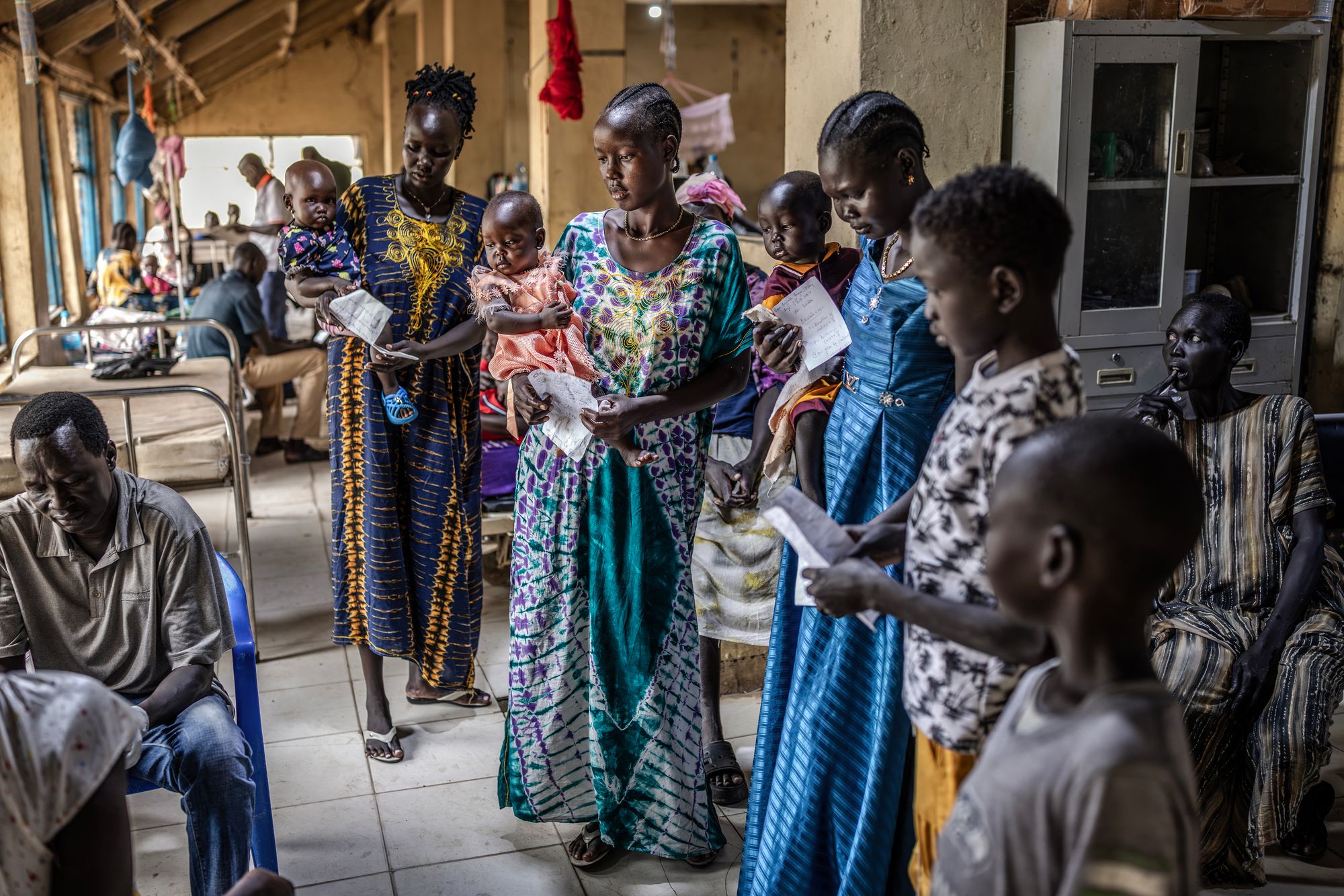
In one state of South Sudan, there are just five midwives. One of those five, who is speaking to The Independent anonymously to speak openly, is describing her ward over the phone. A woman groaning in labour audible in the background. There are six patients. One is in labour, one is recovering from a miscarriage, one has sepsis – she came too late because she lives far away and delivered at home, without gloves, without sterile equipment, in conditions she had no choice about. There are two midwives on shift and between them they cover the delivery room, the neonatal ward and the postnatal side. One surgeon and one doctor cover the entire hospital – childbirth, malaria, broken bones.
South Sudan is one of many nations that has been impacted by Trump's decision to essentially close the United States Agency for International Development (USAID) as he slashed American aid spending at the beginning of his second term as president. The midwife tells The Independent: “USAID cuts have impacted us in a very bad way. From January to now we have had five maternal deaths. That is so alarming.”
One woman died of sepsis after arriving ten days after giving birth and going into shock within thirty minutes of walking through the hospital gates. A functioning blood bank – the kind that consistent funding makes possible – operates around the clock. Without it, staff go into the community to find donors. Sometimes they come. Sometimes they don't and it is too late. Last month a woman died of haemorrhage after a caesarean section for that reason. Staff have not been paid in seven months, but they come anyway and often they work without eating.
 open image in gallery
South Sudan saw USAID spending cuts exceeding 40 per cent in 2025, with commitments to future spending falling by more than 60 per cent. A 2026 study modelling the impact of USAID withdrawal across six vulnerable countries in west and central Africa projected that maternal deaths could increase by 45 per cent on average among populations in need.
The Guttmacher Institute estimates that if 11.7 million women and girls are denied access to contraceptive care in 2025 because of the USAID freeze, around 8,340 maternal deaths could result from pregnancy and childbirth complications.
"We are a growing country”, the midwife says – South Sudan is the world's youngest nation. “We are trying hard. Our mothers need a lot of support.”
The connection between rural Wisconsin and states in South Sudan is not rhetorical. The US is simultaneously cutting maternity care from its own communities and withdrawing the funding that kept services alive in some of the world's most under-resourced settings.
Back in Menomonie, Wisconsin, Syth thinks about the women she can no longer reach. People moved there for the university, the industries, a place to raise children. “When you move to a university town you don't expect that you're not going to be able to deliver your baby there,” she says.
This article has been produced as part of The Independent’s Rethinking Global Aid project
Join our commenting forum
Join thought-provoking conversations, follow other Independent readers and see their replies
CommentsСхожі новини

Israeli beauty queen says she bumped into Zohran Mamdani's wife at a cafe, Rama Duwaji 'refused to engage'

VTuber Filian vanishes online after months away, massive content wipe shocks fans