Trump Class Battleships Will Be Nuclear Powered
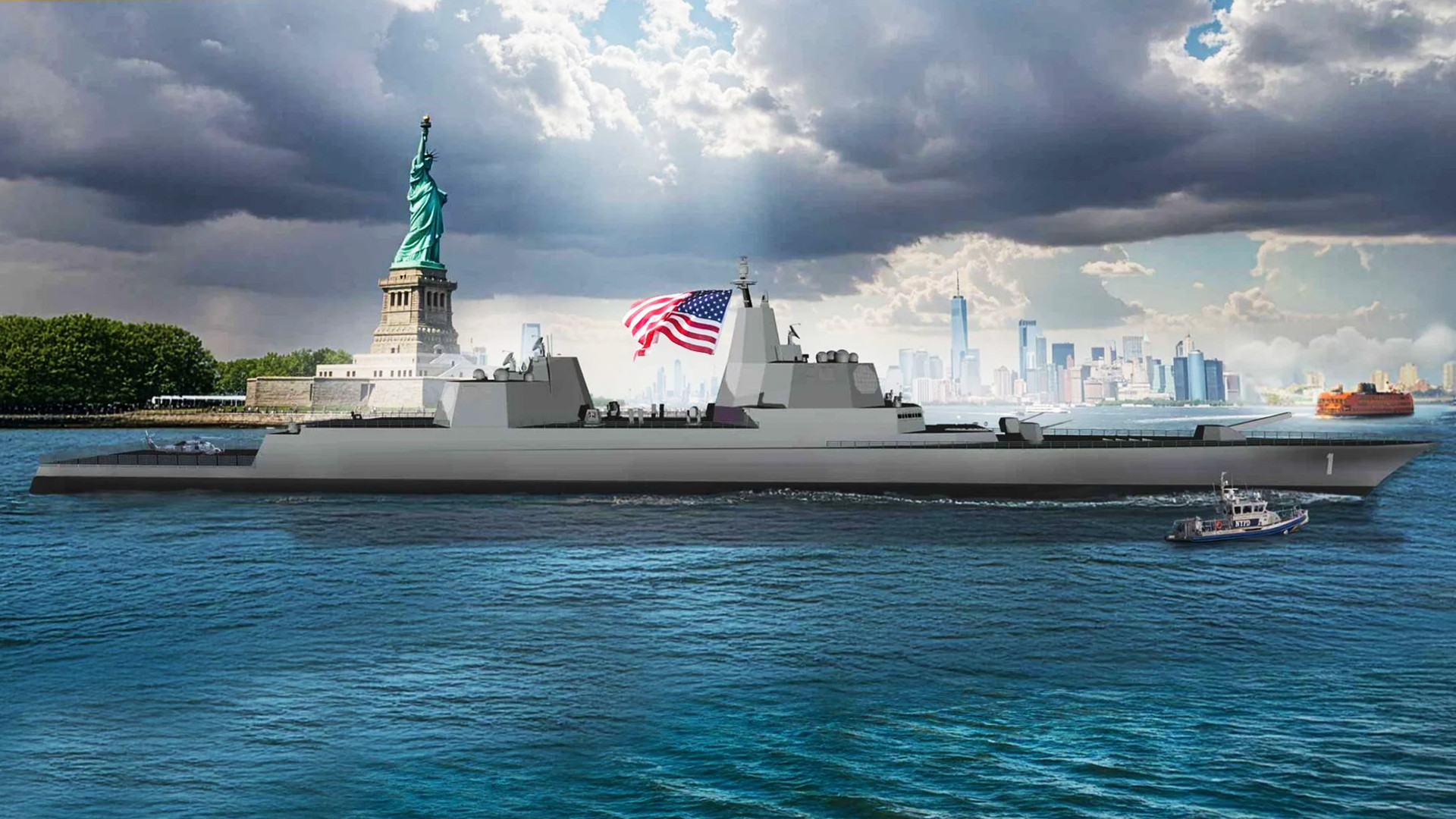
The U.S. Navy says its future Trump class battleships are now set to be nuclear-powered. This is a huge development that will impact the cost and complexity of the design. With those issues in mind, now-former Secretary of the Navy John Phelan had said this was “unlikely” to happen just four weeks ago.
The Navy announced its intention to fit a nuclear propulsion system to the Trump class warships in its latest annual shipbuilding plan, which was released earlier today. The document also refers to these future large surface combatants as BBGNs, or nuclear-powered (N) guided-missile (G) battleships (BB). USNI News was first to report on this development.
The only nuclear-powered surface vessels in the Navy’s fleet today are its Nimitz and Ford class aircraft carriers. The service has not had a nuclear-powered surface combatant since the 1990s, when the one-of-a-kind cruiser USS Long Beach and frigate USS Bainbridge, as well as four Virginia class cruisers (not to be confused with the subsequent Virginia class of attack submarines) left active duty. Nuclear propulsion offers functionally unlimited range, as well as a major boost in onboard power generation. It also comes with cost and complexity, in terms of a ship’s core design, and what it takes to operate and maintain it. We will come back to those issues later on.
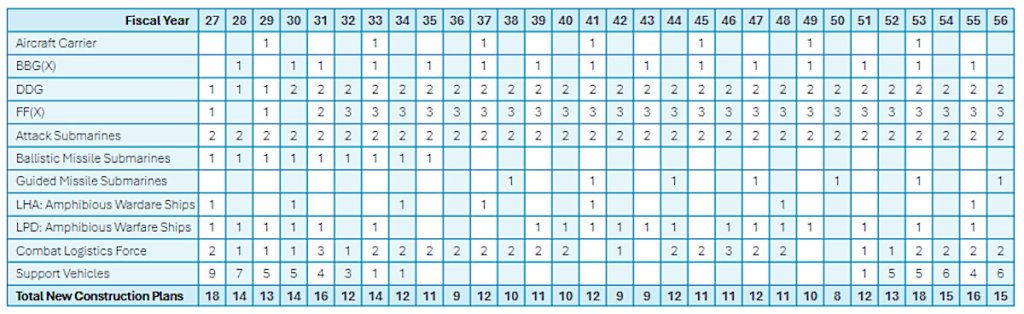
The Navy has now outlined plans to acquire 15 Trump class BBGNs, one virtually every other year, between Fiscal Year 2028 and 2055. Two are also set to be ordered back-to-back in Fiscal Years 2030 and 2031. An initial official estimate has put the price tag of each of these ships at $17 billion. This is more than what the service expects to spend on each of the next three Ford class aircraft carriers, the projected unit costs of which range from roughly $13 to $15 billion.
“Our Fleet deserves and our national security requires the most comprehensive capability a surface combatant can provide, not just what we can make do with tradeoffs. The nuclear-powered Battleship is designed to provide the Fleet with a significant increase in combat power by longer endurance, higher speed, and accommodating advanced weapon systems required for modern warfare,” the Navy’s new shipbuilding plan declares. “Adding capability at the highest end of the high- low mix, the Battleship’s primary role is to deliver high-volume, long-range offensive fires and serve as a robust, survivable forward command and control platform, it is not a destroyer replacement.”
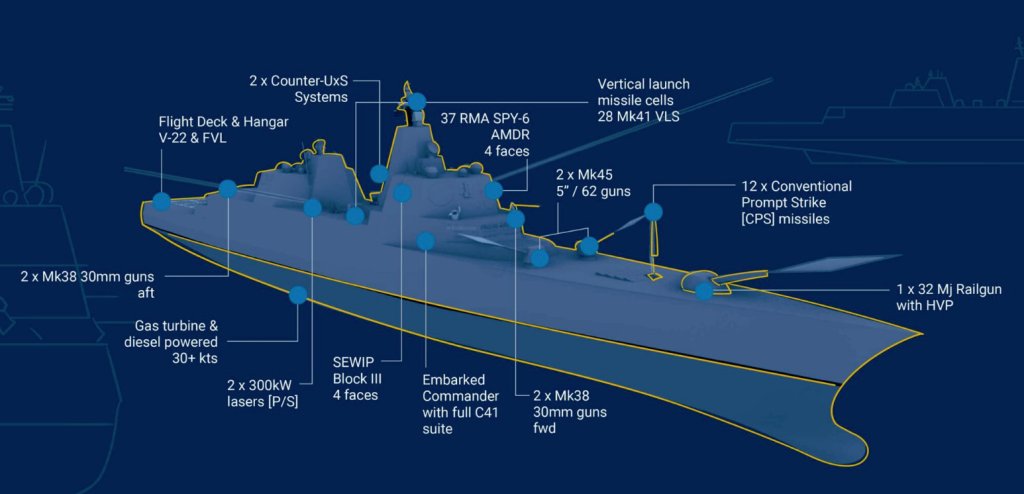
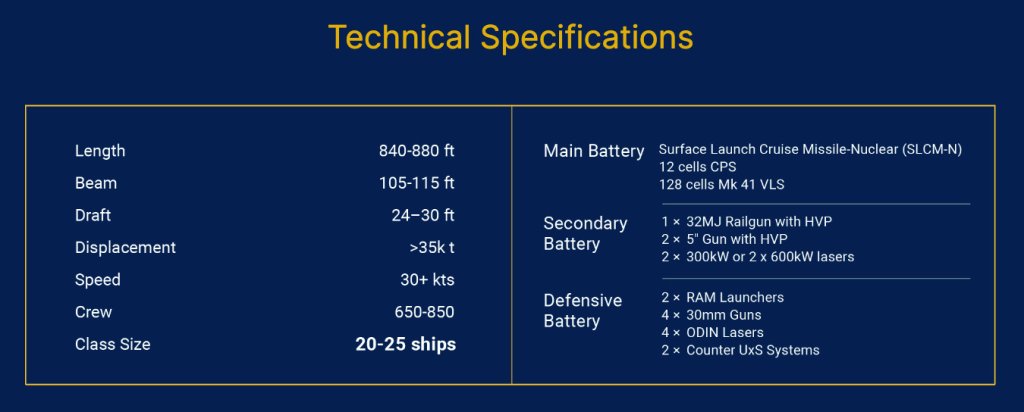
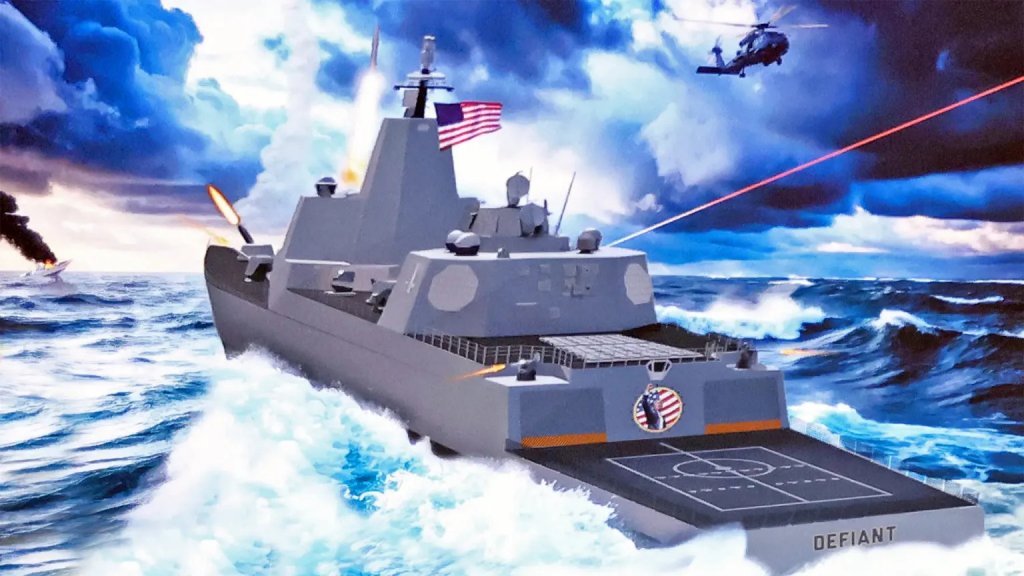
The shipbuilding plan highlights various aspects of the planned arsenal on each of the Trump class warships, including its ability to launch a mix of nuclear and conventional missiles, including hypersonic types, loaded into large vertical launch system (VLS) arrays. Each one of the vessels will also have an electromagnetic railgun, a pair of traditional 5-inch naval guns, laser directed energy weapons, and various additional weapons for close-in defense.
“Vastly increased power generation capacity provides warfighting capability across the entire electromagnetic spectrum, including through electronic warfare tools and high-output lasers that allow us to reduce reliance on high-cost single-use munitions for both attack and defense,” the shipbuilding plan also notes. “The internal volume and capability to embark a fleet command staff allows us to take the Maritime Operations Center concept to sea. As a tactical command-and-control platform, the Battleship can lead a Surface Action Group (SAG), integrate its systems with a Carrier Strike Group (CSG) for layered defense, or operate autonomously, possessing the organic capability to defeat advanced threats and distributing our force capability.”
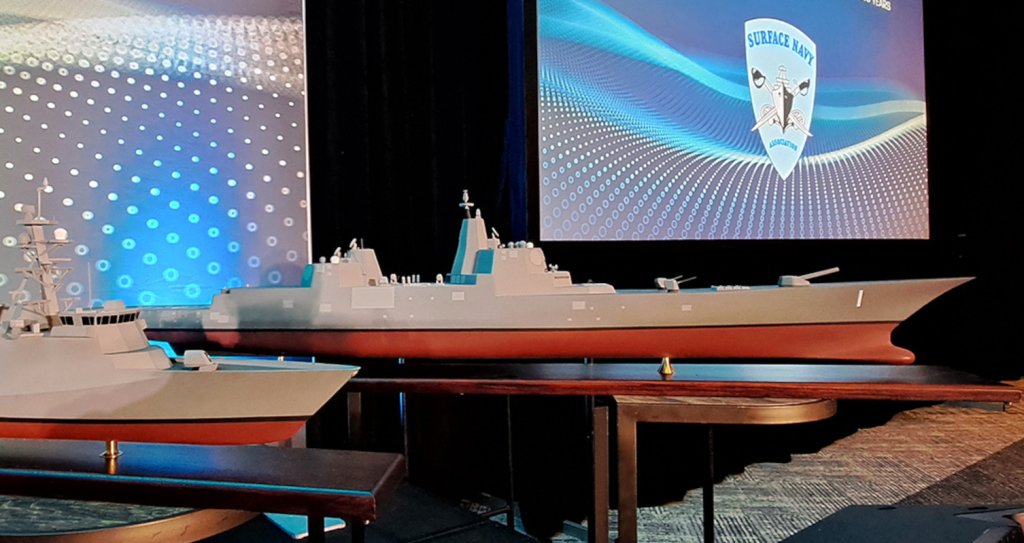
The Navy has said in the past that each of the Trump class warships will displace approximately 35,000 tons, very roughly three times that of the newest Flight III subvariant of the Arleigh Burke class destroyer. They are also expected to be between 840 and 880 feet long, have a beam (the widest point in the hull) between 105 and 115 feet, and be able to reach a top speed greater than 30 knots.
As noted, as recently as four weeks ago, the Navy was pushing back on the idea, at least publicly, that the Trump class warships could be nuclear-powered. The service’s proposed budget for the 2027 Fiscal Year, which was rolled out last month, describes the vessels as non-nuclear BBGs that will feature “diesel generators, gas turbines, [and] propulsion motors.”
“That [the $17 billion estimated unit cost of a Trump class warship] is the early initial estimate. We’ll see where we really settle down as we get through that and start to rationalize some of the costs. So let’s see where we land on that first ship, and then what the economies of scale get us to as we move through it,” former Secretary of the Navy John Phelan had also told reporters at a roundtable on the sidelines of the Navy League’s Sea Air Space 2026 exposition on April 21. “I think a little bit with those numbers, they’re still moving around, because this question is it nuclear-powered, is it not nuclear-powered?”
“It could be [nuclear powered], but it’s unlikely, but it could be,” Phelan said at that time. “I think we’re trying to understand all the proper trade-offs.”
Phelan was fired unexpectedly and with little explanation the following day, with veteran Navy officer Hung Cao taking over as Acting Secretary. On April 23, The New York Times, published a report, citing anonymous sources, saying former Navy Secretary’s sudden exit was tied to disagreements with President Donald Trump over plans for the Trump class battleships, including efforts to accelerate their production and entry into service. There have been reports pointing to other factors in Phelan’s dismissal, including friction with Secretary of War Pete Hegseth, as well.
“He’s a very good man. I really liked him, but he had some conflict with, not necessarily with [Secretary] Pete [Hegseth], but with some other[s],” President Trump himself told members of the press on April 23. “He’s a hard charger, and he had some conflicts with some other people, mostly as to building and buying new ships. I’m very aggressive in the new shipbuilding.”
BREAKING: President Trump speaks about the firing of Navy Secretary John Phelan:
— Fox News (@FoxNews) April 23, 2026
“He’s a very good man. I really liked him, but he had some conflict, not necessarily with Pete. He’s a hard charger, and he had some conflicts with some other people, mostly as to building and… pic.twitter.com/xJOhYygka4
“I think it’s a logical question to think, hey, here’s a big capital ship. It’s going to be carrying a lot of load, you know, in places that we don’t necessarily need a strike enforcement air wing as a large ship there that’s in command of a flotilla,” Chief of Naval Operations Adm. Daryl Caudle also said at a roundtable around the Surface Navy Association’s (SNA) main annual symposium back in January. “Wouldn’t it be logical to be nuclear powered? And that brings a tail to the construction of that that [sic] just really fell outside the scope of what we want to do on the speed to get this thing in the water. And so what you trade off with, with persistency that only nuclear power can do, is you end up having, you know, the ability to go produce that — it pushes the battleship into a timeframe that just didn’t meet the operational need of the ship.”
TWZ has reached out to the Navy for any more information it can offer about when and why the decision was made regarding nuclear propulsion for the Trump class. We have already raised numerous questions about the plans for these warships in the past, including their exact operational utility, as well as the costs and risks involved. As Phelan and Caudle previously indicated, nuclear power can only add to the design’s complexity and up-front price tag, as well as what it will take to operate and maintain the ships once they enter service. These were factors in the Navy’s past decision to move away from nuclear propulsion on surface warships. Russia’s Kirov class battlecruiser Admiral Nakhimov is the only nuclear-powered surface combatant in service anywhere in the world today. Nuclear-powered surface ships of any kind remain a relative rarity globally, as well, even among nuclear powers.
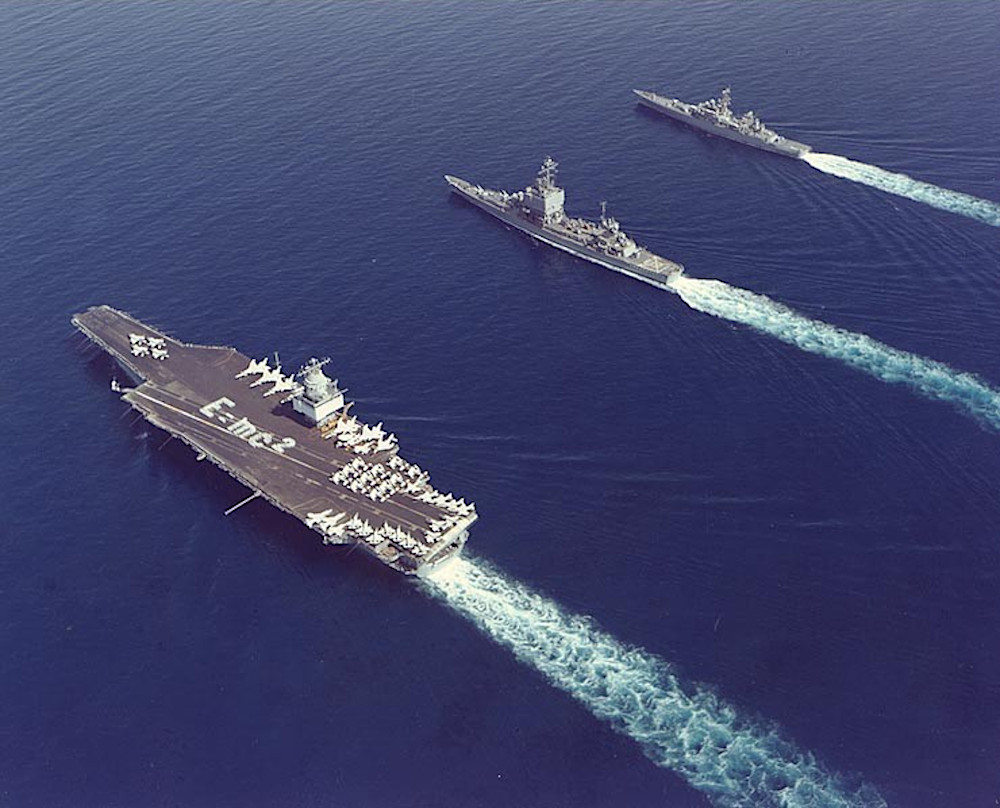
The choice now to use nuclear reactors to power the Trump class comes at a time when naval shipbuilders in the United States are already under heavy strain, and have been struggling in many cases to stay on budget and schedule. Newport News Shipbuilding, a division of Huntington Ingalls Industries, is the only yard in the country currently building nuclear-powered surface vessels of any kind, which are the Ford class aircraft carriers. While the USS Gerald R. Ford is in service now, work on subsequent ships in the class continues to be beset by delays and cost growth.
There is also immense pressure on U.S. shipyards that built nuclear-powered submarines. This has been magnified by plans to provide Virginia class boats to the Royal Australian Navy as part of the trilateral Australia-United Kingdom-United States (AUKUS) defense cooperation agreement. The same yards are also responsible for producing the new Columbia class nuclear ballistic missile submarines. Those boats have to be delivered on a tight schedule to ensure there is no gap in the ability of the leg of America’s nuclear triad to meet operational requirements, and there is little, if any, margin left.
The Navy has other shipbuilding plans, as well. Naval shipyard capacity in the United States, or the lack thereof, has been an increasingly worrisome issue for years now, and remains concerning despite U.S. government efforts to reverse the trend in recent years. The Navy’s new shipbuilding plan does underscore the service’s determination to avoid past shipbuilding pitfalls with the new battleships.
“Learning from the lessons of prior shipbuilding programs, the Battleship acquisition plan is a prime example of how we are changing the way the Navy does business. This will be the first clean-sheet surface combatant designed in more than 30 years, and we are deliberately incorporating modern digital engineering, advanced production practices, and AI [artificial intelligence] enabled design tools to reduce cost and schedule risk from the outset,” the shipbuilding plan states. “To strengthen this approach, we are adopting proven best practices from foreign partners with advanced shipbuilding techniques. This includes front loading production engineering to ensure high design maturity before construction begins, using precision modular construction methods, and tightly integrating design, planning, and production teams to minimize rework and accelerate throughput.
“We are also applying long term production planning, rigorous process control disciplines, and deeper supplier integration to stabilize the industrial base and improve quality across distributed construction sites. Modeled on commercial shipbuilding, this digital-first approach will accelerate design, reduce manual rework, and create a direct link between design and production,” it continued. “The Battleship will employ a highly modular architecture that enables distributed construction across the industrial base while allowing U.S. shipyards to focus on final assembly, integration, and testing. This strategy strengthens workforce stability, increases industrial base resilience, and delivers a more predictable, affordable path to fielding the capability.”
As it stands now, the Navy is still planning to order the first Trump class warship, set to be named USS Defiant, in Fiscal Year 2028. The current expectation is that it will not enter service until Fiscal Year 2036. This underscores an additional point that the program will carry over into the next presidential administration (and potentially beyond). Further major changes could well be made to its scale and scope, or it could be outright cancelled, in that timeframe.
For now, at least, the Navy has settled on its future Trump class battleships being powered by nuclear reactors.
Contact the author: joe@twz.com
The post Trump Class Battleships Will Be Nuclear Powered appeared first on The War Zone.
Схожі новини
Hiroshima and Nagasaki to take differing approaches toward Taiwan again

Україна та Німеччина запускають програму Brave Germany — працюватимуть з критичними напрямами Defense Tech
Як айтівці шукають роботу в 2026 році: 44% пошукачів знизили зарплатні очікування — результати опитування DOU