Toilets and changing rooms must be used on basis of biological sex, guidance confirms

 Getty Images
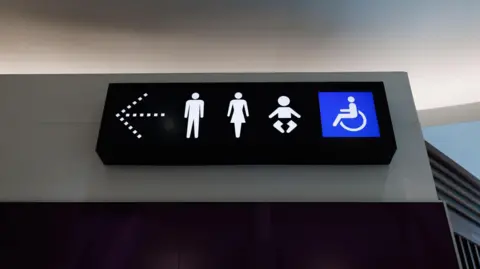
Single-sex spaces - such as changing rooms and toilets - must be used on the basis of biological sex, new guidance from the equalities watchdog has confirmed.
This means, for instance, that a trans woman - a biological male who identifies as a woman - should not use female toilets or changing rooms, according to the code of practice.
The guidance, produced by the Equalities and Human Rights Commission (EHRC) and now approved by ministers, makes it clear that transgender people should instead be offered a third or a gender-neutral space.
The code states that leaving a trans person without access to any services or facilities would be unlikely to be proportionate and could be discriminatory.
The guidance was published on Thursday following the landmark Supreme Court ruling last year that the definition of a woman under the Equality Act should be based on biological sex.
The code of practice sets out how associations, businesses and services open to the public should organise their facilities. It covers a wide range of settings from shopping centres and gyms to hospitals and restaurants.
Women and Equalities Minister Bridget Phillipson said the aim was to allow people to live free from discrimination and harassment.
"Our focus has always been making sure organisations have clear, accessible guidance on how to implement the law," she said.
Within the guidance, it was recommended that gender neutral toilets or changing rooms should have self-contained lockable areas with floor-to-ceiling walls and wash basins.
The watchdog said it did not think the requirements would be too onerous as services could decide to let trans people use toilets for disabled people, for example.
The EHRC also said if a service just had two toilets - one for men and one for women - they could be changed into unisex facilities.
Minister blames 'slow' watchdog for trans guidance delay
Trans people could be barred from services based on appearance
With the guidance now before parliament, MPs and peers have 40 days to raise any concerns. If there are no objections, the guidance becomes statutory.
The guidance, which is more than 300 pages long, was first sent to the government in September 2025.
The EHRC said it expected ministers to spend six weeks examining it before either asking for revisions or placing it before parliament.
Instead, the government said it would deal with the issue "thoroughly and carefully", and took eight months to release the guidance.
EHRC chair Dr Mary-Ann Stephenson said she hoped people would read the code with an "open mind".
"I think we do need to broaden out the debates, and we need to start from a point of saying, how do we make sure that everyone has access to the services they need, and that will be different things for different people," she said.
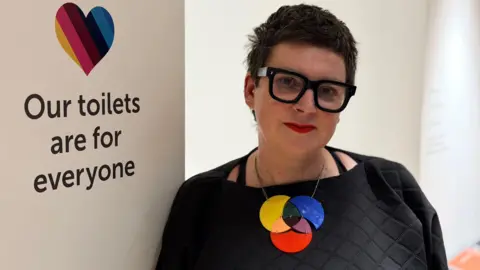
At the Watershed arts cinema in Bristol, chief executive Clare Reddington said they pride themselves on being inclusive.
She said it had taken too long for the guidance to be published which has led to confusion and misinformation.
Reddington described the impact on trans people as "toxic", and said they had been waiting to hear what the guidance meant "for their ability to live a full public life".
The Watershed has gender neutral toilets, which won a Loo of the Year award in 2024.
The brightly coloured cubicles have floor-to-ceiling doors, and some have sinks inside. They also have separate male and female toilets.
"I would say that designing toilets for everyone is great for business," Reddington said.
 Other
Other'Less rights'
Maya Forstater, of Sex Matters, a gender-critical women's rights group, said: "Finally, there are no more excuses for the many public and private sector organisations that said they were 'waiting for guidance' before fixing their unlawful policies.
"The government's long delay in placing the updated code of practice before Parliament was seized on as cover by organisations that preferred to break the law than enrage trans lobby groups.
"The new guidance is long and detailed, but at its heart is a simple principle: 'sex' means what it says – male and female. What people call themselves and how they dress doesn't change their sex.
"Any business, charity or public service provider that took a wrong turn and started letting men who identify as women use women's spaces or vice versa must now urgently fix its policies."
But a spokesperson for TransActual, a trans rights campaign group, said the guidance left trans people with less rights.
"Not only does this new guidance fail to protect the rights and dignity of transgender people, but appears to have weakened protections for the LGBT community as a whole," they said.
"TransActual will continue to fight for equal access to public life for all trans people, and will publish our full thoughts on the new code once we have had the time to properly scrutinise it."
Joanne Moseley, of Irwin Mitchell Solicitors, said she is being regularly asked to provide advice to business and services on what they need to do.
She believes that good signage and, where appropriate, ensuring that a gender-neutral space is available are important.
She said some businesses and employers made changes to their facilities immediately after the Supreme Court judgement, but others are putting off doing anything until the EHRC guidance comes into force.
However, she warned the guidance was not "a silver bullet" and that if someone made a claim of discrimination against an organisation it was not a defence to say "we're waiting for the guidance".
Women's rightsLGBTTransgender peopleHealthСхожі новини
France: Part of Eiffel Tower sold at auction for €450,000

Промоутер Ентоні Джошуа зірвав дуель поглядів Усика та Верховена під час пресконференції
Володимир Зеленський попередив лідера Білорусі про наслідки за участь у війні проти України