This X-ray image shows our solar system 'breathing'
Breaking space news, the latest updates on rocket launches, skywatching events and more!
By submitting your information you agree to the Terms & Conditions and Privacy Policy and are aged 16 or over.You are now subscribed
Your newsletter sign-up was successful
Want to add more newsletters?
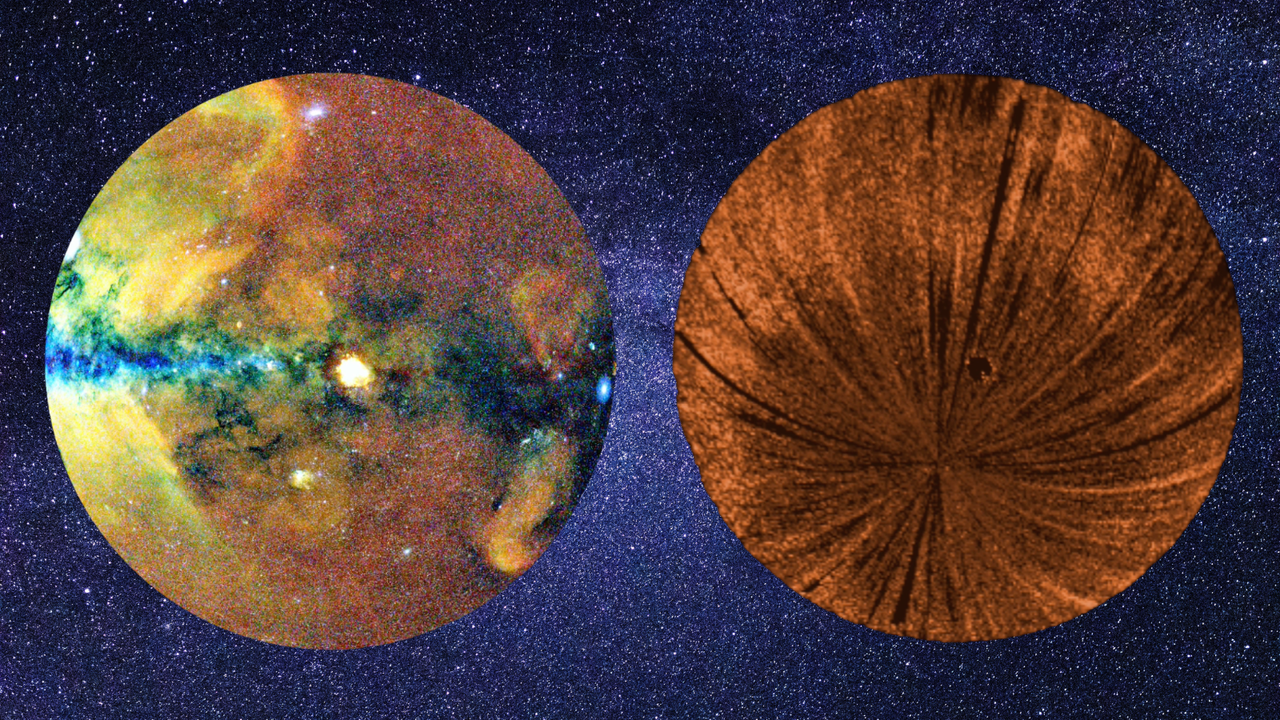
An account already exists for this email address, please log in. Subscribe to our newsletterAstronomers have, for the first time, spotted the "breath of the solar system." The finding comes in the form of X-ray emissions generated when the electrically charged solar wind slams into both Earth's atmosphere and the bubble that surrounds our solar system, the heliosphere.
This phenomenon, known as "solar wind charge exchange," was observed by the eROSITA space telescope, allowing a team of scientists to create a map of the sky in so-called "soft X-rays." This X-ray glow is radiated when the heavy ions of the solar wind, like carbon and oxygen, grab an electron from neutral atoms in either our outer atmosphere or the heliosphere.
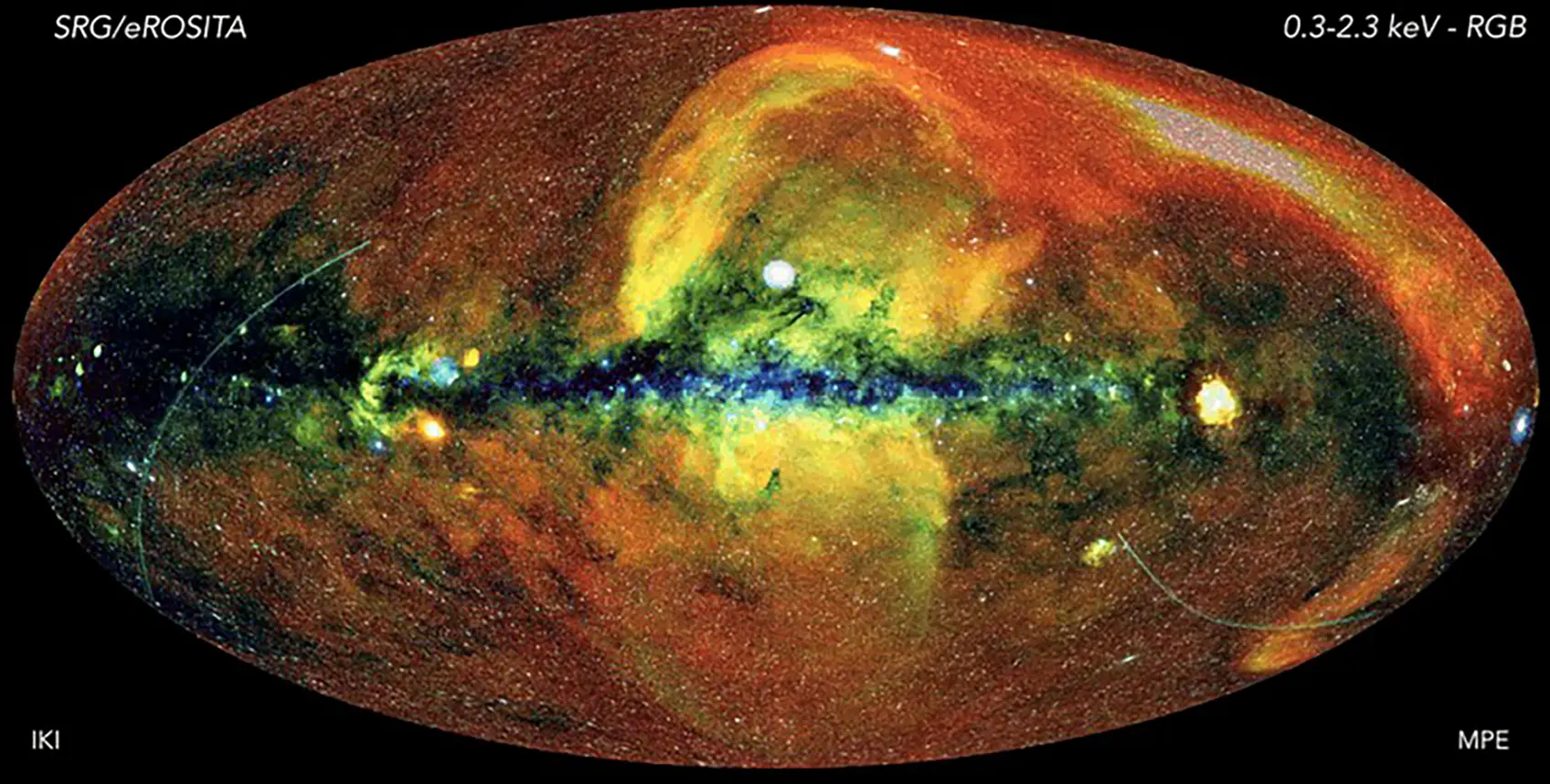
Launched by Russia's space agency Roscosmos on July 13, 2019, eROSITA currently sits at a gravitationally stable point between Earth and the sun known as Lagrange Point 2. This point, also known simply as L2, is located 932,000 miles (1.5 million kilometers) from Earth. From the vantage point of L2, the X-ray spacecraft was able to gather the data that informed this soft X-ray map by scanning the sky four times between 2019 and 2021.
"We were interested in studying the Milky Way's X-ray emission, particularly the circumgalactic medium, which should extend into a large sphere of plasma around our galaxy," Gabriele Ponti, team member and an astronomer with the Brera Astronomical Observatory said in a statement translated from Italian. "Analyzing the eROSITA data, we noticed significant and unexpected variations in this diffuse radiation.
"We realized that they couldn't come from distant galactic structures, which are constant, but must be linked to a phenomenon much closer to us: the charge exchange of the solar wind."
Team member and Max Planck Institute researcher Konrad Denneri pointed out that the team was then able to isolate the local radiation component, adding: "In this way, we not only reconstructed an unaltered image of the emissions from deep space, but also obtained valuable information on the solar wind emitted in all directions, as well as its variations over a two-year period."
Get the Space.com NewsletterThe research suggests that solar wind emitted by the solar system follows the fluctuation of the solar cycle, weakening during periods of minimum activity and intensifying during periods of increased solar activity.
"With this work, what was previously an obstacle becomes a powerful diagnostic tool for heliophysics, allowing us to study the components of the solar wind and its interaction with the interstellar medium," Ponti said. "Understanding how the dynamics of the heliosphere modify the appearance of the X-ray sky is fundamental to correctly interpreting the Milky Way's warm phase."
The team's research was published on April 16 in the journal Science.

Robert Lea is a science journalist in the U.K. whose articles have been published in Physics World, New Scientist, Astronomy Magazine, All About Space, Newsweek and ZME Science. He also writes about science communication for Elsevier and the European Journal of Physics. Rob holds a bachelor of science degree in physics and astronomy from the U.K.’s Open University. Follow him on Twitter @sciencef1rst.
View MoreYou must confirm your public display name before commenting
Please logout and then login again, you will then be prompted to enter your display name.
Logout MORE FROM SPACE... 1Viltrox AF 50mm f/1.4 Pro FE lens review
- 2How did the USSR win the space race to beat the US to the moon in Apple TV's new 'Star City'?
- 3Comet PanSTARRS approaches Earth on April 26. Here's how to catch it in satellite imagery this weekend
- 4Famous asteroid Ryugu may have been bombarded by a swarm of tiny space rocks 1,000 years ago
- 5'Guess I'll be waiting a minute to surf again': Artemis 2 moon astronaut Christina Koch shares her recovery journey
Схожі новини
Inside the evidence revolution — how decision-making became data driven
Cosmic-ray detection heralds era of mega-observatories for neutrinos
Fossil-Fuel Funded GOP Leaders Claim a Renowned Scientific Institution Has ‘Potential Conflicts of Interest’
