These Are The Top 5 Underrated European Capitals For 2026
We've all heard extensively of Paris and its glamorous Haussmann-designed boulevards and soaring Eiffel, London with the red telephone boxes and unmissable Victorian clock, and Madrid's grand boulevards and imperial parks.
That's the itinerary of every tourist going to Europe for the first time, and while we're not really mad at them—these hotspots are famous for a reason—we can't help but feel they're not exactly the best representation of a raw, authentic Old Continent without the Disneyfication of it, if you know what we mean.
Everything seems too polished, too perfect, and too movie-like, and don't get us wrong, we love a bit of daydreaming and storybook vibes ourselves, but sometimes, it's the grungier, quirky, unexpected corners that truly take it there for us.
We're called Travel Off Path, after all.
If you're planning on a European summer, but you're looking to switch things up, how about pairing your Paris getaway with one of these 5 underrated capitals that are unlike anything you've stumbled upon before?
PLUS: We've built an interactive quiz at the end of this article to find your perfect match, so stick around!
Sarajevo, Bosnia and Herzegovina
Underrated and Balkan go hand in hand, and there's no more unsung, crossroads-of-civilizations, criminally-overlooked capital than Sarajevo, the administrative heart of Bosnia and Herzegovina.
Now, Bosnia itself is a modern mish-mash of cultures, including Orthodox Serbs, Catholic Croats, and a majority of Muslim Bosniaks, so it’s only fair that the capital city would be reflective of the nation’s diverse character.
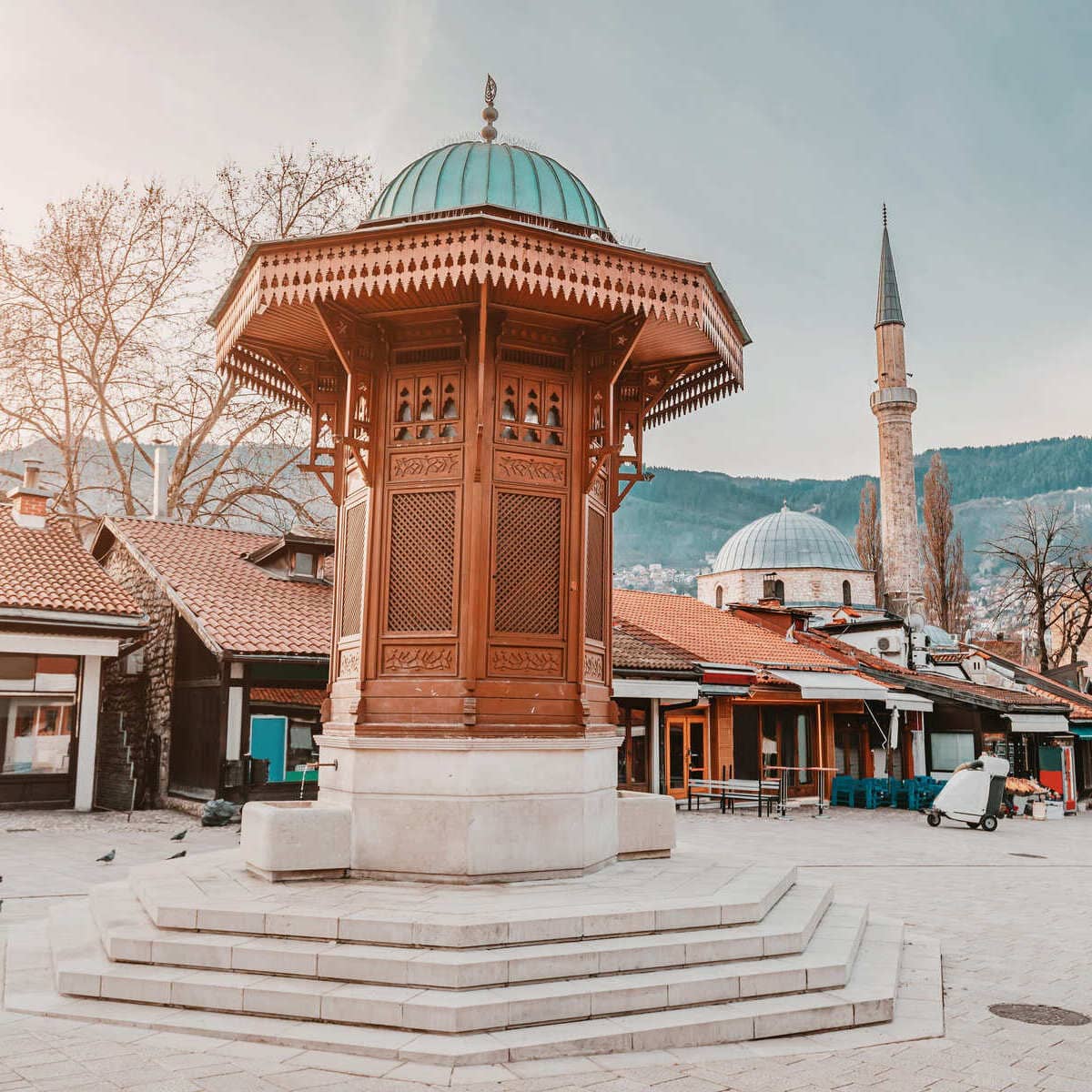
In the heart of Baščaršija, the Muslim-majority area, you’ll find the landmark Gazi Husrev-beg Mosque, an icon of Ottoman architecture, and one of the most prominent mosques in the Balkans. With the bazaar-style shops, cobbled streets, and ornate ablution fountains, the whole area truly feels like a slice of Turkey.
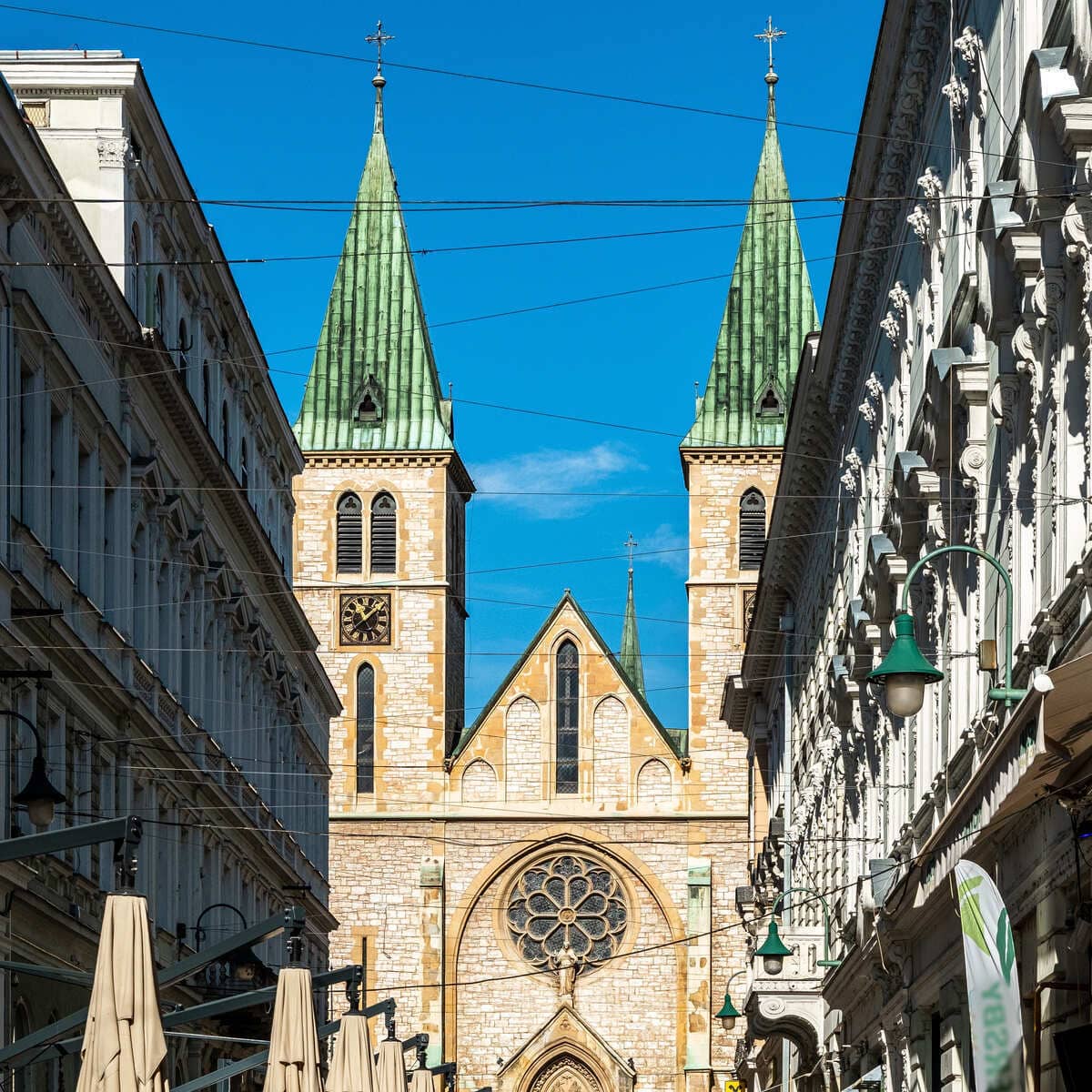
The craziest part? Walk some 6 minutes from the Muslim quarter of town, and you’ll hit the Sacred Heart Cathedral, a neo-Gothic marvel surrounded by Austro-Hungarian buildings, Central Europe-style café terraces, and tram-rattled boulevards.
Sarajevo still has one more trick up its sleeve. Right around the corner from the Catholic cathedral, there stands a massive Orthodox Cathedral, catering to the local Serb population, anchored by ćevapi spots and coffee houses.
Tie it all together, Sarajevo has a fascinating local history:
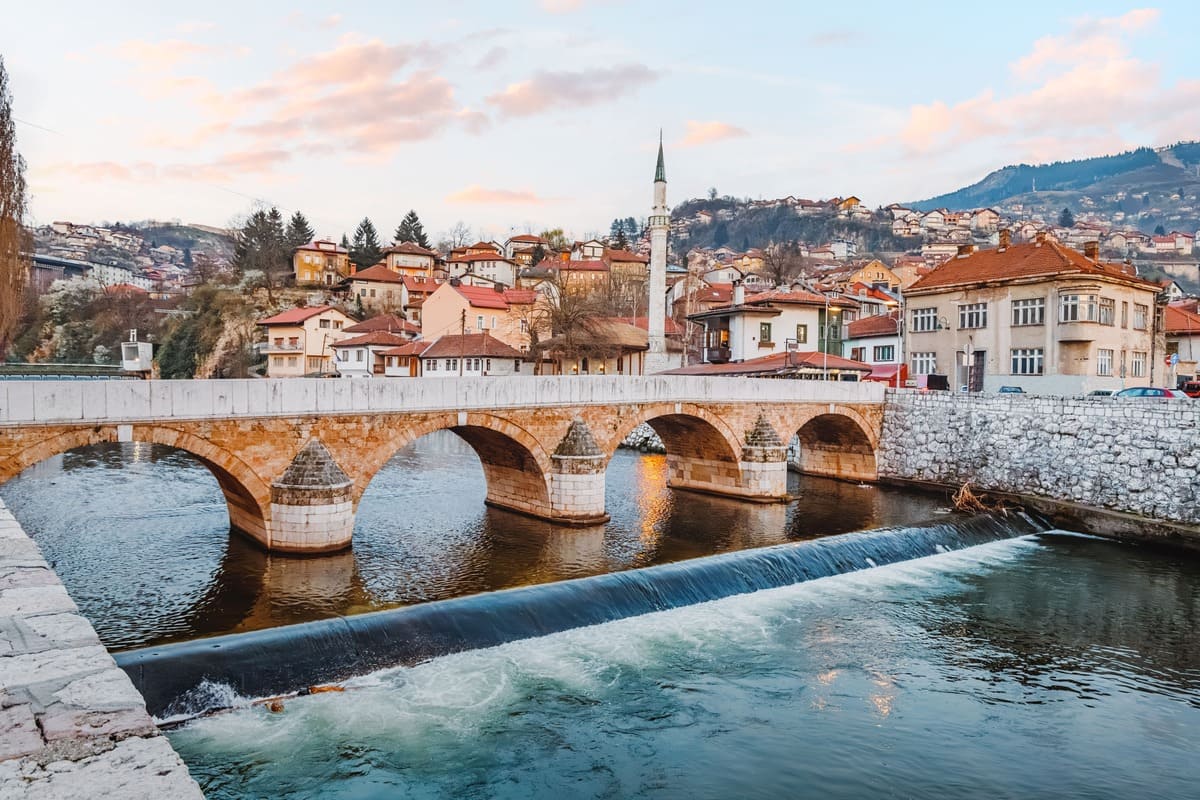
Its scenic Latin Bridge, spanning the Miljacka River, is where Archduke Franz Ferdinand was assassinated in 1914, an event that infamously triggered World War I, and all around the Old Quarter, you can still spot scars of the bloody Bosnian War of the 90s, from bullet holes to sniper signage and abandoned shells of buildings.
Berlin may have the war-era hype, but Sarajevo feels like the real deal.
Check the Entry Requirements for Americans traveling to Bosnia and Herzegovina and beyond as tourists here.
Tirana, Albania
Balkan capitals for the win.

Now, listen, Tirana's not really somewhere you go for insanely beautiful architecture, picture-perfect corners that scream Europe, or that quaint, lovely Old World feel, but it feels inebriatingly authentic and gritty.
Even if it's, hem, a little rough around the edges.
You see, Albania was stuck under an iron-fisted communist rule for many decades, and Tirana may have taken the brunt of that. While smaller Albanian towns like Berat and Gjirokaster still have a hint of a medieval charm, much of the capital's historic flair was flattened or overwritten.
No castles, hardly any cobbled lanes, nor showstopping façades.
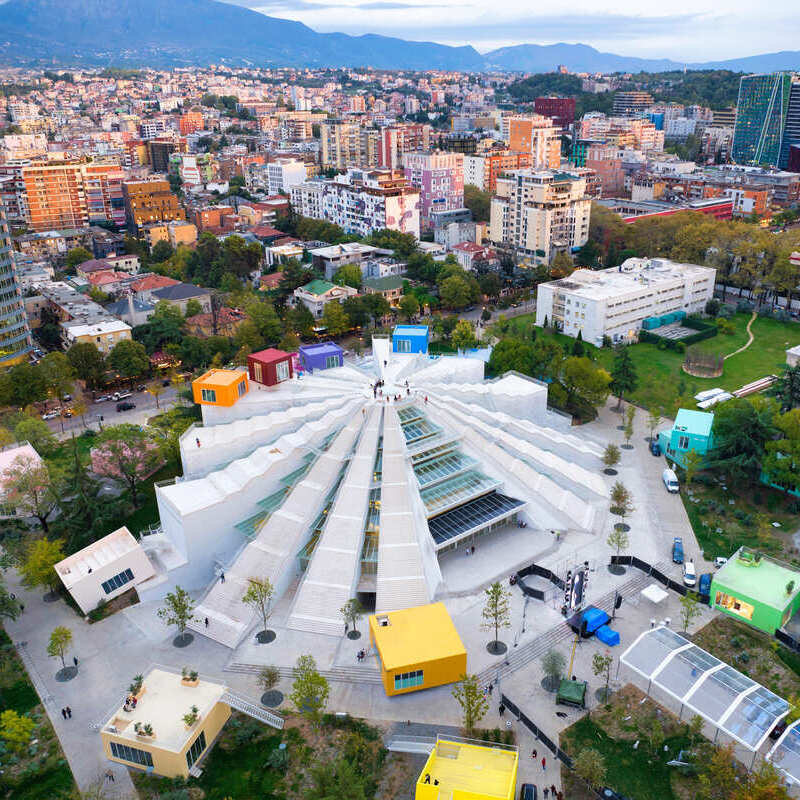
What you get today is an eclectic mix of modern glass-and-steel skyscrapers that don't really seem to follow a strict urban pattern, commie-style apartment blocks that wouldn't exactly look out of place in Russia, and weird, but incredibly cool Brutalist installations that will defy your sense of a European cityscape.
Want an example? Tirana Pyramid is an icon of the skyline, originally built in the 80s as a museum dedicated to Enver Hoxha, the communist leader at the time. After the fall of communism, the bunker-like structure became an exhibition space, a conference hall, and even a temporary TV station.
Now, it's just a climbing spot for locals to catch the sunset over Tirana's minarets and gleaming new high-rises.

Hoxha didn't stop there: he was terrified Albania would eventually be invaded and overrun, so he built an insane amount of bunkers across the country.
One of the main ones is right in the capital, Bunk'Art, now a massive underground museum depicting life under the regime.
It's dark, claustrophobic, and even a little unsettling, yet it's one of the most eye-opening experiences you can do in town. Other than, of course, swinging by the Blloku district to explore the stylish café scene, or walking the serene footpaths looping around the big Artificial Lake in the middle of the metropolis.
Albania has had a reputation for being one of the dodgier, more obscure countries in Europe, but it's come a looong way since its dark early noughties days. This is what travelers have been reporting as of late:
Nicosia, Cyprus
The Last Divided Capital in Europe, Nicosia is a sad, yet fascinating tale, and a modern Berlin of the sorts that never quite got its reunification.
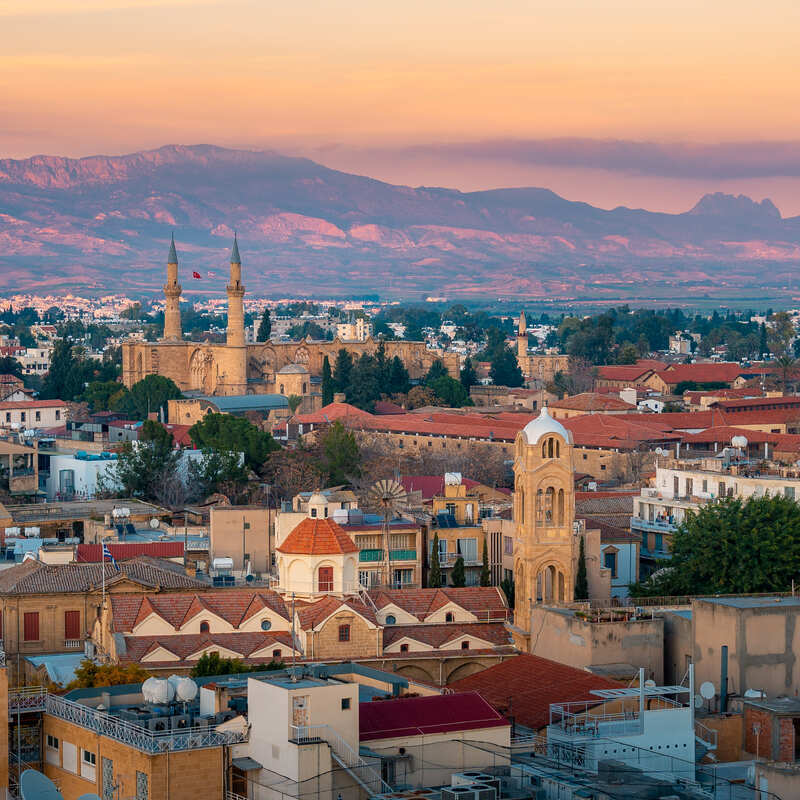
For context, Cyprus is a Greek-majority island-nation in the East Mediterranean with a Turkish minority. In the 70s, Turkey invaded it and occupied roughly a third of the territory, including the northern half of Nicosia, effectively splitting the city in half.
The jingoistically-Greek south is currently administered by the internationally-recognized Republic of Cyprus, a member of the European Union, whereas the northern part of town is under the jurisdiction of the so-called Turkish Republic of Northern Cyprus.
No international recognition, no EU membership, but effectively its own country, nonetheless.

The division was never settled, and this remains one of the most contentious topics in geopolitics to this day. In practice, if you're visiting Ledra Street in Nicosia today, the main thoroughfare running through the heart of the capital, you'll eventually hit a roadblock:
There's a border post right in the middle of the street, and in order to get from here to there, you'll need to show your passport.
The green line running along the UN Buffer Zone is also fascinating to watch, with coffeeshops and taverna terraces literally lining barricaded alleys and narrow streets, and barbed wire providing the backdrop.

In the south, expect to pay for your unequivocally-Greek gyros in euros, and don't be surprised by the amount of Orthodox churches per square mile. Cross north, however, and it's the Islamic call to prayer blasting from old Ottoman minarets, old caravanserai hosting lively bazaars, and the Turkish half-moon everywhere.
If you're going to Cyprus this year, make sure you double check the security situation beforehand. The island is dangerously-close to the Middle East, and it's been directly-impacted by the ongoing conflict:
Bern, Switzerland
Now, here’s something you might not know about Switzerland. As much as people mistakenly peg Zurich (or, on occasion, Geneva) as the capital, neither of the country’s top financial hubs holds that title.

In fact, no city officially does, but ask any Swiss where the national capital is, and they’ll point to the much-smaller, quaint, unassuming Bern, tucked right near the Alps.
Switzerland has no official capital on paper, so to keep all its wildly diverse, culturally distinct cantons on equal footing. That said, Bern—home to about 133,000 people—concentrates a majority of the federal institutions.
But it's far from being just another administrative hub, and that's why it's so quietly charming.
It’s a capital-like town with a real European soul.

The medieval core is one of the most beautiful you’ll ever see: cobbled lanes winding along ocher-colored arcaded buildings, landmark clock towers tunneled for modern trams, and palace terraces overlooking snow-capped peaks.
No wonder it’s a UNESCO World Heritage Site.
Don’t miss Zytglogge, the medieval clock with its moving figurines that is Bern’s pride and joy, and Münster (Bern Cathedral), where climbing the tower gives epic views of the city’s grid-like streets and the surrounding nature.
The winding, turquoise Aare River only adds to the alpine charm.
Zagreb, Croatia
I’m sure you’re familiar with Dubrovnik’s imposing medieval walls, hugged by the Adriatic Sea, and the glamorous Split Riva, with its palm trees and Ancient Roman flair, but who'd have thought Croatia’s capital would be anything but Mediterranean in character?

The Balkan gem may be best known for its pebbly beaches, Dalmatian stone houses, and summery aesthetics, but Zagreb, its one true metropolis, lies much further inland, practically touching Central Europe, and it actually wouldn’t look out of place in either Hungary or Austria.
Instead of waterfront promenades and laid-back coffeeshop terraces, you get wide avenues lined with Habsburg edifices, palatial complexes housing art museums, and leafy parks and plazas pulsating with city life.
The Upper Town (Gornji Grad) feels like a living museum, with narrow streets twisting past pastel-hue buildings and centuries-old churches. The beautiful St. Mark’s, with its kaleidoscopic tiled roof, is effectively the city’s symbol.

A short stroll downhill, past the soaring Zagreb Cathedral, perhaps the largest Gothic offering south of the Alps, and you’ll reach the Lower Town (Donji Grad), home to lively squares, buzzing boulevards, and pedestrianized thoroughfares flanked by bakeries and boutique shops.
Ban Jelačić Square is the central meeting point where locals, tourists, street performers, and tram lines converge, a perfect snapshot of Zagreb life.
Zagreb isn’t exactly as grand as Paris, nor as vast as London, but it’s a cultural powerhouse in its own understated way. It’s simply a shame most of the beach-obsessed tourists skip it altogether.
Now take this quiz to find your perfect match!
🧭Find Your Underrated Capital
Skip Paris. Go Here. Question 1 of 3What kind of vibe are you looking for?
🕌 A raw cultural melting pot of world religions 🏢 Gritty, authentic, and slightly weird Brutalist history 🏰 Pure alpine charm and medieval clock towers Question 2 of 3What's your ideal afternoon activity?
☕ Drinking coffee near a divided border or historic bullet scars 🌇 Climbing a massive abandoned pyramid for sunset views 🌳 Strolling through leafy parks and wide Habsburg-style avenues Final QuestionPick your ideal geographic setting:
⛰️ A historic Balkan crossroads nestled in a valley 🌊 A Mediterranean island nation with two distinct sides 🏔️ Tucked right alongside snow-capped mountain peaks 🇧🇦Your Match: Sarajevo
Bosnia and Herzegovina
The Vibe: The ultimate crossroads of civilizations. Where else can you find a massive Orthodox cathedral, a neo-Gothic Catholic church, and an iconic Ottoman mosque just a 6-minute walk from each other?The Reality Check: Skip Berlin's war hype. Sarajevo feels like the real deal, with visible scars from the 90s Bosnian War perfectly blending with vibrant modern coffee houses and ćevapi spots. ↻ Retake Quiz 🇦🇱
Your Match: Tirana
Albania
The Vibe: Inebriatingly authentic and a little rough around the edges. This is for travelers who want eclectic skyscrapers mixed with Soviet-style blocks and incredibly cool Brutalist installations.The Reality Check: Climb the iconic Tirana Pyramid for sunset, or explore Bunk'Art—a massive underground bunker turned museum depicting life under the country's former iron-fisted regime. ↻ Retake Quiz 🇨🇾
Your Match: Nicosia
Cyprus
The Vibe: A modern Berlin that never quite got its reunification. Nicosia is Europe's last divided capital, split between the Greek-majority south and the Turkish-administered north.The Reality Check: Walk down Ledra Street and you will literally hit a border post in the middle of town where you must show your passport to cross the UN Buffer Zone! ↻ Retake Quiz 🇨🇭
Your Match: Bern
Switzerland
The Vibe: Quietly charming and deeply alpine. While not officially the capital on paper, Bern houses the federal institutions within one of the most beautiful medieval cores in Europe.The Reality Check: Wander along the winding, turquoise Aare River, climb the Münster Cathedral for epic views, and watch the moving figurines on the famous Zytglogge clock tower. ↻ Retake Quiz 🇭🇷
Your Match: Zagreb
Croatia
The Vibe: A cultural powerhouse in its own understated way. While tourists flock to the Dalmatian coast, Zagreb offers a rich Central European vibe full of Habsburg edifices and leafy parks.The Reality Check: Explore the Upper Town's living museum, snap a photo of St. Mark’s kaleidoscopic tiled roof, and soak in the buzzing city life at Ban Jelačić Square. ↻ Retake Quiz CHECK ENTRY REQUIREMENTS Traveler Dashboard
Plan Smarter. Travel Safer.
Check entry requirements, real-time safety scores, and hidden fees for your destination before you book.
Open Traveler Dashboard 📬Get Alerts That Affect Your Trip
Only 2 emails per month.
🌍Join 25,000+ Travelers
Swap advice, ask questions, and share your adventures in our private Facebook community.
Join the Facebook Group 📰Support Independent Journalism
Follow Travel Off Path on Google News for breaking updates.
Follow on Google News
Схожі новини
У ЄС заперечили дефіцит авіапалива і масові скасування рейсів, – Ціцікостас
This Unknown Beach Town Is The Gulf Coast’s New Vacation Hotspot
