'There are 4 people in those pixels': Earth-based telescope snapped Artemis II crew orbiting the moon
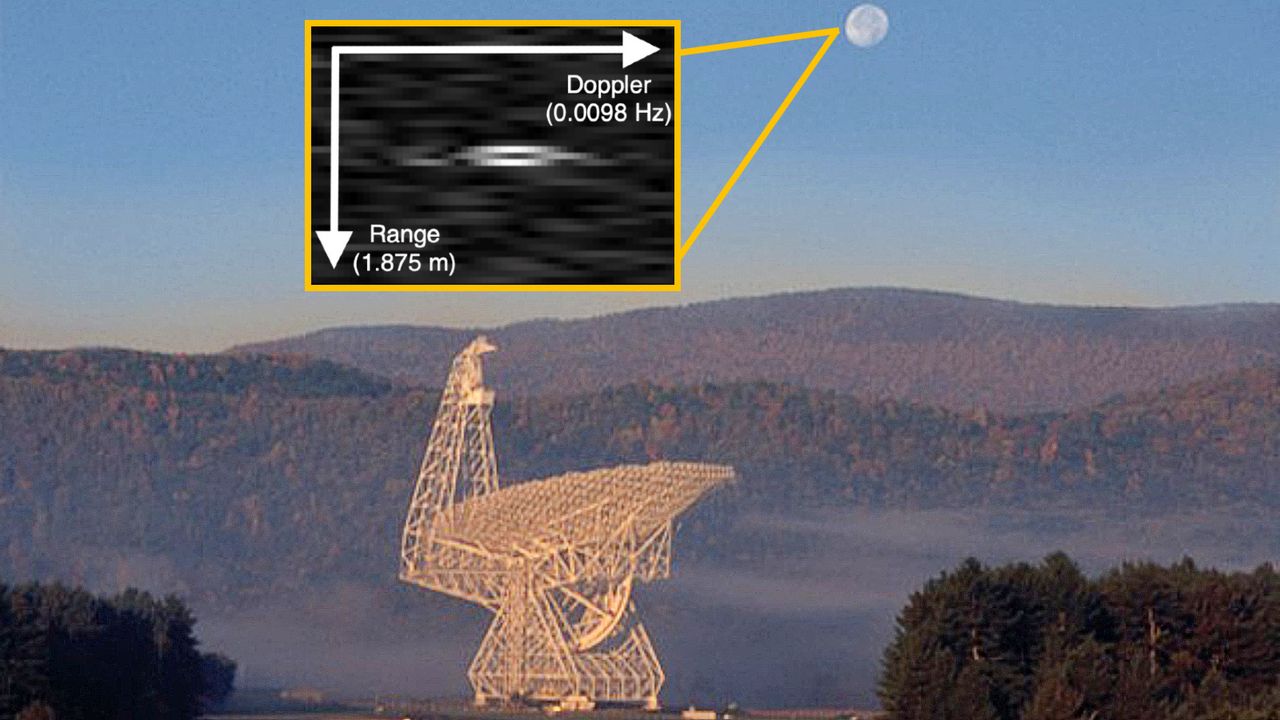
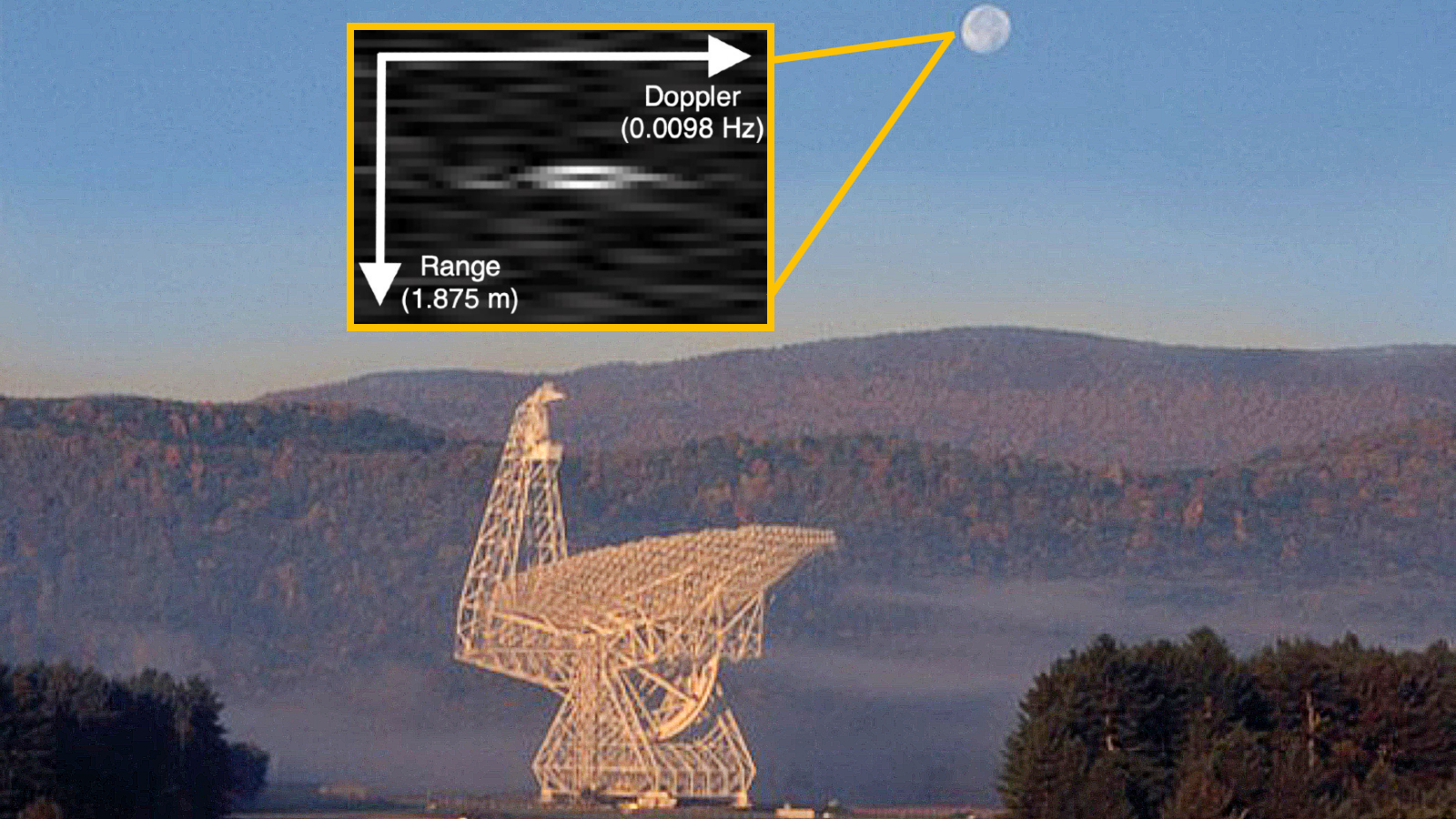
In recent weeks, we've been treated to some truly incredible photos of NASA's historic Artemis II mission, including a dump of 12,000 images captured by the crew. But a blurry new snap, which shows the crewed Orion capsule as nothing more than a handful of black and white pixels, is a late contender for the most impressive Artemis II photo — because it was captured by an Earth-based telescope more than 200,000 miles (320,000 kilometers) away.
This makes the newly released photo a candidate for the longest-distance image of humans ever taken from Earth. (Images like the "Pale Blue Dot," which were taken from space, don't count.)
The pixelated photo shows the radio waves emitted by Integrity as it slingshotted around the moon at around 2,000 mph (3,200 km/h) — as fast as a speeding bullet. The camper-van-sized capsule was approximately 213,000 miles (343,000 km) away when the image was captured on April 6 (the sixth flight day of the mission), meaning it was on the same side of the moon as Earth. It was, therefore, taken either just before or just after the crew temporarily disappeared behind the moon's far side and broke the record for the farthest distance traveled from our planet.
At first glance, the photo might not seem striking, but when you start to think about what you're actually looking at and the technology required to capture it, it becomes much more impressive.
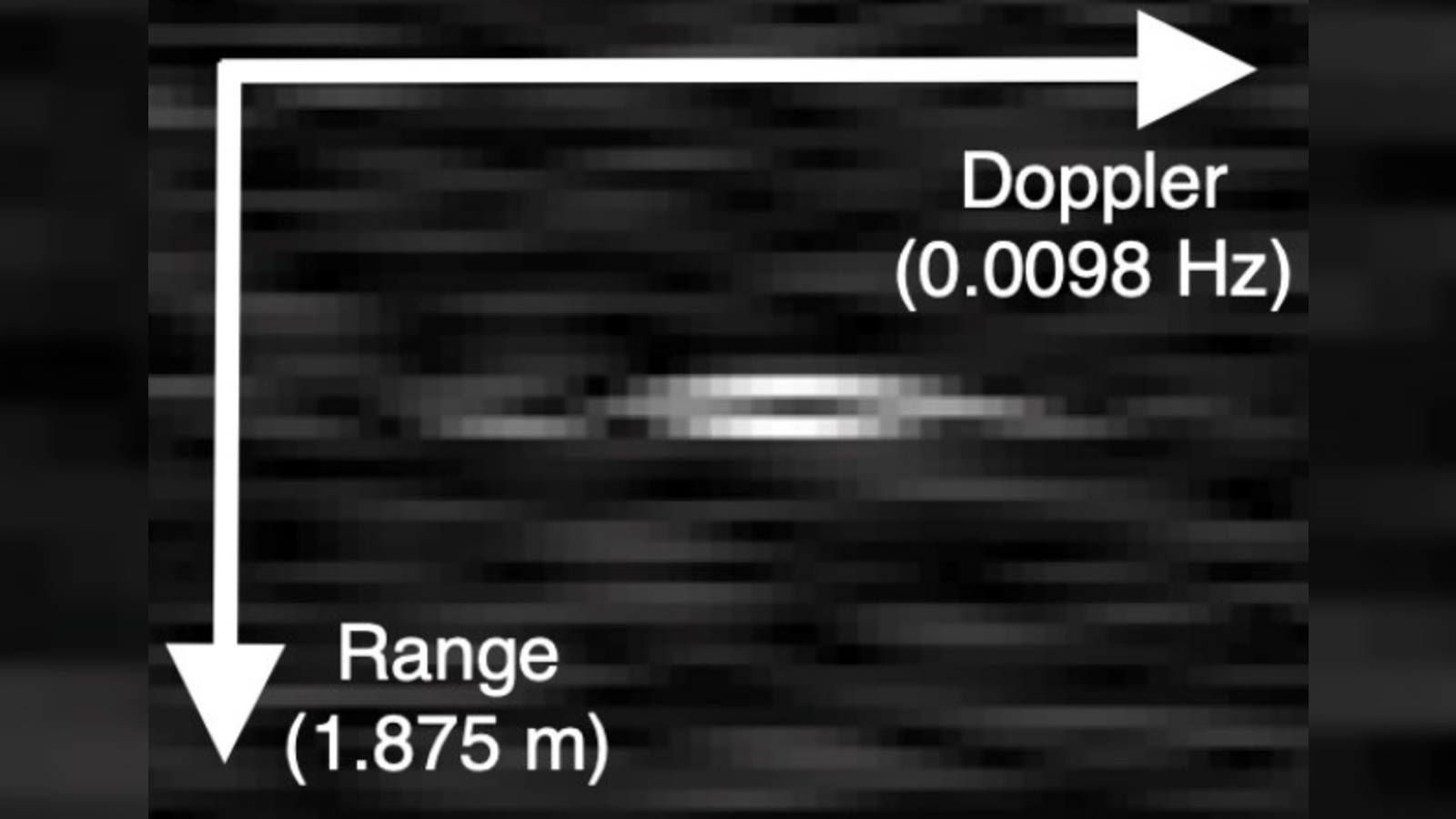
The pixelated new photo shows the radio signals given off by Integrity. "The vertical (range) axis indicates distance to the spacecraft with distance increasing downward in the image. The horizontal (Doppler) axis indicates a frequency shift from the expected return signal," NRAO officials wrote.
"There are four people in those pixels," Will Armentrout, a GBT astronomer who helped track Artemis II, commented to his colleagues when they first saw the image, according to an NRAO statement.
Those four people were mission commander Reid Wiseman, pilot Victor Glover and mission specialist Christina Koch of NASA, as well as mission specialist Jeremy Hansen of the Canadian Space Agency — each of whom broke a different individual spaceflight record during the mission.
Sign up for the Live Science daily newsletter nowTracking NASA's return to the moon
The Artemis II crew launched to the moon on April 1 on board NASA's mega Space Launch System rocket and splashed down in the Pacific Ocean on April 10, after reentering Earth's atmosphere at around 25,000 mph (40,000 km/h) — the fastest speed any humans have ever traveled.
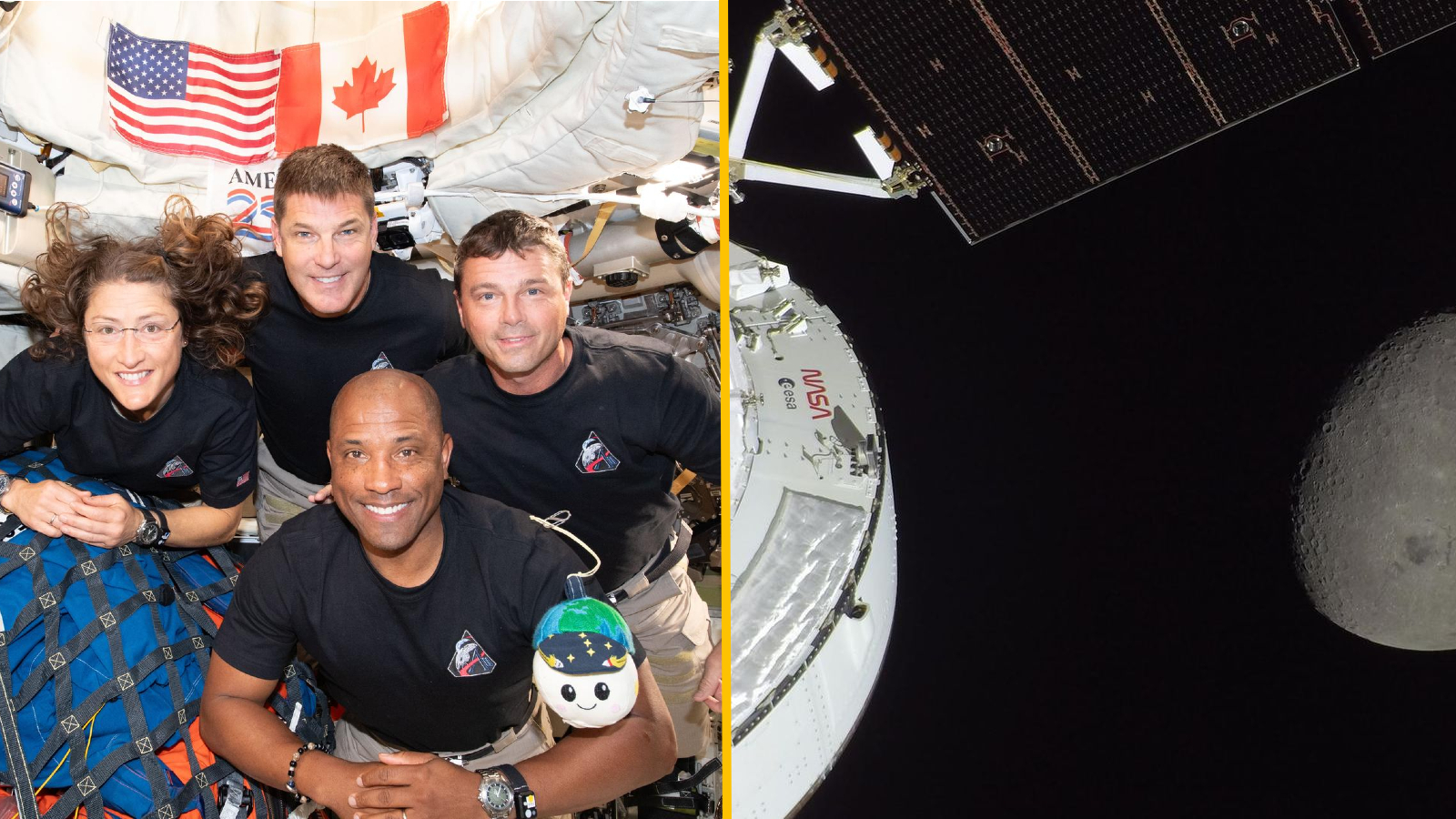
Astronauts Reid Wiseman (right), Victor Glover (bottom), Christina Koch (left) and Jeremy Hansen (top) traveled further from Earth than any other human in history when they went around the moon on April 6.
Throughout the mission, spaceflight enthusiasts watched the livestream from Earth, keeping tabs on everything that happened, from early toilet troubles and lunar meteor strikes to a touching tribute to Wiseman's late wife and a rather awkward interview with President Donald Trump. But they were not the only ones watching.
RELATED STORIES
- 'I have not processed what we just did': Artemis II astronauts share all in first news conference since splashdown
- Can the US be trusted with the moon? A law scholar raises concerns after Artemis II's success.
- I've witnessed nearly 100 rocket launches. Artemis II was like nothing I've experienced.
The GBT team was also keeping a close eye on Artemis II and helped to accurately track the crew's progress during six-hour observation windows on each of the five days Integrity was closest to the moon. The telescope's extreme sensitivity and precision helped provide crucial data that will help NASA prepare for future Artemis missions, which aim to establish a base on the moon.
"With the GBT, we were able to track the movement of the spacecraft within 0.2 millimeters [0.008 inches] per second of what NASA calculated in its projections," Anthony Remijan, the GBT's site director, said in the statement. "It's like having a speedometer in your car that can track your speed within 0.0004 decimal places per hour."
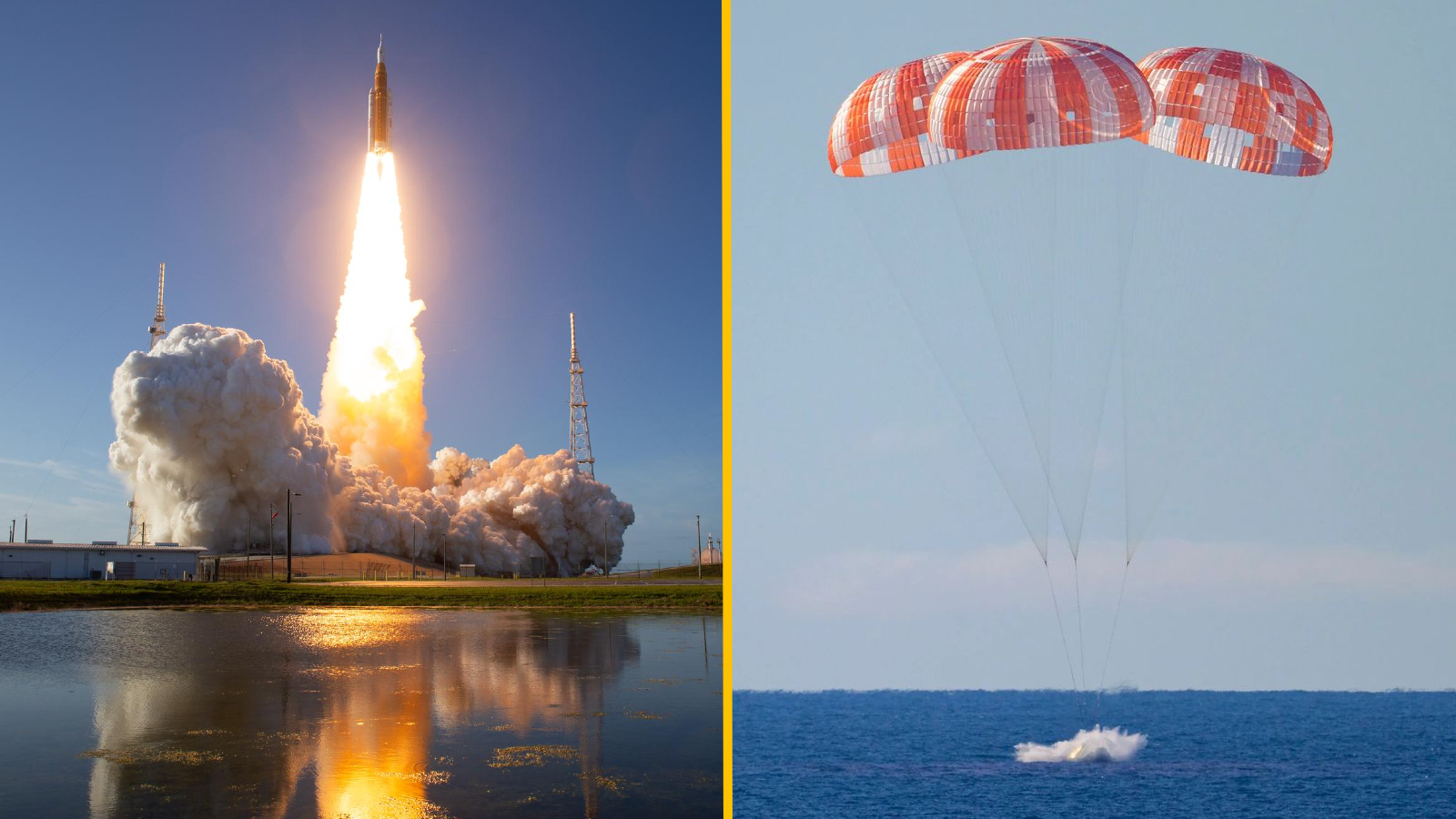
The Artemis II crew lifted off from the Kennedy Space Center in Florida on April 1 and landed just off coast of San Diego on April 10, having traveled a total of 695,000 miles (1.1 million km).
This is a great example of how scientific institutions across the globe contributed to the mission.
"To get big things done like we're doing in this capsule … you need a big team behind you," Hansen said during an interview while on board Integrity.
Artemis II quiz: Is your knowledge of NASA's historic moon mission out of this world?

Harry is a U.K.-based senior staff writer at Live Science. He studied marine biology at the University of Exeter before training to become a journalist. He covers a wide range of topics including space exploration, planetary science, space weather, climate change, animal behavior and paleontology. His recent work on the solar maximum won "best space submission" at the 2024 Aerospace Media Awards and was shortlisted in the "top scoop" category at the NCTJ Awards for Excellence in 2023. He also writes Live Science's weekly Earth from space series.
View MoreYou must confirm your public display name before commenting
Please logout and then login again, you will then be prompted to enter your display name.
LogoutСхожі новини
NIH staffing shortage could slash number of new grants issued this year
Author Correction: The AIM2 inflammasome exacerbates atherosclerosis in clonal haematopoiesis

The 'Doctor Who' TV movie at 30: Too British for America, too American for the UK
