The Trump administration wants to open precious East Coast forests to logging and mining
Get the world’s most fascinating discoveries delivered straight to your inbox.
By submitting your information you agree to the Terms & Conditions and Privacy Policy and are aged 16 or over.You are now subscribed
Your newsletter sign-up was successful
Want to add more newsletters?
Join the club
Get full access to premium articles, exclusive features and a growing list of member rewards.
Explore An account already exists for this email address, please log in. Subscribe to our newsletterThis coverage is made possible through a partnership between Grist, WABE, Atlanta’s NPR station; and WBEZ, a public radio station serving the Chicago metropolitan region.
When most people think about national forests, they imagine vast Western landscapes: Alaska, the Rockies, the Pacific Northwest. But millions of acres of federal woodlands dot the eastern half of the country, too. These great swaths of vibrant ecosystems have long been free of roads, protected by a policy called, appropriately enough, the "roadless rule."
Adopted in 2001 during the final days of the Clinton administration, the Roadless Area Conservation Rule, as it is formally known, grew out of a realization within the U.S. Forest Service that it had built more roads than it could afford to maintain. Many were crumbling into streams, fragmenting habitat, and degrading drinking water, alarming even agency scientists. The rule barred road construction and logging in nearly 60 million acres of undeveloped national forest in 39 states. In the eastern U.S., these areas provide rare pockets of ecological and natural relief in a densely developed region.
As the Trump administration moves to dismantle the policy and open those lands to logging and mining, the future of these forests — and the communities that rely on them — is in question.
The Department of Agriculture, under which the Forest Service sits, argues the roadless rule limits its ability to reduce wildfire risk, maintain access for firefighters, and promote forest health. Secretary of Agriculture Brooke Rollins has called the policy an "absurd obstruction" and "overly restrictive." She said its repeal would give the Forest Service greater flexibility to protect woodlands and support rural economies.
But conservationists argue the administration's position is unsupported by science and ignores the importance of these relatively pristine expanses of forest. The woodlands play an outsize role in sheltering wildlife, supporting recreation, and protecting drinking water supplies to millions of people, as well as storing carbon to help fight climate change. "Roadless areas are a finite resource," said Garrett Rose of the Natural Resources Defense Council. "They are our last best stretches of national forest land."
Sign up for the Live Science daily newsletter nowEven some former leaders of the Forest Service oppose the repeal. Four former chiefs, drawing on 150 years of collective experience, have urged the administration to preserve the rule. "Removing protection of these precious lands that belong to all citizens, rich and poor, would be an irreparable tragedy," said Vicki Christiansen, who led the agency from 2018 until 2021.
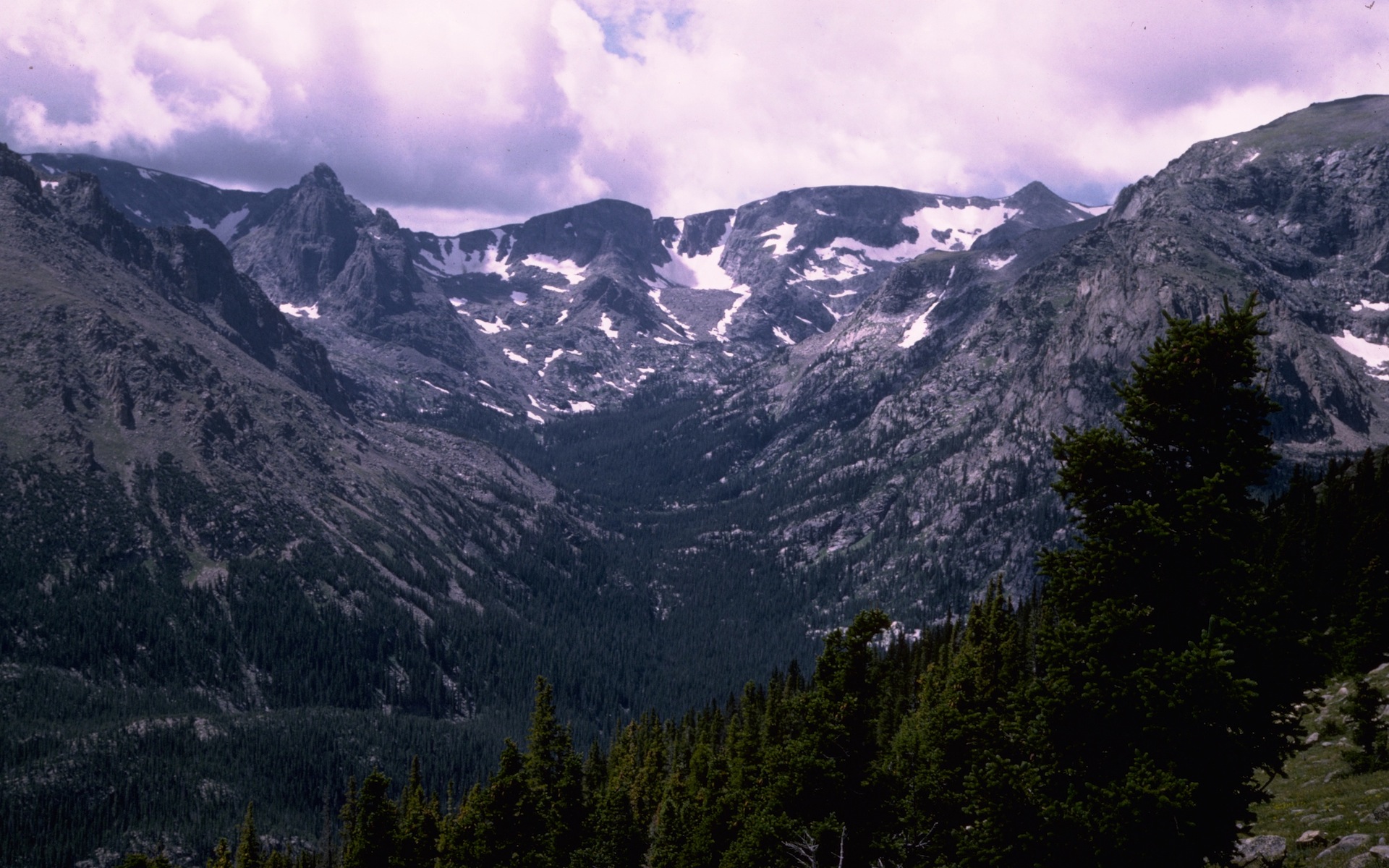
The policy safeguards about one-third of all national forest land. Ninety-five percent of it lies in 10 Western states where vast, contiguous forests remain the norm. East of the Mississippi River, however, the policy shields smaller, more vulnerable parcels. In Shawnee National Forest in Illinois, for example, just 4,000 acres are road-free; across the Southeast, the total is roughly 416,000.
The Trump administration began its repeal effort last fall with an unusually short 21-day public comment period — far shorter than the usual timeframe, which can be as long as 90 days. Still, it drew more than 220,000 responses, nearly all of them opposed, according to an analysis by the advocacy organization Roadless Defense. Most cited concerns about wildlife, tourism, and water quality.
Still, the administration plans to press ahead. The rollback is part of a broader push to expand logging and remake the nation's second-largest land management agency. Last month, the Trump administration shuttered 57 of the 77 research stations the Forest Service operated nationwide, many of which studied the impacts of climate change, invasive species, and wildfires on woodlands. The shakeup included plans to move the agency headquarters to Salt Lake City, Utah from Washington, D.C. and shutter nine regional offices.
Related stories- Trump is bringing car pollution and other greenhouse gases back to America's skies. Here are the health risks we all face from climate change.
- Our fossil fuel economy is a house of cards and Trump's war in Iran is about to topple it. The need for a clean energy transition has never been clearer.
- Clean energy is surging — with or without Trump
Since his return to office last year, President Donald Trump has pushed federal agencies to intensify timber production, an effort that includes making it easier to use legal loopholes to fell trees. With the Department of Agriculture aiming to overturn the roadless rule this year, the debate is shifting from Washington to the woods — and to the communities living alongside some of the last protected forests in the East.
— Juanpablo Ramirez-Franco & Katie Myers
This story was originally published by Grist. Sign up for Grist’s weekly newsletter here.
Grist View MoreYou must confirm your public display name before commenting
Please logout and then login again, you will then be prompted to enter your display name.
Logout LATEST ARTICLES 1'Eventually, it becomes you': Inventors of new 'living' knee replacement describe why this tech is desperately needed and how it works
- 2'The push towards renewables is unstoppable because it's in a country's self-interest': Climate scientist Andy Reisinger on Trump, Iran, and the future of Earth
- 3The AMOC moves closer to collapse, scientists create artificial neurons, the "Iliad" is found inside and Egyptian mummy, and researchers search for treatments for brain-eating amoebas
- 4Why are some constellations visible for only part of the year?
- 5Science history: Chernobyl nuclear power plant melts down, bringing the world to the brink of disaster — April 26, 1986
Схожі новини

Китайські вчені розробляють "космічного павука" для будівництва конструкцій на орбіті

NASA's initial takeaways from the Artemis II mission, and more science stories
Conspiracy theory over UFOs and missing scientists spreads from web to White House