The 'Oscars of Science': Breakthrough Prize 2026 awards over $18 million for discoveries across space, physics and more
Breaking space news, the latest updates on rocket launches, skywatching events and more!
By submitting your information you agree to the Terms & Conditions and Privacy Policy and are aged 16 or over.You are now subscribed
Your newsletter sign-up was successful
Want to add more newsletters?
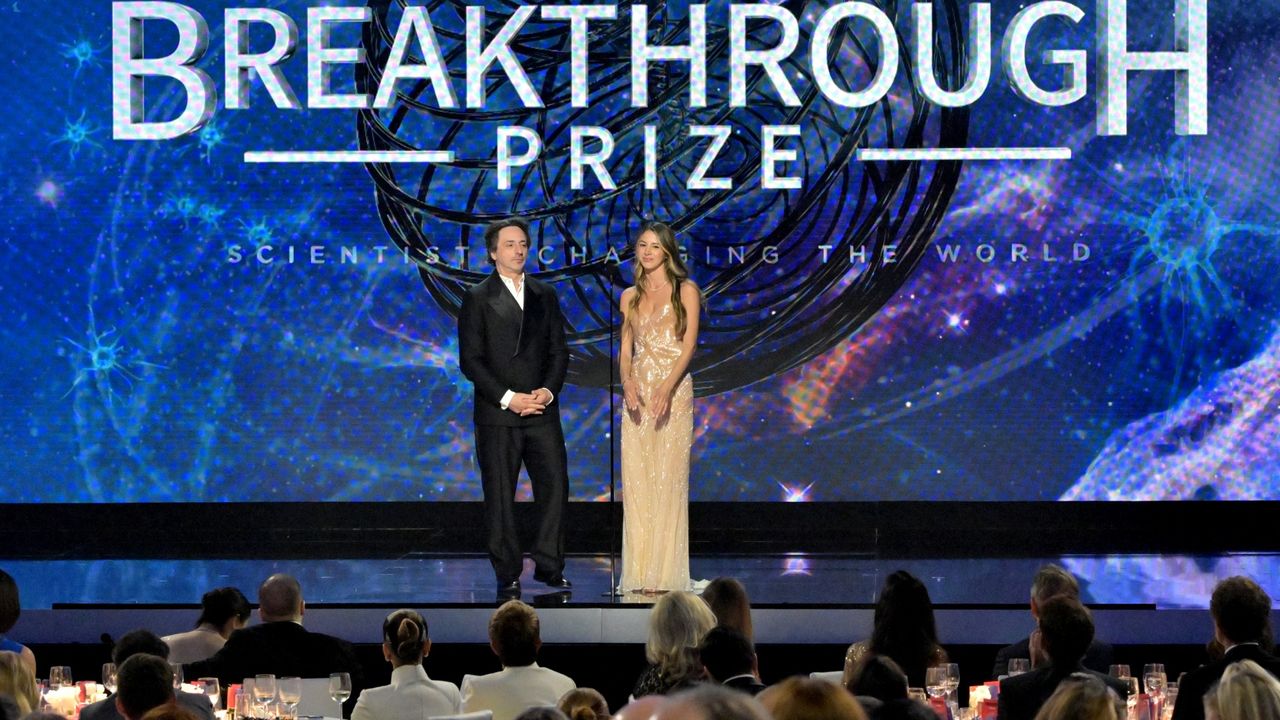
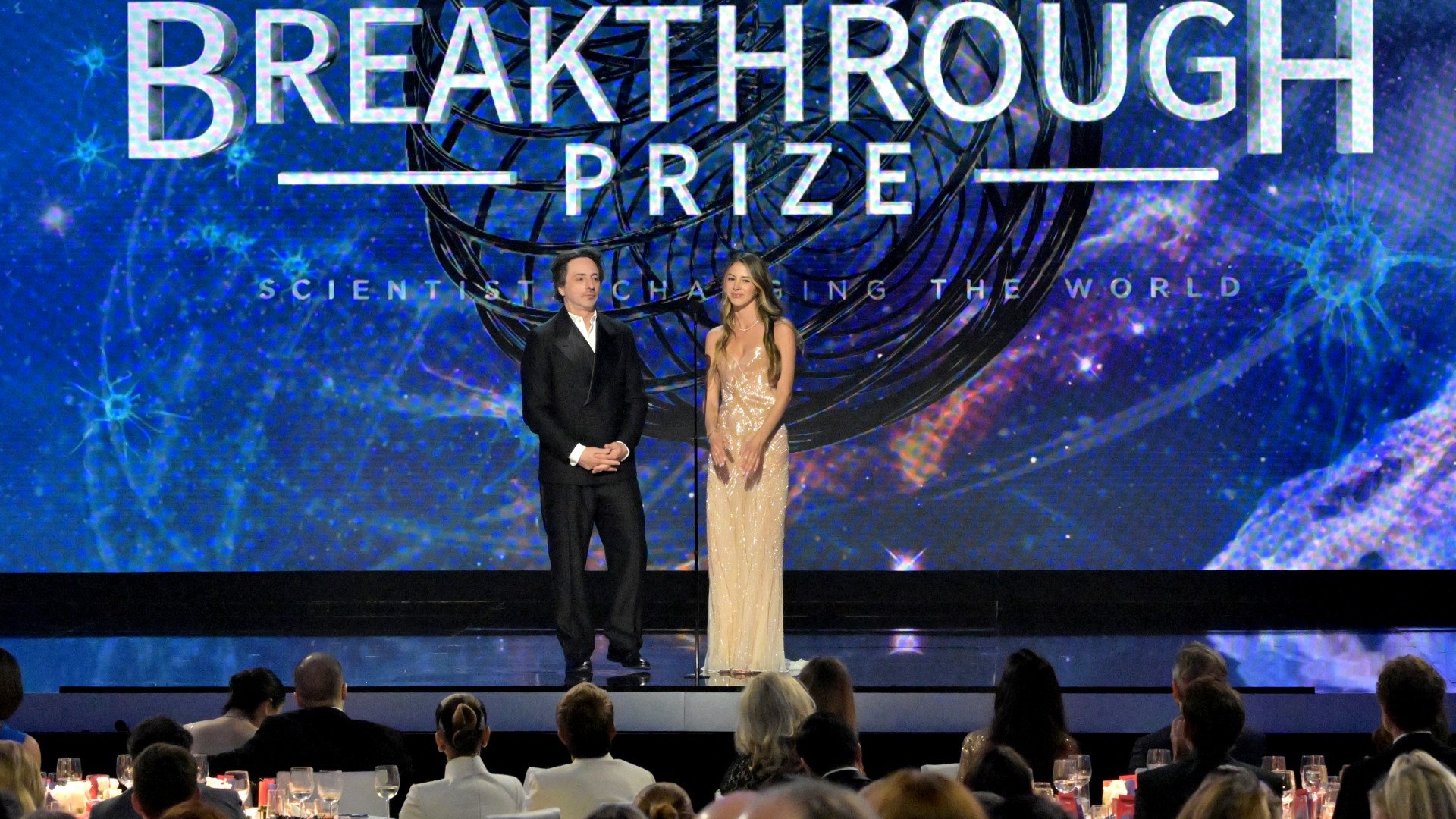
An account already exists for this email address, please log in. Subscribe to our newsletterThe 2026 Breakthrough Prize winners were announced Saturday (April 18) as the red carpet opened at the annual gala in Los Angeles, a globally broadcast ceremony often dubbed the "Oscars of Science," where celebrities and tech leaders mingle with researchers to celebrate major scientific advances.
Six mainstage prizes — each worth $3 million — were awarded across life sciences, fundamental physics and mathematics, along with a special prize for lifetime achievement. This year's honors recognize breakthroughs ranging from gene therapies and neurodegenerative disease to precision particle physics and the mathematics of complex systems, according to a statement from the non-profit organization.
"This year's laureates show what great science can do — deepen our understanding of the world and lead to discoveries that improve millions of lives," Mark Zuckerberg and Priscilla Chan, founders of the nonprofit research organization called Biohub, said in the statement. "We're proud to recognize their work."
In life sciences, Jean Bennett, Katherine A. High and Albert Maguire were recognized for developing the first FDA-approved gene therapy for an inherited disease. Their work led to a treatment for retinal degeneration that restores functional vision, marking a turning point for genetic medicine and helping spark a wave of similar therapies now in development.
Another life sciences prize went to Stuart H. Orkin and Swee Lay Thein for uncovering how the body switches from fetal to adult hemoglobin. By identifying a key genetic regulator, their work enabled new gene-editing therapies for sickle cell disease and beta-thalassemia — conditions affecting millions worldwide — demonstrating how fundamental biology can translate into transformative treatments.
A third Breakthrough Prize in Life Sciences honors Rosa Rademakers and Bryan Traynor, who discovered that a mutation in the C9orf72 gene is a major cause of both amyotrophic lateral sclerosis (ALS), also known as Lou Gehrig's disease, and frontotemporal dementia (FTD), the second leading cause of early-onset dementia. The finding unified two previously separate diseases and opened new avenues for diagnosis and targeted therapies.
In mathematics, Frank Merle is honored for breakthroughs in nonlinear evolution equations, which describe waves and complex systems such as turbulence and plasmas. His work sheds light on how these systems remain stable or develop singularities, advancing understanding of phenomena that span aeronautics, fluid dynamics and astrophysics.
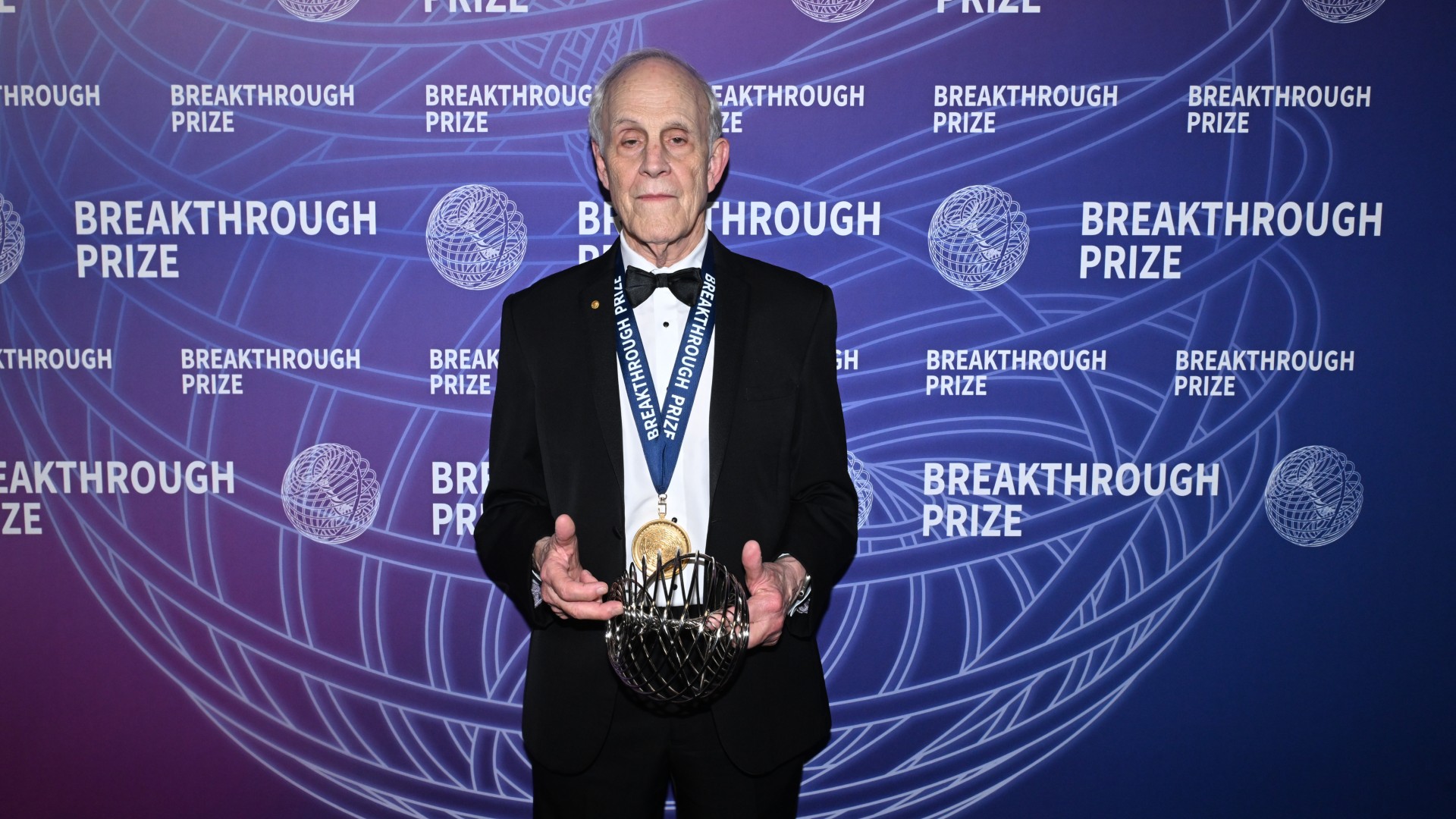
Get the Space.com NewsletterThe Breakthrough Prize in Fundamental Physics recognizes the Muon g-2 collaborations at CERN, Brookhaven National Laboratory and Fermilab, along with hundreds of scientists including David Hertzog, Chris Polly, Lee Roberts and William Morse. Their work measures the anomalous magnetic moment of the muon — a heavy, unstable cousin of the electron — with extraordinary precision, probing for cracks in the Standard Model that could reveal new particles or forces.
The Special Breakthrough Prize in Fundamental Physics goes to David J. Gross for a career of foundational contributions, including explaining how the strong nuclear force behaves at different energy scales and advancing string theory — key steps toward a unified description of nature.
Also announced was the inaugural Vera Rubin New Frontiers Prize, awarded to Carolina Figueiredo, an early-career theorist whose work uncovers deep geometric connections between seemingly unrelated particle physics theories. Her research suggests that the behavior of fundamental particles may be governed by underlying geometric structures rather than spacetime itself — a perspective that could help reshape how physicists model the universe at its most fundamental level.
Named after pioneering astronomer Vera Rubin, the $50,000 prize highlights emerging talent at a moment when new observatories — including the Vera C. Rubin Observatory, expected to begin full science operations this year — are poised to probe dark matter and the large-scale structure of the cosmos with unprecedented detail.
Other prizes were awarded to recognize emerging talent through the New Horizons and New Frontiers awards. In physics, these honors spotlighted advances in dark matter searches, quantum field theory and increasingly precise measurements of the universe's expansion and structure.
Together, the 2026 Breakthrough Prize recipients highlight the breadth of modern science — from rewriting the genetic basis of disease to testing the limits of particle physics and modeling extreme cosmic environments — underscoring how fundamental discoveries continue to shape both technology and our understanding of the universe.
A full list of award recipients can be found online with additional details on their breakthrough discoveries.
Samantha Mathewson joined Space.com as an intern in the summer of 2016. She received a B.A. in Journalism and Environmental Science at the University of New Haven, in Connecticut. Previously, her work has been published in Nature World News. When not writing or reading about science, Samantha enjoys traveling to new places and taking photos! You can follow her on Twitter @Sam_Ashley13.
View MoreYou must confirm your public display name before commenting
Please logout and then login again, you will then be prompted to enter your display name.
Logout MORE FROM SPACE... 1The moon as you rarely see it: How a photographer captured night and day on the first quarter moon
- 215 expert-checked places to see the 2026 total solar eclipse in Spain, Iceland and Greenland
- 3Best space prison movies
- 4Satellite snaps amazing 36th birthday pic of Hubble Space Telescope (photo)
- 5From Apollo to alien worlds: 4 'firsts' you can spot in the night sky tonight
Схожі новини

Chernobyl Genetic Study: DNA scan finds no extra mutations in children; solid data might ease worries
Перекрити океан заради клімату: вчені запропонували несподіване рішення
SpaceX launching powerful Falcon Heavy rocket for 1st time in 18 months on April 27: Watch it live