The new Moomin game is lovely, but also illustrates the limits of cozy comfort over the harsher lessons of a children's book
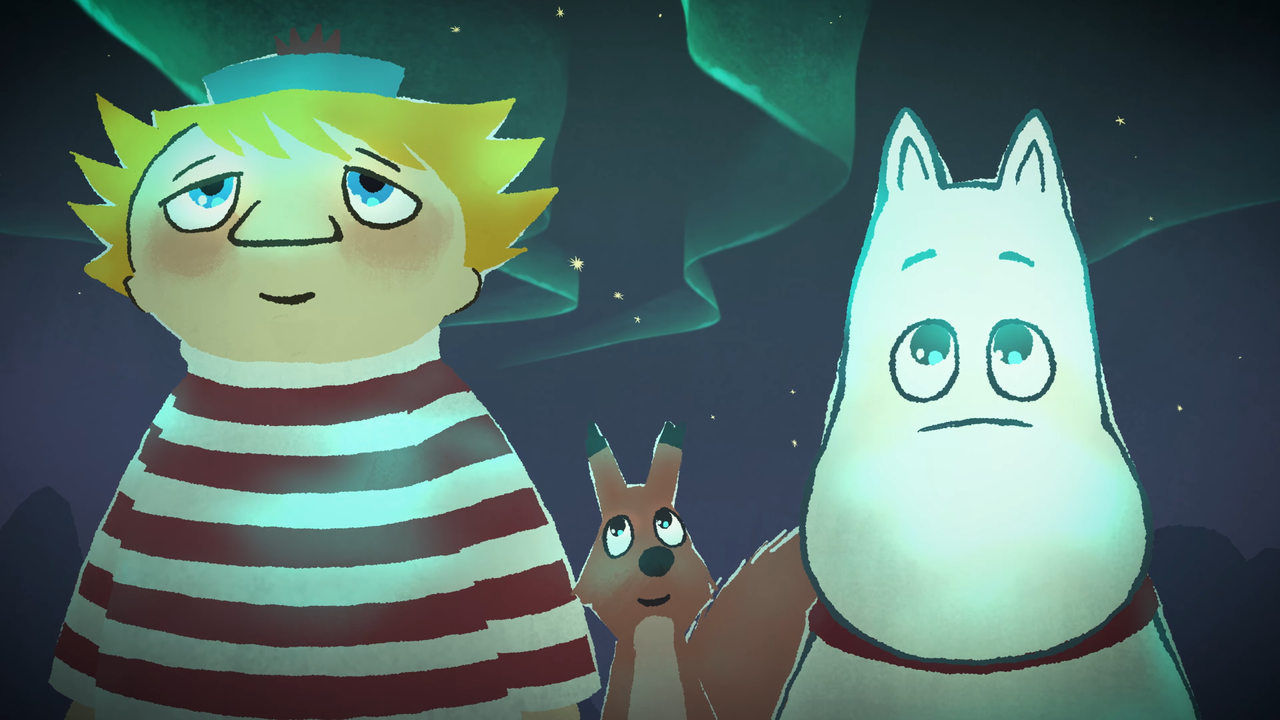
Moomintroll: Winter's Warmth, the sequel to Snufkin: Melody of Moominvalley, is basically the perfect example of a cozy game.
It follows Moomintroll as he accidentally wakes from hibernation in the middle of winter and emerges into a snowy, unfamiliar world, where he must meet strange creatures and go on adventures in order to bring back spring. This story, familiar to generations of Moomin fans (and retold in basically every Moomin adaptation you can imagine), comes first from Moominland Midwinter, one of the original chapter books written by Tove Jansson.
It's also a story that generations of Moomin fans will recognize as, uh, not actually cozy, which makes Winter's Warmth a fascinating example of the priorities and emotional landscapes that wholesome games have to conform to. To make my case, please indulge me while I recite the journey of a children's book written 68 years ago.
Moomintroll waking from hibernation is textually an interruption to his normal cozy life. He spends early chapters trying to get back to sleep (he can't), change Moominhouse to be as comfortable and warm as he's used to it being (he can't do that either), and then deciding since he can't he'll cross the mountains to find Snufkin, who's always wandering in summer (he gives up on this very quickly).
When he can't return to what he knows and finds comfortable, he starts looking for others to reassure and guide him.
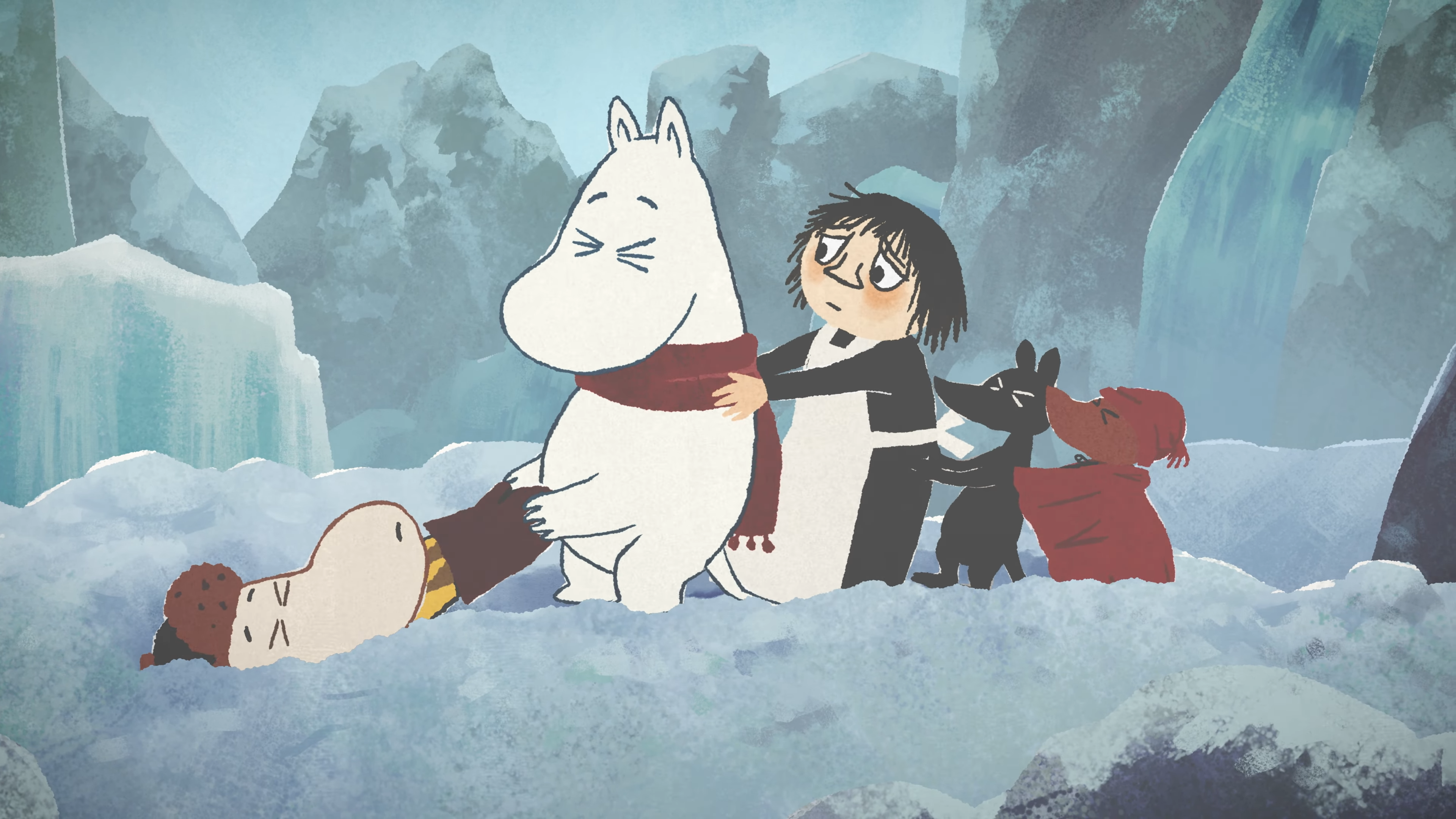
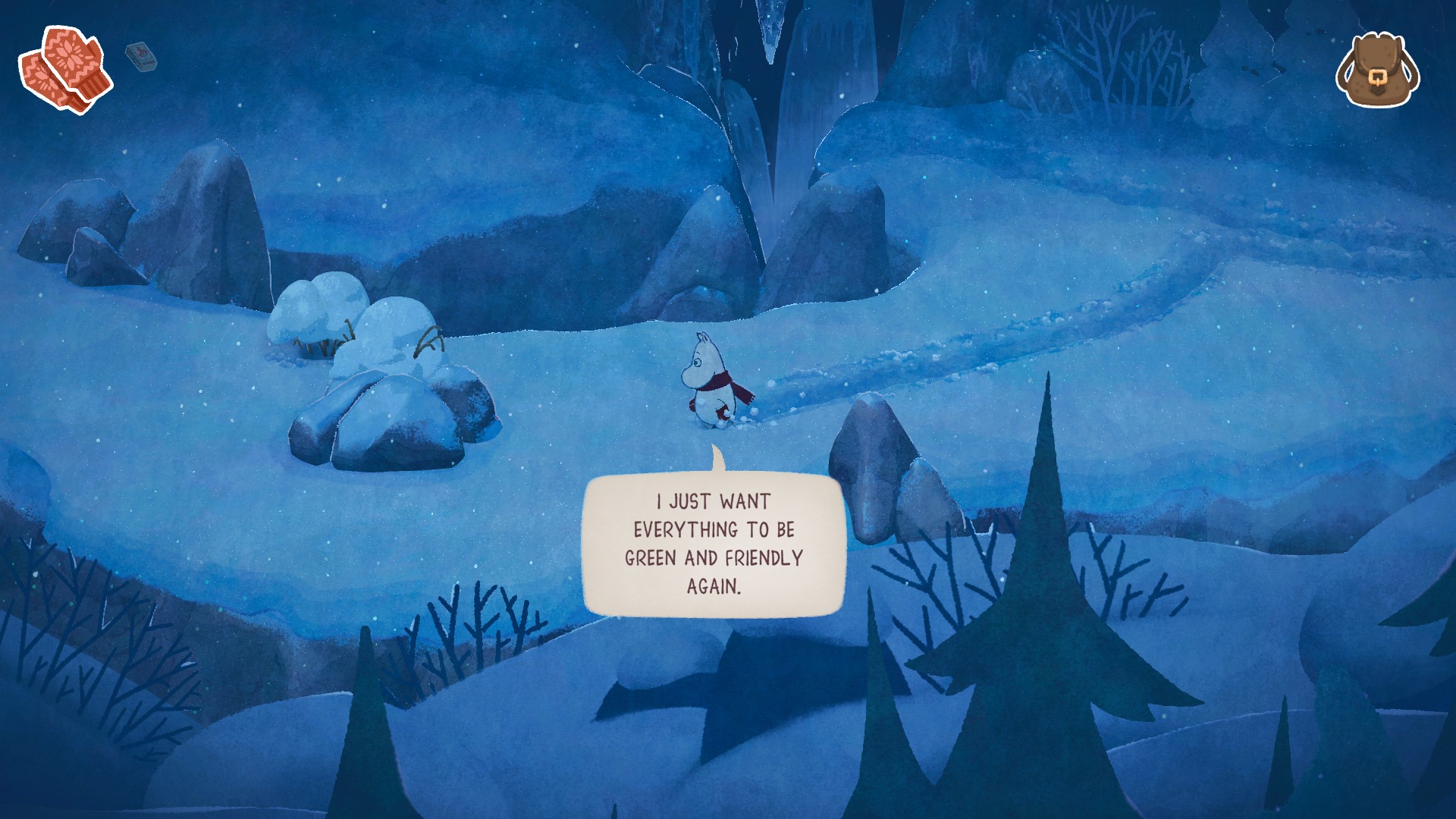
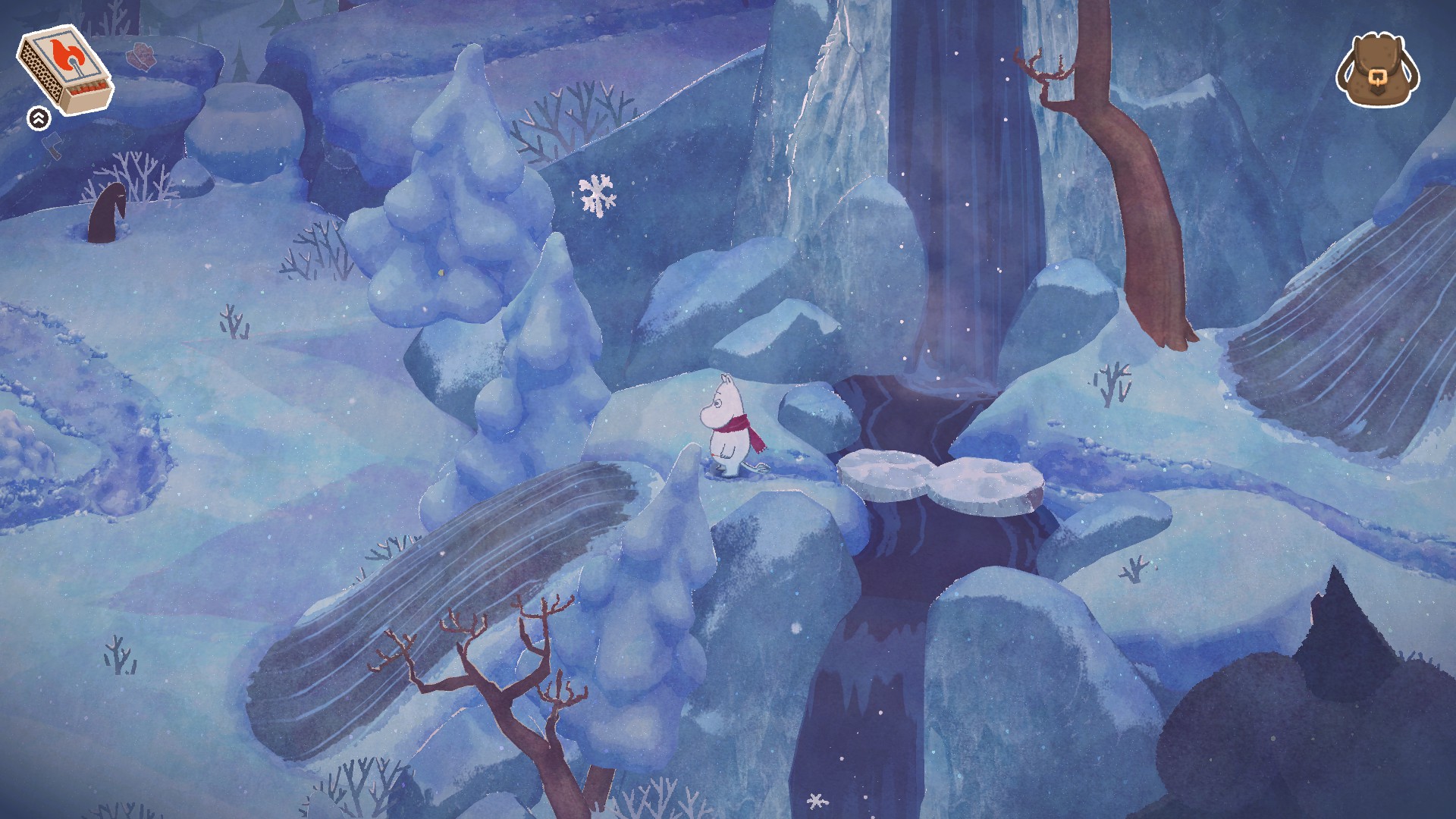
What he finds instead are the wise but cryptic Too-Ticky, who spends the winter in the Moomins' bathing house; his brash friend Little My, who's also awoken from hibernation but can't be bothered to be upset by it; and an air-headed squirrel, who immediately runs afoul of the Lady of the Cold and freezes to death, horrifying Moomintroll (but not Little My, who attempts to make a muff out of its tail.)
Moomintroll sustains himself with dreams of summer. He finds the winter beings strange and unhelpful, and their blasé acceptance of his confusion and fear frustrating. When he lights the Midwinter bonfire that Too-Ticky promises will bring the sun back, and the sun only returns the next day for a mere few seconds, he's so angry that he immediately opens a forbidden cupboard and lets out his thousand-year-old ancestor. Winter continues anyway, and he meets other odd creatures, and slowly learns the ways of the unfamiliar season.
By the end of the book, when Moomintroll falls into the sea after the ice breaks and the cold he catches finally wakes Moominmamma, his time enduring winter has become another exciting adventure.
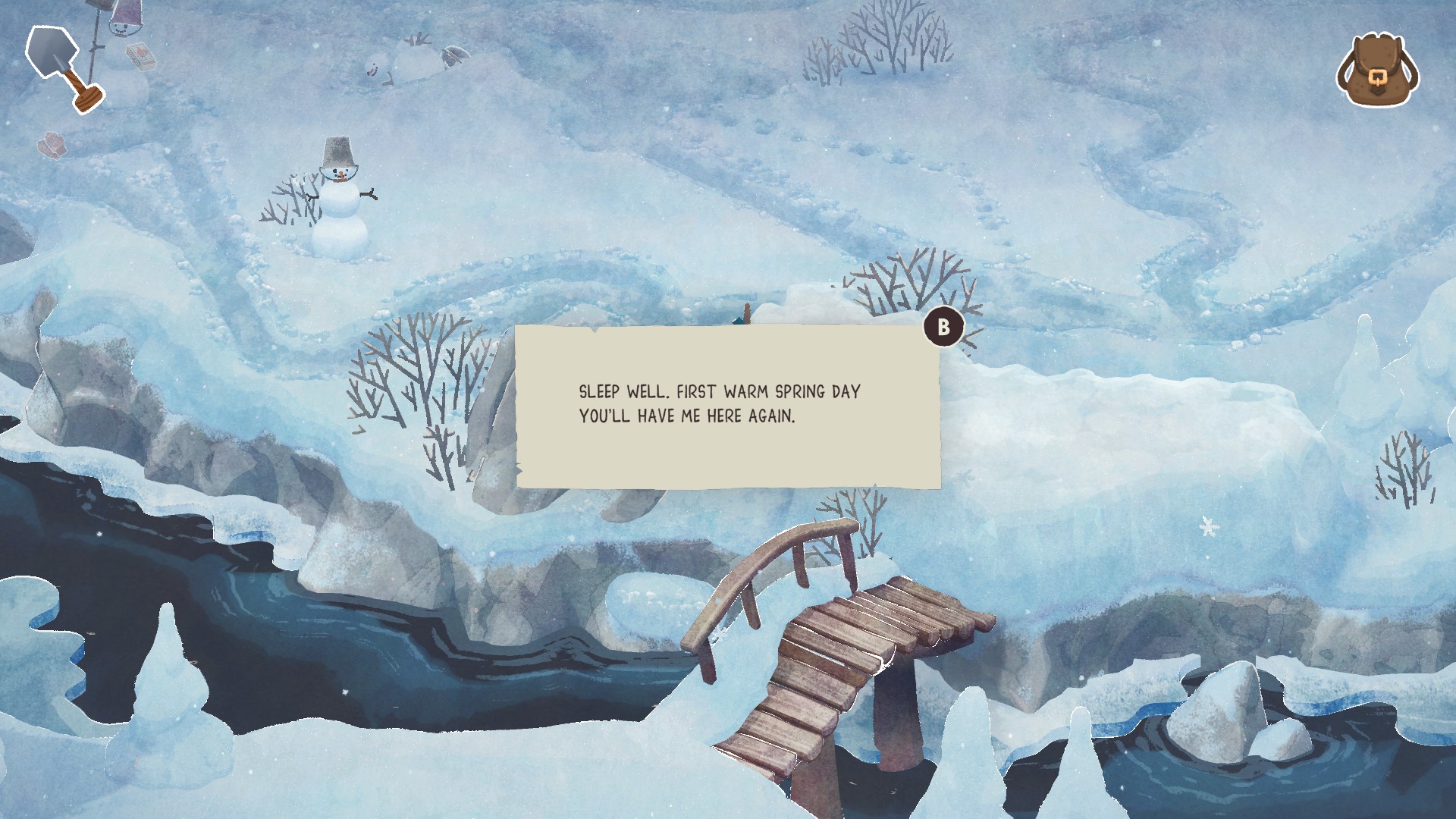
In many ways the game follows this loyally. After Mooomintroll wakes up from hibernation, I guide him between minor videogame tasks (closing windows, lighting lamps and boilers, discovering broken vases whose pieces must be collected). Then I wander out into the world to meet the doomed squirrel and Too-Ticky. There are many other characters to encounter, minor problems to solve, and beautiful landscapes to explore, but there's also a key difference from the book: the Midwinter bonfire is the climactic event, promising to bring back spring, upon which all of Moomintroll's hopes hinge. Once Moomintroll collects approximately a million logs and convinces his erstwhile neighbors to show up to the party, the end of the game rolls quickly by.
In Jansson's story, the Midwinter bonfire takes place (as one might expect) in the middle of the story. Moomintroll's disappointment at spring not returning—and his slow acceptance of winter as a time of year with wonders all its own—are the second act. In fact, the reader spends longer with this weary, wary Moomintroll than they ever did with the hopeful one.
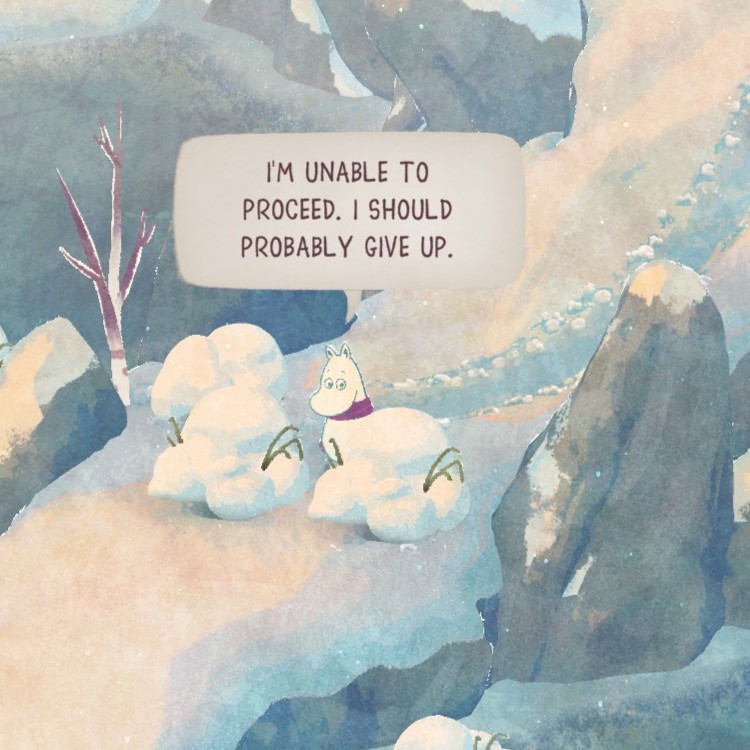
What this does is change the primary emotion we witness in Moomintroll in the game versus the book. In Moomintroll: Winter's Warmth, he's motivated by hope based on misunderstanding. The promise of a return to familiar comfort and a decisive, quick end to the harshness of winter makes him, for the vast majority of the game, a determined and committed protagonist. His disappointment and anger after the Midwinter bonfire come in the last section of the game, and spring returns (for the player, over four-ish hours playtime) fairly quickly.
These two versions of the story have almost opposite goals
There's a sense that, although Moomintroll is young and naive, he's also right: justified by the structure of the game in his belief that he can make spring come through hard work and helpfulness, and that the discomforts of winter will not stay with him for long.
In Moominland Midwinter, his frustration after the bonfire is given much more narrative importance. It's not his pluck and bravery in trying to bring back spring that is highlighted, but his experience of disappointment and his persistence despite it that becomes the main takeaway. That's part of what makes it such a strange read, especially as an adult. It feels somber, a bit tough-love, to watch Moomintroll face the brief fingernail of sun over the ocean and to know that spring can't be hastened. It also feels a bit more like adulthood than the promise that pluck and elbow grease will always bring their just rewards.
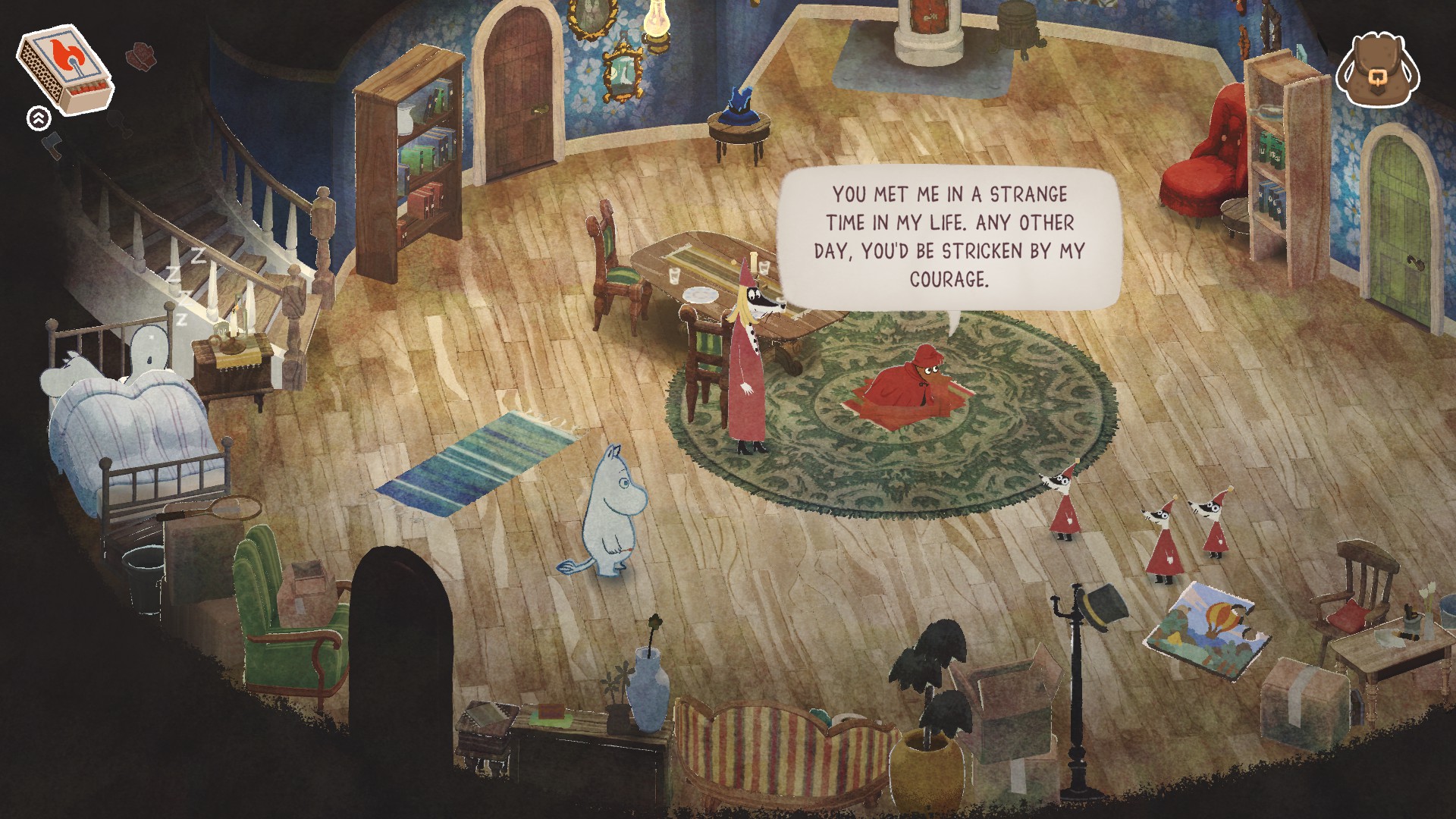
It highlights, unintentionally, that these two versions of the story have almost opposite goals. A children's book tries to introduce complicated emotions in a safe form, to give kids the skills to handle them on their own. A cozy game, on the other hand, wants to relax, comfort, and appease. It's important, in the game, for Moomintroll (and me) to have a reasonable amount of agency, and for our encounters to be manageable and lead to a good outcome, and for him to be a pleasing character to follow around. The sense of predictability is important to the player; they know that they're going to make it through winter, after all, that one day the sun is going to come back, and Moomintroll won't be stuck in the cold landscape of uncertainty forever.
They're also playing the game to relax, so evoking that feeling of uncertainty through mechanics, whether through something more skill-based than gentle puzzles or through some sort of survival system, would undermine the genre's goal of being calm and unstressful.
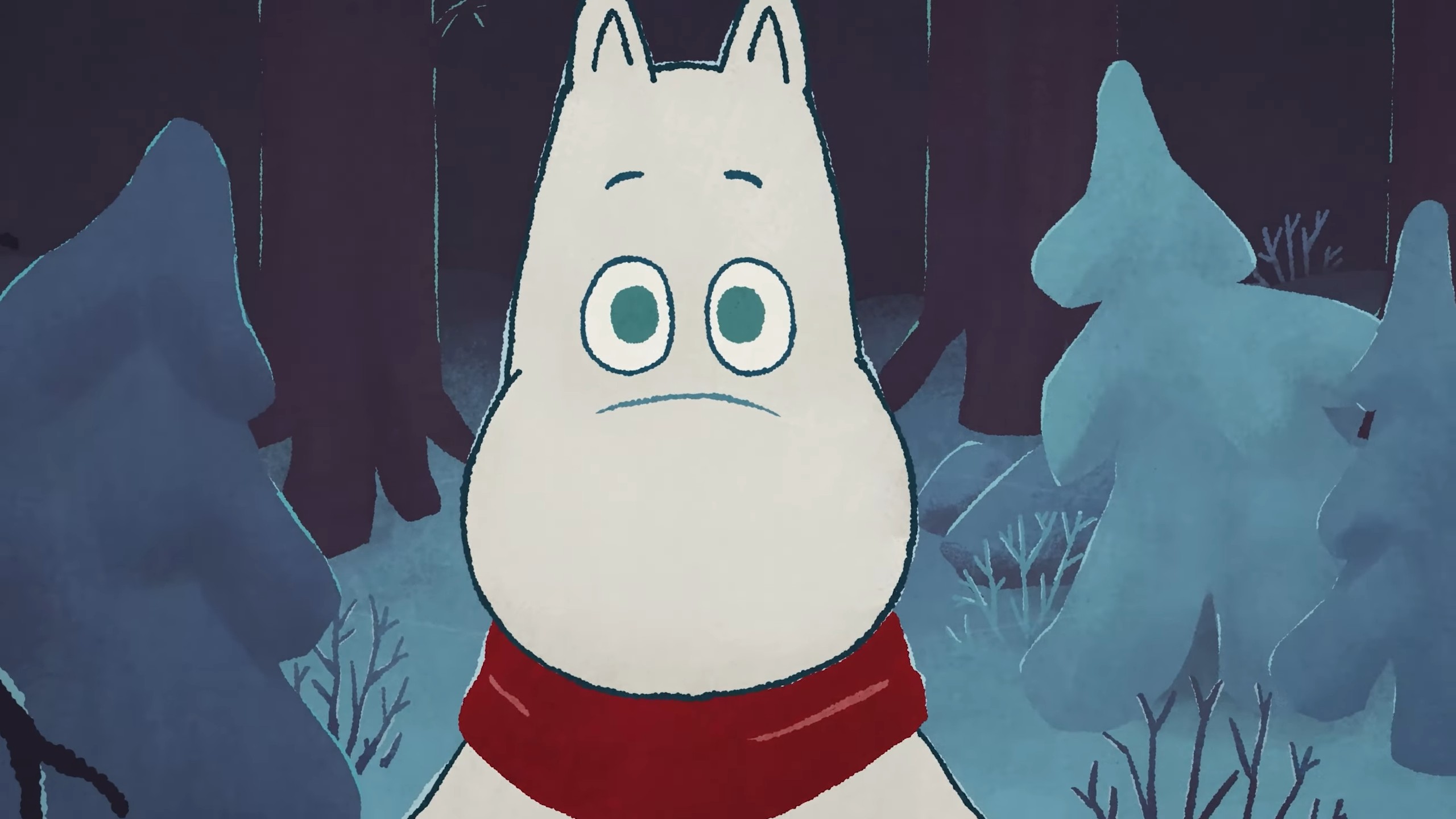
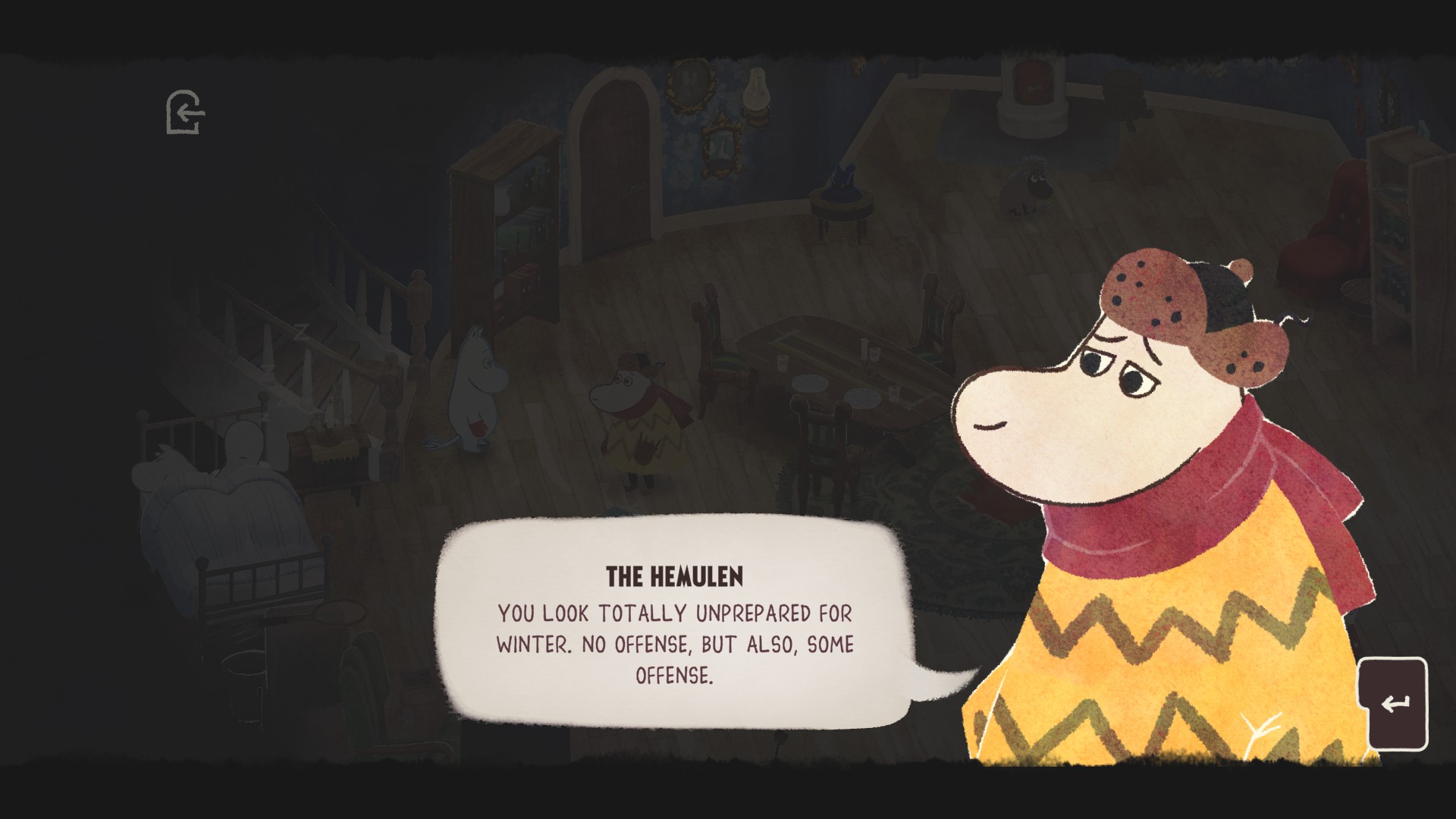
This is a reasonable choice for the game to make. The player, after all, probably doesn't want to be confused: it's still a videogame, and you've still got to know what to do. Concessions have to be made. Too-Ticky, for example, is much more of an articulate and patient mentor in Moomintroll: Winter's Warmth than in Moominland Midwinter: it might offend the sensibilities of gamers looking for a relaxing escape if they struggled their way to the first major NPC in their game and she said, as she does in the book, "One has to discover everything for oneself, and get over it all alone." Damn, Too-Ticky, alright.
Still, it's striking how differently these choices make it land. It's still the same story, about Moomintroll waking up alone, fording his way through the winter, and learning a lesson at the end. It includes many of the same characters, hits many of the same narrative beats, and ends in the same place, with the faithful return of the sun. But reading Moominland Midwinter, even as an adult, exposes you to difficult emotions—anxiety, fear, frustration, confusion, anticipation—and then encourages you to sit with them as winter rolls slowly through its stages.
Moomintroll: Winter's Warmth (which is now out on Steam) doesn't spend nearly as much time there. It can't; otherwise it wouldn't be cozy.
The result is a fairly faithful adaptation that nonetheless sharply deviates in emotional tone, deemphasizing the uncertainty, disappointment, and anger that were prominent in the book. It instead emphasizes Moomintroll's agency and intentional role in helping the denizens of Moominvalley make it through winter. While it would have been possible to design a game around the more uncomfortable aspects of Moomintroll's journey, that would pull Moomintroll: Winter's Warmth away from its genre-defined goals of evoking safety, abundance and softness.
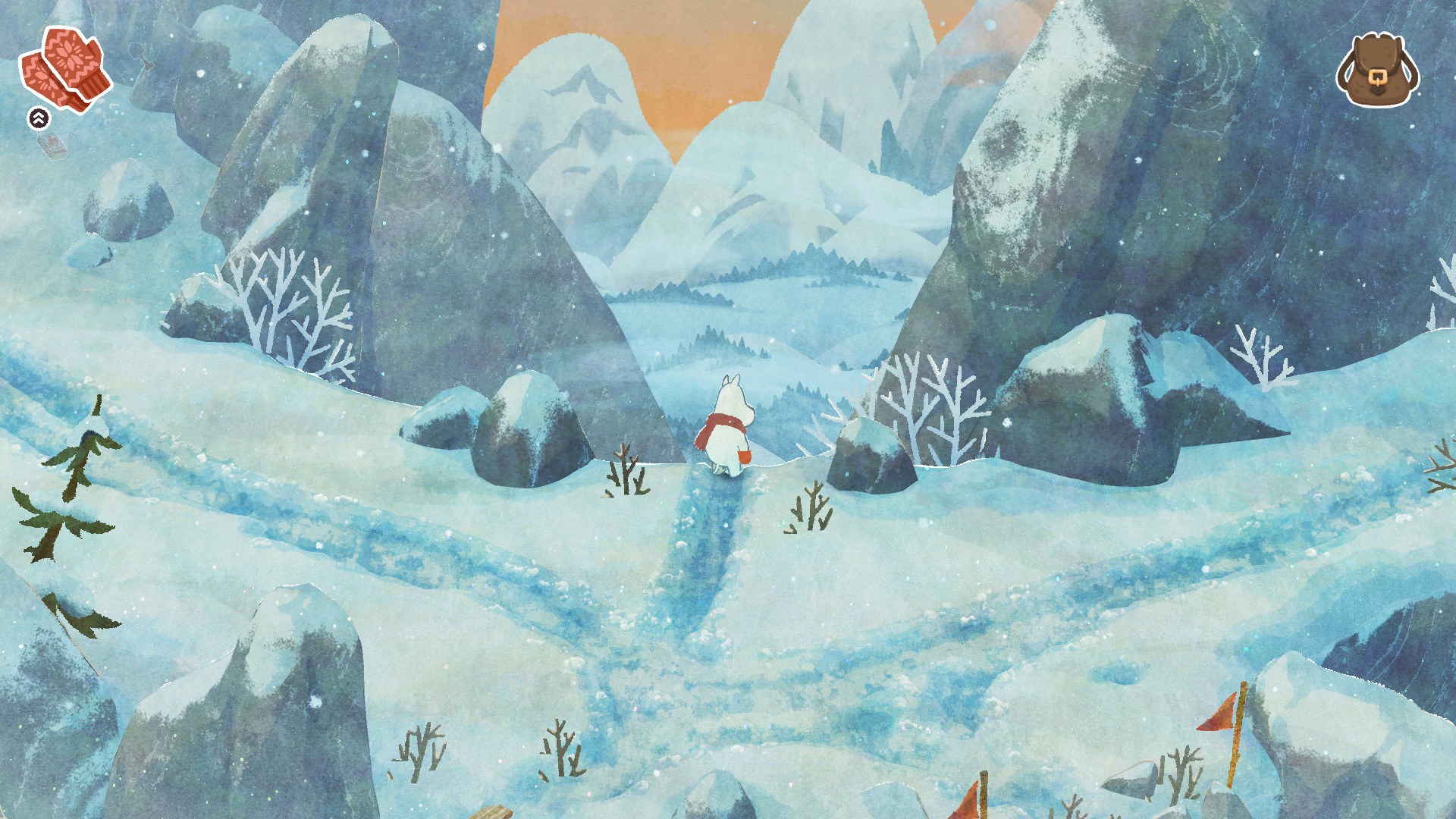
Neither of these are the wrong approach. Moomintroll: Winter's Warmth is a lovely game, and I certainly don't think it would be accomplishing its goals any better if you spent the whole time following around a stressed and sad Moomintroll. It does exactly what it sets out to do: reassures the player, and Moomintroll, that with hard work, friendship, and bravery, spring will come. It also exposes the contradictory nature of adapting a story from a children's book, one intended to challenge and disrupt within a safe environment, to a cozy game, which is intended to calm and reassure, to provide a reliable source of spring within the insistent winter of modern life. It's a comforting message, just slightly different from the one Jansson wrote, which focused on adversity and discomfort not as the problem but as the point:
But the Snork Maiden had come across the first brave nose-tip of a crocus. It was pushing through the warm spot under the south window, but wasn't even green yet.
'Let's put a glass over it,' said the Snork Maiden. 'It'll be better off in the night if there's a frost.'
'No, don't do that,' said Moomintroll. 'Let it fight it out. I believe it's going to do still better if things aren't so easy.'

Best cozy games: Relaxed gaming
Best anime games: Animation-inspired
Best JRPGs: Classics and beyond
Best cyberpunk games: Techno futures
Best gacha games: Freemium fanatics
Схожі новини

Counter-Strike legend pashaBiceps donates $21K to Poland Cancer Fighters stream after knife skin sale

How To Help The Reclaimers In Marketland In Tides Of Tomorrow
Essential Things To Do Before Final Fantasy 14: Evercold