The Iran war has made jet fuel twice as expensive. Should we be flying with cooking oil instead?
Since it began with US-Israeli airstrikes in late February, the Iran war has grounded tens of thousands of flights and pushed jet fuel to its highest price in years. Europe's jet fuel inventories have fallen 50 per cent, and Goldman Sachs warned this week that stocks could drop below the International Energy Agency's (IEA) critical 23-day shortage threshold in June – with the UK identified as most at risk.
Many airlines are facing a financial crunch as a result, with jet fuel averaging $181 a barrel globally, roughly double its pre-war level. Lufthansa has axed 20,000 flights through October. Spirit Airlines collapsed after a government bailout fell through. American Airlines faces $4bn more in fuel costs this year, and Delta is looking at a $2bn spike in the second quarter alone.
The crisis has brought renewed attention to the hunt for other fuel sources, and there is one in particular that the industry has been talking about for years but is yet to deploy at scale. Known as sustainable aviation fuel, or SAF, it is typically made from used cooking oil, agricultural waste, and captured carbon. But how close are we to actually flying planes with it?
SAF currently makes up just 0.7 per cent of global kerosene consumption, according to the International Air Transport Association. Around two million tonnes were produced last year. The IEA’s net zero scenario requires at least 250 million tonnes of SAF annually by 2050, while some think-tanks say we should be targeting closer to 500 million tonnes by that date.
The most accessible feedstock – and the one most people imagine when they think of sustainable jet fuel – is used cooking oil. Almost all SAF currently in use is made from it. But the global supply of waste cooking oil is finite.
"While it's difficult to assess exactly how much could be available, the figures you can find in the literature is something around 20 million tonnes maximum," says Frédérique Rigal, co-author of a study published earlier this year on how aviation can decarbonise and move to sustainable fuels. Whichever projection you go by, that’s a small fraction of what is required by 2050.
The next generation of SAF – made from woody waste, agricultural residues and fermented alcohol – is more scalable but not yet commercially deployed at meaningful volumes.
Rigal admits there are some “hard limitations” on how quickly SAF production can be scaled up, partly because it requires large amounts of land, and partly because existing producers are mostly geared towards making fuel for cars not planes.
But she says the biggest problem of all is the fact that airlines themselves are not committing to buy SAF in advance. “Airlines are not moving quickly enough and are not giving enough offtake promises to these projects so that they can be realised,” she says.
 open image in gallery
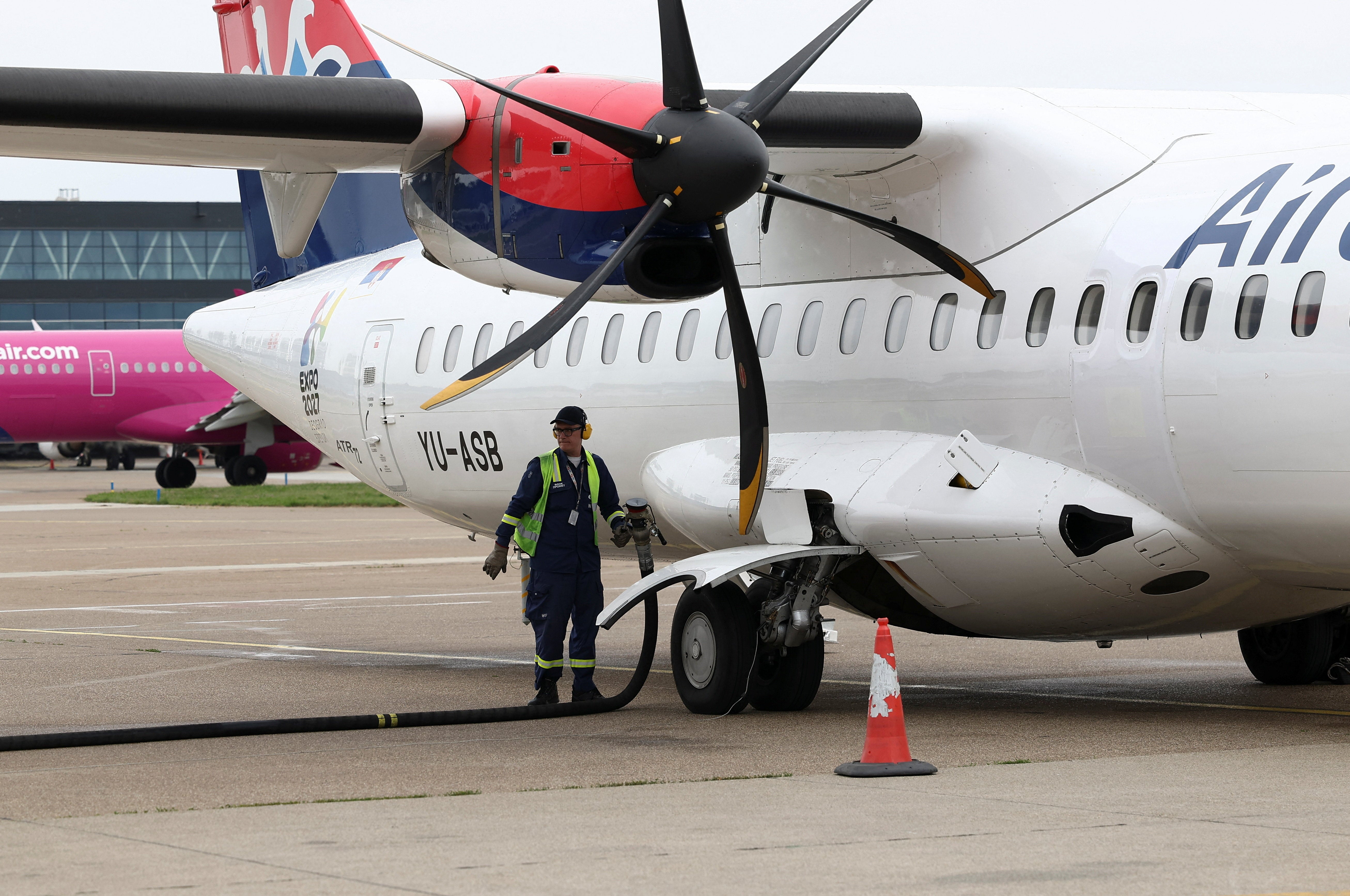
Instead of looking to new alternatives, the short-term response from airlines to the shortage has come from conventional sources. US refiners have stepped up production, with exports of jet fuel to Europe surging more than 400 per cent to 94,000 barrels per day in April compared to February, according to Kpler data. The European Commission has launched a programme called AccelerateEU, which includes measures to optimise jet fuel distribution between EU member states.
But supply chain bottlenecks will persist for months even if a peace deal is reached, analysts warn. And the dominoes are falling across regions. South Korea, which supplies more than 80 per cent of the US West Coast's jet fuel imports, has lost crucial crude from the Middle East, threatening West Coast supply.
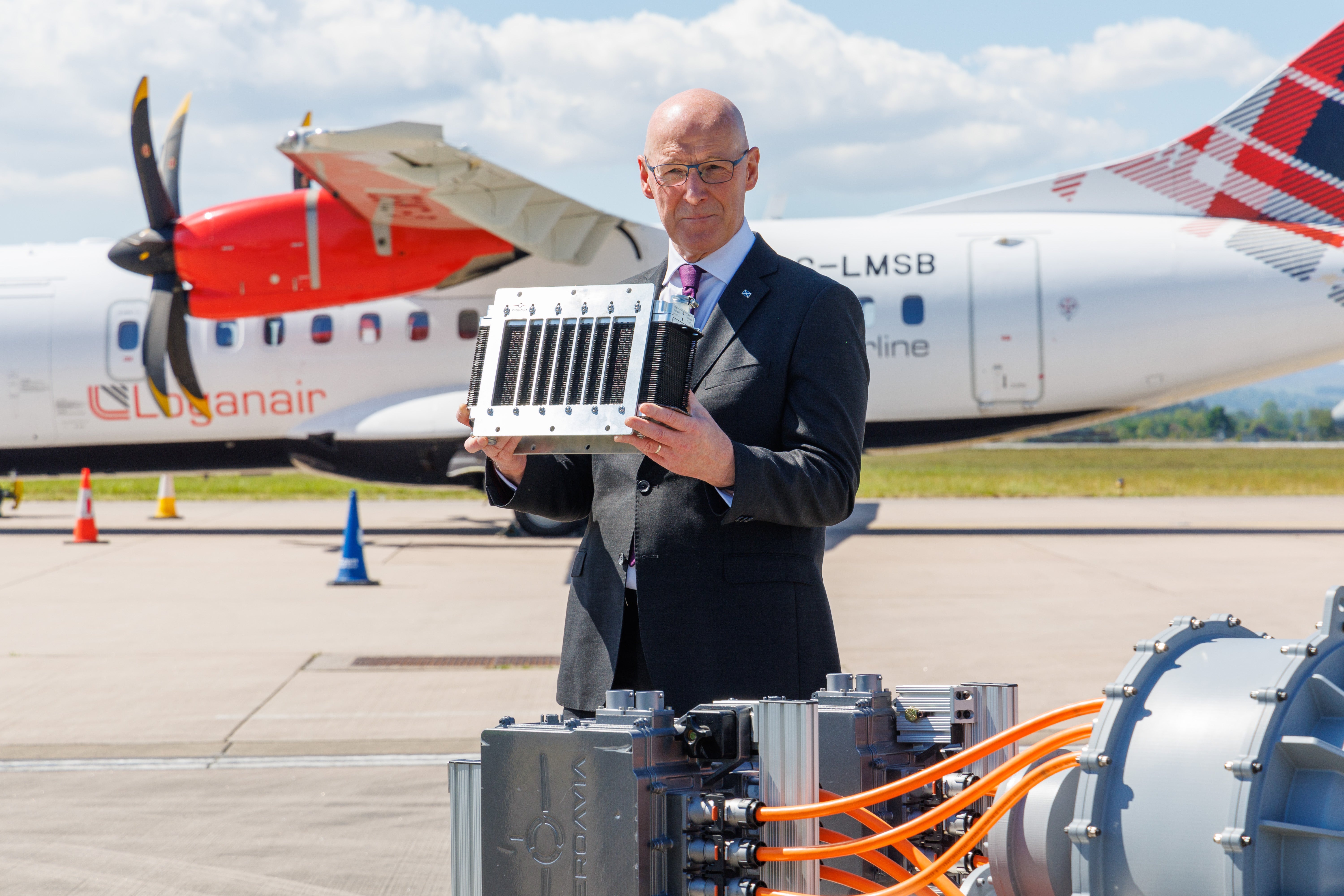
Another alternative fuel is called electro-SAF or e-SAF, which uses green electricity to combine captured carbon with hydrogen produced from water electrolysis, creating a synthetic kerosene. There is no hard upper limit on how much e-SAF can be produced, but Rigal says it is constrained by investment and industrial capacity, not feedstock. It remains expensive, and the technology is still maturing.
The EU and UK have set mandates requiring airlines to blend increasing proportions of SAF into their fuel, with e-SAF submandates starting at 1.2 per cent in 2030. But airlines have been calling for those targets to be pushed back, citing a lack of available supply.
The producers say that’s not the case. In a collective letter to the European Commission, e-SAF developers said they "firmly disagreed" with airlines' assessment, stating that "a significant number of eSAF projects are currently under development across Europe" and that "many of these projects are progressing towards final investment decision and are designed to deliver volumes within the ReFuelEU timeframe".
Mahesh Roy, programme director for SAF at the Green Finance Institute, said the current crisis has begun to shift the conversation around these fuels. SAF mandates in the UK and EU have been almost entirely couched in the language of the climate crisis and sustainability. The Strait of Hormuz blockade has reframed them as a question of energy security and sovereignty.
"The energy trilemma was what they used to talk about – energy security, energy sustainability, and energy affordability," Roy says. "Now you can see that security and price are really driving what people are thinking about." The crisis has not changed what SAF is, he said, but it has changed who is asking about it and why.
Airlines that had already secured SAF supply agreements before the crisis are now quietly benefiting, because SAF supply chains do not run through the Middle East.
"The imperative has always been there, and now we're just being reminded that finding better technologies to do things isn't just about global warming, even though that's a very good reason to do it in the first place," Roy says.
The financial pressure on airlines to move faster on SAF is growing, regardless of the current crisis. Global airline compliance costs under environmental policies – SAF blending mandates, EU and UK emissions trading systems, and the UN's Corsia carbon offsetting scheme – are set to nearly quadruple to $48 billion by 2035, up 256 per cent from 2026, according to BloombergNEF research published this week.
Roy says the doubling of jet fuel prices had already changed the terms of the debate. "All of jet fuel is going up by this amount due to this conflict," he said.
"Those fluctuations can't be guaranteed not to happen again anytime soon. That reframes it – is this just something in the realm of net zero, or is it also something that can help reduce the cost and energy security burden placed on economies that rely on fossil fuel imports?"
 open image in gallery
European carriers face the heaviest burden. Ryanair's unit operating costs are projected to rise 38 per cent from environmental policies alone by 2035, pushing the airline's margin per available seat-kilometre into negative territory. Airlines are likely to pass higher costs onto passengers, reduce capacity, or reroute long-haul flights from European hubs to avoid the highest compliance costs – a shift that could itself increase emissions by lengthening journey distances.
The investment required to close the supply gap is staggering. According to the ATAG Waypoint 2050 report, total cumulative capital expenditure for new renewable fuel plants over 2020-2050 ranges from $4.2 trillion to $8.1 trillion, depending on SAF yield assumptions. For context, total global oil and gas capital expenditure over the entire period from 2014 to 2021 was also $4.2 trillion.
Can any of this respond to the current crisis? No, experts say. However, the direction of the travel is clear.
"It's probably something more like four or five years" before the projects currently in development begin producing meaningful volumes, Roy says.
"If you think that the Russian invasion of Ukraine was four years ago, and then if there was another similar shock in about four years' time, those projects that are being planned now – if they can get off the ground and be properly supported – then yeah, that would shift," he says.
Join our commenting forum
Join thought-provoking conversations, follow other Independent readers and see their replies
CommentsСхожі новини
Japan group launches online timber market
Курс валют на неділю, 10 травня: скільки коштують долар, євро і злотий
Latest news bulletin | May 10th, 2026 – Morning