The history of Memorial Day and how it has evolved from its Civil War origins
Memorial Day, a solemn occasion dedicated to honoring the United States' fallen service members, has increasingly become synonymous with the unofficial start of summer, marked by long weekends, travel, and widespread retail discounts.
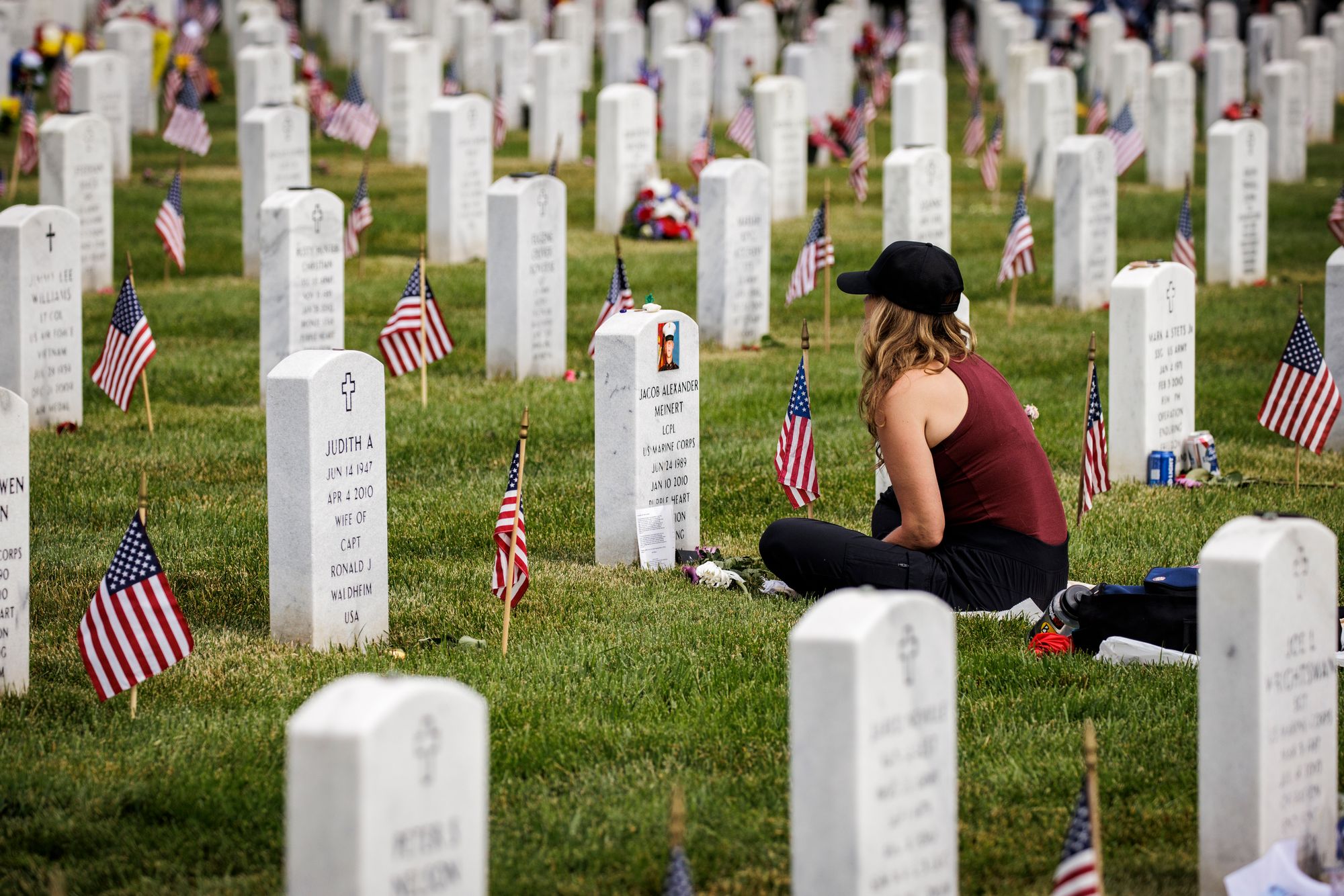
Observed on the last Monday of May, the federal holiday calls for reflection and remembrance of those who died while serving in the U.S. military, with a National Moment of Remembrance encouraging a 3 p.m. moment of silence.
The holiday's roots trace back to the American Civil War, which claimed over 600,000 lives between 1861 and 1865.
The first national observance, then known as Decoration Day, took place on May 30, 1868, initiated by an organization of Union veterans who called for decorating war graves with flowers.
While Waterloo, New York, formally began its observance on May 5, 1866, and is often cited as the holiday's birthplace, other communities had earlier practices.
 open image in gallery
Boalsburg, Pennsylvania, for instance, recorded its first observance in October 1864, and women in some Confederate states decorated graves even before the war concluded.
Yale history professor David Blight highlights a significant event on May 1, 1865, in Charleston, South Carolina, where as many as 10,000 people, many of them Black, held a parade, delivered speeches, and dedicated the graves of Union soldiers who had died in a Confederate prison. Blight noted, "What happened in Charleston does have the right to claim to be first, if that matters."
However, the holiday's purpose began to face scrutiny early on.
As far back as 1869, The New York Times warned that the day could become "sacrilegious" and lose its "sacred" status if it focused too much on “pomp and oratory.”
Abolitionist Frederick Douglass, speaking at Arlington National Cemetery in 1871, expressed concern that Americans were forgetting the Civil War's true impetus: enslavement.
 open image in gallery
"We must never forget that the loyal soldiers who rest beneath this sod flung themselves between the nation and the nation’s destroyers," Douglass declared.
Ben Railton, a professor of English and American studies, observed that despite the service of approximately 180,000 Black men in the Union Army, the holiday in many communities effectively became "white Memorial Day," particularly with the rise of the Jim Crow South.
Early signs of shifting priorities included reports of President Grover Cleveland spending the holiday fishing in the 1880s, which "people were appalled" by, according to Matthew Dennis, an emeritus history professor.
Memorial Day's distinctiveness further diminished with the introduction of Armistice Day in 1918, marking the end of World War I, which later became Veterans Day in 1954.
A pivotal change occurred in 1971 when Congress moved Memorial Day from a fixed May 30 to the last Monday of May, creating a three-day weekend. This legislative shift, according to Dennis, acknowledged the holiday's transformation into a more generalized remembrance of the dead and a day for leisure. A year later, Time Magazine lamented that the holiday had devolved into "a three-day nationwide hootenanny that seems to have lost much of its original purpose."
The intertwining of leisure, sales, and travel with Memorial Day is not entirely new. Even in the 19th century, grave ceremonies were often followed by recreational activities like picnicking and foot races. The holiday's evolution paralleled the rise of baseball, the automobile, the five-day work week, and the concept of summer vacation, as detailed in the 2002 book "A History of Memorial Day: Unity, Discord and the Pursuit of Happiness."
While a small number of businesses initially defied tradition by opening on the holiday in the mid-20th century, the move to a Monday observance truly "began to crumble" the "traditional barriers against doing business," authors Richard Harmond and Thomas Curran noted. Today, Memorial Day sales and travel are deeply ingrained in the nation's collective consciousness.
Схожі новини
DGCA issues Ebola SOP for airlines, tightens screening at Indian airports
Ruud survives five-set epic at French Open, Shelton also advances as Wawrinka bows out
No issues with Iran basing in Mexico for World Cup: President Claudia approves