The City Of Providence, Rhode Island Is Ready To Decarbonize
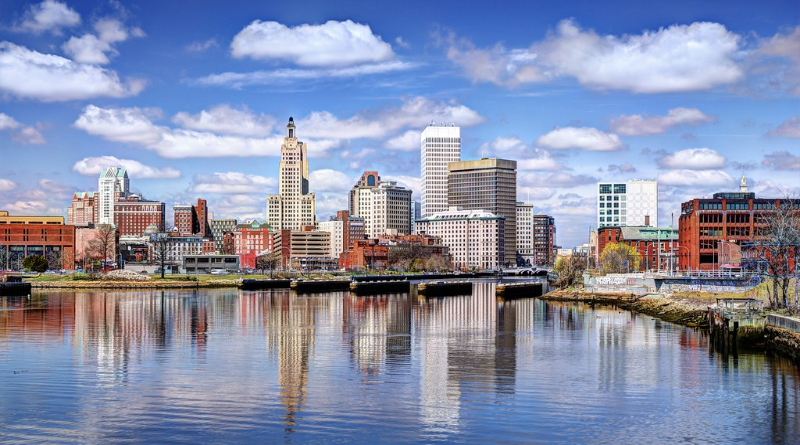 "Providence, Rhode Island" by Condor.com is licensed under CC BY-NC-ND 2.0.
April 26, 202621 minutes ago
Carolyn Fortuna
0 Comments
Support CleanTechnica's work through a Substack subscription or on Stripe.
"Providence, Rhode Island" by Condor.com is licensed under CC BY-NC-ND 2.0.
April 26, 202621 minutes ago
Carolyn Fortuna
0 Comments
Support CleanTechnica's work through a Substack subscription or on Stripe.
Envision early 20th century Providence, Rhode Island. Over a century of textile manufacturing had dumped industrial toxins — thousands of per- and polyfluoroalkyl substances, more commonly known as PFAS or “forever chemicals.”
Two rivers combine to form the Providence River: the Woonosquatucket and the Moshassuck Rivers. The old timers insist that they had swum there in their youths, but mill pollution eventually became so prevasive that the River became a kaleidoscopic miasma; no one would dare swim there any longer. Local lore has it that in the 1970s the University of RI held a contest to see if a live fish could be caught in the Providence River: impossible. But a fisher pulled in a scraggly, translucent life form, which (again, the elders claim) was unidentifiable by researchers back on campus.
By 2010 numerous hazardous waste, leaking underground storage tank, and Environmental Protection Agency (EPA) Superfund sites posed real problems for Providence. The Department of Environmental Management’s Office of Waste Management has been overseeing the investigation and remediation of contaminated sites in Providence and across the state ever since.
Fast forward to 2026 and Mayor Brett Smiley, who has committed to bolstering climate resiliency. Smiley hopes to position Providence as a national leader in the green economy. The Mayor and a group of stakeholders have announced a $3 million proposal to unveil the city’s first-ever green revolving fund, which is designed to dedicate City funds to renewable energy and decarbonization.
The announcement took place at the Roger Williams Park Carriage House. Nearby were two park maintenance buildings to which Smiley referred as ideal candidates for rooftop solar. Such projects could find at least partial funding from the green revolving fund.
What is a Green Revolving Fund?
A green revolving fund is a capital pool within a governmental authority that is directed specifically to sustainability projects. The funds aren’t as free-wheeling or avante guarde as you might think, though — they must produce cost savings. When those savings accrue, they replenish the fund. That means other sustainability projects can be targeted for comparable investment.
Such an ongoing funding approach is key to increased sustainability over time, as its dual cost savings and available capital assure a revolving portfolio of sustainablity projects. Historically, western countries have applied green revolving funds for clean energy and urban greening, but, more recently, green stormwater and wastewater infrastructure and drinking water capacity projects have become more common.
There are many potential adaptation-relevant sector applications for a green revolving fund, according to Amelia Keyes in the Harvard Law Review.
- Ecological services and management, such as forest management (including afforestation and reforestation); wetlands; ecosystem and biodiversity protection, conservation, and enhancement;
- Water supply infrastructure, especially water management;
- Coastal and riverine protection and management, which can involve coastal defenses or flood protection barriers, river flood protection measures, disaster risk reduction, and early warning and observation systems;
- Other built environment and infrastructure, as consistent with urban development; and,
- Social infrastructure, like targeted education or health facility gaps.
Why did Providence Decide on a Revolving Fund?
Mayor Brett Smiley acknowledges that US cities find themselves in a precarious position in which the federal administration continues to rollback climate protections. That means it’s up to local governments “to protect our neighborhoods from the tangible impacts of our rapidly changing climate,” Smiley says.
The establishment of a green revolving fund protect local quality-of-life and ensures that Providence “is able to sustainably and responsibly adapt our infrastructure to face climate change impacts head-on,” he continues. “I see it as one of my principal responsibilities to ensure that Providence is investing in innovative energy efficient improvements to our infrastructure and creating a greener and healthier future for our communities.”
The green revolving fund will be directed to decarbonization and renewable energy efforts in Providence. It will invest funding with the goal of significantly reducing energy consumption, costs, and carbon emissions. This seed money will be used for municipal projects that offer a pathway for the city further toward achieving net-zero emissions in city-owned buildings by 2040.
The funding would be designated from the City’s capital improvement budget and be strictly for energy efficiency projects, managed by the City’s Department of Sustainability. Proposed projects would be focused on upgrades to City-owned buildings and centered around energy efficiency, electrification, and clean energy.
The establishment of the green revolving fund follows the 2024 Providence initiative, “Energy Efficiency and Carbon Neutral Goals for Municipal Buildings Ordinance.” The Ordinance marked a significant commitment by Providence to combat climate change and enhance quality of life.
Since the Ordinance was signed, the City has accomplished several milestones, including:
- 22 Building electrification projects have been completed or are currently under construction. This accounts for ~1.2M square feet, or 22% of the City’s building portfolio that has been built new or will be updated with heat pump technology by 2028.
- Energy efficiency projects and audits have touched more than 60 buildings over the past 2 years and have resulted in $3.2M in utility incentives for lighting, HVAC, and building management system upgrades.
- On-Site renewable energy systems at multiple locations will be completed in 2026. Totaling 1.4 MW of installed capacity, the systems will generate 1,600 MWh of clean energy, or 5% of the electricity used by City buildings. (Rhode Island faces some of the highest residential electricity prices in the nation.)
The City’s Building Energy Reporting Ordinance Program (BERO) confirms that energy use has decreased by 7% over the past four years in City-owned buildings.
Providence has also released a clean energy plan for City buildings — the Decarbonization Roadmap — in accordance with the energy efficiency and carbon neutral ordinance. The Roadmap evaluates cost-effective strategies that can be achieved by 2040 to decarbonize 130 city-owned facilities while maintaining reliable public services and supporting long-term capital planning.
Importantly, Providence’s commitment to achieving carbon neutrality in all City-owned buildings by 2040 also recognizes the importance of ensuring a just and equitable transition away from fossil fuels. Environmental Justice (EJ) communities have argued that the market-based programs are not actually serving the EJ movement’s fundamental goals of liberating communities from the wide-ranging harms of the fossil fuel–reliant economy.
Providence officials have expressed a desire to draw on any remaining federal dollars available to boost local sustainability projects before the Trump administration phases out such clean energy incentives.
Resources
“An energy efficiency and carbon neutral plan for municipal buildings in Providence.” City of Providence.
“Green revolving fund.” NAP Global Network. February 24, 2024.
“Mayor Brett Smiley announces City’s first-ever climate-initiative revolving fund.” City of Providence. April 7, 2026.
“Providence’s new revolving fund to pay for greening of the City.” Rob Smith. ecoRI News. April 13, 2026.
“Who decides how to decarbonize?”Amelia Keyes. Harvard Law Review. April 2026.
“Woonasquatucket River: Fecal coliform bacteria and dissolved metals.” Rhode Island Department of Environmental Management, Office of Water Resources. April 2007.
Sign up for CleanTechnica's Weekly Substack for Zach and Scott's in-depth analyses and high level summaries, sign up for our daily newsletter, and follow us on Google News! Advertisement Have a tip for CleanTechnica? Want to advertise? Want to suggest a guest for our CleanTech Talk podcast? Contact us here. Sign up for our daily newsletter for 15 new cleantech stories a day. Or sign up for our weekly one on top stories of the week if daily is too frequent. CleanTechnica uses affiliate links. See our policy here.CleanTechnica's Comment Policy
Share this story!
Схожі новини

Смертельна негода у Запоріжжі: повалене дерево розчавило авто разом із водієм (фото)

Norrie wins to set up first career meeting with Sinner in Madrid Open

Best players for FC 26 The Trailblazer Evolution