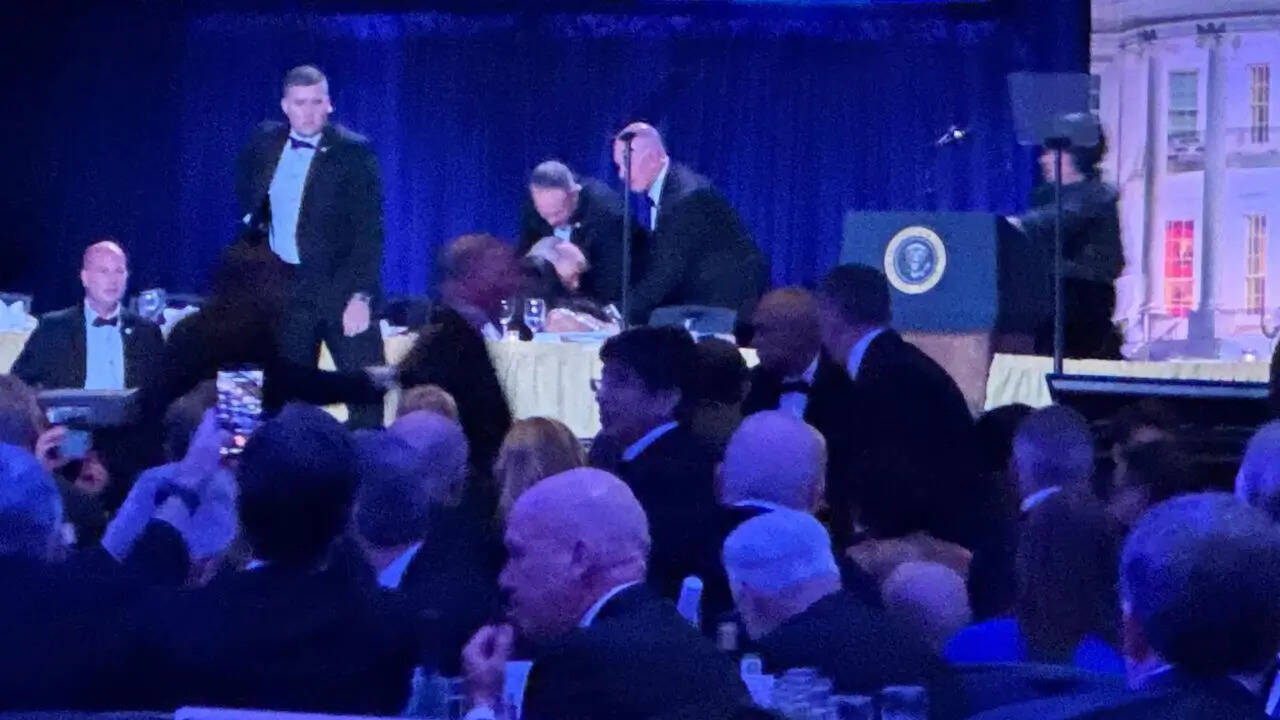
The buzz that never leaves Beirut: Life under the shadow of Israeli drones
This article first appeared on our partner site, Independent Arabia
In Lebanon, language in times of war is not a neutral description of reality, but is a means of taming it – or at the very least, softening its weight.
In the popular consciousness, Israeli drones are no longer merely military tools or surveillance technologies; they have entered everyday vocabulary under ironic, colloquial names such as “the buzz” and “Um Kamel”, a play on the acronym MK, used for Israeli drones, which locals personified as the 'Mother of Kamel’.
For nearly three years, they have not left Lebanon’s skies – nor its people’s ears.
This naming is not a trivial linguistic detail; it reveals how Lebanese popular culture confronts violence, even in its auditory form. In doing so, a threatening device is turned into something that can be named, mocked and symbolically tamed through language.
Within this same context, everyday expressions have also emerged in reference to drones – phrases such as “how nice of you to visit” or “it’s here” – used as ironic greetings for an unwelcome guest whose repeated presence has turned this performative humour into a form of adaptation.
 open image in gallery
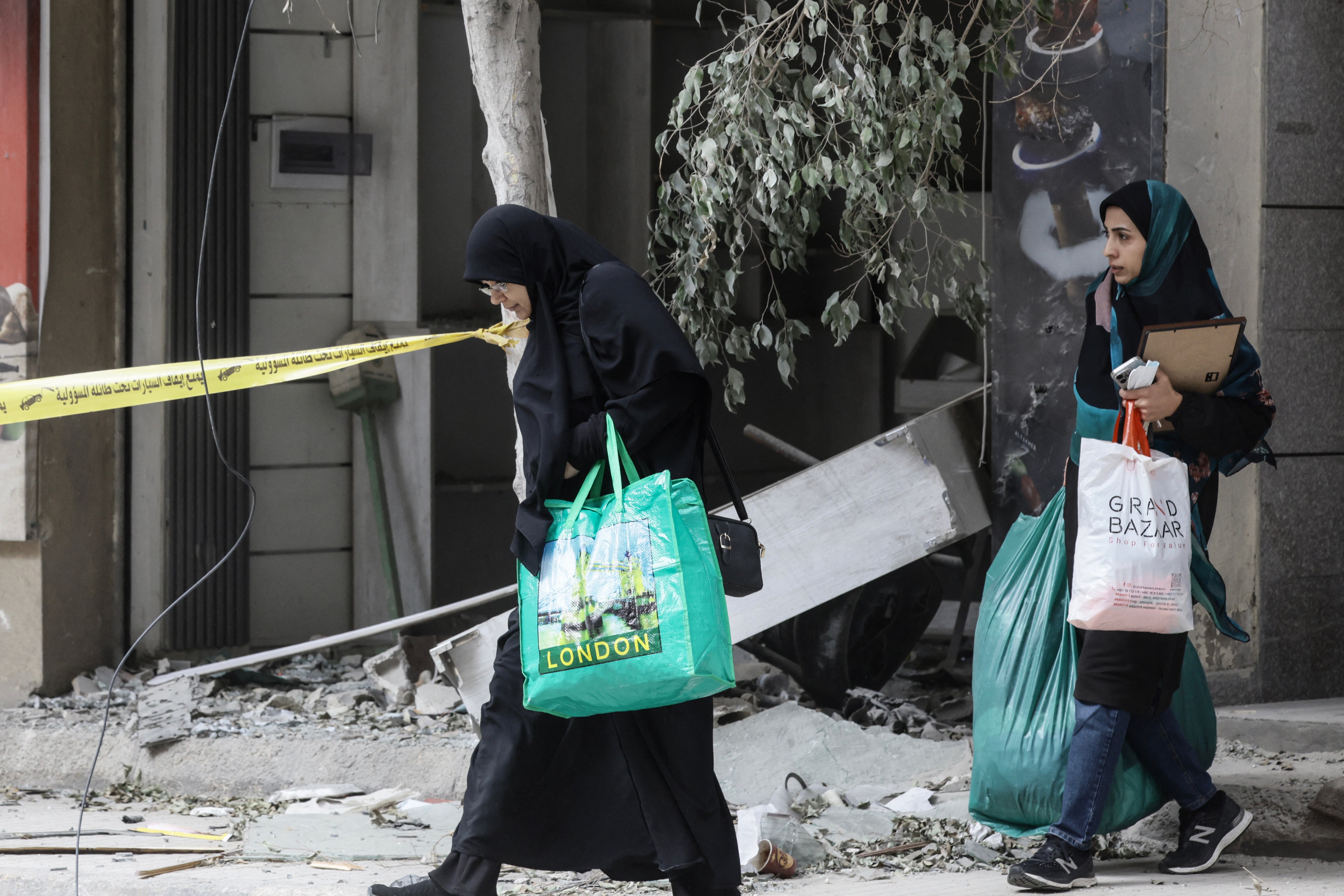
‘How nice of you to visit’
In Beirut, the drones’ hum is no longer a fleeting auditory detail in the periphery of daily life; it has become a constant presence, reshaping the relationship between residents, the city and the sky itself.
War, in this capital city, is not merely confined to the climax of explosion or the spectacle of visible ruins; it is endured as a perpetual soundscape – a low, unbroken hum that lingers to remind people that the space above is no longer neutral, but has been integrated into a system of surveillance and imminent threat.
Notably, society does not confront this intrusion through a single linguistic lens. There are those who call the drone “the buzz”, those who personify it as “Um Kamel”, and those who greet its return with an ironic refrain, “how nice of you to visit” – none of which signal acceptance.
Instead, these labels suggest that society has forged a linguistic means of containing what it cannot physically repel. In this light, the popular vocabulary surrounding drones in Beirut is not a mere rhetorical margin, but a cultural indicator of how prolonged violence is negotiated – and how humour itself crystallises into a collective psychological record.
 open image in gallery
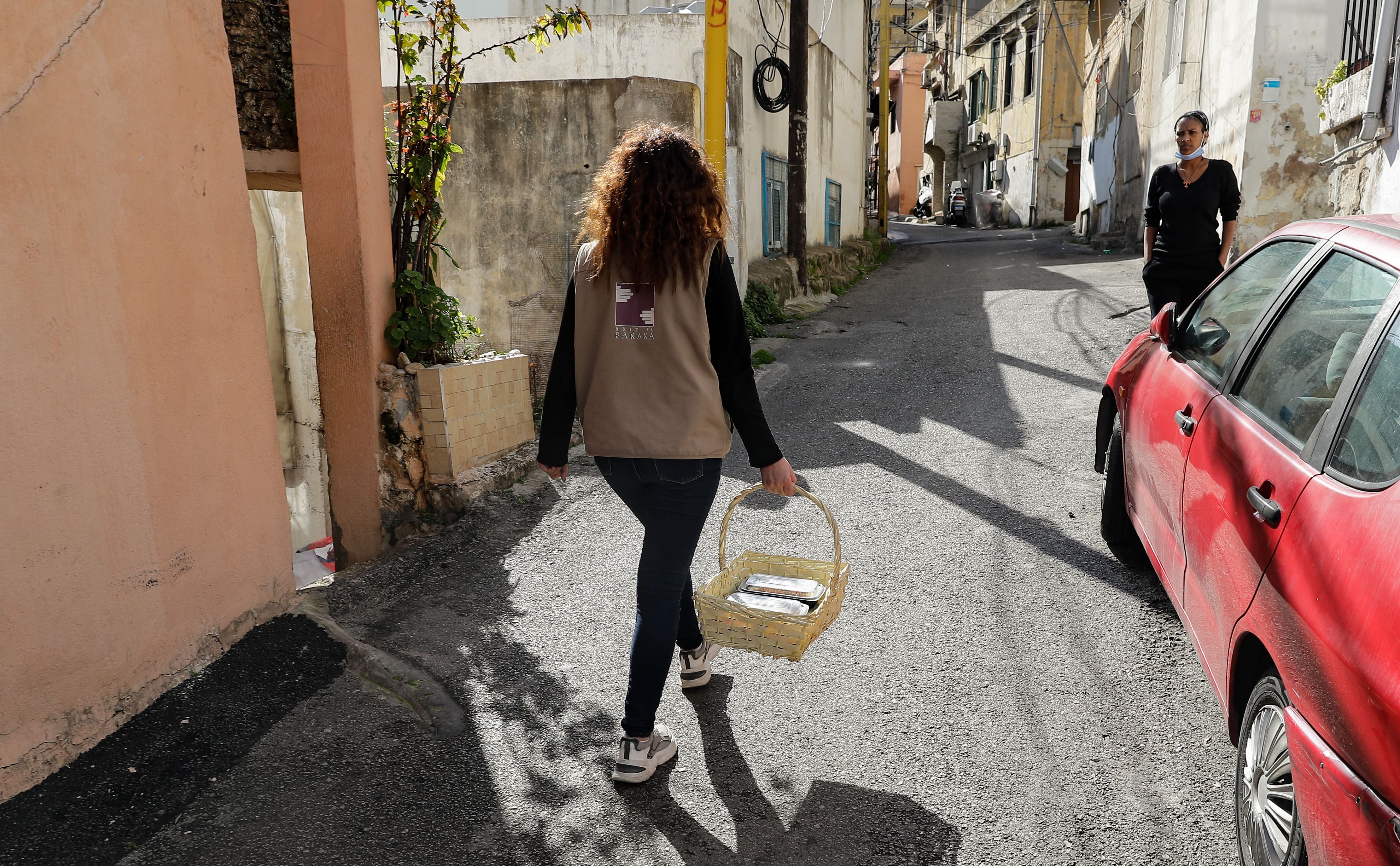
‘The GPS signal disappears altogether’
Mahmoud, a delivery driver, was making his way through Beirut’s crowded streets, his eyes fixed on his phone rather than on the road.
Not because he was lost, but because the GPS could no longer be relied upon. Raising his voice above a faint hum in the sky, he said: “Sometimes the signal disappears altogether, or it sends me down the wrong route. I don’t know if it’s due to interference, but what’s happening isn’t normal.”
He pauses for a moment, looks up, then offers a bitter smile.
“The job now demands double the attention: not just to what’s happening on the ground, but to what’s coming from the sky as well.”
‘The pigeons sense it before we do’
In the Ras al-Nabaa district of western Beirut, on the roof of an old building overlooking the expanse of the city’s sky, pigeon-keeper Ibrahim lets out a short whistle. Flocks of pigeons circle above him in broken arcs, but they no longer fly as they once did.
Watching their agitation, he tells Independent Arabia: “The pigeons sense it before we do. When a drone passes, they suddenly change direction, as if they see what we cannot.”
He gently holds one to his chest. “These are my children … and if they are afraid, I know the danger is near.”
Meanwhile, in the bustling Hamra district, taxi driver Ali grips the steering wheel with one hand and lowers the radio with the other – not to listen to his passengers, but to the sky. Calmly, he explains: “There is a sound that never leaves, even when it isn’t clear; you just feel its presence.”
He pauses briefly, then adds: “We will never get used to this sound, so I turn down the music on purpose”, as if attempting to cancel it out.
 open image in gallery
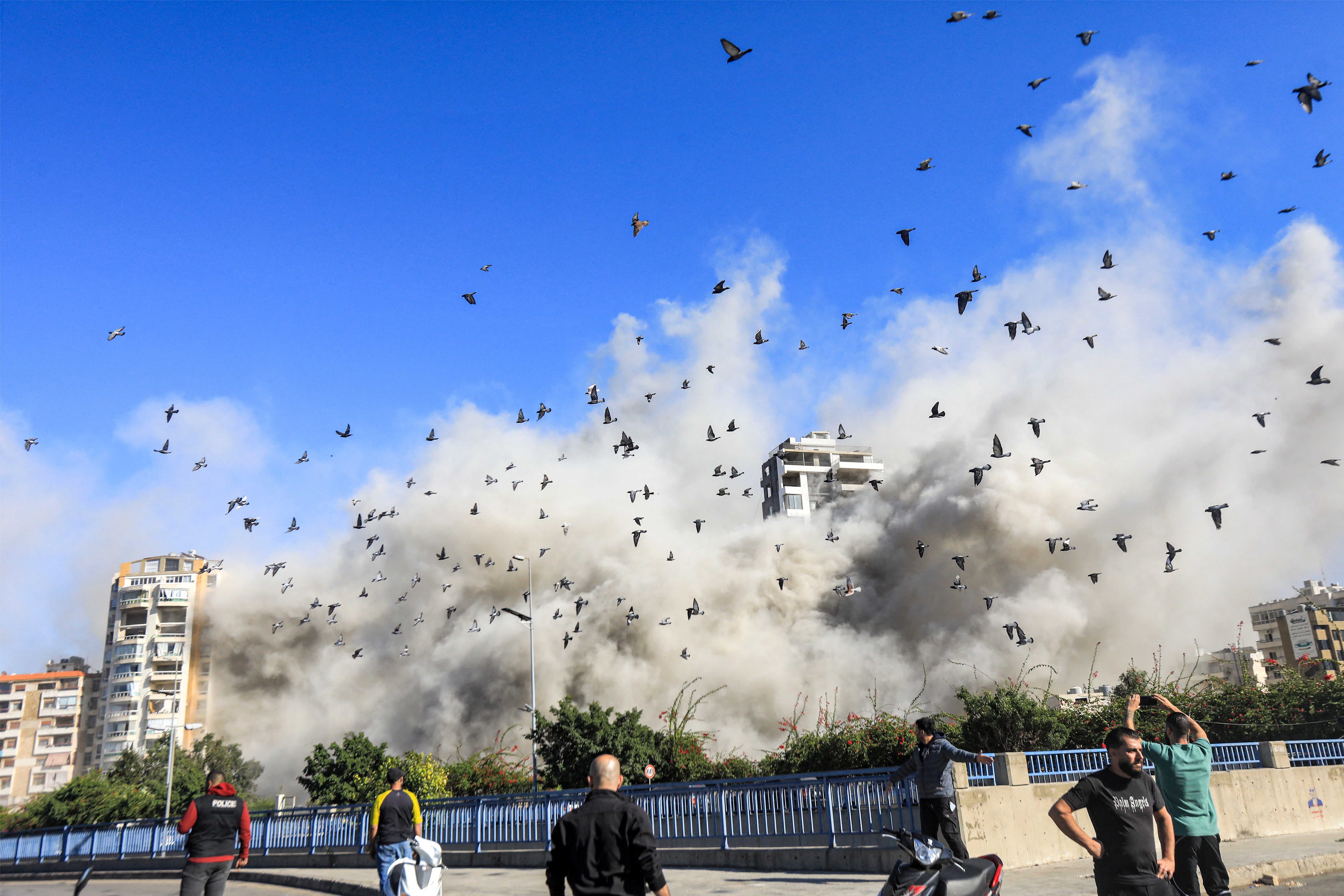
‘This sound will never become normal’
Beirut, a city long associated with art in all its forms, has also woven the drone into its cultural fabric – absorbing it both directly or indirectly, into the artist’s consciousness, their brush and the soul of their work.
Creative artist Karim Massoud says: “Beirut is like my mother, a woman who has endured immense hardship and weathered countless losses, yet each time she sets herself in order, prepares the home, and readies herself to embrace life once more. She does not pine for a miracle, nor does she announce victory – she simply continues.”
He smiles with mild irony. “As for the drones? I do not think Beirut will even grant them the courtesy of a response. A city thousands of years old does not engage with passing noise.”
“I am from the South, I have lived through all the wars, but the sound of the drone is different. There is something psychological that gnaws at the nerves constantly, as if the war is no longer confined to the ground, but has breached the mind. I wish I could grasp it with my bare hands and crush it.”
On the effect of the sound on his art, he explains: “The absence of reassurance directly impacts creative work and cultural seasons, as doubt surrounds everything.
“This sound will never become normal. I will not get used to it. It is a constant violation over the city and its inherent freedom. One day it will vanish, and though we will remember it, we will never accept it.”
‘Beirut cannot be reduced to a single image’
British painter Tom Young, who has lived in Beirut for more than a decade, believes “Beirut carries a hidden energy, invisible to the eye and impossible to capture directly, yet it is felt and lived.”
He explains that “what I try to capture in my paintings is not the form, but this flowing sensation that inhabits the city – the spirit of its people, their courage, warmth and generosity.”
This perspective is deepened as he recounts sharing simple moments with displaced families along the waterfront, hosting a small gathering among the tents, where they offered him coffee and shisha – a scene that harmonised both profound pain and resilient life.
Recommended In Lebanon, has Trump really ‘solved’ his 10th war?
 Israel ‘violates ceasefire’ within hours of historic truce, claims Lebanon
 Iran-US war latest: Trump thanks Tehran after Strait of Hormuz declared ‘fully open’ for ships during ceasefire
“Beirut cannot be reduced to a single image,” he explains “it is simultaneously the harshness of war and the beauty of light, the rubble and the warmth. A city of overlapping layers, not to be summarised in a single narrative, but experienced as a living, concurrent contradiction.”
Yet this beauty cannot be separated from the impact of drones, which have permeated his artistic techniques. He describes painting the sky in thick layers of black, then brushing turpentine across it to split the surface like “tears”, signalling grief seeping from above or something piercing the sky inward. Drones have manifested in several of his works, some painted while he listened to their real sound overhead, as if the canvas becomes a direct translation of lived experience.
He emphasises that “living and working under this sound is psychologically unsettling, but it is also a shared communal experience.” For him, remaining in Beirut and continuing to paint represents a form of “creative perseverance” – not a loud resistance, but a quiet determination to bear witness, to turn fear into meaning, and fleeting moments into enduring visual memory.
‘A constant sense of being watched’
Graphic designer Rana Salam sees the sound of drones as “not just a passing noise, but a direct intrusion into privacy and a constant sense of being watched.” She says her presence in Beirut today carries a deeply personal paradox: she had longed to return to the city from America, and when she did, she found herself at the heart of war.
Though conflict is not unfamiliar to her, as a self-described “child of war”, she refuses to remain a passive observer. She goes out into the streets, monitors, documents, and engages – even amid reactions that range from supportive to critical. For her, the drones revealed a reality that had been postponed or neglected. “They are a constant reminder that we are under threat, and that someone is always watching.”
Yet, alongside this weight, Salam insists on highlighting the other face of the city – the one that refuses to surrender. Through her lens, she portrays displaced people in vivid colours, capturing the small joys of daily life: bright lipstick, summer clothing, fleeting laughter amid tents. She tells Independent Arabia: “The role of art is not only to convey pain, but also to reshape how people see reality and to create a space for hope.”
“Even in the harshest circumstances, Lebanese people do not abandon their love for life; they reinvent it in small details.” Her work deliberately reflects this balance between anxiety and hope, between ongoing threat and the people’s determination to live, affirming that “preserving this light, however faint, is in itself a form of resistance befitting the Lebanese.”
 open image in gallery
‘We turn up the music to block it out’
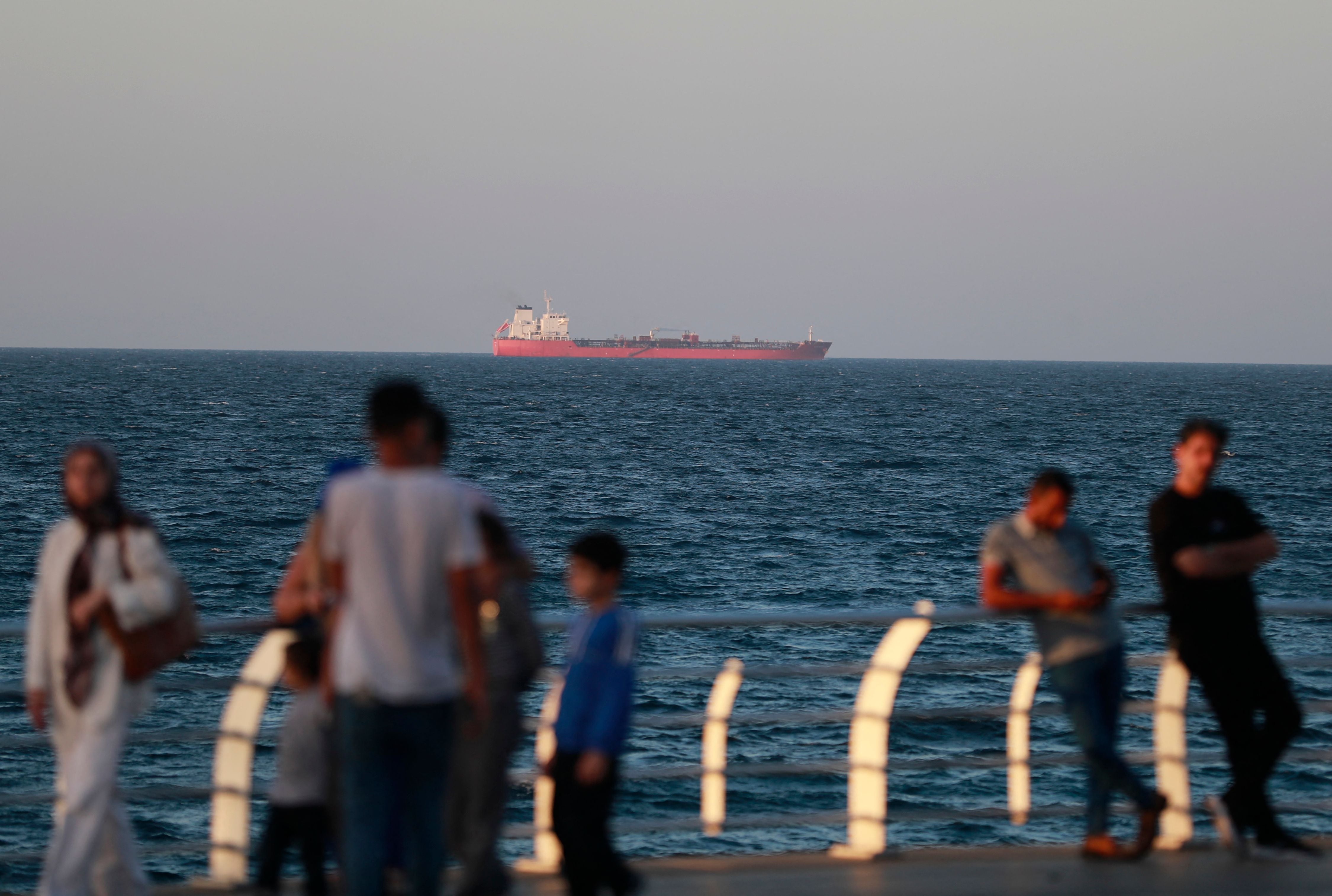
Along the Corniche at Manara, in Central Beirut, where the sea stretches open to the horizon, the sound of drones feels less oppressive.
Walid Shaker, a sports manager, says the location provides him with a psychological distance from the constant hum. “Here, it feels different, as if the sound drifts away slightly,” he explains. Yet he has not altered his daily routines or his running schedule. “Sometimes we turn up the music, in the car or at home, just to block it out. But the most important thing is to keep going.”
Shaker emphasises that “holding on to routine has become essential. For me, running is not just exercise; it is a way to maintain life’s balance.”
Acknowledging a degree of anxiety, he downplays its impact: “Yes, there is a little fear, but I don’t believe it fundamentally changes people’s lives.” For him, the quiet determination to carry on, even under the drone’s persistent presence, embodies a calm form of adaptation to a reality that cannot be ignored.
The eye in the sky
Dr Raed Mohsen, a social work specialist and dean at the Lebanese American University, observes that “the impact of drones in Beirut cannot be separated from the broader context of war. They are not merely a detail; they amplify the daily psychological toll. War does not always require bombing to exhaust people – the constant, invisible hum alone seeps into the nerves and reshapes the sense of life.”
He explains that “the effect of drones differs from person to person. Some experience increased anxiety or depression, while others rely on various coping mechanisms, from denial to over-occupation, or even forced adaptation. The impact is not uniform, yet it touches everyone to varying degrees, infiltrating daily rhythms and subtle, often unnoticed details.”
For Dr Mohsen, the sense of being watched is even more disconcerting than the sound itself. “The presence of drones overhead reinforces a constant feeling of exposure – not merely a security concern, but an existential one. Balconies, homes, even private spaces are no longer beyond the eye in the sky. This awareness erodes a sense of safety and leaves individuals in a perpetual state of vulnerability.
“[It has] two faces: on one hand, a psychological mechanism that allows people to continue their lives; on the other, a form of normalisation of fear. The real danger does not lie in the drones themselves, but in becoming accustomed to them. When intrusion into daily life becomes routine, dignity silently erodes. Just as with previous violations by military aircraft, what was once exceptional becomes familiar.”
In his view, “this is the most dangerous shift of all.”
Translated by Dalia Mohamed; Reviewed by Tooba Khokhar and Celine Assaf
Join our commenting forum
Join thought-provoking conversations, follow other Independent readers and see their replies
CommentsСхожі новини
'Bizarre': Former student of White House shooting suspect says Cole Allen seemed like a completely average guy
Hormuz crisis throws spotlight on world's largest 'chokepoint' — the Malacca Strait
Mali violence escalates: Defence minister Sadio Camara killed in 'terrorist attack'