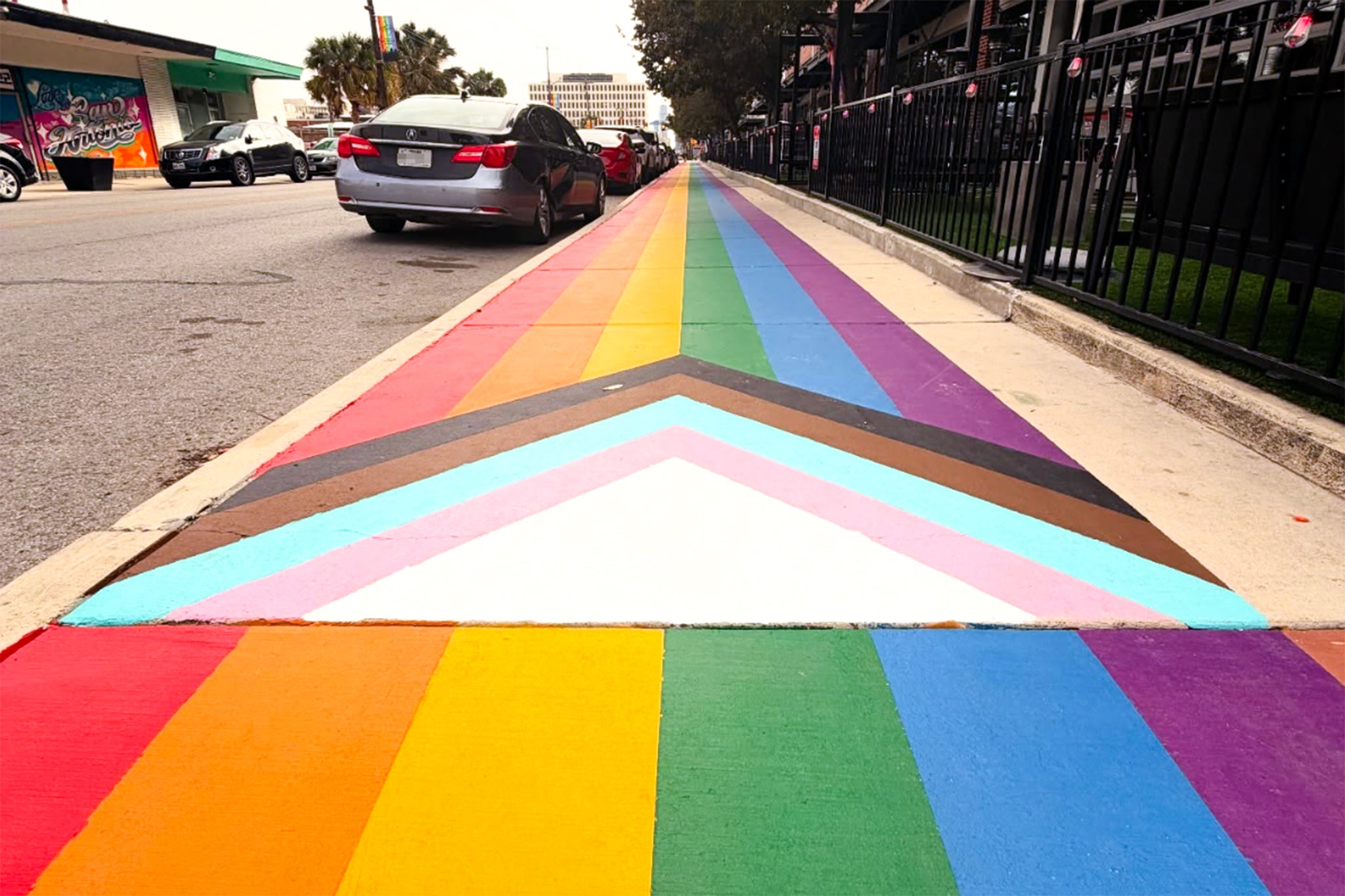
Texas banned rainbow-painted crosswalks – but locals found a workaround to restore the LGBTQ Pride symbol
The Pride flag returned to the streets of San Antonio, even after the Trump administration and Texas leaders ordered cities to remove rainbow-painted crosswalks.
Portions of the sidewalk in San Antonio’s Pride Cultural Heritage District, a neighborhood home to LGBTQ+ establishments and residents, are now painted with the colors of the Pride flag.
City council members chose to paint the sidewalks after the city was asked to remove a rainbow-painted crosswalk that had existed in the neighborhood since 2018.
In October, Texas Governor Greg Abbott directed cities to remove “any and all political ideologies” from the streets. Transportation Secretary Sean Duffy had threatened to revoke federal funding from places that painted roadways with what he called “political banners” to reduce distractions.
Other cities, such as Dallas, Austin and Houston, were forced to remove their rainbow crosswalks. Washington, D.C., removed its Black Lives Matter mural. Cities across Florida were asked to do the same.
San Antonio Mayor Gina Ortiz Jones, a veteran who is the first openly gay woman to serve in the role, told the New York Times that she had to consider the consequences of not removing the rainbow sidewalk in her city.
“I appreciate what our rainbow sidewalks represent. But, I’m the mayor of a major city in Texas, so I have to think about the consequences for everyone if our governor were to take away critical funding over this issue,” Jones told the newspaper.
Jones, who said she served in the Iraq War during the “don’t ask, don’t tell” policy, said her pride “is not tied to this paint” but rather “in my heart and head.”
But community members were still dismayed by the idea of getting rid of the rainbow crosswalk.
Ultimately, the city council’s LGBTQ+ Advisory Board chose to place the Pride colors on the sidewalk, an idea sparked by Councilman Jalen McKee-Rodriguez.
“In 2026, there’s certain individuals, certain people of our community that still feel unwelcome and unsafe,” Michael Rendon, the chair of the city’s LGBTQIA advisory board, told KENS5, a local news outlet, in March.
“This strip represents a place where people can come from the LGBTQ community and our allies and come and celebrate, build community. It’s a space where we can come together, be ourselves and welcome everyone from our community,” Rendon added.
Some still fought to prevent the rainbow sidewalks from becoming part of the city, especially since $170,000 was coming out of the Public Works funding to both remove the rainbow crosswalk and install the rainbow sidewalk.
The Texas Conservative Liberty Forum, a group dedicated to advancing conservative values, sued in objection to using public funds for the rainbow sidewalk. Ultimately, Pride San Antonio, a nonprofit aimed at instilling and embracing the LGBTQ+ community, sued to stop the removal of the rainbow crosswalk.
The lawsuits were merged in a somewhat confusing move – sparking outrage from some community members, including a local organization called Pride210, which expressed opposition to Pride San Antonio’s suit.
Ultimately, a judge declined to issue an injunction halting the removal of the crosswalk or installation of the sidewalks.
Members of the community unveiled the rainbow sidewalk at the end of March.
Join our commenting forum
Join thought-provoking conversations, follow other Independent readers and see their replies
CommentsСхожі новини
Canvas owner secures student data in deal with hacking group
EU invites Taliban members to discuss Afghan migrant returns

Mindich had a Russian business partner until mid-2025, MP says