Tennessee governor met with protests after signing GOP-backed House redistricting into law
Tennessee Gov. Bill Lee has signed into law a new U.S. House map that significantly alters a majority-Black district in Memphis, a move widely seen as part of Donald Trump’s broader strategy to secure a slim Republican majority in the upcoming November midterm elections.
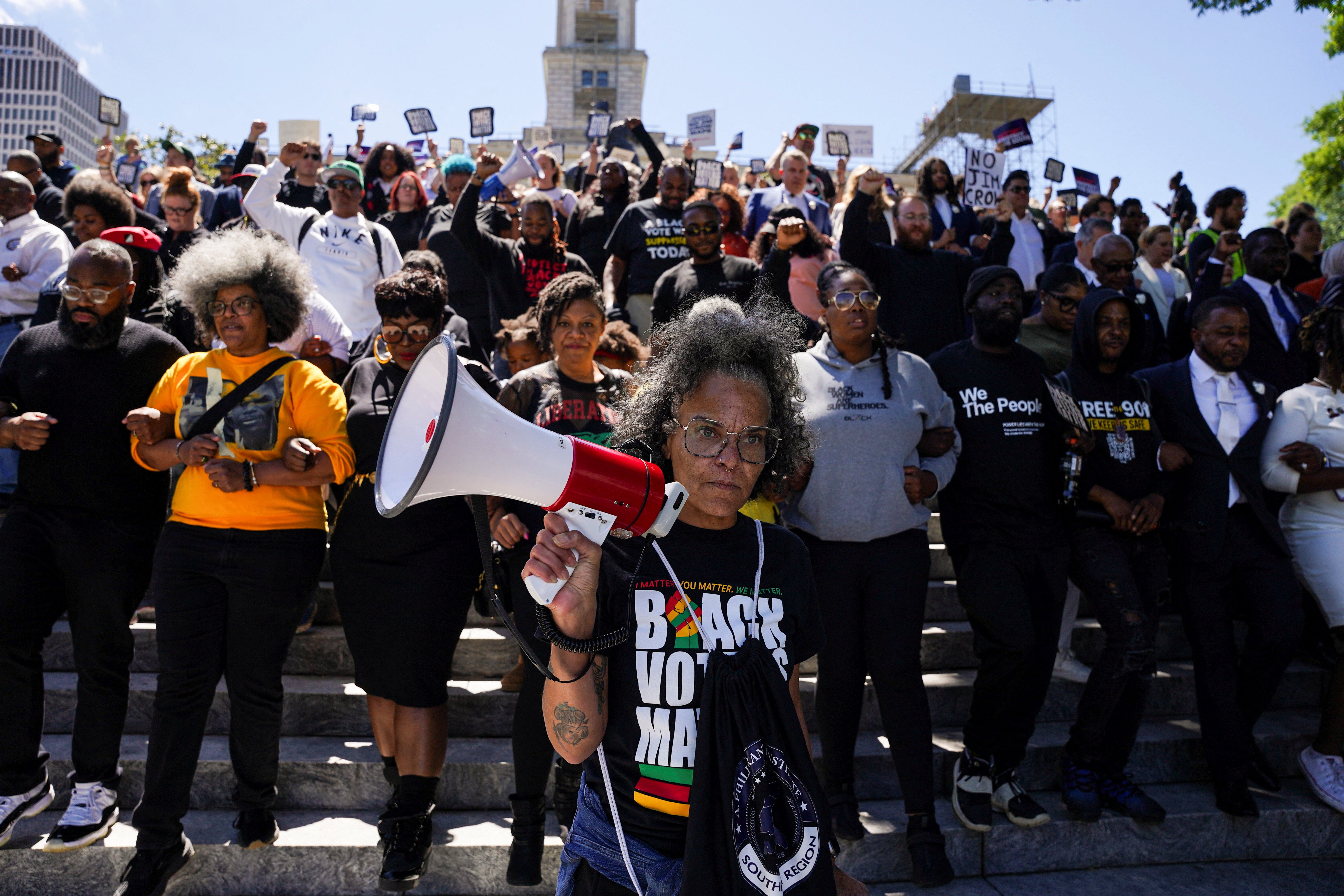
The governor’s swift approval followed a contentious legislative session where the Republican-led assembly pushed through the redistricting plan despite vociferous protests at the Capitol.
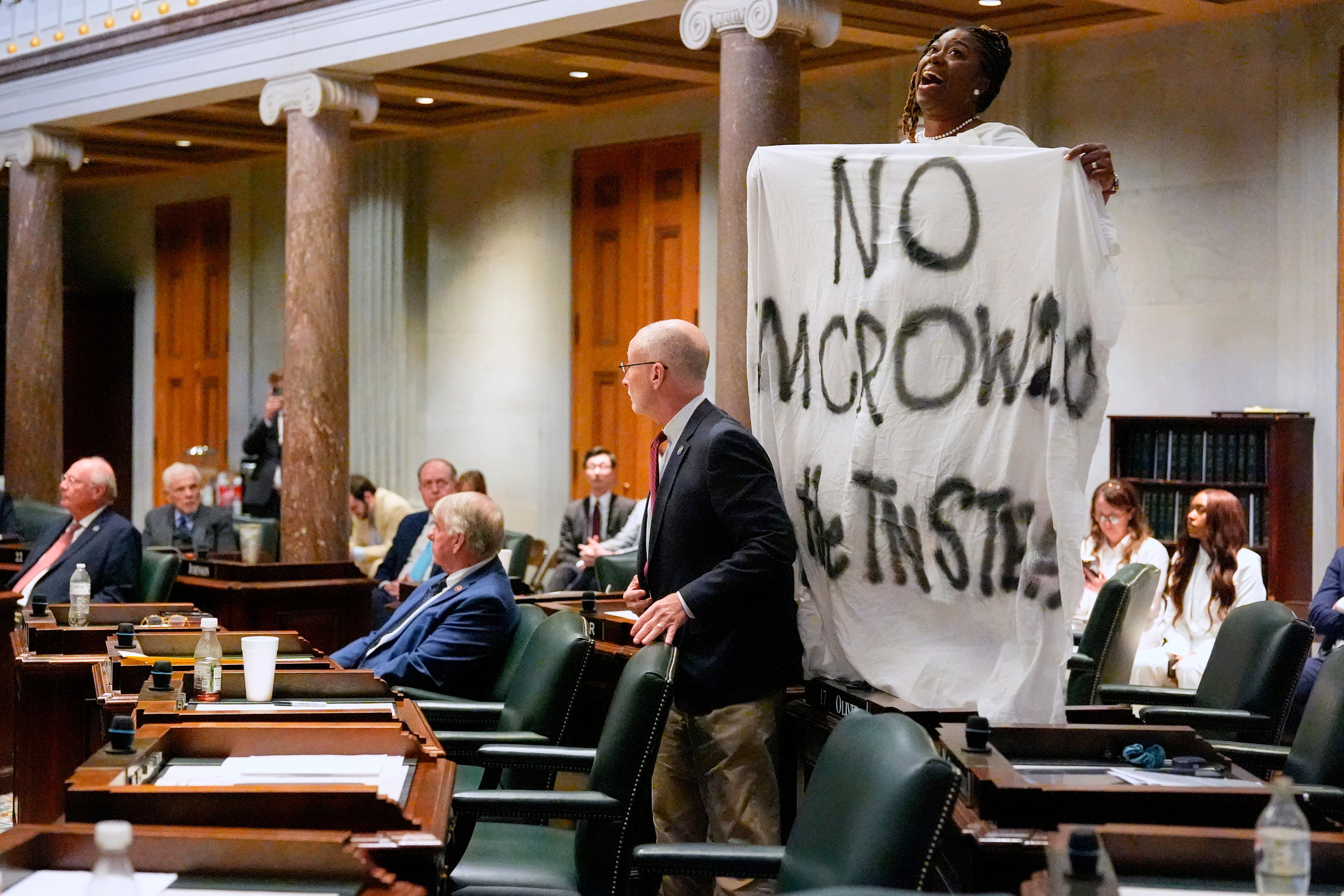
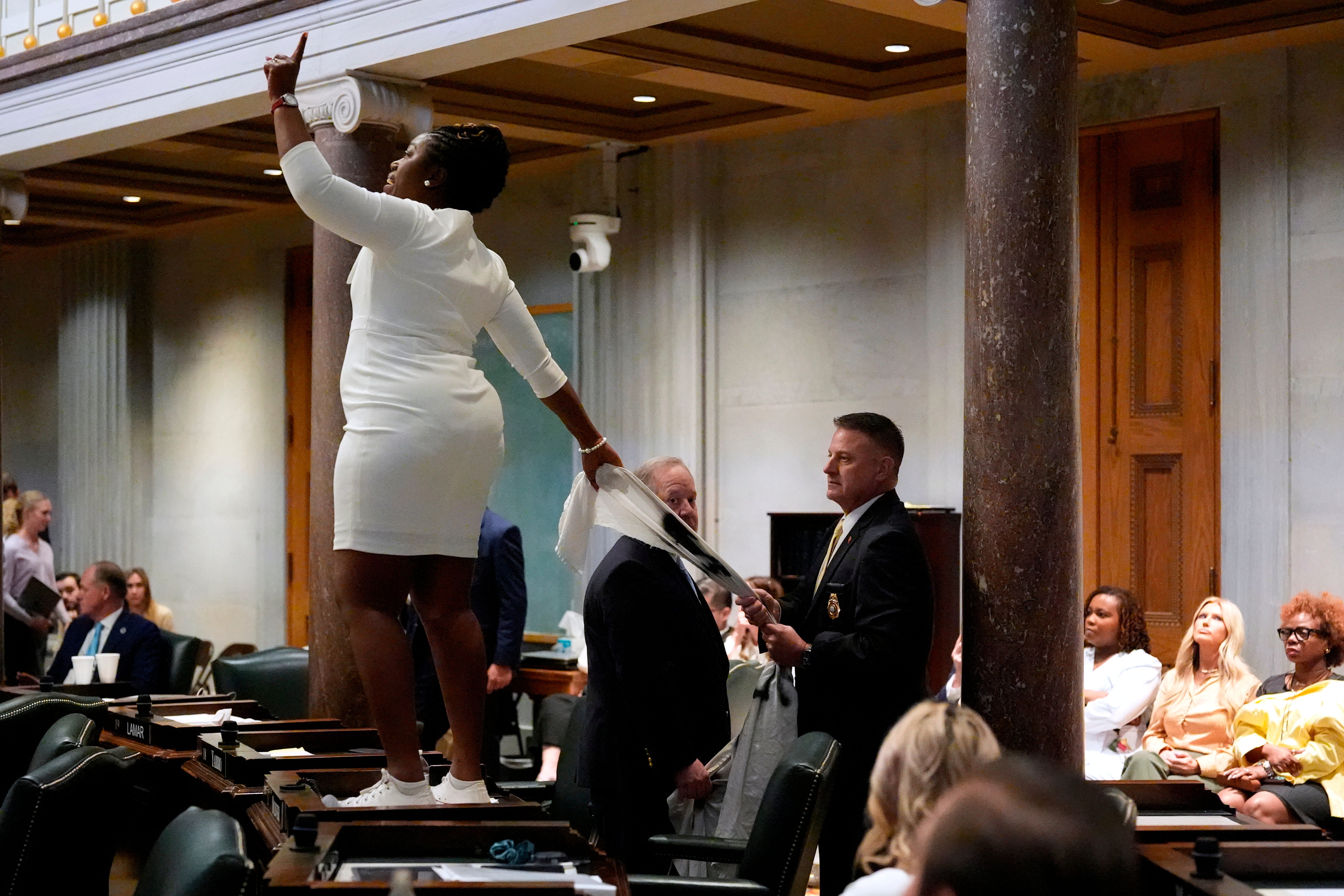
Demonstrators chanted loudly in the galleries and hallways, while inside the Senate chamber, Democratic state Sen. Charlane Oliver stood on her desk, holding a banner denouncing the redistricting as a "Jim Crow" effort.
 open image in gallery
Other Democratic senators linked arms in a show of defiance before Republican leadership quickly adjourned the special session, sending the map to Gov. Lee.
Similar disruptions, including yelling, chanting, and air horns, had plagued the House vote, with state troopers holding back shouting protesters in the hallways.
Tennessee is the first state to enact new congressional districts since a recent U.S. Supreme Court ruling significantly weakened federal Voting Rights Act protections for minorities.
 open image in gallery
This decision has emboldened Republicans in other Southern states, with Louisiana, Alabama, and South Carolina already taking steps toward similar redistricting efforts, and more legal challenges are anticipated.
The Supreme Court’s ruling, which found Louisiana relied too heavily on race when creating a second Black-majority House district, altered a decades-old understanding of the law, providing grounds for Republicans to attempt to eliminate majority-Black districts that have historically elected Democrats.
Louisiana has since postponed its congressional primary to allow lawmakers time to craft a new House map. In Alabama, legislation awaiting a final vote could upend the state’s congressional primaries if courts permit changes to its U.S. House districts.
Meanwhile, Republican lawmakers in South Carolina, reportedly urged on by Trump, are considering adding congressional redistricting to their agenda.
The actions in these states are the latest in an already fierce national redistricting battle. Since Trump encouraged Texas to redraw its U.S. House districts last year, eight states have adopted new congressional maps.
 open image in gallery
Republicans believe these changes could yield as many as 13 additional seats, while Democrats hope to gain up to 10. However, several competitive races suggest neither party may achieve all their desired outcomes in the November elections.
As a precursor to adopting the new House districts, Tennessee lawmakers first approved legislation, quickly signed by Gov. Lee, that repealed a state law prohibiting mid-decade redistricting.
They then passed a bill to reopen candidate qualifying until May 15, allowing new candidates to enter primaries or existing ones to switch districts.
The new Tennessee map would dismantle the state’s sole Democratic-held district, currently centered on the majority-Black city of Memphis and represented by Steve Cohen.
The geographically compact 9th District, which includes Memphis, would be stretched hundreds of miles eastward and northward toward the Nashville suburbs, creating a ripple effect across western and central parts of the state.
Republican House Speaker Cameron Sexton asserted that the new districts were drawn based on population and politics, not racial data.
However, Democrats vehemently rejected these claims. State Representative Justin Pearson, a Black Democrat from Memphis who is running for the U.S. House, stated, "These maps are racist tools of white supremacy at the behest of the most powerful white supremacist in the United States of America, Donald J. Trump."
Republican state Senator John Stevens defended the new districts he sponsored by noting that Democrats in Illinois, Massachusetts, and other states had also drawn congressional districts to their advantage. "This bill represents Tennessee’s attempt to maximize our partisan advantage," he said.
Senator London Lamar, a Democrat from Memphis, argued that this comes at the expense of both Memphis residents and democracy.
"You cannot take a majority Black city, fracture its voting power and then tell us race has nothing to do with it," she said. Democrats also pointed out that the state Supreme Court in April 2022 rejected a challenge to the current congressional map due to its proximity to the election. This year, with even less time before the August 6 primary, Democrats warn of potential confusion for both candidates and voters.
In Alabama, protesters watching a legislative committee erupted in shouts of "shame" as Republican lawmakers advanced legislation to authorize special congressional primaries if the state can implement a new congressional map for the November midterms.
Following the Supreme Court decision, Alabama seeks to overturn a court injunction that created a second U.S. House district with a substantial percentage of Black voters, which led to the 2024 election of Rep. Shomari Figures, a Black Democrat. Republicans aim to use a 2023 map drawn by state lawmakers that would give the GOP an opportunity to reclaim Figures’ district. If a court grants Alabama's request, the proposed legislation would disregard the May 19 primary results for congressional seats and direct the governor to schedule a new primary under the revised districts. The House passed the legislation on a party-line vote after four hours of fiery debate, with a final Senate vote expected.
The South Carolina Senate is also considering a resolution that would allow lawmakers to return after their regular session to redraw congressional districts, potentially eliminating the state’s only Democratic-held district. The proposal, which passed the House, requires a two-thirds vote in both chambers. Republican House leaders plan to introduce a new map and hold committee meetings.
During debate, Republicans sidestepped specific questions from Democrats regarding why they were willing to halt the June 9 U.S. House primary elections well after candidates had filed, and how much a rescheduled primary could cost. Democratic Representative Justin Bamberg expressed sympathy for Republicans, whom he said were sacrificing their principles to follow Trump’s "whims." "The president of the United States is a very powerful man, wields a heavy, heavy thumb — Truth Social, X, Meta, Instagram. To be honest, I don’t envy our Republican colleagues," Bamberg said.
Join our commenting forum
Join thought-provoking conversations, follow other Independent readers and see their replies
CommentsСхожі новини
Трамп заявив про знищення іранських катерів під час проходу есмінців США через Ормузьку протоку

Russian court sentences Ukrainian citizen to 22 years in prison

Як доглядати за чорнобривцями у травні, щоб вони цвіли весь сезон
