Takuma Sato on Why Indy Is the Most Special Race, and a Third 500 Win the Only Thing on His Mind
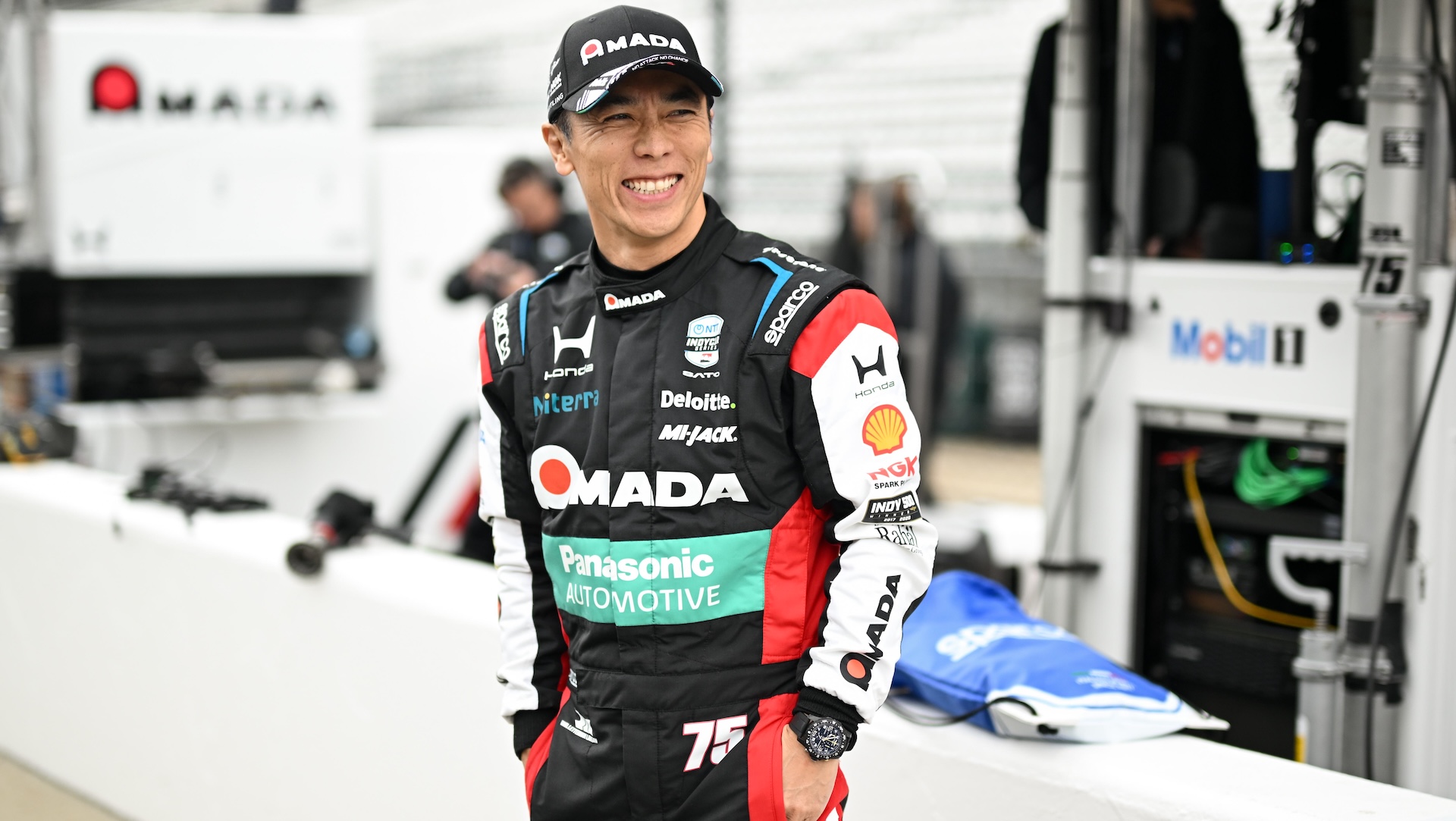
Winning the Indianapolis 500 once is the kind of feat that can make a man immortal in the American open-wheel racing world. Winning it twice is more than most racers could ever dream of (or achieve). But Takuma Sato won’t be satisfied until he sips that milk for a third time.
The first Japanese driver to win the Indy 500 sat down with select media, including The Drive, ahead of the race’s 110th running for a round table organized by Honda, and his demeanor could only be described as reflective.
Sato began the interview by reliving a moment in the early 1980s that has been embedded in his memory ever since. He told us that, back in 1987, he attended his first-ever race, the Formula 1 Japanese Grand Prix, “but a couple of years before — I might be age six or seven,” he cranked the rotary dial on his television to the TBS channel and saw a car.
“The car went extremely fast,” he remembered with a smile, “and that wasn’t Formula 1. That must be the Indy 500.”
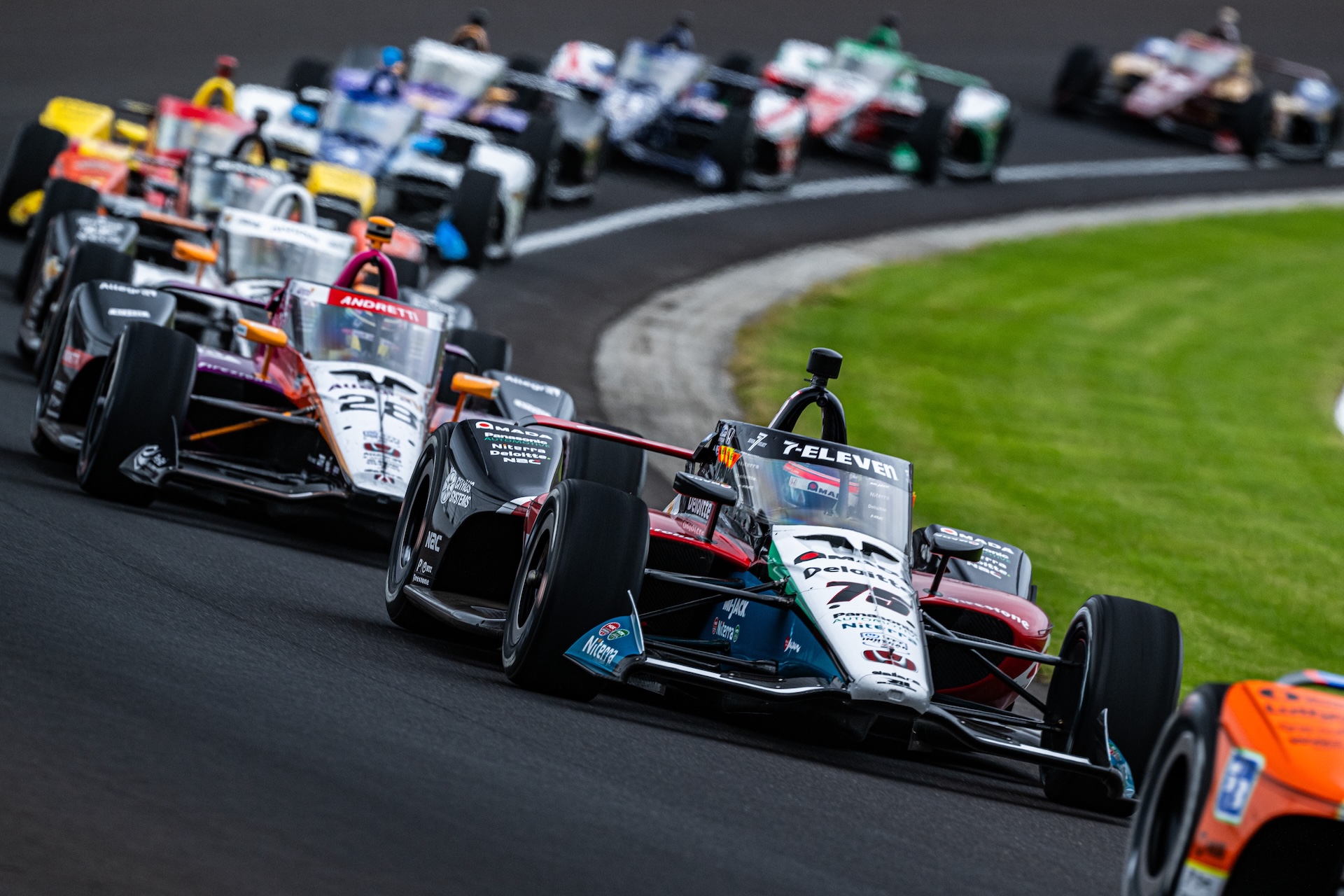
It was his first taste of the Greatest Spectacle in Racing, and even though he may not have understood what race he was watching at the time, it was his first step down a path that would permanently etch his name into the history books.
Those familiar with Sato’s career will know that Indianapolis was not his first step in motorsport; the path to Formula 1 had already been paved by men like Satoru Nakajima and Aguri Suzuki and races like the Japanese Grand Prix. Born in Tokyo, Sato’s longstanding ties with Honda saw him enter in 2002 with Jordan, before stints at BAR and Super Aguri, all culminating in a best finish of third at the 2004 US Grand Prix. For six years, he’d traveled to some of the most iconic F1 events in the world. Yet when the fates finally conspired to bring Sato to Speedway, Indiana, the magnitude of the track was both immediately apparent and also elusive.
“My first Indy 500, I didn’t really quite understand what is the Indy 500,” Sato admitted. “I knew, of course, it’s the biggest racing event in the world—but the magnitude of the energy and the meaning of that” was something that needed to evolve over time. It would take repeated exposures to the 2.5-mile oval for Sato to truly grasp the race’s meaning and his role in continuing to define its ongoing legacy.
“In my third [Indy 500], 2012, in turn 1 on the last lap, that was definitely the turning point of my race career,” he said, referring to the last-lap move he attempted to throw on leader Dario Franchitti—a move that ended with Sato in the wall.
“We were there very competitively, we were challenging for the win, but we couldn’t win this race. [With] how difficult this race is, you need everything.”
Over time, he’s come to appreciate the little things that make this race what it is.
“It’s always nice to walk through Gasoline Alley to get into the pit lane, and you can hear the people’s noise—almost 300,000 people,” he reflected. “That is a mega feeling. Sensational. There’s nothing like it.
“I’ve been to the Japanese Grand Prix, I went to the Nürburgring, I went to Spa-Francorchamps, and I was in Monte Carlo in Formula 1, knowing how special each race [was] as a Grand Prix, but the Indy 500 is nothing like it. It’s just based on history and tradition, and the people are so excited.”
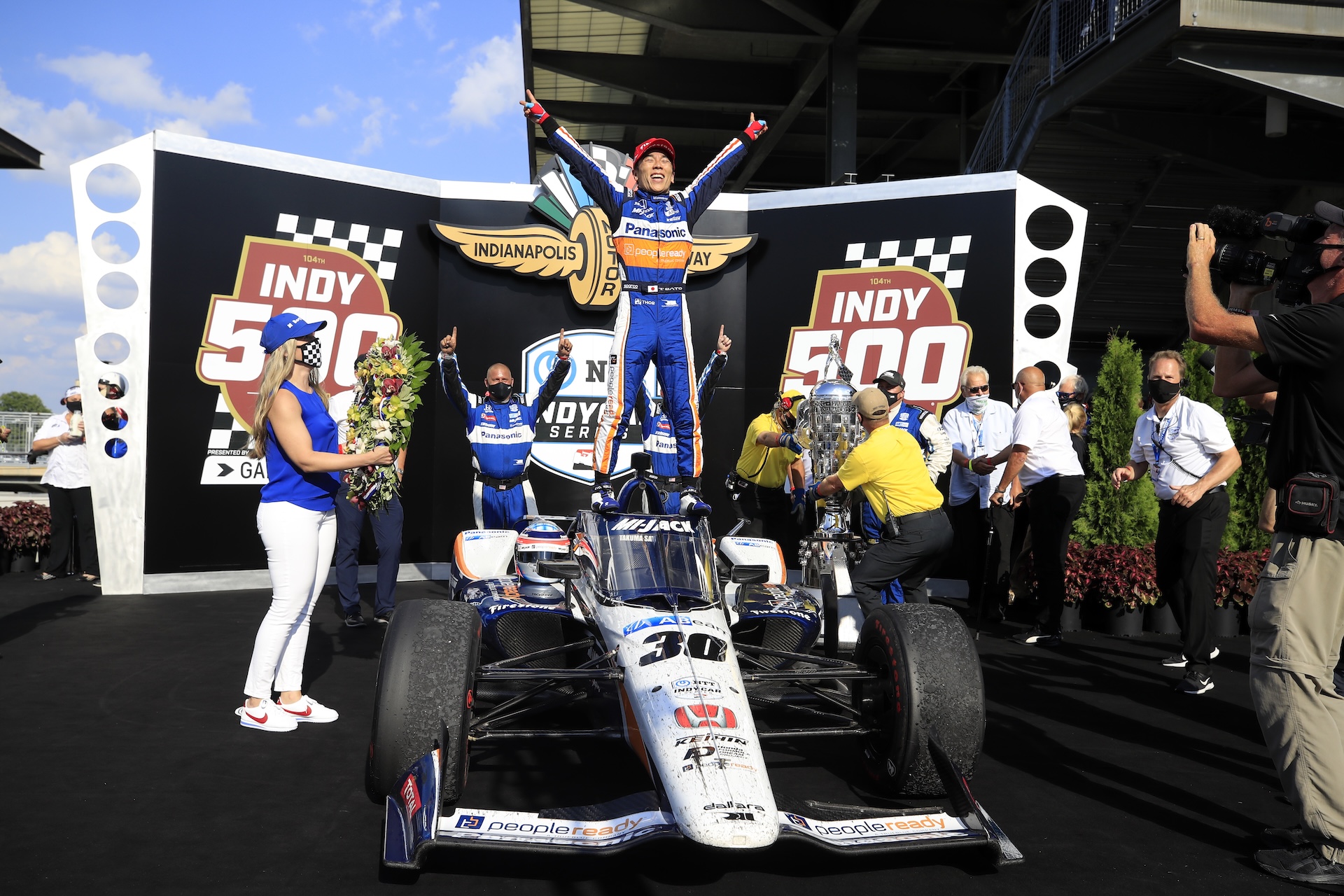
Of course, Sato is happy with both of his 500 victories. But the circumstances of his 2020 win left him feeling as though he was missing an integral part of the Indy 500 victory process.
“It was kind of sad. Lonely. Quiet,” Sato admitted to that pandemic-era victory. “There’s not 350,000 people.”
And that’s exactly why he keeps coming back. Yes, a victory for his No. 75 Rahal Letterman Lanigan Racing crew would be worth cherishing in and of itself, a reward for the hard work of the one-off operation. Yet there’s the part of Sato that, personally, needs the roar of the crowd.
“I want to feel it when I cross the finish line over the checkered flag, flat-out. Then I can feel the incredible energy from the fans. That was missing in 2020.
“That’s why I wanted to come back and focus on number three.”
And his chances this year are promising. Sato will line up on row four, in 12th position, when he takes the green flag. Two drivers have won the 500 from 12th on the grid in the past. And wouldn’t it be something special if Sato could make it number three?
Got a tip? Email us at tips@thedrive.com
The post Takuma Sato on Why Indy Is the Most Special Race, and a Third 500 Win the Only Thing on His Mind appeared first on The Drive.
Схожі новини
Росія атакувала українське місто, коли люди йшли у справах: є багато постраждалих

Hormuz traffic to return to pre-war levels within 30 days after peace deal: Iran

В Одесі вибухнув автомобіль - СБУ підозрює теракт