Switching to Heat Pump Water Heaters Could Save $8 Billion Annually in Health Care Costs
 April 20, 2026April 21, 20264 hours ago
Joe Wachunas
0 Comments
Support CleanTechnica's work through a Substack subscription or on Stripe.
April 20, 2026April 21, 20264 hours ago
Joe Wachunas
0 Comments
Support CleanTechnica's work through a Substack subscription or on Stripe.
For Earth Day, we want to talk about how much we love HPWHs for cleaning our air.

Yes, unbeknownst to most of us, what water heater we have in our basement or utility closet can have a profound impact on how clean our air is. Heat pump water heaters emit significantly less CO2 than other types of water heaters, but they also don’t emit any other air pollution (like smog) that can cause breathing problems.
Fossil fuel-based water heaters which burn natural gas, propane, or fuel oil, on the other hand, release dangerous pollutants into the local air we breathe — namely, sulfur dioxide (SO2), nitrogen oxides (NOx), and particulate matter (PM2.5).
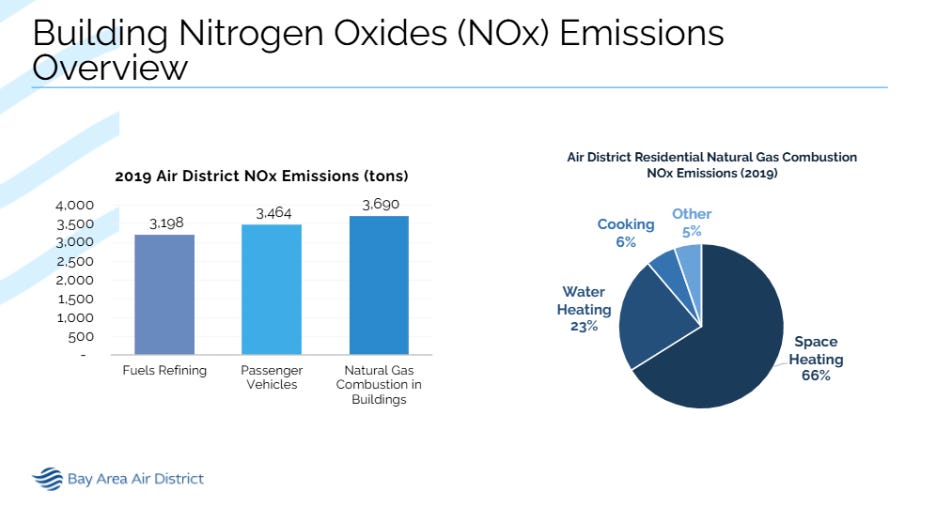
An illustrative example of the harmfulness of this pollution can be seen in the Bay Area Air District (BAAD), which is currently trying to reduce pollution from gas water heaters and furnaces. In BAAD’s presentation at the Advanced Water Heating Initiative’s January 2026 working group, they showed how burning gas in furnaces and water heaters accounts for the largest source of NOx emissions in their territory — even larger than vehicles. Water heating makes up about a quarter of these building-related NOx emissions.
Types of pollution avoided by using HPWHs
Heat pump water heaters clean our air because they don’t emit, or emit significantly less (if you count emissions from electricity) of the following pollutants:
Particulate Matter (PM2.5)
Particles 2.5 microns or less in diameter are defined as PM2.5. They are emitted from combustion of gas, gasoline, oil, diesel fuel, or wood. PM2.5 is known to cause adverse health effects, including premature mortality, affecting lung function growth in children, acute and chronic bronchitis, respiratory symptoms, etc.
Sulfur Dioxide (SO2) & Nitrogen Oxide (NOx)
Fossil fuel powered water heaters also emit sulfur dioxide (SO2) and Nitrogen Dioxide (NO2) into the air. These pollutants can irritate the lungs, worsen breathing issues and lead to emergency hospital visits.
Carbon Dioxide
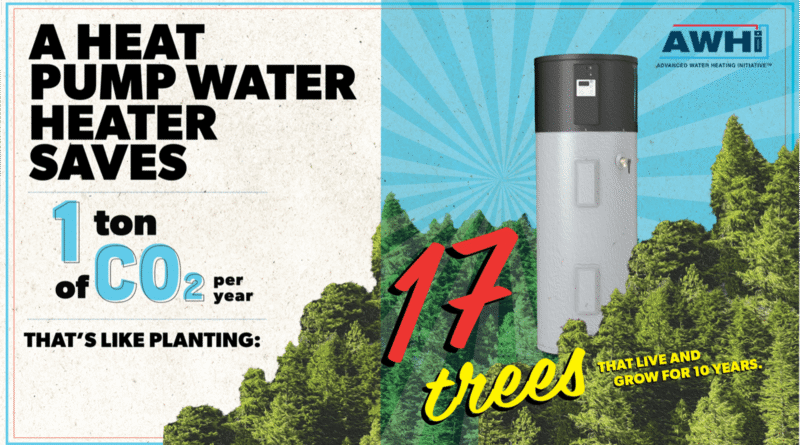
Because HPWHs are so efficient and because they run on electricity rather than fossil fuels, they emit much less CO2 (64%) than a fossil fuel water heater. Replacing one gas water heater with a HPWH can thus save more than 2,000 lb of CO2 every year. That’s the equivalent of growing more than 17 trees for 10 years according to data from the U.S. Environmental Protection Agency and equates to over 12 tons of CO2 over the life of the water heater!
See AWHI’s factsheet on CO2 savings here.
If all homes switched to a HPWH
If all the homes that currently burn fossil fuels for their water heating switched to a HPWH — our air would be a lot cleaner. According to Rewiring America’s great study called “Breathe Easy,” a US filled with HPWHs would save tens of thousands of tons of different types of pollution.
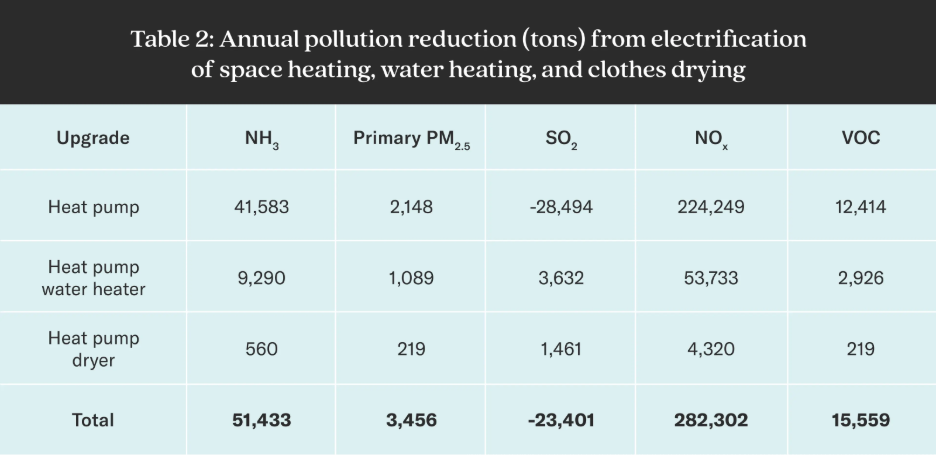
This pollution would reduce premature mortality by 700 lives per year. It would also save an estimated 8.4 billion dollars in health-related costs.
HPWHs are thus more than just water heaters — they keep our air clean and protect our health. By reducing harmful air pollution, they save lives and even lower healthcare costs. This Earth Day, let’s thank HPWHs for keeping our air clean and do our best to get them into as many homes as possible.
Check out our factsheet on how much pollution HPWHs save over fossil fueled water heaters: https://www.advancedwaterheatinginitiative.org/benefits.
This article was written with assistance from Vidhisha Moopnar.
Sign up for CleanTechnica's Weekly Substack for Zach and Scott's in-depth analyses and high level summaries, sign up for our daily newsletter, and follow us on Google News! Advertisement Have a tip for CleanTechnica? Want to advertise? Want to suggest a guest for our CleanTech Talk podcast? Contact us here. Sign up for our daily newsletter for 15 new cleantech stories a day. Or sign up for our weekly one on top stories of the week if daily is too frequent. CleanTechnica uses affiliate links. See our policy here.CleanTechnica's Comment Policy
Share this story!
Схожі новини
The misunderstood sex chromosome: how X affects your health
Durability key in school backpack sales in Japan
Germany news: Lufthansa scraps 20,000 flights