Spain Joins Growing European Push for Synthetic Sustainable Aviation Fuel as Iran Crisis Exposes Fossil Fuel Vulnerability
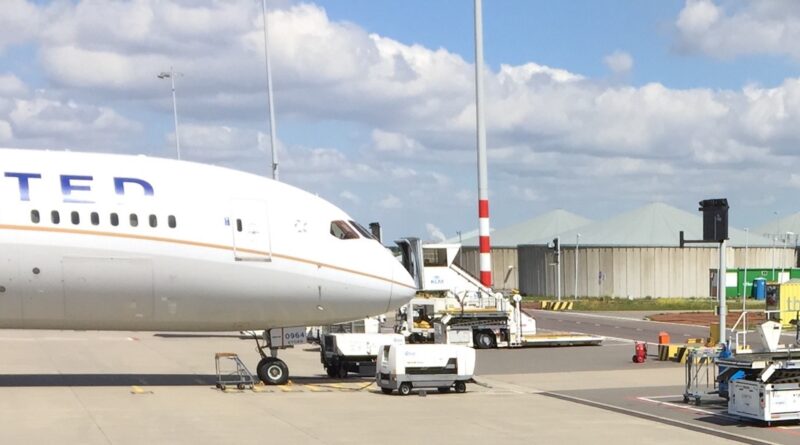 Photo by Zach Shahan | CleanTechnica
May 13, 20262 hours
Transport & Environment (T&E)
0 Comments
Support CleanTechnica's work through a Substack subscription or on Stripe.
Photo by Zach Shahan | CleanTechnica
May 13, 20262 hours
Transport & Environment (T&E)
0 Comments
Support CleanTechnica's work through a Substack subscription or on Stripe.
21 Spanish organisations are urging Madrid to back political commitment with an economic one ahead of the June EU Transport Council.
Geopolitical oil premium costs passengers up to €88 per long-haul flight, 29 times more than ReFuelEU compliance.
A broad coalition of over 21 companies, trade associations and industry bodies has written jointly to the Spanish government and ministers calling on Spain to translate its membership of the eSAF Early Movers Coalition into a concrete financial commitment before the EU Transport Council in June 2026.
The letter, coordinated by T&E Spain (T&E España), brings together the full Spanish eSAF value chain — from airlines and aircraft manufacturers to renewable energy producers and industrial developers — in an unusually unified call for public support.
The signatories — Spanish Airlines Association (ALA), Airbus, Moeve, AELEC, or RIC Energy, among many others — are calling on the Spanish government to mobilise a concrete budgetary contribution to the first European eSAF pilot auction, structured as a two-sided mechanism operated by a publicly backed market intermediary, in line with the H2 Global model already endorsed by the European Commission’s Sustainable Transport Investment Plan (STIP).
The Iran crisis: fossil fuel dependency, not climate policy, is aviation’s biggest risk
The 2026 Middle East crisis has laid bare the structural vulnerability of European aviation to fossil fuel dependence. According to T&E analysis, the EU imports around 95% of its crude oil, and approximately 30% of total European jet fuel supply – including both crude refined within the EU and directly imported refined jet fuel — depends on routes passing through the Strait of Hormuz. The partial disruption of that corridor was enough to push benchmark jet fuel prices to more than double their pre-conflict levels, prompt Lufthansa to cut 20,000 flights through the autumn, and lead the head of the International Energy Agency, Fatih Birol, to warn that Europe had “maybe six weeks or so” of jet fuel reserves remaining.
The scale of the cost contrast is striking. For an average intra-European flight, the geopolitical premium on fossil fuels currently adds €29 to per-passenger fuel costs — while the ReFuelEU mandate adds just €0.70 in the same period. On long-haul routes, which account for the bulk of aviation’s emissions and remain entirely outside the scope of carbon markets, the gap widens dramatically: the fossil fuel penalty reaches €88 per passenger, against just €3 from ReFuelEU. The oil market insecurity penalty is therefore up to 41 times larger than the cost of European climate policies on short-haul, and 29 times larger on long-haul.
“The Iran crisis is the clearest possible demonstration that aviation’s problem is not climate regulation — it is its oil dependency,” said Ioan Bucuras, Deputy Director T&E Spain. “Every euro invested in eSAF today is an insurance policy against future energy shocks, and a bet on European industrial sovereignty.”
Three barriers, one solution
The letter identifies three specific obstacles blocking private investment in industrial-scale eSAF plants: uncertainty over long-term revenue and offtake contracts, the technology risk inherent in first-of-a-kind projects, and the mismatch between the 25–30-year asset life of eSAF plants and the limited willingness of buyers to commit to offtake agreements at that duration.
To break this deadlock, the signatories propose a two-sided auction mechanism operated by a publicly backed intermediary, positioned between producers and buyers, that would offer developers long-term purchase agreements with predictable revenues while providing airlines with competitively priced supply. This structure, modelled on H2 Global and referenced in the European Commission’s STIP, would absorb the risk mismatch that currently prevents investment decisions from being taken.
Spain’s participation in the eSAF Early Movers Coalition sends an important political signal. But signatories warn that political commitment must now be followed by financial commitment. Germany has confirmed a contribution of up to €2 billion to launch an eSAF auction by early 2027 through H2 Global. Luxembourg has also signalled its intention to contribute, and Portugal is actively discussing its participation. Spain, the letter argues, must now move from coalition membership to budget allocation, and do so before the EU Transport Council on 26 June 2026.
“Spain already has industrial eSAF projects at various stages of development, and committed actors across the entire value chain,” said Bucuras. “The June Council is the window. If Spain is not at the table when the pilot auction budget is decided, Spanish projects will be left out.”
What the coalition is asking for
The signatories call on the Spanish government to:
- Actively participate in the European Commission taskforce designing the joint eSAF pilot auction, ensuring that its architecture benefits projects and buyers based in Spain.
- Define and mobilise a concrete financial contribution before the EU Transport Council on 26 June 2026, drawing on Recovery and Resilience Facility funds and Emissions Trading System revenues.
- Ensure effective interministerial coordination to unlock the necessary financing at EU level.
- Designing industrial policy to ensure competitive, predictable and stabilised grid electricity costs.
Spain has already reserved one third of the €415 million allocated under the European Hydrogen Bank’s “auctions-as-a-service” scheme for projects serving the maritime and aviation sectors, a signal of intent that the signatories argue must now be backed by direct participation in the European eSAF auction mechanism.
About the coalition
The letter is coordinated by T&E (Spain), Europe’s leading clean transport campaign group. It unites the breadth of Spain’s eSAF value chain, including:
-
Airlines and aircraft manufacturers bound by ReFuelEU, including Spanish airlines association, ALA and Airbus.
-
The electricity generation sector, represented by AELEC, the solar trade association UNEF, and the wind trade association, AEE.
-
Spanish oil fuel supplier, Moeve (former Cepsa);
-
The Spanish national hydrogen association, AeH2;
-
Industrial e-fuel developers, including RIC Energy, Alkeymia, Avalon Renovables, Ignis P2X (ECO2FLY Power), Reolum, Enagás Renovable, Hy24, and HyFive;
-
An engineering company in charge of project construction, Técnicas Reunidas;
The non-profit sector, including GFI España, Fundación Hidrógeno Aragón, Cleantech for Iberia, Skypower alliance and T&E itself.
Download the letter. News release from T&E.
Sign up for CleanTechnica's Weekly Substack for Zach and Scott's in-depth analyses and high level summaries, sign up for our daily newsletter, and follow us on Google News! Advertisement Have a tip for CleanTechnica? Want to advertise? Want to suggest a guest for our CleanTech Talk podcast? Contact us here. Sign up for our daily newsletter for 15 new cleantech stories a day. Or sign up for our weekly one on top stories of the week if daily is too frequent. CleanTechnica uses affiliate links. See our policy here.CleanTechnica's Comment Policy