South Carolina says the nation’s worst measles outbreak in three decades is finally over
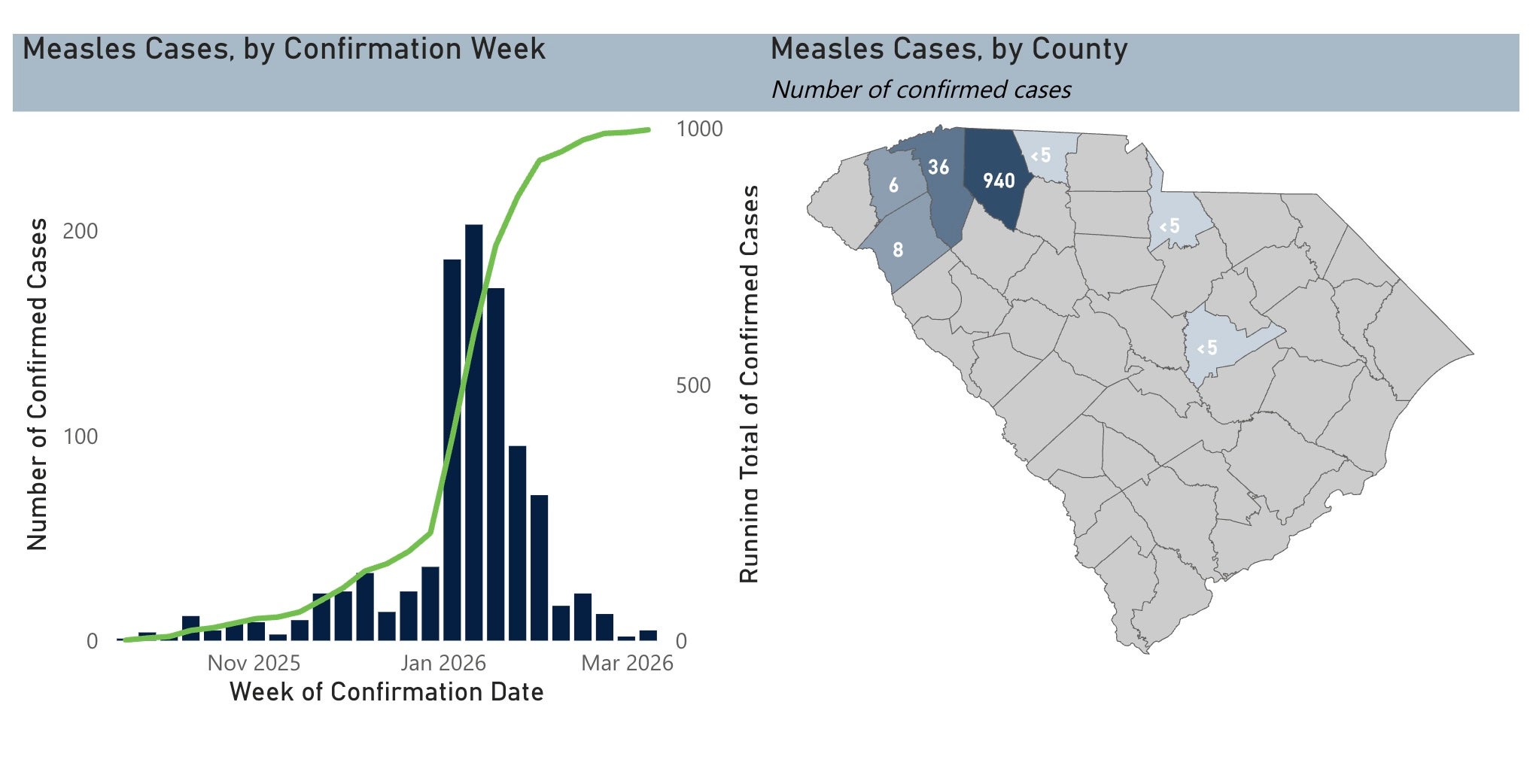
South Carolina’s measles outbreak – the worst in the U.S. in 35 years – is finally over, public health officials said Monday.
The outbreak sickened 997 people, most of whom were unvaccinated children aged 5-11. The same pattern was seen nationwide, with the majority of America’s measles cases in unvaccinated individuals. Vaccine hesitancy and misinformation have helped to fuel these outbreaks, threatening America’s decades-long elimination status.
“While 997 is a large number, without the front-line help from a diverse and dedicated group of people from all backgrounds and walks of life, I believe many more cases – and potentially more hospitalizations or even deaths – would have occurred,” South Carolina Department of Public Health Interim Director Dr. Edward Simmer said in a statement.
He called the state’s response “textbook,” but assured that the department would be ready for any future outbreaks, too. Outbreaks are declared over after 42 days without infections.
“The best way to prevent measles is the measles-mumps-rubella vaccine, which is safe and 97 percent effective. Even as this outbreak ends, measles remains a risk,” cautioned Simmer.
 open image in gallery
Of the 997 cases, 932 patients were unvaccinated.
But, more than 81,000 vaccinations were administered during the outbreak from October 2025 to March 2026. That’s up 31.3 percent over last year, the department said.
Health officials credit that increase in vaccination for ending the outbreak.
“Vaccination – combined with other opportunities for good, solid public health work – really can be effective, even against some of the most contagious viruses,” Dr. Brannon Traxler, the department’s deputy director and chief medical officer, told reporters at a news briefing last Wednesday.
When health officials in West Texas declared the end of the outbreak there last August, they also highlighted the importance of vaccination.
 open image in gallery
“We arrived at this point through a comprehensive outbreak response that included testing, vaccination, disease monitoring and educating the public about measles through awareness campaigns,” Department of State Health Services Commissioner Dr. Jennifer Shuford said.
As was the case in Texas, the majority of South Carolina cases were reported in young children.
Fewer than 100 of the cases were adults. Whereas, 264 were under the age of 5 and 639 were aged 5-17.
Children are among the populations most vulnerable to severe infection. Yet, they also make up the majority of measles cases nationwide. 917 of the 1,792 cases reported this year were in children and teens aged 5-19 and 385 were in kids under the age of 5, U.S. Centers for Disease Control and Prevention data shows.
 open image in gallery
That underscores the role of vaccine skepticism nationwide — but so does the data.
Vaccination rates need to be above a 95 percent threshold to limit the spread of measles. Right now, national coverage is at 93 percent, according to Johns Hopkins University.
Childhood vaccination rates have been declining in recent years, the CDC says, with personal and religious exemptions reaching an all-time high within the last year, the Johns Hopkins Bloomberg School of Public Health also found.
“To reverse declining childhood immunization rates in the U.S., we need to focus on strengthening public trust in the safety and effectiveness of vaccines,” International Vaccine Access Center Executive Director Dr. William Moss told the school. “If more and more parents choose not to vaccinate their children for non-medical reasons, we will no doubt see a rise in disease outbreaks.”
Join our commenting forum
Join thought-provoking conversations, follow other Independent readers and see their replies
Comments