South Africa xenophobia response under fire
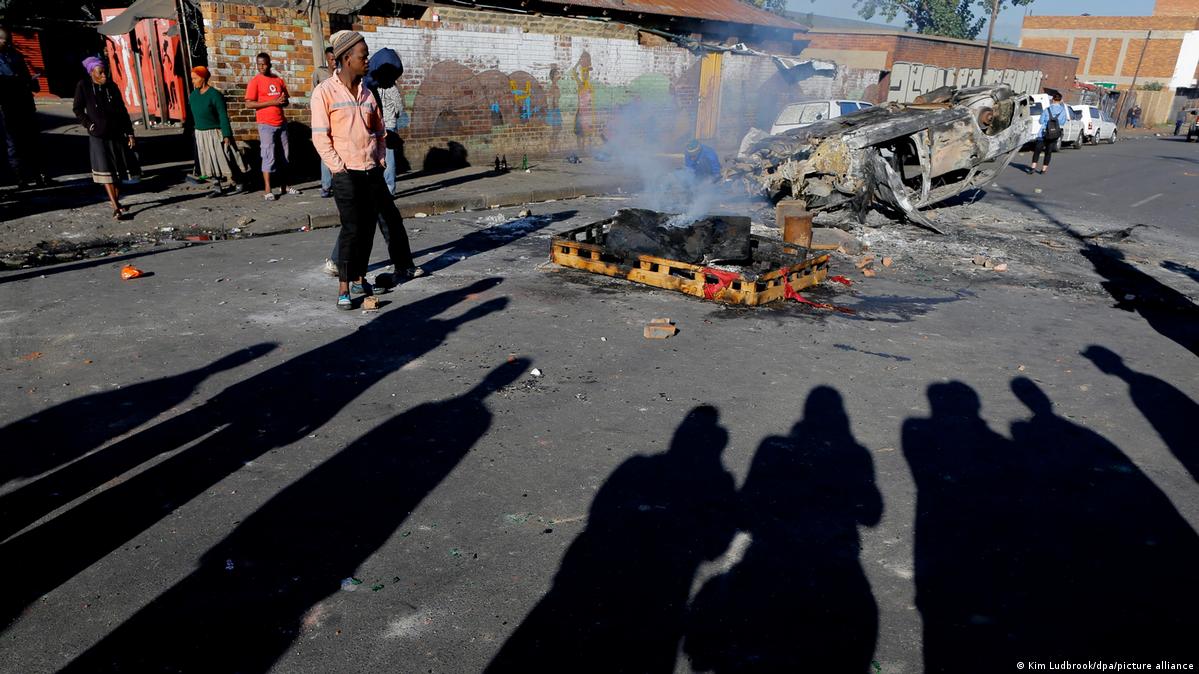
As anti-foreigner tensions resurface in parts of South Africa, critics are questioning whether the government's response to xenophobia is working.
South Africa has faced repeated outbreaks of violence targeting migrants from Zimbabwe, Nigeria, Somalia, Ethiopia, Malawi, Mozambique, Ghana and Zambia.
Easlier this month, Nigeria summoned South Africa's acting high commissioner, citing growing anti-African migrant protests.
More than 60 people were killed in anti-immigrant riots in 2008, while similar unrest resurfaced in 2015 and 2016. Armed mobs attacked foreign-owned businesses around the city of Johannesburg in 2019, leaving at least 12 people dead — ten of them South African citizens.
Migration blamed for deeper crises
The violence is often linked to frustrations over unemployment, crime, overcrowded services and poor living conditions — grievances that are frequently redirected toward migrants.
However, Loren Landau, a senior migration researcher at University of the Witwatersrand's (Wits) African Centre for Migration and Society in Johannesburg, argued that the roots run deeper.
"The scapegoating and demonization of migrants merely draw people's attention away from the true source of South Africa's problems and erodes democracy while putting the welfare of many people — both our own citizens and foreigners — at risk," Landau said in an article published by Wits.
"Migrants are not the source of any of South Africa's challenges. There are too few to make a substantial impact on employment or crime," Landau added.
Government defends response to xenophobia
South Africa's government says it condemns violence against foreign nationals and is working to strengthen social cohesion and migration management.
South Africa's Foreign Minister, Ronald Lamola, recently warned against civilians taking immigration enforcement into their own hands.
"It is not the responsibility of civilians to enforce the law," Lamola told DW. "Where people are told, 'You are not South African, you must go home,' that is xenophobia."
South Africa: Legitimate grievances or veiled xenophobia?
To view this video please enable JavaScript, and consider upgrading to a web browser that supports HTML5 video
Lamola rejected claims that targeting migrants would solve South Africa's economic problems.
"The economic challenges and unemployment issues will not be resolved by chasing anyone," Lamola said. "This is not just a security issue, it is an economic and social issue."
Minister in the Presidency, Khumbudzo Ntshavheni, also defended government efforts while condemning vigilantism.
"We cannot allow anyone who is not law enforcement to demand people's passports," she told DW.
Activist groups deepen migration tensions
Groups such as Operation Dudula, which campaigns against undocumented migration, have become increasingly influential in public debate.
Supporters argue undocumented migration places pressure on jobs, healthcare and housing. Critics, however, say such movements risk fueling xenophobia and vigilantism.
Patrick Mokgalusi, a member of Operation Dudula, defended the movement.
"People are in charge now because government has failed us. There's no turning back," he told DW, calling for "mass deportations for illegal foreigners."
Vusumuzi Sibanda, chairman of the refugee advocacy group African Diaspora Global Network, warned that some official responses risk worsening tensions.
"In some cases the response appears to be worsening the situation," Sibanda told DW, pointing to allegations that vulnerable people seeking protection during unrest were dispersed with rubber bullets.
Former South African President Thabo Mbeki has also pushed back against blaming undocumented migrants for South Africa's problems.
A quote from Mbeki, which was widely shared on X, argued that "Jacob Zuma and Cyril Ramaphosa caused high levels of crime and unemployment, not illegal immigrants." The post added that documented migration existed during his presidency while the economy was growing and crime was lower.
Fear grows among migrant communities
For many migrants, fear has become part of everyday life.
Princess Adjei, a 33-year-old Ghanaian national who has lived in South Africa since she was 13, said tensions are escalating.
"It's getting hectic. It feels like a war now. We as foreigners are not safe anywhere," she told DW. "People are frustrated and tensions are escalating. Foreigners are also beginning to respond with force. People could die."
Dudula: Fighting for South Africa or fighting Africans?
To view this video please enable JavaScript, and consider upgrading to a web browser that supports HTML5 video
Moses Chanda, a Zambian entrepreneur in Johannesburg, said xenophobic violence often begins with rumour and misinformation.
"You hear people saying foreigners are taking jobs or running illegal businesses," he said. "Then suddenly shops are looted or people are attacked."
Still, some South Africans reject portraying the country solely through the lens of xenophobia.
"There are tensions, yes, but many communities work together every day," Johannesburg resident Nomsa Dlamini told DW. "The real issue is poverty and frustration, not ordinary South Africans hating foreigners."
For many observers, South Africa faces mounting pressure to balance migration concerns with constitutional protections and regional solidarity.
"We are Africans too," said Adjei. "We came here to work and build lives, not to take anything away from anyone."
Thuso Khumalo in Johannesburg contributed reporting
AdvertisementСхожі новини

У Львові презентували інтерактивну виставку про роботу військових психологів
Вторгнення з Білорусі. Блеф чи реальність?
Підозрювані у «кришуванні» порноофісів топпосадовці Нацполіції вийшли з-під варти