South Africa Constitutional Court orders Parliament to revisit Ramaphosa impeachment proceedings
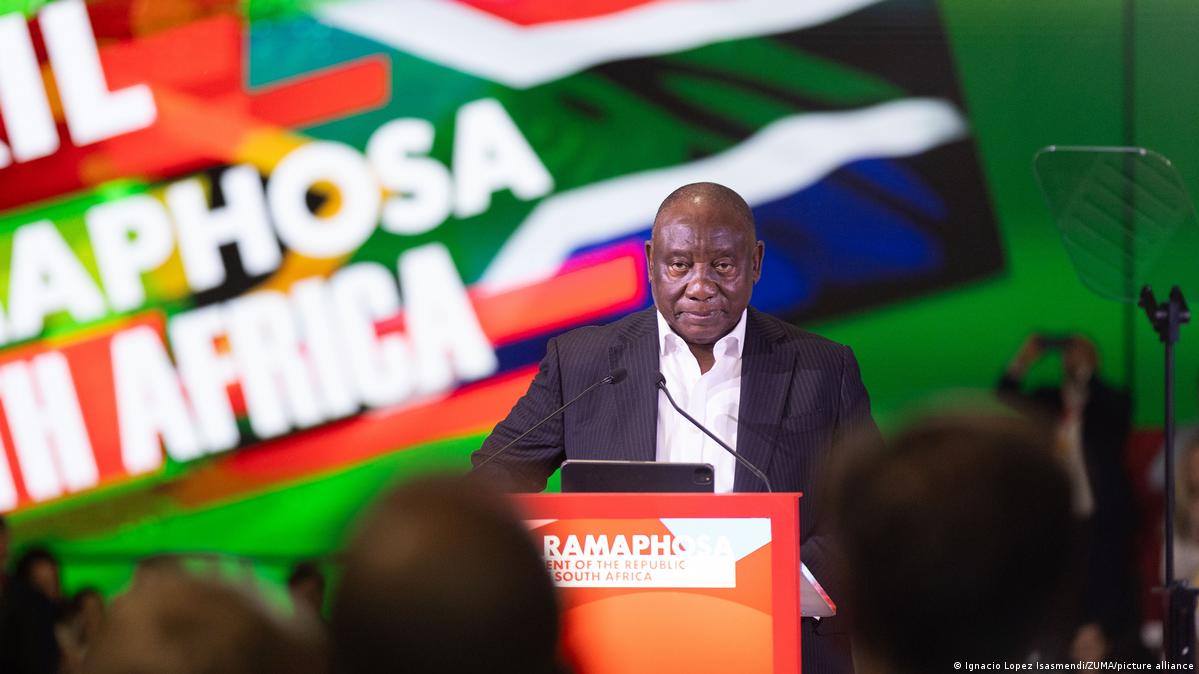
South Africa's Constitutional Court on Friday ordered the country's Parliament to reconsider impeachment proceedings against President Cyril Ramaphosa.
The ruling stems from an allegation that $580,000 in US banknotes, hidden in a couch, was stolen from Ramaphosa's private Phala Phala game farm in 2020.
The court did not rule on the substance of the allegations. Instead, it examined whether lawmakers acted lawfully in rejecting a recommendation from an independent panel appointed by Parliament to proceed with an impeachment inquiry into claims that Ramaphosa broke the law in his handling of the theft.
"It is declared that the vote of the National Assembly taken on 13 December 2022... is inconsistent with the Constitution, invalid, and it is set aside," Chief Justice Mandisa Maya said.
The legal challenge was launched by the Economic Freedom Fighters (EFF) and the African Transformation Movement (ATM), two opposition parties, who contend that Parliament's decision to dismiss the panel's findings was irrational and unconstitutional.
Cash-in-sofa scandal
The finding is a significant setback for the president, who has faced persistent allegations that he sought to conceal the theft to avoid scrutiny over the large amount of foreign currency kept as his property.
It was first brought to light in June 2022, when a former South African spy boss, Arthur Fraser, accused the president of hiding the theft at his farm in Limpopo province.
Ramaphosa has always denied wrongdoing over the affair and has not been charged with any crime. He said the money was payment for buffalos bought by a Sudanese businessman.
The president was also cleared in separate investigations by the Reserve Bank, the Revenue Service and an independent watchdog, the Public Protector.
A test for Ramapahosa's coalition government
In 2022, parliament instructed a panel headed by South Africa's former chief justice Judge Sandile Ngcobo to investigate the matter.
The panel found the president had a case to answer and recommended that lawmakers proceed with an impeachment inquiry over the accusations.
Ramaphosa's African National Congress (ANC) used its then majority in Parliament to quash recommendations from the panel. It was then when the EFF and the ATM took the matter to court.
The court ordered that the report be referred to an impeachment committee.
The EFF wrote to the Speaker of Parliament to "immediately initiate the process" to form the impeachment committee.
The ANC no longer holds a majority in Parliament but remains the largest party in Ramaphosa's government of national unity.
It appears that Ramaphosa cannot rely on the Democratic Alliance (DA), the second-largest party in the coalition government, for support.
Its leader, Geordin Hill-Lewis, said the DA would "uphold the law" and that the ruling drew "a clear line between the DA and the ANC."
"The ANC has presided over a political culture in which accountability is delayed, diluted or avoided when it becomes inconvenient. The DA stands for a different kind of politics in which the Constitution comes before party loyalty, and no leader is shielded from answering to the people," he wrote on X.
Edited by: Wesley Rahn
AdvertisementСхожі новини

Федоров: Завдання від президента – побудувати власну антибалістичну систему ППО разом із партнерами ЄС, це ключове питання для нас зараз
Підготовка до зими вимагає швидких рішень і ефективної комунікації між всіма стейкхолдерами – очільники ТКЕ