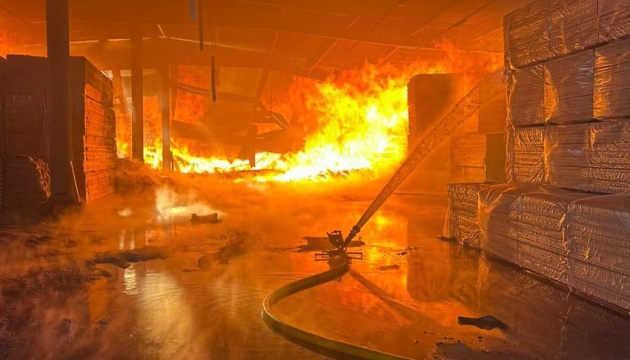
Global Military Spending Hits Record $2.887 Trillion as Europe Leads Surge
Global Military Spending Hits Record $2.887 Trillion as Europe Leads Surge
For the eleventh consecutive year, worldwide defense expenditures have climbed to unprecedented levels. According to the Stockholm International Peace Research Institute (SIPRI), governments allocated $2.887 trillion (€2.47 trillion) toward military purposes in 2025, representing the highest figure ever documented.
Geopolitical tensions and ongoing conflicts are fueling the spending surge. Xiao Liang, a researcher at SIPRI's Military Expenditure and Arms Production Programme, attributed the increase to escalating global instability. "This really speaks to countries' reactions to ongoing wars, tensions and geopolitical uncertainty," Liang explained. Persistent conflicts in Ukraine, Gaza, and Sudan, among other regions, have prompted governments to lock in long-term defense spending plans that are expected to sustain this upward trajectory through 2026 and beyond.
Europe Drives Global Increase
European nations accounted for the primary driver of increased military spending in 2025. Defense expenditures across the continent surged by 14% to reach $864 billion. Russia's 2022 full-scale invasion of Ukraine fundamentally reshaped European security assessments, with many governments now viewing potential Russian aggression as a broader regional threat.
NATO members and other European states have responded by substantially expanding defense budgets to strengthen military capabilities and deter potential aggression. Central and Western European countries recorded the highest annual growth rates since the Cold War's conclusion. Notable increases included Spain's 50% defense budget jump, Poland's 23% increase, and Italy's 20% rise.
Germany's Military Transformation
Germany emerged as Europe's leading military spender in 2025, with its defense budget climbing 24% to $114 billion, securing fourth place globally. The nation surpassed NATO's 2% of GDP spending benchmark for the first time since 1990, reaching 2.3%.
To facilitate this expansion, Germany's parliament modified fiscal regulations in 2025. Military expenditures exceeding 1% of GDP were exempted from the nation's stringent debt brake, enabling increased government borrowing for defense initiatives.
Liang cautioned that spending increases may not immediately translate to proportional military capability gains. However, he noted that "in the long term, Germany is becoming more powerful and more independent militarily." Beyond Ukraine-related concerns, Germany's spending reflects apprehension regarding future American security commitments, particularly following statements by US President Donald Trump questioning NATO's collective defense obligations.
United States Spending Declines
The United States allocated $954 billion to military spending in 2025, representing a 7.5% decrease from the previous year. The primary factor behind this decline was Congress's decision to withhold new military aid to Ukraine, departing from the previous three years' pattern of sustained assistance. SIPRI includes such aid within donor nations' military expenditure calculations.
Liang predicted this reduction would be temporary. "The new 2026 budget approved by the US Congress is signaling a big increase," he stated. Pentagon figures underscore this trajectory—the first six days of 2026 Iran military operations alone cost $11.3 billion.
Despite the year-over-year decline, the United States remained the world's largest military spender, commanding approximately one-third of global defense spending. However, its proportional share has gradually diminished since 2020. The nation continued prioritizing nuclear and conventional weapons development to maintain military supremacy and counter Chinese expansion in the Indo-Pacific region.
China's Relentless Buildup
China maintained its position as the world's second-largest military spender, extending a remarkable 31-year streak of consecutive annual defense budget increases—longer than any other nation monitored by SIPRI. Chinese military expenditures grew 7.4% in 2025, advancing the country's modernization plan targeting 2035.
China's military advancement carries significant regional implications. The nation tested sixth-generation fighter jet prototypes and progressed toward deploying its H-20 stealth bomber. Liang emphasized that China's modernization efforts and regional tensions have historically driven increased spending among neighboring nations, particularly Japan, Taiwan, and the Philippines. In 2025, security concerns prompted American allies to reassess their defense strategies and invest more substantially in independent military capabilities.
Regional Security Responses
Japan's military spending reached $62.2 billion in 2025, marking a 9.7% increase. This growth supports a comprehensive buildup initiative commenced in 2022, responding to security challenges posed by China and North Korea. Japan's expanding missile and drone programs represent a strategic shift positioning the nation among the world's top military spenders.
India ranked as the world's fifth-largest military spender in 2025, with its defense budget rising 8.9% to $92.1 billion. While Chinese tensions remained a significant factor, Liang highlighted an additional catalyst: "There was also a war between India and Pakistan in 2025. That was a big factor, and they invested heavily in aerospace and drones, which were used a lot in that conflict."
The Broader Economic Impact
Military spending as a proportion of global GDP climbed to an estimated 2.5% in 2025, the highest level since 2009. This metric reveals not only absolute spending increases but also society's shifting economic priorities toward defense.
This reallocation carries far-reaching consequences. "This will affect other areas of public spending," Liang cautioned. "Governments may cut social services or development aid. So, this isn't only about wars and weapons — it will have deep effects across societies."
Arms Race Concerns
Some analysts suggest that more evenly distributed military capabilities could enhance global stability. Liang rejected this perspective. "That just means more arms and more weapons," he argued. "A new arms race reduces trust and increases the risk of miscalculation" — ultimately rendering the world more precarious.
Схожі новини
Не модель "війни на виснаження": Сирський розповів про стратегію Сил оборони
Війська РФ намагаються просуватися на всіх напрямках фронту - Сили оборони
Більшість електроніки - іноземна: ГУР про нову російську ракету «Ковер»