Global Military Spending Hits Record $2.887 Trillion as Europe Leads Surge
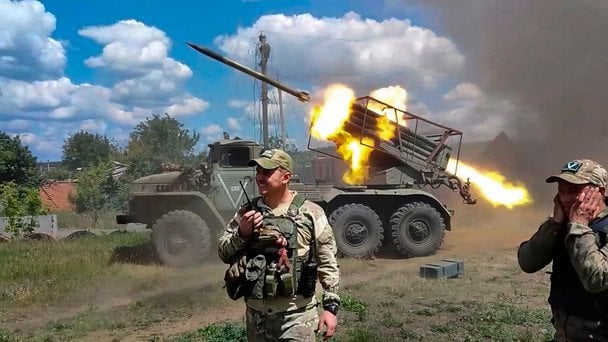
Governments worldwide spent $2.887 trillion on defense in 2025, marking the highest military expenditure ever recorded and extending an 11-year streak of consecutive increases, according to the Stockholm International Peace Research Institute (SIPRI). The surge reflects persistent geopolitical tensions, ongoing conflicts, and shifting security strategies across multiple regions.
The unprecedented spending levels underscore how deeply current crises have reshaped global security priorities. "This really speaks to countries' reactions to ongoing wars, tensions and geopolitical uncertainty," explained Xiao Liang, a researcher in SIPRI's Military Expenditure and Arms Production Programme. With fighting continuing in Ukraine and Gaza, alongside conflicts in Sudan and elsewhere, analysts anticipate this spending trajectory will persist through 2026 and beyond.
Europe's Defense Buildup Accelerates
European nations drove much of the 2025 increase, with defense spending rising 14% to $864 billion. Russia's 2022 invasion of Ukraine fundamentally altered how European governments perceive security threats, prompting NATO members and other nations to significantly expand military capabilities.
"That is definitely the biggest driver," Liang noted. The focus has progressively shifted from Russia and Ukraine's spending toward Central and Western Europe, which recorded the highest annual growth since the Cold War's conclusion. Spain's defense budget surged by 50%, Poland's increased by 23%, and Italy's rose by 20%.
Germany's Military Transformation
Germany emerged as Europe's leading military spender in 2025, with its defense budget climbing 24% to $114 billion — making it the world's fourth-largest overall. For the first time since 1990, German military spending exceeded NATO's 2% GDP target, reaching 2.3%. To facilitate this expansion, Germany's parliament reformed fiscal rules in 2025, exempting military spending above 1% of GDP from the country's debt brake restrictions.
"I don't think that Germany's military capability is rising as fast as the spending figure suggests," Liang cautioned. "But I think in the long term, Germany is becoming more powerful and more independent militarily."
Beyond Ukraine's influence, Germany's military expansion reflects concerns about future U.S. security commitments. Like other NATO allies, Berlin seeks to reduce dependence on Washington, particularly following President Donald Trump's renewed questioning of the alliance's collective defense obligations.
United States Spending Declines, Then Rebounds
The United States, despite remaining the world's largest military spender, allocated $954 billion to defense in 2025 — a 7.5% decrease from the prior year. This decline resulted primarily from Congress approving no new military aid for Ukraine, unlike in the three preceding years, when SIPRI counts such assistance as part of military spending.
However, the trend is reversing. "That trend is already turning," Liang observed. "The new 2026 budget approved by the US Congress is signaling a big increase. With the war in the Middle East and tensions rising in Asia, the slowdown is probably going to be short-lived." The Pentagon reported that military operations in Iran alone cost $11.3 billion during the first six days of 2026.
The U.S. continued investing heavily in nuclear and conventional weaponry to preserve military superiority and deter China in the Indo-Pacific region. Nevertheless, America's share of global defense spending has steadily contracted since 2020, dropping from approximately one-third of total expenditures.
"This is less about the biggest spenders cutting back," Liang explained, "and more about widespread increases elsewhere, especially among middle-power countries."
China's 31-Year Spending Streak
China maintained its position as the world's second-largest military spender, with spending increasing 7.4% in 2025. The nation has sustained annual defense budget increases for 31 consecutive years — longer than any other country monitored by SIPRI — as it pursues military modernization targets through 2035. Last year, China unveiled sixth-generation fighter jet prototypes and advanced its H-20 stealth bomber deployment timeline.
"China's military modernization and tensions with its neighbors have long driven higher spending in the region, especially in countries like Japan, Taiwan and the Philippines," Liang said. "But in 2025, this was also about changing security thinking among US allies. Countries such as Australia, Japan and Taiwan are under growing pressure to spend more on defense and become more self-reliant."
Asia-Pacific Security Shift
Japan's military spending reached $62.2 billion in 2025, representing a 9.7% increase, supporting a 2022-initiated buildup plan addressing security concerns regarding China and North Korea. Expanded missile and drone initiatives indicate Japan's trajectory toward becoming one of the world's premier military spenders.
India ranked as the world's fifth-largest military spender in 2025, with its defense budget rising 8.9% to $92.1 billion, driven largely by Chinese tensions. A 2025 conflict between India and Pakistan also proved significant, with India heavily investing in aerospace and drone technology utilized extensively in that confrontation.
The Broader Economic Impact
Military spending as a percentage of global GDP reached an estimated 2.5% in 2025 — the highest level since 2009 — demonstrating that nations are not merely increasing absolute expenditures but also redirecting proportionally greater economic resources toward defense.
"This will affect other areas of public spending," Liang cautioned. "Governments may cut social services or development aid. So, this isn't only about wars and weapons — it will have deep effects across societies."
Regarding the potential dangers of accelerating arms expenditures, Liang expressed concern about the risks. A more evenly distributed military balance, some argue, could enhance global stability. Liang disagreed with this assessment. "That just means more arms and more weapons," he said. "A new arms race reduces trust and increases the risk of miscalculation — and that makes the world more dangerous."
Схожі новини
Масований удар російських дронів по Одесі: понад десяток постраждалих і пошкодження цивільних об'єктів
Lebanon Marks Deadliest Day Under Ceasefire as Israel Intensifies Operations Against Hezbollah
Global Military Spending Hits Record $2.887 Trillion as Europe Leads Surge